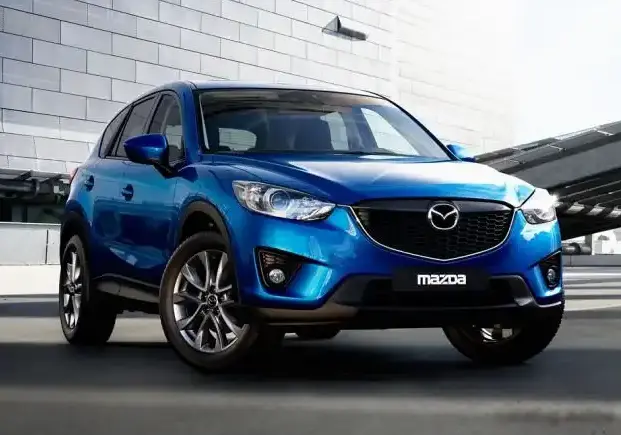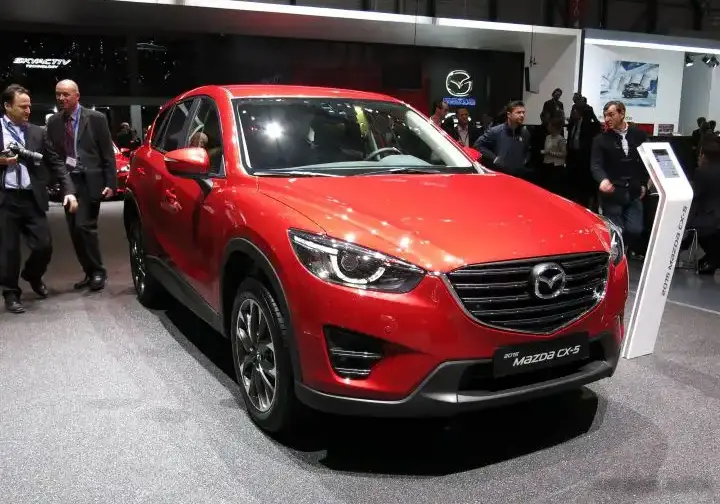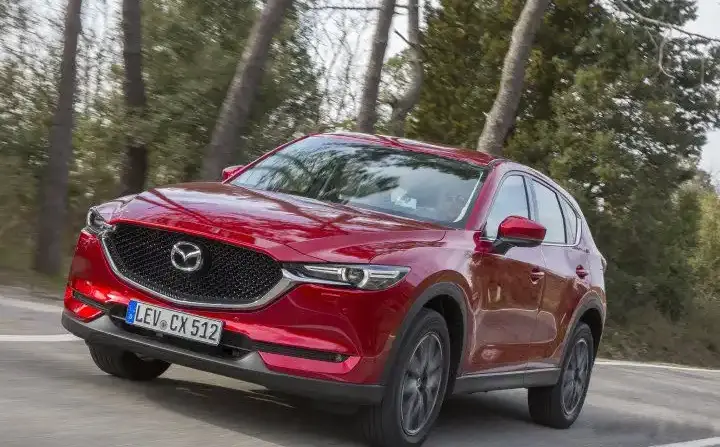
The Mazda CX-5 II 2.5 SKYACTIV-G (188 Hp) Automatic, produced from 2019 to 2021, represents a significant iteration of Mazda’s popular compact crossover SUV. Falling within the second generation (CX-5 II) of the CX-5 lineage, this variant occupied a key position in the lineup, offering a balance of performance, fuel efficiency, and features aimed at a broad consumer base. It was built on the Mazda’s Kodo design philosophy, emphasizing flowing lines and a premium aesthetic. This model was primarily marketed in North America, Europe, and Asia-Pacific regions, competing with vehicles like the Honda CR-V, Toyota RAV4, and Nissan X-Trail.
Technical Specifications
| Brand | Mazda |
| Model | CX-5 |
| Generation | CX-5 II |
| Type (Engine) | 2.5 SKYACTIV-G (188 Hp) Automatic |
| Start of production | 2019 |
| End of production | 2021 |
| Powertrain Architecture | Internal Combustion engine |
| Body type | SUV |
| Seats | 5 |
| Doors | 5 |
| Fuel consumption (combined) | 6.6 l/100 km (35.6 US mpg, 42.8 UK mpg, 15.2 km/l) |
| CO2 emissions | 156.2-156.7 g/km |
| Fuel Type | Petrol (Gasoline) |
| Weight-to-power ratio | 8.6 kg/Hp, 116.6 Hp/tonne |
| Weight-to-torque ratio | 6.4 kg/Nm, 156.3 Nm/tonne |
| Power | 188 Hp @ 6000 rpm |
| Power per litre | 52.2 Hp/l |
| Torque | 252 Nm @ 4000 rpm (185.87 lb.-ft. @ 4000 rpm) |
| Engine layout | Front, Transverse |
| Engine Model/Code | PY-Y8 |
| Engine displacement | 3599 cm3 (219.62 cu. in.) |
| Number of cylinders | 4 |
| Engine configuration | Inline |
| Number of valves per cylinder | 4 |
| Fuel injection system | Direct injection |
| Engine oil capacity | 4.3 l (4.54 US qt | 3.78 UK qt) |
| Coolant capacity | 7.4 l (7.82 US qt | 6.51 UK qt) |
| Kerb Weight | 1612 kg (3553.85 lbs.) |
| Max. weight | 2110 kg (4651.75 lbs.) |
| Max load | 498 kg (1097.9 lbs.) |
| Trunk (boot) space – minimum | 875 l (30.9 cu. ft.) |
| Trunk (boot) space – maximum | 1687 l (59.58 cu. ft.) |
| Fuel tank capacity | 56 l (14.79 US gal | 12.32 UK gal) |
| Length | 4550 mm (179.13 in.) |
| Width including mirrors | 2116 mm (83.31 in.) |
| Height | 1675 mm (65.94 in.) |
| Drivetrain Architecture | Front wheel drive |
| Number of gears and type of gearbox | 6 gears, automatic transmission |
| Front suspension | Independent, type McPherson with coil spring and anti-roll bar |
| Rear suspension | Independent multi-link spring suspension with stabilizer |
| Front brakes | Ventilated discs |
| Rear brakes | Disc |
| Tires size | 225/65 R17; 225/55 R19 |
Powertrain & Engine Architecture
At the heart of the CX-5 II 2.5 SKYACTIV-G Automatic lies Mazda’s PY-Y8 2.5-liter inline-four cylinder engine. This engine is a cornerstone of Mazda’s SKYACTIV technology, designed to maximize combustion efficiency and reduce emissions. It features direct injection, a high compression ratio (typically around 13:1), and optimized intake and exhaust systems. The engine utilizes a variable valve timing system on both intake and exhaust camshafts, enhancing performance across the rev range. The 188 horsepower output is achieved at 6000 rpm, with peak torque of 252 Nm (185.87 lb-ft) delivered at 4000 rpm. The engine is paired with a six-speed automatic transmission, specifically tuned for smooth operation and responsiveness. This transmission features a torque converter and utilizes Mazda’s quick-shift technology for faster gear changes.
Driving Characteristics
The 2.5-liter engine and six-speed automatic combination provides a comfortable and capable driving experience. While not overtly sporty, the CX-5 II delivers adequate acceleration for everyday driving situations. The automatic transmission is well-programmed, offering smooth shifts and generally avoiding unnecessary gear hunting. Compared to the manual transmission versions of the same engine, the automatic sacrifices some responsiveness, but gains in ease of use, particularly in urban traffic. Compared to the higher-output 2.5T turbocharged engine offered in some CX-5 trims, this naturally aspirated version feels less powerful, especially when fully loaded or tackling steep inclines. However, it offers a more linear power delivery and potentially better fuel economy.
Equipment & Trim Levels
The CX-5 II 2.5 SKYACTIV-G Automatic was typically offered in several trim levels, varying by market. Standard equipment generally included features like Mazda’s infotainment system with a 7-inch or 10.25-inch touchscreen display (depending on the trim), Bluetooth connectivity, a rearview camera, and basic safety features such as ABS, stability control, and multiple airbags. Higher trim levels added features like leather upholstery, a power-adjustable driver’s seat, a premium sound system, navigation, and advanced safety technologies like blind-spot monitoring, lane departure warning, and adaptive cruise control. Interior upholstery ranged from cloth on base models to leather on higher trims. Dashboard configurations were generally consistent across trims, with a focus on a clean and minimalist design.
Chassis & Braking
The CX-5 II utilizes a MacPherson strut front suspension and a multi-link rear suspension, providing a comfortable ride and predictable handling. Stabilizer bars are fitted to both axles to reduce body roll during cornering. The braking system consists of ventilated discs at the front and solid discs at the rear. ABS (Anti-lock Braking System) and electronic brake-force distribution are standard features. The steering is an electric power-assisted system, offering a balance of light steering effort and decent feedback. The suspension tuning is geared towards comfort, but still provides a reasonably controlled driving experience.
Market Reception & Comparison
The Mazda CX-5 II 2.5 SKYACTIV-G Automatic was generally well-received by automotive critics. It was praised for its stylish design, comfortable interior, and engaging driving dynamics. The fuel economy of around 35.6 US mpg was considered competitive within its class. However, some reviewers noted that the engine could feel underpowered when the vehicle was fully loaded or driving uphill. Compared to other trims in the CX-5 lineup, such as the 2.5T turbocharged version, this variant offered a more affordable entry point but sacrificed some performance. Compared to competitors like the Honda CR-V and Toyota RAV4, the CX-5 was often lauded for its more premium feel and engaging driving experience, though some competitors offered more cargo space.
Legacy
The PY-Y8 2.5-liter SKYACTIV-G engine has proven to be a reliable and durable powertrain. While some early models experienced minor issues with the fuel pump, these were generally addressed through warranty repairs. In the used car market, the CX-5 II 2.5 SKYACTIV-G Automatic remains a popular choice due to its reputation for reliability, fuel efficiency, and overall value. Maintenance costs are generally reasonable, and parts availability is good. The engine’s relatively simple design, compared to turbocharged alternatives, contributes to its long-term durability and ease of maintenance. The CX-5 II continues to be a well-regarded compact crossover, and this specific variant represents a sweet spot in the lineup for buyers seeking a balance of practicality, efficiency, and driving enjoyment.