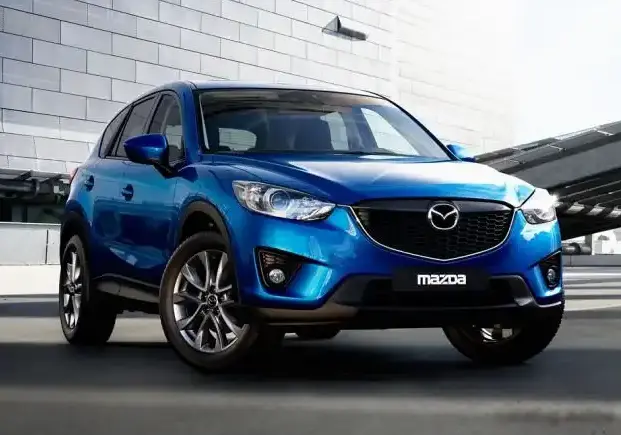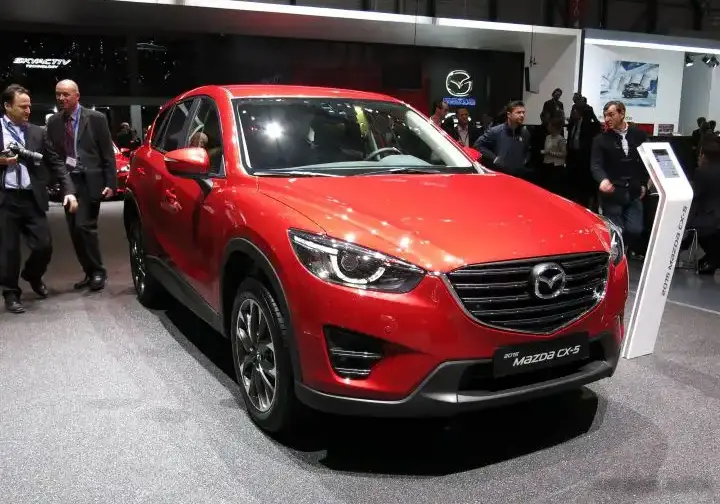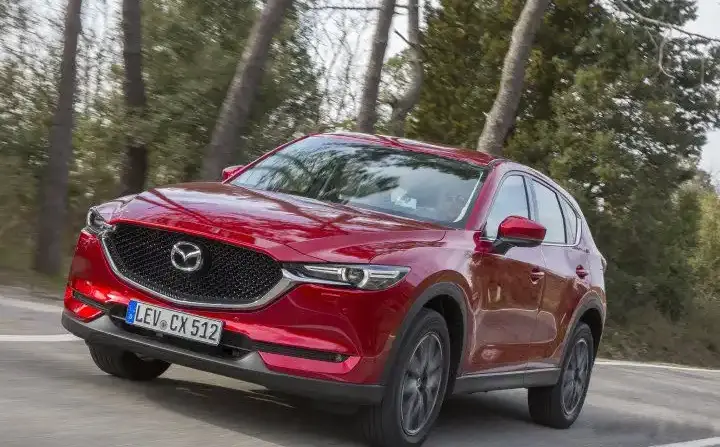
The Mazda CX-5 II 2.5 Turbo SKYACTIV-G Automatic, produced from 2019 to September 2021, represents a significant step up in performance for Mazda’s popular compact SUV. This variant, positioned as a mid-to-upper trim level within the second-generation CX-5 (KF series) lineup, offered a compelling blend of power, efficiency, and Mazda’s signature driving dynamics. It catered to buyers seeking more than the base engine’s capabilities without venturing into the territory of potential higher maintenance costs associated with more complex powertrains. The CX-5 II, overall, aimed to elevate the compact SUV experience, competing directly with vehicles like the Honda CR-V, Toyota RAV4, and Nissan Rogue.
Technical Specifications
| Brand | Mazda |
| Model | CX-5 |
| Generation | CX-5 II |
| Type (Engine) | 2.5 Turbo SKYACTIV-G (228 Hp) Automatic |
| Start of production | 2019 |
| End of production | September, 2021 |
| Powertrain Architecture | Internal Combustion engine |
| Body type | SUV |
| Seats | 5 |
| Doors | 5 |
| Fuel consumption (combined) | 7.3 l/100 km (32.2 US mpg, 38.7 UK mpg, 13.7 km/l) |
| CO2 emissions | 171.1 g/km |
| Fuel Type | Petrol (Gasoline) |
| Weight-to-power ratio | 7.3 kg/Hp, 137.7 Hp/tonne |
| Weight-to-torque ratio | 3.9 kg/Nm, 253.6 Nm/tonne |
| Power | 228 Hp @ 5000 rpm |
| Power per litre | 91.6 Hp/l |
| Torque | 420 Nm @ 2000 rpm (309.78 lb.-ft. @ 2000 rpm) |
| Engine layout | Front, Transverse |
| Engine Model/Code | PY-VPTS |
| Engine displacement | 2488 cm3 (151.83 cu. in.) |
| Number of cylinders | 4 |
| Engine configuration | Inline |
| Number of valves per cylinder | 4 |
| Fuel injection system | Direct injection |
| Engine aspiration | Turbocharger, Intercooler |
| Engine oil capacity | 4.5 l (4.76 US qt | 3.96 UK qt) |
| Kerb Weight | 1656 kg (3650.86 lbs.) |
| Max. weight | 2115 kg (4662.78 lbs.) |
| Max load | 459 kg (1011.92 lbs.) |
| Trunk (boot) space – minimum | 875 l (30.9 cu. ft.) |
| Trunk (boot) space – maximum | 1687 l (59.58 cu. ft.) |
| Fuel tank capacity | 56 l (14.79 US gal | 12.32 UK gal) |
| Length | 4550 mm (179.13 in.) |
| Width including mirrors | 2116 mm (83.31 in.) |
| Height | 1675 mm (65.94 in.) |
| Drivetrain Architecture | The Internal combustion engine (ICE) drives the front wheels of the vehicle. |
| Drive wheel | Front wheel drive |
| Number of gears and type of gearbox | 6 gears, automatic transmission |
| Front suspension | Independent, type McPherson with coil spring and anti-roll bar |
| Rear suspension | Independent multi-link spring suspension with stabilizer |
| Front brakes | Ventilated discs |
| Rear brakes | Disc |
| Assisting systems | ABS (Anti-lock braking system), Electric Power Steering |
| Tires size | 225/55 R19 |
| Wheel rims size | 19 |
Powertrain & Engine Architecture
At the heart of the CX-5 II 2.5 Turbo lies Mazda’s PY-VPTS engine, a 2.5-liter inline-four cylinder gasoline engine utilizing SKYACTIV-G technology. This engine is characterized by its high compression ratio (typically around 13:1) and direct injection system, contributing to both improved fuel efficiency and increased power output. The addition of a twin-scroll turbocharger and intercooler significantly boosts performance, bringing the engine’s output to 228 horsepower and 310 lb-ft of torque. The engine’s valvetrain employs dual overhead camshafts (DOHC) and four valves per cylinder, optimizing airflow for enhanced combustion. The engine is paired with a six-speed automatic transmission, specifically tuned to handle the increased torque output of the turbocharged engine. This transmission features a manual shift mode, allowing drivers some control over gear selection, but is primarily designed for smooth and efficient automatic operation.
Driving Characteristics
The 2.5 Turbo Automatic CX-5 delivers a noticeably more spirited driving experience compared to the naturally aspirated 2.5-liter variant. The turbocharger provides a substantial increase in low-end torque, making acceleration from a standstill and during overtaking maneuvers significantly quicker. While not a sports car, the CX-5 Turbo feels responsive and capable. The six-speed automatic transmission generally shifts smoothly, although some drivers have noted a slight hesitation during downshifts. The gear ratios are well-matched to the engine’s powerband, providing adequate acceleration in most driving situations. Compared to manual transmission versions, the automatic offers convenience but sacrifices some driver engagement. The added weight of the turbocharger and associated components does slightly impact handling, but Mazda’s well-tuned suspension helps to mitigate this effect.
Equipment & Trim Levels
The 2.5 Turbo trim typically included a generous array of standard features. These commonly included leather upholstery, a power-adjustable driver’s seat with memory function, a premium sound system (often Bose), a large infotainment screen with navigation, and a suite of advanced safety features such as adaptive cruise control, lane departure warning, and automatic emergency braking. Optional extras often included a power moonroof, heated and ventilated front seats, and a 360-degree view monitor. The interior design emphasized a clean and minimalist aesthetic, with high-quality materials and a focus on ergonomics.
Chassis & Braking
The CX-5 II utilizes a MacPherson strut front suspension and a multi-link rear suspension, providing a comfortable yet controlled ride. Stabilizer bars are fitted to both axles to reduce body roll during cornering. The braking system consists of ventilated discs at the front and solid discs at the rear. Anti-lock braking system (ABS) and electronic brake-force distribution (EBD) are standard features. The steering is electrically assisted, providing a light and precise feel. The 19-inch wheels and 225/55 R19 tires contribute to both handling and ride comfort.
Market Reception & Comparison
The Mazda CX-5 II 2.5 Turbo was generally well-received by automotive critics. Reviewers praised its powerful engine, refined interior, and engaging driving dynamics. Fuel economy was considered respectable for a turbocharged SUV, although not class-leading. Compared to the base 2.5-liter CX-5, the Turbo offered a significant performance upgrade, justifying the higher price tag for buyers prioritizing power. Compared to competitors like the Honda CR-V and Toyota RAV4, the CX-5 Turbo was often lauded for its more premium feel and sportier handling. However, some critics noted that its cargo space was slightly smaller than some rivals.
Legacy
The PY-VPTS engine, when properly maintained, has proven to be a relatively reliable powertrain. Common issues, if any, often relate to the turbocharger itself or the fuel injectors. Regular oil changes and adherence to Mazda’s recommended maintenance schedule are crucial for long-term reliability. On the used car market, the CX-5 II 2.5 Turbo commands a slightly higher price than the base models, reflecting its increased performance and desirable features. It remains a popular choice for buyers seeking a well-rounded and enjoyable compact SUV experience.