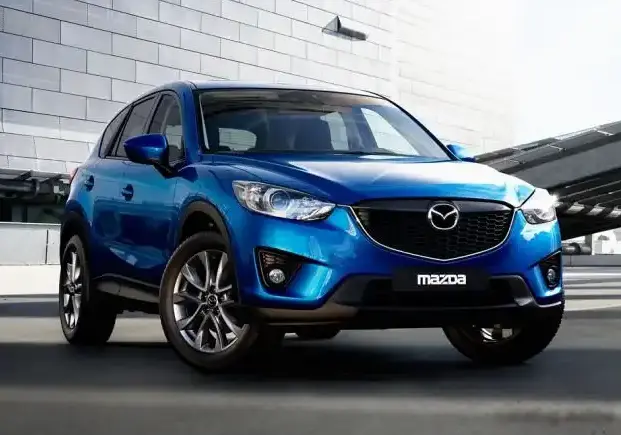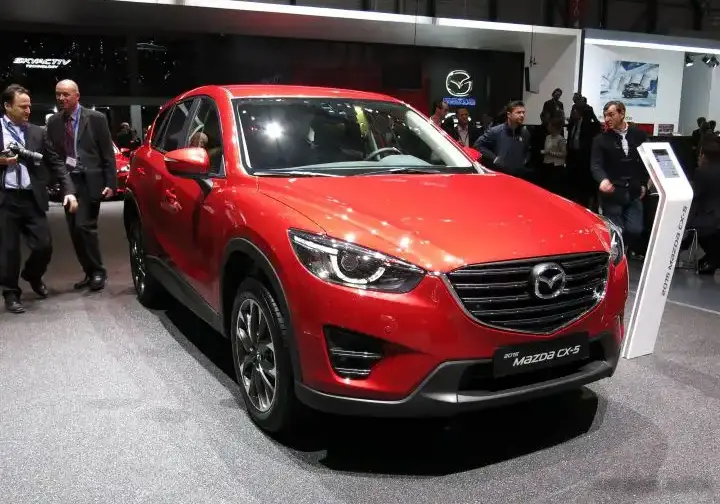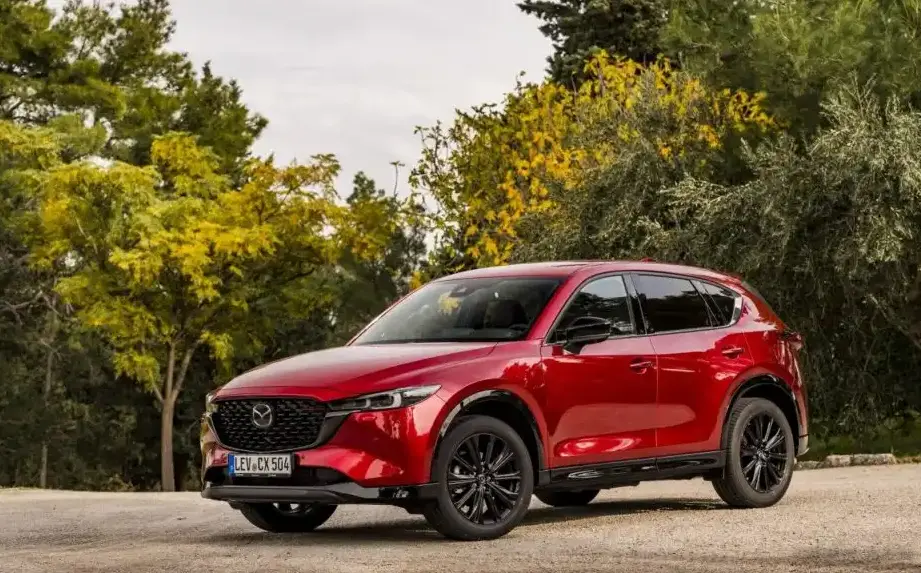
The Mazda CX-5 II, specifically the facelift model introduced in September 2021 and produced through November 2022, represents a significant evolution of Mazda’s popular compact SUV. This variant, equipped with the 2.0-liter SKYACTIV-G engine producing 165 horsepower and paired with a six-speed automatic transmission, served as a key entry point into the CX-5 lineup, offering a balance of efficiency, comfort, and Mazda’s signature driving dynamics. It falls within the second generation of the CX-5 (KE series), benefiting from updates to styling, technology, and refinement compared to the original model. This version was primarily aimed at the European and Asian markets, with a focus on fuel economy and a comfortable driving experience.
Technical Specifications
| Brand | Mazda |
| Model | CX-5 |
| Generation | CX-5 II (facelift 2021) |
| Type (Engine) | 2.0 SKYACTIV-G (165 Hp) Automatic |
| Start of production | September, 2021 |
| End of production | November, 2022 |
| Powertrain Architecture | Internal Combustion engine |
| Body type | SUV |
| Seats | 5 |
| Doors | 5 |
| Fuel consumption at Low speed (WLTP) | 8.9-9 l/100 km (26.4 – 26.1 US mpg, 31.7 – 31.4 UK mpg, 11.2 – 11.1 km/l) |
| Fuel consumption at Medium speed (WLTP) | 6.9 l/100 km (34.1 US mpg, 40.9 UK mpg, 14.5 km/l) |
| Fuel consumption at high speed (WLTP) | 6.3 l/100 km (37.3 US mpg, 44.8 UK mpg, 15.9 km/l) |
| Fuel consumption at very high speed (WLTP) | 7.8 l/100 km (30.2 US mpg, 36.2 UK mpg, 12.8 km/l) |
| Combined fuel consumption (WLTP) | 7.3-7.4 l/100 km (32.2 – 31.8 US mpg, 38.7 – 38.2 UK mpg, 13.7 – 13.5 km/l) |
| CO2 emissions (WLTP) | 165-166 g/km |
| Fuel consumption (economy) – urban (NEDC) | 7.8 l/100 km (30.2 US mpg, 36.2 UK mpg, 12.8 km/l) |
| Fuel consumption (economy) – extra urban (NEDC) | 5.9 l/100 km (39.9 US mpg, 47.9 UK mpg, 16.9 km/l) |
| Fuel consumption (economy) – combined (NEDC) | 6.6 l/100 km (35.6 US mpg, 42.8 UK mpg, 15.2 km/l) |
| CO2 emissions (NEDC) | 150 g/km |
| Fuel Type | Petrol (Gasoline) |
| Acceleration 0 – 100 km/h | 9.9 sec |
| Acceleration 0 – 62 mph | 9.9 sec |
| Acceleration 0 – 60 mph | 9.4 sec |
| Maximum speed | 192 km/h (119.3 mph) |
| Emission standard | Euro 6d |
| Weight-to-power ratio | 9.2 kg/Hp, 109.3 Hp/tonne |
| Weight-to-torque ratio | 7.1 kg/Nm, 141.1 Nm/tonne |
| Power | 165 Hp @ 6000 rpm |
| Power per litre | 82.6 Hp/l |
| Torque | 213 Nm @ 4000 rpm (157.1 lb.-ft. @ 4000 rpm) |
| Engine layout | Front, Transverse |
| Engine Model/Code | PE |
| Engine displacement | 1998 cm3 (121.93 cu. in.) |
| Number of cylinders | 4 |
| Engine configuration | Inline |
| Cylinder Bore | 83.5 mm (3.29 in.) |
| Piston Stroke | 91.2 mm (3.59 in.) |
| Compression ratio | 13:1 |
| Number of valves per cylinder | 4 |
| Fuel injection system | Direct injection |
| Engine aspiration | Naturally aspirated engine |
| Valvetrain | DOHC |
| Engine oil capacity | 4.2 l (4.44 US qt | 3.7 UK qt) |
| Coolant | 7.1 l (7.5 US qt | 6.25 UK qt) |
| Kerb Weight | 1510-1568 kg (3328.98 – 3456.85 lbs.) |
| Max. weight | 2035 kg (4486.41 lbs.) |
| Max load | 467-525 kg (1029.56 – 1157.43 lbs.) |
| Trunk (boot) space – minimum | 522 l (18.43 cu. ft.) |
| Trunk (boot) space – maximum | 1638 l (57.85 cu. ft.) |
| Fuel tank capacity | 56 l (14.79 US gal | 12.32 UK gal) |
| Max. roof load | 75 kg (165.35 lbs.) |
| Permitted trailer load with brakes (8%) | 2000 kg (4409.25 lbs.) |
| Permitted trailer load with brakes (12%) | 2000 kg (4409.25 lbs.) |
| Permitted trailer load without brakes | 750 kg (1653.47 lbs.) |
| Length | 4575 mm (180.12 in.) |
| Width | 1845 mm (72.64 in.) |
| Width including mirrors | 2115 mm (83.27 in.) |
| Height | 1680-1685 mm (66.14 – 66.34 in.) |
| Wheelbase | 2700 mm (106.3 in.) |
| Front track | 1595 mm (62.8 in.) |
| Rear (Back) track | 1595 mm (62.8 in.) |
| Front overhang | 965 mm (37.99 in.) |
| Rear overhang | 910 mm (35.83 in.) |
| Ride height (ground clearance) | 192-200 mm (7.56 – 7.87 in.) |
| Minimum turning circle (turning diameter) | 11 m (36.09 ft.) |
| Drivetrain Architecture | The Internal combustion engine (ICE) drives the front wheels of the vehicle. |
| Drive wheel | Front wheel drive |
| Number of gears and type of gearbox | 6 gears, automatic transmission |
| Front suspension | Independent type McPherson |
| Rear suspension | Independent multi-link suspension |
| Front brakes | Ventilated discs, 297 mm |
| Rear brakes | Disc, 303 mm |
| Assisting systems | ABS (Anti-lock braking system) |
| Steering type | Steering rack and pinion |
| Power steering | Electric Steering |
| Tires size | 225/65 R17; 225/55 R19 |
| Wheel rims size | 7J x 17; 7J x 19 |
INTRODUCTION
The Mazda CX-5 II facelift, launched in 2021, continued Mazda’s commitment to refined, driver-focused SUVs. The 2.0-liter SKYACTIV-G engine with 165 horsepower, coupled with a six-speed automatic transmission, represented a core offering within the CX-5 range. Positioned as a more accessible option compared to the higher-output 2.5-liter variants, this configuration prioritized fuel efficiency and a smooth driving experience. It was designed to appeal to buyers seeking a comfortable and practical SUV without sacrificing Mazda’s renowned handling characteristics. The CX-5 II facelift benefited from styling updates, improved interior materials, and enhanced safety features, solidifying its position as a competitive choice in the compact SUV segment.
Powertrain & Engine Architecture
The heart of this CX-5 variant is Mazda’s PE-VPH 2.0-liter SKYACTIV-G four-cylinder gasoline engine. This engine utilizes direct injection, a high compression ratio of 13:1, and a double overhead camshaft (DOHC) valvetrain to maximize efficiency and power output. The SKYACTIV technology suite focuses on optimizing combustion, reducing internal friction, and improving thermal efficiency. The engine’s design emphasizes torque delivery across a broad RPM range, making it responsive in everyday driving situations. Paired with this engine is a six-speed automatic transmission, known for its smooth and quick shifts. This transmission is designed to work seamlessly with the engine’s power characteristics, providing a comfortable and efficient driving experience. The transmission features a torque converter for smooth launches and low-speed driving, and it’s electronically controlled for precise gear selection.
Driving Characteristics
The 2.0-liter engine and automatic transmission combination delivers a balanced driving experience. While not as brisk as the 2.5-liter models, the 165 hp engine provides adequate power for most driving situations. Acceleration from 0-60 mph takes approximately 9.4 seconds. The automatic transmission is well-tuned, offering smooth gear changes and responsive downshifts when needed. The gear ratios are optimized for fuel efficiency, but also provide enough torque for confident highway merging and overtaking. Compared to the manual transmission versions of the 2.0-liter engine, the automatic prioritizes convenience and ease of use, at the expense of some driver engagement. The CX-5’s well-tuned suspension contributes to a comfortable ride, absorbing bumps and imperfections in the road effectively. The steering is precise and responsive, providing a connected feel to the driver.
Equipment & Trim Levels
The 2.0-liter Automatic CX-5 typically came equipped with a solid set of standard features. These generally included Mazda’s infotainment system with a 10.25-inch display screen, Apple CarPlay and Android Auto integration, Bluetooth connectivity, and a rearview camera. Safety features such as Mazda’s i-Activsense suite, which includes adaptive cruise control, lane departure warning, lane-keep assist, and automatic emergency braking, were also standard. Interior upholstery was typically cloth, with options for leather upgrades on higher trim levels. Available options included a power sunroof, heated front seats, a premium sound system, and navigation. Trim levels varied by market, but generally offered increasing levels of luxury and convenience features.
Chassis & Braking
The CX-5 II utilizes a robust chassis with independent suspension at all four wheels. The front suspension employs a McPherson strut design, while the rear features a multi-link setup. This configuration provides a good balance of ride comfort and handling precision. Braking duties are handled by ventilated discs at the front and solid discs at the rear. The braking system is equipped with ABS (Anti-lock Braking System) and electronic brake-force distribution (EBD) for enhanced safety. The CX-5’s chassis is designed to minimize body roll during cornering, contributing to its confident handling characteristics. Stabilizer bars are fitted to both the front and rear axles to further reduce body roll.
Market Reception & Comparison
The 2.0-liter Automatic CX-5 was generally well-received by automotive critics. It was praised for its comfortable ride, refined interior, and fuel efficiency. However, some reviewers noted that the engine could feel underpowered when fully loaded or driving uphill. Compared to the 2.5-liter variants, the 2.0-liter offered better fuel economy but less overall performance. The 2.0-liter was also often compared to competitors such as the Honda CR-V, Toyota RAV4, and Nissan Qashqai. The CX-5 often stood out for its more engaging driving dynamics and upscale interior. Fuel economy figures were competitive, with combined WLTP figures ranging from 7.3 to 7.4 l/100 km.
Legacy
The 2.0-liter SKYACTIV-G engine paired with the six-speed automatic transmission has proven to be a reliable powertrain in the CX-5. While not known for any groundbreaking innovations, it’s a well-engineered and durable combination. On the used car market, these CX-5 variants are generally considered a good value, offering a blend of practicality, comfort, and reliability. Maintenance costs are typically reasonable, and parts availability is good. The engine’s direct injection system requires regular maintenance to prevent carbon buildup, but overall, it’s a relatively trouble-free unit. The CX-5 II facelift, including this 2.0-liter variant, has helped solidify Mazda’s reputation for building engaging and well-rounded SUVs.