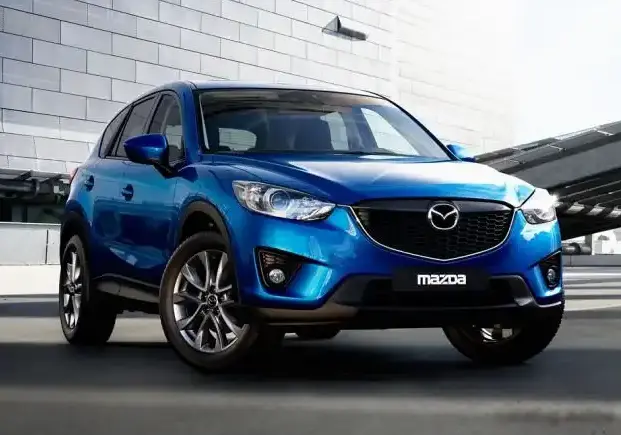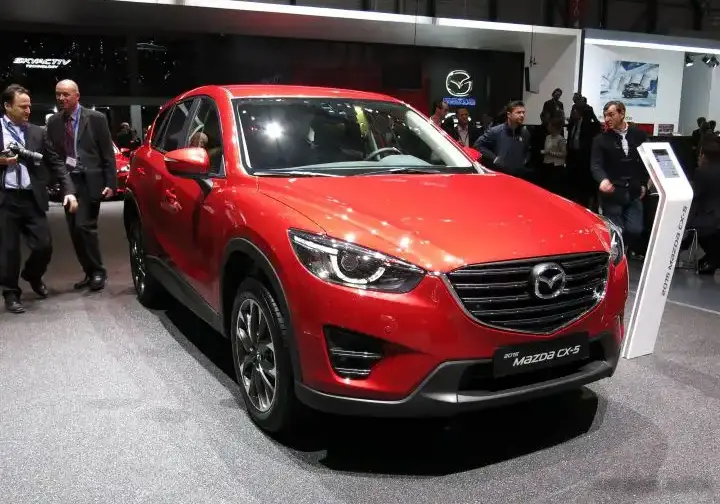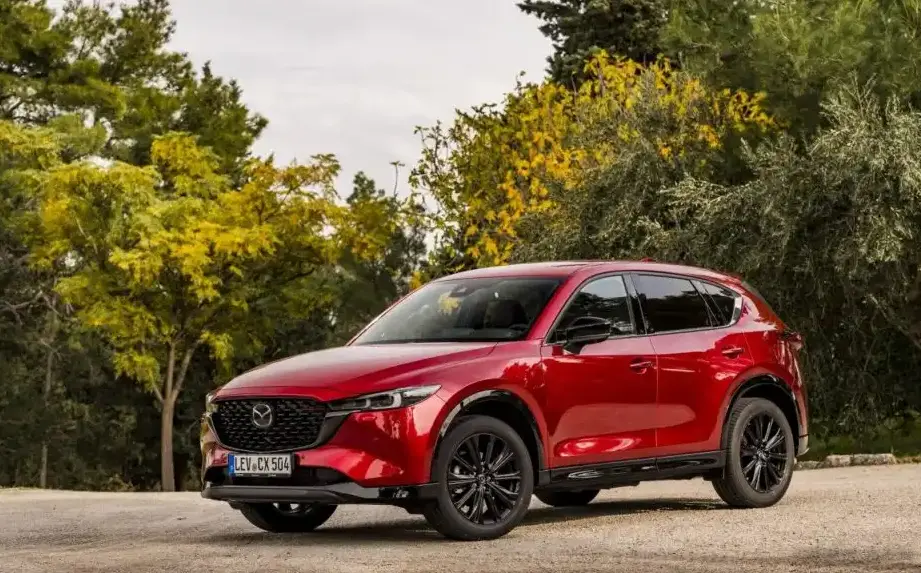
The Mazda CX-5 II, specifically the facelift model introduced in September 2021 and produced through November 2022, represents a significant evolution of Mazda’s popular compact SUV. This variant, equipped with the 2.0-liter SKYACTIV-G engine producing 165 horsepower and paired with an all-wheel-drive (AWD) system, occupied a key position in the CX-5 lineup, offering a balance between affordability, fuel efficiency, and Mazda’s signature driving dynamics. It falls within the second generation of the CX-5 (KE series), benefiting from updates to styling, technology, and refinement compared to the original model. This version was primarily marketed in Europe and Asia, with limited availability in North America where larger engine options were favored.
Technical Specifications
| Brand | Mazda |
| Model | CX-5 |
| Generation | CX-5 II (facelift 2021) |
| Type (Engine) | 2.0 SKYACTIV-G (165 Hp) AWD |
| Start of production | September, 2021 |
| End of production | November, 2022 |
| Powertrain Architecture | Internal Combustion engine |
| Body type | SUV |
| Seats | 5 |
| Doors | 5 |
| Fuel consumption at Low speed (WLTP) | 8.8-9 l/100 km (26.7 – 26.1 US mpg) |
| Fuel consumption at Medium speed (WLTP) | 7.2-7.3 l/100 km (32.7 – 32.2 US mpg) |
| Fuel consumption at high speed (WLTP) | 6.7 l/100 km (35.1 US mpg) |
| Fuel consumption at very high speed (WLTP) | 8-8.1 l/100 km (29.4 – 29 US mpg) |
| Combined fuel consumption (WLTP) | 7.6 l/100 km (30.9 US mpg) |
| CO2 emissions (WLTP) | 171-172 g/km |
| Fuel consumption (economy) – urban (NEDC) | 7.7-8 l/100 km (30.5 – 29.4 US mpg) |
| Fuel consumption (economy) – extra urban (NEDC) | 5.7-5.9 l/100 km (41.3 – 39.9 US mpg) |
| Fuel consumption (economy) – combined (NEDC) | 6.4-6.5 l/100 km (36.8 – 36.2 US mpg) |
| CO2 emissions (NEDC) | 146-147 g/km |
| Fuel Type | Petrol (Gasoline) |
| Acceleration 0 – 100 km/h | 10.9 sec |
| Acceleration 0 – 62 mph | 10.9 sec |
| Acceleration 0 – 60 mph | 10.4 sec |
| Maximum speed | 198 km/h (123.03 mph) |
| Emission standard | Euro 6d |
| Weight-to-power ratio | 9.2 kg/Hp |
| Weight-to-torque ratio | 7.2 kg/Nm |
| Power | 165 Hp @ 6000 rpm |
| Torque | 213 Nm @ 4000 rpm (157.1 lb.-ft. @ 4000 rpm) |
| Engine layout | Front, Transverse |
| Engine Model/Code | PE |
| Engine displacement | 1998 cm3 (121.93 cu. in.) |
| Number of cylinders | 4 |
| Engine configuration | Inline |
| Cylinder Bore | 83.5 mm (3.29 in.) |
| Piston Stroke | 91.2 mm (3.59 in.) |
| Compression ratio | 13:1 |
| Number of valves per cylinder | 4 |
| Fuel injection system | Direct injection |
| Engine aspiration | Naturally aspirated engine |
| Valvetrain | DOHC |
| Engine oil capacity | 4.2 l (4.44 US qt | 3.7 UK qt) |
| Coolant | 7.1 l (7.5 US qt | 6.25 UK qt) |
| Kerb Weight | 1524-1574 kg (3359.84 – 3470.08 lbs.) |
| Max. weight | 2080 kg (4585.62 lbs.) |
| Max load | 506-556 kg (1115.54 – 1225.77 lbs.) |
| Trunk (boot) space – minimum | 522 l (18.43 cu. ft.) |
| Trunk (boot) space – maximum | 1638 l (57.85 cu. ft.) |
| Fuel tank capacity | 58 l (15.32 US gal | 12.76 UK gal) |
| Max. roof load | 75 kg (165.35 lbs.) |
| Permitted trailer load with brakes (8%) | 1900 kg (4188.78 lbs.) |
| Permitted trailer load with brakes (12%) | 1800 kg (3968.32 lbs.) |
| Permitted trailer load without brakes | 750 kg (1653.47 lbs.) |
| Length | 4575 mm (180.12 in.) |
| Width | 1845 mm (72.64 in.) |
| Width including mirrors | 2115 mm (83.27 in.) |
| Height | 1680-1685 mm (66.14 – 66.34 in.) |
| Wheelbase | 2700 mm (106.3 in.) |
| Front track | 1595 mm (62.8 in.) |
| Rear (Back) track | 1595 mm (62.8 in.) |
| Front overhang | 965 mm (37.99 in.) |
| Rear overhang | 910 mm (35.83 in.) |
| Ride height (ground clearance) | 192-200 mm (7.56 – 7.87 in.) |
| Minimum turning circle (turning diameter) | 11 m (36.09 ft.) |
| Drivetrain Architecture | The Internal combustion engine (ICE) drives the front wheels permanently, and the rear wheels are driven through an electrically or mechanically operated clutch if necessary. |
| Drive wheel | All wheel drive (4×4) |
| Number of gears and type of gearbox | 6 gears, manual transmission |
| Front suspension | Independent type McPherson |
| Rear suspension | Independent multi-link suspension |
| Front brakes | Ventilated discs, 297 mm |
| Rear brakes | Disc, 303 mm |
| Assisting systems | ABS (Anti-lock braking system) |
| Steering type | Steering rack and pinion |
| Power steering | Electric Steering |
| Tires size | 225/65 R17; 225/55 R19 |
| Wheel rims size | 7J x 17; 7J x 19 |
INTRODUCTION
The Mazda CX-5 II facelift, launched in 2021, continued Mazda’s commitment to refined, driver-focused SUVs. The 2.0-liter SKYACTIV-G engine with 165 horsepower and all-wheel drive was a popular configuration, particularly in markets where lower running costs and a more relaxed driving experience were prioritized. Positioned as an entry-level or mid-range option within the CX-5 lineup, it offered a compelling alternative to more powerful, and often more expensive, variants. This model built upon the success of the first-generation CX-5, refining its design, improving interior quality, and enhancing its already impressive handling characteristics. It’s built on the 1HX0/A3 platform.
Powertrain & Engine Architecture
The heart of this CX-5 variant is Mazda’s PE-VPH 2.0-liter SKYACTIV-G inline-four cylinder engine. This engine is characterized by its high compression ratio of 13:1, achieved through careful engineering and precise fuel injection. The engine utilizes direct injection, optimizing fuel delivery and combustion efficiency. The DOHC (Double Overhead Camshaft) valvetrain further enhances breathing and contributes to the engine’s responsive nature. The engine’s design prioritizes thermal efficiency, reducing pumping losses and maximizing energy extraction from the fuel. The 6-speed automatic transmission is a conventional torque-converter type, tuned for smooth shifts and fuel economy. It’s not known for being particularly sporty, but it provides a comfortable and predictable driving experience. The transmission is electronically controlled, adapting shift points based on driving conditions and throttle input.
Driving Characteristics
The 165 hp/213 Nm output of this engine and transmission combination delivers adequate, but not exhilarating, performance. Acceleration from 0-60 mph takes around 10.4 seconds, and the top speed is approximately 123 mph. The focus is on providing a smooth and refined driving experience rather than outright speed. The automatic transmission’s gear ratios are optimized for fuel efficiency, resulting in a relaxed cruising demeanor. Compared to the more powerful 2.5-liter engine options, this variant feels less urgent when accelerating, particularly when fully loaded. However, the all-wheel-drive system provides excellent traction and stability in various weather conditions. The steering is precise and well-weighted, a hallmark of Mazda vehicles, contributing to a confident and engaging driving experience.
Equipment & Trim Levels
The 2.0-liter AWD CX-5 typically came equipped with a respectable level of standard features. These generally included automatic climate control, a 7-inch infotainment screen with Mazda Connect, Bluetooth connectivity, and a rearview camera. Higher trim levels added features such as leather upholstery, a power-adjustable driver’s seat, a premium sound system, and advanced safety technologies like blind-spot monitoring and lane-departure warning. Optional extras included a sunroof, navigation system, and adaptive front lighting. Interior upholstery was typically cloth on base models, with leather available on higher trims. Dashboard configuration was consistent across the range, featuring a clean and modern design with a focus on ergonomics.
Chassis & Braking
The CX-5 II utilizes a McPherson strut front suspension and a multi-link rear suspension, providing a comfortable ride and responsive handling. The suspension is tuned to balance ride comfort with body control. Braking duties are handled by ventilated discs at the front and solid discs at the rear. Anti-lock braking system (ABS) is standard, along with electronic brake-force distribution (EBD). The chassis is designed to be rigid, contributing to the vehicle’s stability and handling precision. Stabilizer bars are fitted front and rear to reduce body roll during cornering.
Market Reception & Comparison
Critics generally praised the CX-5 II for its stylish design, refined interior, and engaging driving dynamics. The 2.0-liter engine was considered adequate for most drivers, but some reviewers noted its lack of outright power compared to the 2.5-liter options. Fuel economy was a strong point, with the 2.0-liter variant achieving around 30.9 US mpg in combined driving. Compared to competitors like the Nissan Qashqai and Hyundai Tucson, the CX-5 was often lauded for its superior driving experience and higher-quality interior. The 1.8L automatic versions were often seen as a good value proposition, offering a well-equipped and enjoyable SUV at a competitive price point.
Legacy
The 2.0-liter SKYACTIV-G engine paired with the automatic transmission has proven to be a relatively reliable powertrain. While not without its occasional issues (such as potential carbon buildup with infrequent long journeys), it generally requires routine maintenance and is not known for any major inherent flaws. On the used car market, these CX-5 variants represent a good value, offering a blend of practicality, comfort, and Mazda’s renowned driving dynamics. Their fuel efficiency and relatively low running costs make them an attractive option for buyers seeking a reliable and economical compact SUV.