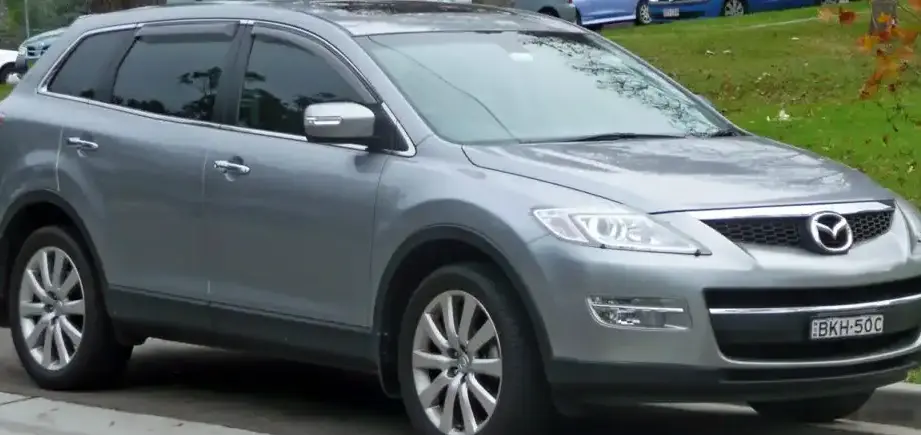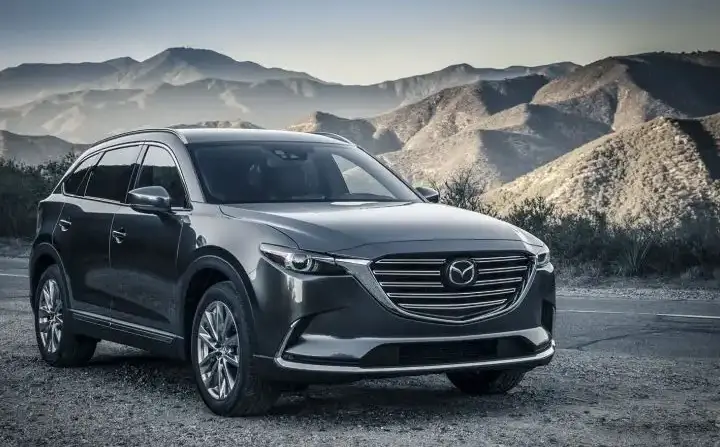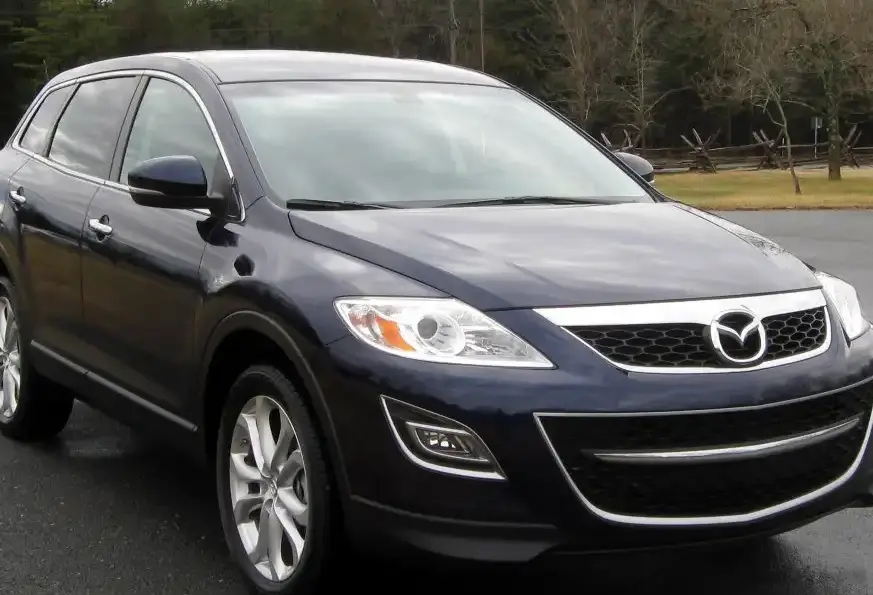
The Mazda CX-9, launched in 2006, represented Mazda’s entry into the burgeoning mid-size crossover SUV segment. The first generation (TC) ran through 2015, receiving a significant facelift in 2010. This refresh brought updated styling, improved interior materials, and, crucially, a new engine. The 2010-2013 Mazda CX-9 equipped with the 3.7-liter V6 engine and six-speed automatic transmission, coupled with all-wheel drive, became a popular choice for families seeking a blend of space, comfort, and performance. This variant occupied the top-tier position within the CX-9 lineup, offering the most powerful engine option available.
Technical Specifications
| Brand | Mazda |
| Model | CX-9 |
| Generation | CX-9 I (facelift 2010) |
| Type (Engine) | 3.7 V6 (273 Hp) AWD Automatic |
| Start of production | 2010 |
| End of production | 2013 |
| Powertrain Architecture | Internal Combustion engine |
| Body type | SUV |
| Seats | 7 |
| Doors | 5 |
| Fuel consumption (urban) | 15.7 l/100 km (15 US mpg, 18 UK mpg) |
| Fuel consumption (extra urban) | 11.2 l/100 km (21 US mpg, 25.2 UK mpg) |
| Fuel Type | Petrol (Gasoline) |
| Weight-to-power ratio | 7.6 kg/Hp, 132.4 Hp/tonne |
| Weight-to-torque ratio | 7.6 kg/Nm, 130.9 Nm/tonne |
| Power | 273 Hp @ 6250 rpm |
| Power per litre | 73.3 Hp/l |
| Torque | 270 Nm @ 4250 rpm (199.14 lb.-ft. @ 4250 rpm) |
| Maximum engine speed | 6500 rpm |
| Engine layout | Front, Transverse |
| Engine Model/Code | CAY1, CAY5, CAY6 |
| Engine displacement | 3726 cm3 (227.37 cu. in.) |
| Number of cylinders | 6 |
| Engine configuration | V-engine |
| Compression ratio | 10.3:1 |
| Number of valves per cylinder | 4 |
| Fuel injection system | Multi-port manifold injection |
| Engine aspiration | Naturally aspirated engine |
| Valvetrain | DOHC |
| Engine oil capacity | 5.2 l (5.49 US qt | 4.58 UK qt) |
| Coolant capacity | 11.5 l (12.15 US qt | 10.12 UK qt) |
| Kerb Weight | 2062 kg (4545.93 lbs.) |
| Trunk (boot) space – minimum | 487 l (17.2 cu. ft.) |
| Trunk (boot) space – maximum | 2852 l (100.72 cu. ft.) |
| Fuel tank capacity | 76 l (20.08 US gal | 16.72 UK gal) |
| Permitted trailer load with brakes (12%) | 1588 kg (3500.94 lbs.) |
| Length | 5085-5100 mm (200.2 – 200.79 in.) |
| Width | 1935 mm (76.18 in.) |
| Height | 1727 mm (67.99 in.) |
| Wheelbase | 2875 mm (113.19 in.) |
| Front track | 1654 mm (65.12 in.) |
| Rear track | 1643 mm (64.69 in.) |
| Ride height (ground clearance) | 203 mm (7.99 in.) |
| Minimum turning circle | 11.4 m (37.4 ft.) |
| Drive wheel | All wheel drive (4×4) |
| Number of gears | 6 |
| Gearbox type | automatic transmission |
| Front suspension | Independent, type McPherson with coil spring and anti-roll bar |
| Rear suspension | Independent multi-link suspension |
| Front brakes | Ventilated discs |
| Rear brakes | Disc |
| Assisting systems | ABS (Anti-lock braking system) |
| Steering type | Steering rack and pinion |
| Power steering | Electric Steering |
| Tires size | 245/60 R18; 245/50 R20 |
| Wheel rims size | 18; 20 |
INTRODUCTION
The 2010 facelift of the Mazda CX-9 brought with it the MZI 3.7-liter V6 engine, a significant upgrade over the previous 3.5-liter powerplant. This engine, paired exclusively with a six-speed automatic transmission and Mazda’s Active Torque Split all-wheel-drive system, aimed to deliver a more refined and engaging driving experience. Positioned as the premium trim level, the 3.7L AWD Automatic CX-9 offered a compelling package for buyers needing three-row seating and the capability of all-wheel drive. It was built on the Mazda GC platform, shared with the Ford Escape and Ford Tribute, but distinguished itself through Mazda’s focus on driving dynamics and interior quality.
Powertrain & Engine Architecture
The heart of this CX-9 variant is the 3.7-liter (3726 cc) MZI-V6 engine, designated with engine codes like CAY1, CAY5, and CAY6 depending on specific calibration and market. This engine features a 60-degree V-angle, dual overhead camshafts (DOHC), and four valves per cylinder. The multi-port fuel injection system delivers fuel directly into the intake ports, while variable valve timing (VVT) on both intake and exhaust camshafts optimizes performance and efficiency across the rev range. The engine produces 273 horsepower at 6250 rpm and 270 lb-ft of torque at 4250 rpm. The six-speed automatic transmission, a crucial component, was designed to handle the engine’s increased output and provide smooth, responsive shifts. It features a torque converter lock-up clutch to improve fuel economy at cruising speeds. The Active Torque Split AWD system continuously monitors road conditions and driver inputs, distributing torque between the front and rear axles for optimal traction.
Driving Characteristics
The 3.7-liter V6 and six-speed automatic combination in the CX-9 delivered a noticeable improvement in performance compared to the earlier 3.5-liter engine. Acceleration was brisk, and the engine provided ample power for highway merging and passing maneuvers. While not a sports car, the CX-9 offered a more engaging driving experience than many of its competitors. The automatic transmission was generally smooth and responsive, although some reviewers noted occasional hesitation during downshifts. The AWD system provided confident handling in various weather conditions. Compared to the manual transmission options available on earlier CX-9 models, the automatic prioritized convenience and ease of use, making it ideal for daily commuting and family road trips. The gear ratios were tuned for a balance of acceleration and fuel economy, with a relatively tall final drive to improve highway efficiency.
Equipment & Trim Levels
The 3.7L AWD Automatic CX-9 typically came well-equipped, often including features like tri-zone automatic climate control, a premium audio system (often Bose), leather upholstery, power-adjustable front seats, and a rearview camera. Higher trim levels, such as the Grand Touring, added features like navigation, heated front seats, and power liftgate. Interior materials were upgraded in the 2010 facelift, with softer-touch surfaces and improved detailing. Optional extras included a DVD entertainment system for rear passengers and advanced safety features like blind-spot monitoring and adaptive cruise control.
Chassis & Braking
The CX-9’s chassis featured an independent front suspension with McPherson struts and a multi-link independent rear suspension. This setup provided a comfortable ride while maintaining reasonable handling characteristics. Stabilizer bars were fitted to both the front and rear axles to reduce body roll during cornering. Braking duties were handled by ventilated discs at the front and solid discs at the rear. The anti-lock braking system (ABS) was standard, along with electronic brake-force distribution (EBD). The steering system utilized an electric power steering (EPS) system, providing light and precise steering feel.
Market Reception & Comparison
The 2010-2013 Mazda CX-9 3.7L AWD Automatic was generally well-received by automotive critics. It was praised for its powerful engine, comfortable ride, spacious interior, and attractive styling. Compared to competitors like the Honda Pilot and Toyota Highlander, the CX-9 was often noted for its more engaging driving dynamics. However, fuel economy was a common criticism, as the 3.7-liter V6 was not particularly fuel-efficient. Reliability was generally good, although some owners reported issues with the automatic transmission and the air conditioning system. The 3.7L variant commanded a higher price than the earlier 3.5L models, reflecting its increased performance and features.
Legacy
The Mazda CX-9, particularly the 3.7L V6 AWD Automatic variant, remains a popular choice in the used car market. Its combination of space, comfort, and performance continues to appeal to families. While the engine isn’t known for exceptional fuel economy, its robust construction and relatively straightforward design contribute to reasonable long-term reliability. Common maintenance items include regular oil changes, transmission fluid flushes, and inspection of the cooling system. The CX-9’s legacy lies in establishing Mazda as a serious contender in the mid-size crossover SUV segment, demonstrating that a family vehicle could also be enjoyable to drive.