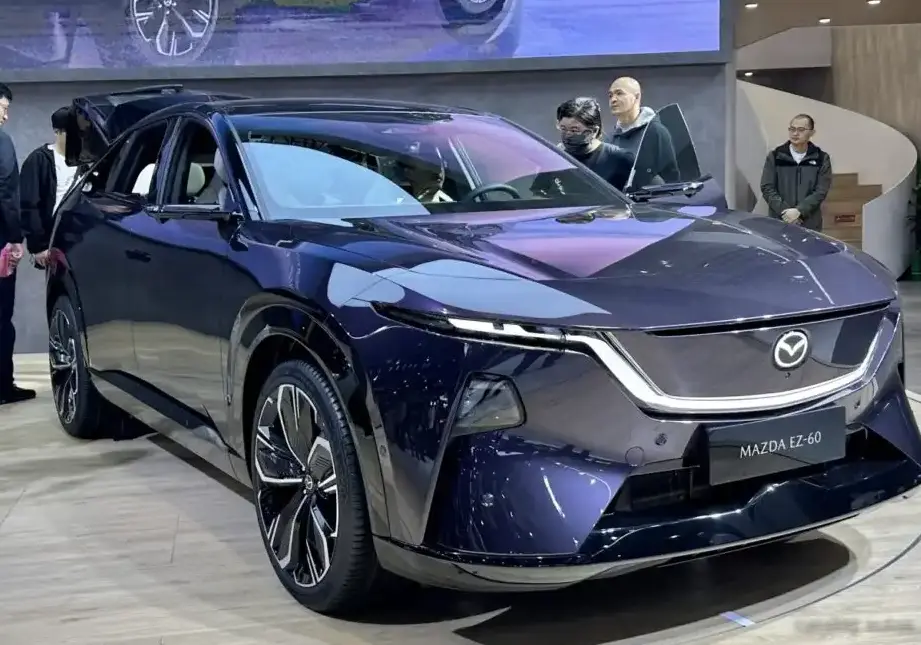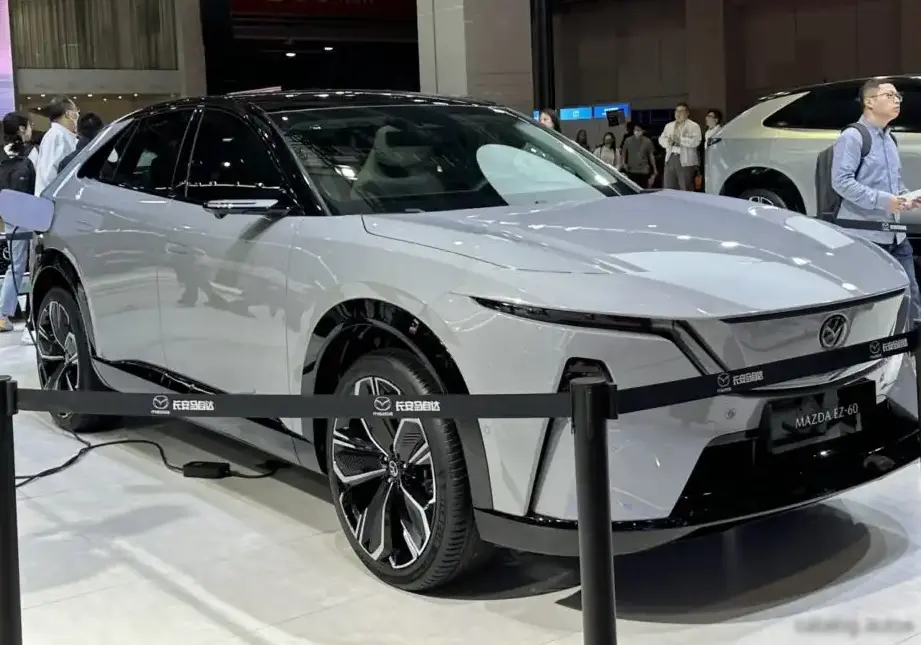
The Mazda EZ-60 1.5 31.37 kWh (258 Hp) Extended Range is a plug-in hybrid electric vehicle (PHEV) introduced by Mazda in September 2025. Positioned as a mid-to-upper trim level within the EZ-60 lineup, it represents Mazda’s entry into a more technologically advanced segment of the SUV market, focusing on extended electric range and fuel efficiency. The EZ-60 is built upon a dedicated new electric vehicle platform, designed to maximize interior space and battery integration. It is primarily targeted towards the Chinese market, adhering to China VI emission standards, but signals Mazda’s broader ambitions in the global EV landscape.
Technical Specifications
| Brand | Mazda |
| Model | EZ-60 |
| Generation | EZ-60 |
| Type (Engine) | 1.5 31.37 kWh (258 Hp) Extended Range |
| Start of production | September, 2025 |
| Powertrain Architecture | PHEV (Plug-in Hybrid Electric Vehicle) |
| Body type | SUV |
| Seats | 5 |
| Doors | 5 |
| Fuel consumption (economy) – combined | 0.74-5.6 l/100 km (317.9 – 42 US mpg, 381.7 – 50.4 UK mpg, 135.1 – 17.9 km/l) |
| Fuel Type | Petrol / electricity |
| Maximum speed | 185 km/h (114.95 mph) |
| Emission standard | China VI |
| Weight-to-power ratio | 7.9 kg/Hp, 126 Hp/tonne |
| Weight-to-torque ratio | 7.1 kg/Nm, 141.6 Nm/tonne |
| Gross battery capacity | 31.73 kWh |
| Battery technology | Lithium iron phosphate (LiFePO4) |
| Battery location | Below the floor |
| All-electric range | 160-200 km (99.42 – 124.27 mi) |
| Average Energy consumption | 17.5 kWh/100 km (28.16 kWh/100 mi, 120 MPGe, 5.7 km/kWh, 3.6 mi/kWh) |
| Electric motor power | 258 Hp |
| Electric motor Torque | 290 Nm (213.89 lb.-ft.) |
| Electric motor model/code | MSED08 |
| Electric motor location | Rear axle, Transverse |
| Electric motor type | Synchronous |
| System power | 258 Hp |
| System torque | 290 Nm (213.89 lb.-ft.) |
| Power | 98 Hp |
| Power per litre | 65.5 Hp/l |
| Engine layout | Front, Transverse |
| Engine Model/Code | CM469NE1 |
| Engine displacement | 1497 cm3 (91.35 cu. in.) |
| Number of cylinders | 4 |
| Engine configuration | Inline |
| Number of valves per cylinder | 4 |
| Fuel injection system | Multi-port manifold injection |
| Engine aspiration | Naturally aspirated engine |
| Valvetrain | DOHC |
| Kerb Weight | 2048 kg (4515.07 lbs.) |
| Max. weight | 2590 kg (5709.97 lbs.) |
| Max load | 542 kg (1194.91 lbs.) |
| Trunk (boot) space – minimum | 549 l (19.39 cu. ft.) |
| Trunk (boot) space – maximum | 2036 l (71.9 cu. ft.) |
| Length | 4850 mm (190.94 in.) |
| Width | 1935 mm (76.18 in.) |
| Height | 1620 mm (63.78 in.) |
| Wheelbase | 2902 mm (114.25 in.) |
| Front track | 1643 mm (64.69 in.) |
| Rear (Back) track | 1652 mm (65.04 in.) |
| Drivetrain Architecture | The Internal combustion engine (ICE) drives the generator only, with no mechanical connection to the drive. An electric motor drives the rear wheels. |
| Drive wheel | Rear wheel drive |
| Number of gears and type of gearbox | 1 gears, automatic transmission |
| Front suspension | Independent, type McPherson with coil spring and anti-roll bar |
| Rear suspension | Independent multi-link spring suspension with stabilizer |
| Front brakes | Ventilated discs |
| Rear brakes | Disc |
| Assisting systems | ABS (Anti-lock braking system) |
| Steering type | Steering rack and pinion |
| Power steering | Electric Steering |
| Tires size | 235/55 R19; 255/40 R21 |
| Wheel rims size | 19; 21 |
Introduction
The Mazda EZ-60 1.5 31.37 kWh Extended Range represents a significant step for Mazda in the rapidly evolving PHEV market. Introduced in September 2025, this model is designed to appeal to consumers seeking a balance between electric driving capability and the reassurance of a gasoline engine. The EZ-60 utilizes a dedicated EV platform, allowing for optimized battery placement and a spacious interior. It’s positioned as a practical and efficient SUV, offering a compelling alternative to traditional gasoline-powered vehicles and pure electric options. The vehicle is currently focused on the Chinese market, where demand for PHEVs is particularly strong.
Powertrain & Engine Architecture
The EZ-60’s powertrain is a series hybrid system. This means the 1.5-liter, naturally aspirated CM469NE1 inline-four engine doesn’t directly power the wheels. Instead, it functions solely as a generator, charging the 31.73 kWh lithium iron phosphate (LiFePO4) battery pack. The rear wheels are driven by a 258 Hp synchronous electric motor (model MSED08). This configuration allows for efficient operation and a smooth driving experience. The engine produces 98 Hp and 65.5 Hp per liter, utilizing a multi-port fuel injection system and a double overhead camshaft (DOHC) valvetrain. The single-speed automatic transmission is integral to the electric motor, providing seamless power delivery. The LiFePO4 battery chemistry is chosen for its stability, longevity, and cost-effectiveness, although it typically offers slightly lower energy density compared to nickel-based chemistries.
Driving Characteristics
The driving experience in the EZ-60 1.5 Extended Range is heavily influenced by its electric powertrain. In typical driving scenarios, the vehicle operates in all-electric mode, providing instant torque and quiet acceleration. The 290 Nm (213.89 lb.-ft.) of torque from the electric motor delivers brisk performance. When the battery is depleted or requires additional power, the gasoline engine seamlessly kicks in to act as a generator, maintaining drive power without interruption. The single-speed automatic transmission ensures smooth transitions. While not as dynamically focused as some of Mazda’s traditionally sporty offerings, the EZ-60 prioritizes comfort and efficiency. The rear-wheel drive configuration contributes to balanced handling, though it may not offer the same level of grip as an all-wheel drive system in adverse conditions.
Equipment & Trim Levels
The EZ-60 1.5 31.37 kWh Extended Range comes standard with a comprehensive suite of features. Interior appointments include comfortable seating for five passengers, with a focus on modern design and quality materials. Standard equipment typically includes a large touchscreen infotainment system, smartphone integration (Apple CarPlay and Android Auto), a digital instrument cluster, and a range of advanced driver-assistance systems (ADAS) such as adaptive cruise control, lane-keeping assist, and automatic emergency braking. Optional extras may include a premium sound system, leather upholstery, a panoramic sunroof, and enhanced ADAS features. Trim levels above the base model often add features like heated and ventilated seats, power-adjustable seats, and upgraded interior trim.
Chassis & Braking
The EZ-60 utilizes an independent suspension system on both the front and rear axles. The front suspension employs a McPherson strut design with coil springs and an anti-roll bar, while the rear features a multi-link setup with a stabilizer bar. This configuration is tuned to provide a comfortable ride and stable handling. The braking system consists of ventilated discs at the front and solid discs at the rear, providing adequate stopping power. Anti-lock braking system (ABS) is standard, enhancing safety and control during emergency braking situations. The electric steering system offers precise and responsive steering feel.
Market Reception & Comparison
Initial reception of the EZ-60 1.5 Extended Range in the Chinese market has been positive, with consumers appreciating its extended electric range and fuel efficiency. Compared to other PHEV SUVs in its class, the EZ-60 offers a competitive combination of performance, range, and features. Its fuel economy of 0.74-5.6 l/100 km (317.9 – 42 US mpg) is a key selling point. Compared to the standard EZ-60 models with smaller batteries, the Extended Range version provides significantly more all-electric driving capability. However, it also carries a higher price tag. Reliability assessments are still emerging, but Mazda’s reputation for build quality and durability suggests the EZ-60 should prove to be a dependable vehicle.
Legacy
The Mazda EZ-60 1.5 31.37 kWh Extended Range represents a pivotal moment for Mazda, demonstrating its commitment to electrification and sustainable mobility. The longevity of the LiFePO4 battery pack and the overall durability of the powertrain will be key factors in determining its long-term success. As the EV market continues to evolve, the EZ-60 is poised to become a significant player, offering a compelling blend of electric efficiency and gasoline-powered range. Its impact on the used car market will depend on factors such as battery degradation and the availability of charging infrastructure, but its reputation for quality and reliability should ensure continued demand for years to come.