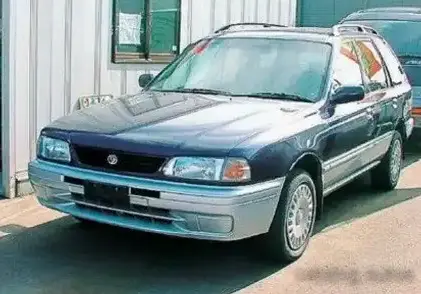
The Mazda Familia Wagon 1.3, producing 63 horsepower, was a practical and economical offering within the broader Familia (also known as 323 in some markets) range. Produced between 1989 and 1994, this variant occupied the entry-level position in the Familia Wagon lineup, targeting buyers prioritizing fuel efficiency and affordability over outright performance. It was primarily sold in Japan and various European markets, where compact wagons were a popular choice for families and individuals needing versatile cargo space. This generation, internally designated as the BJ series, represented a significant step forward in design and engineering for Mazda, offering improved comfort and reliability compared to its predecessors.
Technical Specifications
| Brand | Mazda |
| Model | Familia |
| Generation | Familia Wagon |
| Type (Engine) | 1.3 (63 Hp) |
| Start of production | 1989 |
| End of production | 1994 |
| Powertrain Architecture | Internal Combustion engine |
| Body type | Station wagon (estate) |
| Seats | 5 |
| Doors | 5 |
| Fuel Type | Petrol (Gasoline) |
| Power | 63 Hp @ 5000 rpm |
| Power per litre | 47.6 Hp/l |
| Torque | 103 Nm @ 3000 rpm / 75.97 lb.-ft. @ 3000 rpm |
| Engine layout | Front, Transverse |
| Engine displacement | 1323 cm3 / 80.73 cu. in. |
| Number of cylinders | 4 |
| Engine configuration | Inline |
| Cylinder Bore | 71 mm / 2.8 in. |
| Piston Stroke | 83.6 mm / 3.29 in. |
| Compression ratio | 9.4:1 |
| Number of valves per cylinder | 4 |
| Fuel injection system | Multi-port manifold injection |
| Engine aspiration | Naturally aspirated engine |
| Valvetrain | OHC |
| Fuel tank capacity | 50 l / 13.21 US gal | 11 UK gal |
| Length | 4220 mm / 166.14 in. |
| Width | 1645 mm / 64.76 in. |
| Height | 1410 mm / 55.51 in. |
| Minimum turning circle | 11 m / 36.09 ft. |
| Drivetrain Architecture | The Internal combustion engine (ICE) drives the front wheels of the vehicle. |
| Drive wheel | Front wheel drive |
| Front brakes | Ventilated discs |
| Rear brakes | Drum |
Powertrain & Engine Architecture
The heart of the Familia Wagon 1.3 was the Mazda B6 engine, a 1.3-liter inline-four cylinder gasoline engine. This engine, typically designated with engine codes like B6-ME, featured a single overhead camshaft (OHC) valvetrain operating four valves per cylinder. The multi-port fuel injection system, a relatively modern feature for the time, contributed to improved fuel efficiency and smoother power delivery compared to carbureted engines. The B6 engine was known for its durability and relatively simple design, making it easy to maintain. The 63 horsepower output was achieved at 5000 rpm, while peak torque of 103 Nm (75.97 lb-ft) arrived at 3000 rpm. The engine was transversely mounted in the front of the vehicle, driving the front wheels. While not a powerhouse, the B6 provided adequate power for everyday driving, especially considering the relatively light weight of the Familia Wagon.
Driving Characteristics
The 1.3-liter engine, paired with an automatic transmission (typically a four-speed unit), delivered a comfortable but unhurried driving experience. Acceleration was modest, and overtaking required careful planning. The automatic transmission was geared towards fuel economy, with relatively tall gear ratios. This resulted in a relaxed cruising experience but limited responsiveness when quick acceleration was needed. Compared to the 1.5 or 1.6-liter versions of the Familia, or even the manual transmission variants of the 1.3, this combination felt noticeably slower. However, the automatic transmission made it a more accessible option for drivers who preferred the convenience of not having to shift gears, particularly in urban environments.
Equipment & Trim Levels
The Familia Wagon 1.3 typically came with a basic level of equipment, reflecting its position as the entry-level model. Standard features generally included cloth upholstery, a basic stereo system, and manual windows and door locks. Air conditioning was often an optional extra, as were power windows and central locking. The interior design was functional and practical, prioritizing space and usability over luxury. Trim levels varied depending on the market, but generally, the 1.3 model offered a no-frills approach, focusing on providing a reliable and affordable family vehicle. Exterior features were similarly straightforward, with steel wheels and basic trim moldings being common.
Chassis & Braking
The Familia Wagon featured a MacPherson strut front suspension and a torsion beam rear suspension. This setup provided a reasonable balance between ride comfort and handling. The front brakes were ventilated discs, offering adequate stopping power, while the rear brakes were drums, a cost-saving measure common in this class of vehicle. The steering was typically rack-and-pinion, providing precise and responsive control. Stabilizer bars were often omitted on the base 1.3 model to further reduce costs, resulting in slightly more body roll during cornering compared to higher-spec versions.
Market Reception & Comparison
The Mazda Familia Wagon 1.3 was generally well-received as a practical and economical family car. Critics praised its fuel efficiency, spacious interior, and reliable engine. However, its lack of power and basic equipment level were often noted. Compared to competitors like the Toyota Corolla Wagon or the Nissan Sunny Wagon, the Familia offered a slightly more engaging driving experience, but lacked the brand recognition of its rivals in some markets. The automatic transmission, while convenient, was often criticized for its sluggish performance. Fuel economy was a strong point, typically achieving around 35-40 mpg in mixed driving conditions.
Legacy
The Mazda Familia Wagon 1.3, while not a performance icon, has proven to be a durable and reliable vehicle. Many examples are still on the road today, testament to the quality of its engineering and construction. The B6 engine is known for its longevity, and parts availability remains relatively good. In the used car market, these wagons are often sought after by those looking for an affordable and practical classic car. While not particularly collectible, they represent a significant piece of Mazda’s history and a popular choice for those seeking a simple, reliable, and economical mode of transportation.