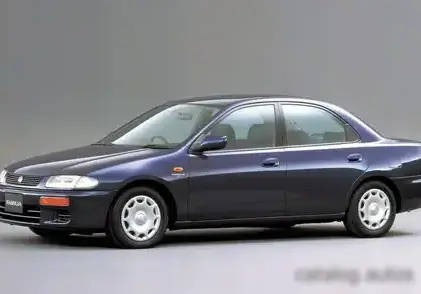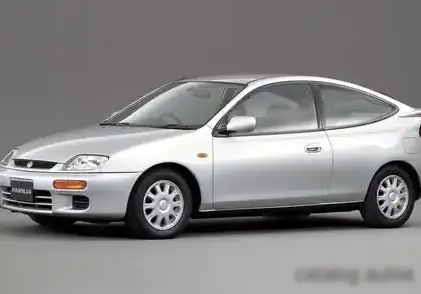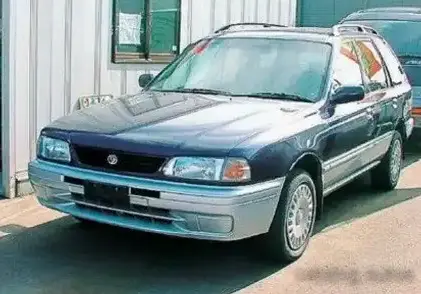
The Mazda Familia Wagon 1.8, produced between 1994 and 1998, represented a practical and relatively affordable offering within Mazda’s lineup. This variant, powered by a 1.8-liter gasoline engine producing 125 horsepower, occupied a middle ground in the Familia Wagon range, positioned above the smaller displacement engines and below any potential higher-performance trims. The Familia Wagon, known as the Mazda 323F Wagon in some export markets, was a popular choice for families seeking a versatile and economical vehicle, particularly in Japan and parts of Asia. It was part of the broader BG series Familia, which included sedan and hatchback body styles.
Technical Specifications
| Brand | Mazda |
| Model | Familia |
| Generation | Familia Wagon |
| Type (Engine) | 1.8 (125 Hp) |
| Start of production | 1994 |
| End of production | 1998 |
| Powertrain Architecture | Internal Combustion engine |
| Body type | Station wagon (estate) |
| Seats | 5 |
| Doors | 5 |
| Fuel Type | Petrol (Gasoline) |
| Weight-to-power ratio | 8.1 kg/Hp, 123.8 Hp/tonne |
| Power | 125 Hp @ 6500 rpm |
| Power per litre | 69.5 Hp/l |
| Engine displacement | 1798 cm3 / 109.72 cu. in. |
| Number of cylinders | 4 |
| Engine configuration | Inline |
| Cylinder Bore | 83 mm / 3.27 in. |
| Piston Stroke | 83.1 mm / 3.27 in. |
| Compression ratio | 10.8:1 |
| Number of valves per cylinder | 4 |
| Fuel injection system | Multi-port manifold injection |
| Engine aspiration | Naturally aspirated engine |
| Kerb Weight | 1010 kg / 2226.67 lbs |
| Fuel tank capacity | 50 l / 13.21 US gal | 11 UK gal |
| Length | 4175 mm / 164.37 in. |
| Width | 1665 mm / 65.55 in. |
| Height | 1480 mm / 58.27 in. |
| Wheelbase | 2400 mm / 94.49 in. |
| Minimum turning circle | 9 m / 29.53 ft |
| Drivetrain Architecture | The Internal combustion engine (ICE) drives the front wheels of the vehicle. |
| Drive wheel | Front wheel drive |
| Front brakes | Ventilated discs |
| Rear brakes | Drum |
Powertrain & Engine Architecture
The heart of the Familia Wagon 1.8 was the Mazda F8 engine, a 1.8-liter (1798cc) inline four-cylinder gasoline engine. This engine utilized a multi-port fuel injection system, which improved fuel atomization and combustion efficiency compared to earlier carburetor-based systems. The engine featured a single overhead camshaft (SOHC) design with four valves per cylinder, contributing to its respectable power output for its displacement. The compression ratio of 10.8:1 was a typical value for naturally aspirated engines of this era, balancing performance and fuel economy. While not a particularly advanced engine in terms of technology, the F8 was known for its durability and relatively straightforward maintenance. The engine was mounted longitudinally in the front of the vehicle.
Driving Characteristics
The 125 horsepower and approximately 135 lb-ft of torque produced by the 1.8-liter engine provided adequate, though not exhilarating, performance for the Familia Wagon. Acceleration was reasonable for everyday driving, but the wagon’s weight and the typically conservative gearing of the automatic transmission meant it wasn’t a particularly quick vehicle. The automatic transmission, usually a four-speed unit, prioritized smooth shifts and fuel efficiency over sporty responsiveness. Compared to the five-speed manual transmission option available on other Familia Wagon trims, the automatic version felt noticeably less engaging and slightly slower to accelerate. The front-wheel-drive configuration provided predictable handling, but the wagon’s suspension, tuned for comfort, resulted in some body roll during cornering. Overall, the driving experience was geared towards practicality and ease of use rather than performance.
Equipment & Trim Levels
The 1.8-liter Familia Wagon typically came with a moderate level of standard equipment. Base models generally included power steering, central locking, and basic instrumentation. Interior upholstery was typically cloth, with a relatively simple dashboard layout. Optional extras could include air conditioning, power windows, and an upgraded audio system. Higher trim levels, if available, might have added features like alloy wheels, a sunroof, and more luxurious interior appointments. The specific trim levels and available options varied depending on the market and year of production. The focus was on providing a comfortable and functional interior without excessive luxury.
Chassis & Braking
The Familia Wagon utilized a MacPherson strut front suspension and a torsion beam rear suspension. This setup provided a good balance between ride comfort and handling, suitable for everyday driving conditions. The front brakes were ventilated discs, offering good stopping power, while the rear brakes were typically drum brakes, a cost-saving measure common in vehicles of this class. The steering was rack-and-pinion, providing reasonably precise control. Stabilizer bars were often included, particularly on higher trim levels, to reduce body roll during cornering. The chassis was designed to provide a stable and predictable driving experience, prioritizing safety and comfort over sporty handling.
Market Reception & Comparison
The Mazda Familia Wagon 1.8 was generally well-received as a practical and reliable family vehicle. Critics praised its spacious interior, fuel efficiency, and reasonable price. However, some reviewers noted that the automatic transmission could feel sluggish and that the overall driving experience lacked excitement. Compared to other wagons in its class, such as the Toyota Corolla Wagon or the Nissan Sunny Wagon, the Familia Wagon offered a competitive combination of features and value. The 1.8-liter engine provided a noticeable performance advantage over the smaller displacement engines available in the Familia Wagon lineup, making it a popular choice for buyers who needed a bit more power for highway driving or carrying a full load of passengers and cargo. The 1.8L was often seen as a sweet spot, offering a good balance between performance and fuel economy.
Legacy
The Mazda Familia Wagon 1.8, and the BG series Familia as a whole, has developed a reputation for long-term reliability, particularly the engine and drivetrain. Well-maintained examples are still found on the roads today, often serving as affordable and dependable transportation. Parts availability can be a challenge in some markets, but many components are still readily available through aftermarket suppliers. The Familia Wagon 1.8 represents a solid example of Japanese automotive engineering from the 1990s, offering a practical and reliable solution for families seeking a versatile and economical vehicle. Its simple design and durable components contribute to its continued presence in the used car market.