
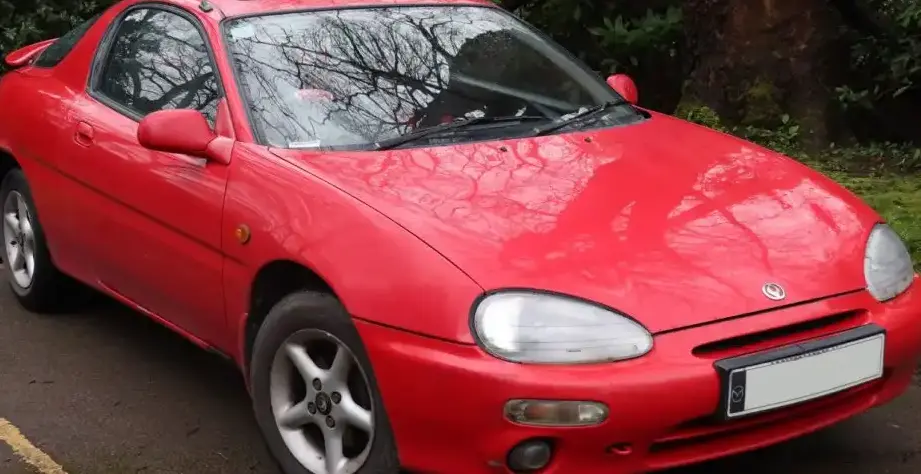
The Mazda MX-3, produced between 1991 and 1996 (with production continuing until 2000 in some markets), represented Mazda’s foray into the affordable, sporty coupe segment. The 1.6L 16V variant, producing 90 horsepower, served as the entry point to the MX-3 lineup, offering a balance of fuel efficiency and accessible performance. Positioned below the more potent V6 models, this version targeted buyers seeking a stylish and economical daily driver with a touch of sporting flair. It was built on Mazda’s EC platform, sharing some components with the 323/Protegé.
Technical Specifications
| Brand | Mazda |
| Model | MX-3 |
| Generation | MX-3 (EC) |
| Type (Engine) | 1.6 16V (90 Hp) |
| Start of production | 1991 |
| End of production | 2000 |
| Powertrain Architecture | Internal Combustion engine |
| Body type | Coupe |
| Seats | 4 |
| Doors | 2 |
| Fuel consumption (urban) | 9 l/100 km (26.1 US mpg) |
| Fuel consumption (extra urban) | 5.8 l/100 km (40.6 US mpg) |
| Fuel consumption (combined) | 7.5 l/100 km (31.4 US mpg) |
| Fuel Type | Petrol (Gasoline) |
| Acceleration 0 – 100 km/h | 10.5 sec |
| Acceleration 0 – 62 mph | 10.5 sec |
| Acceleration 0 – 60 mph | 10 sec |
| Maximum speed | 179 km/h (111.23 mph) |
| Weight-to-power ratio | 11.6 kg/Hp |
| Weight-to-torque ratio | 7.7 kg/Nm |
| Power | 90 Hp @ 5300 rpm |
| Power per litre | 56.3 Hp/l |
| Torque | 135 Nm @ 4000 rpm (99.57 lb.-ft. @ 4000 rpm) |
| Engine layout | Front, Transverse |
| Engine displacement | 1598 cm3 (97.52 cu. in.) |
| Number of cylinders | 4 |
| Engine configuration | Inline |
| Cylinder Bore | 78 mm (3.07 in.) |
| Piston Stroke | 83.6 mm (3.29 in.) |
| Compression ratio | 9:1 |
| Number of valves per cylinder | 4 |
| Fuel injection system | Multi-port manifold injection |
| Engine aspiration | Naturally aspirated engine |
| Valvetrain | OHC |
| Kerb Weight | 1040 kg (2292.81 lbs.) |
| Max. weight | 1475 kg (3251.82 lbs.) |
| Max load | 435 kg (959.01 lbs.) |
| Trunk (boot) space – minimum | 289 l (10.21 cu. ft.) |
| Fuel tank capacity | 50 l (13.21 US gal | 11 UK gal) |
| Length | 4220 mm (166.14 in.) |
| Width | 1695 mm (66.73 in.) |
| Height | 1310 mm (51.57 in.) |
| Wheelbase | 2455 mm (96.65 in.) |
| Front track | 1460 mm (57.48 in.) |
| Rear (Back) track | 1465 mm (57.68 in.) |
| Drivetrain Architecture | Front wheel drive |
| Drive wheel | Front wheel drive |
| Number of gears and type of gearbox | 5 gears, manual transmission |
| Front suspension | Wishbone |
| Rear suspension | Spring Strut |
| Front brakes | Ventilated discs |
| Rear brakes | Disc |
| Assisting systems | ABS (Anti-lock braking system) |
| Steering type | Steering rack and pinion |
| Power steering | Hydraulic Steering |
| Tires size | 185/65 R14 |
| Wheel rims size | 14 |
Powertrain & Engine Architecture
The heart of the MX-3 1.6 was Mazda’s B6 engine, specifically the B6-ZE variant. This 1.6-liter inline-four cylinder engine featured a single overhead camshaft (SOHC) design and multi-port fuel injection. The 16-valve configuration, achieved through four valves per cylinder, contributed to its relatively high output for its displacement. The engine’s 90 horsepower at 5300 rpm and 135 Nm (99.57 lb-ft) of torque at 4000 rpm were respectable for the early 1990s, though significantly less than the V6 options. The engine utilized a conventional distributor ignition system. The standard transmission was a five-speed manual, but a four-speed automatic transmission was also offered, impacting performance and fuel economy.
Driving Characteristics
The 1.6L MX-3 with the manual transmission offered a reasonably engaging driving experience. While not a powerhouse, the engine provided adequate acceleration for everyday driving. The 0-60 mph time of around 10 seconds was typical for a car in its class. The automatic transmission, however, noticeably dulled performance. The four-speed unit lacked the responsiveness of the manual and resulted in slower acceleration and a less connected feel. Gear ratios were optimized for fuel efficiency rather than outright performance. The MX-3’s relatively light weight (around 2293 lbs) helped mitigate the power deficit, making it feel nimble and relatively quick in city driving.
Equipment & Trim Levels
The base 1.6L MX-3 typically came with a fairly basic level of equipment. Standard features generally included power steering, a basic stereo system, and cloth upholstery. Air conditioning was often an optional extra. Higher trim levels, though still utilizing the 1.6L engine, added features like alloy wheels, upgraded interior trim, and a more sophisticated sound system. The interior design was driver-focused, with a relatively simple dashboard layout and well-placed controls. Optional extras included a sunroof and power windows.
Chassis & Braking
The MX-3 featured a front-wheel-drive layout with independent front suspension utilizing wishbones and a spring strut rear suspension. This setup provided a comfortable ride and decent handling characteristics. The base models typically came equipped with ventilated disc brakes on the front and disc brakes on the rear. Anti-lock brakes (ABS) were available as an option, enhancing safety. The steering was rack and pinion, providing precise and responsive control. The relatively narrow tires (185/65 R14) contributed to a balanced ride and handling compromise.
Market Reception & Comparison
The 1.6L MX-3 was generally well-received as an affordable and stylish coupe. Critics praised its attractive design and nimble handling. However, the engine’s lack of outright power was a common criticism, particularly when compared to the V6 models. Fuel economy was a strong point, with combined figures around 31.4 US mpg. Compared to competitors like the Honda Civic Coupe and Toyota Celica, the MX-3 offered a more distinctive design and a slightly more sporty driving experience, but often at a slightly higher price point. The automatic transmission version was often seen as a compromise, sacrificing performance for convenience.
Legacy
The Mazda MX-3, particularly the 1.6L variant, has developed a modest following among enthusiasts. The B6 engine is known for its reliability, although regular maintenance is crucial. The four-speed automatic transmission is generally considered less desirable due to its impact on performance and fuel economy. Today, well-maintained examples of the MX-3 are becoming increasingly rare, and prices for clean, original cars are slowly rising. The MX-3 represents a unique chapter in Mazda’s history, showcasing the company’s commitment to stylish and affordable sports coupes. While not a high-performance machine, the 1.6L version offered a compelling package for buyers seeking a fun-to-drive and economical coupe.
