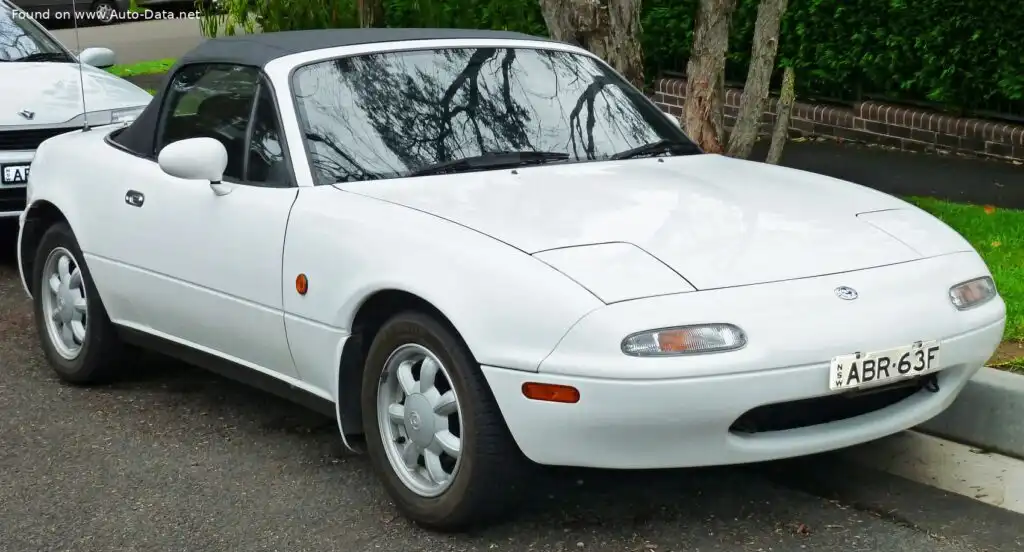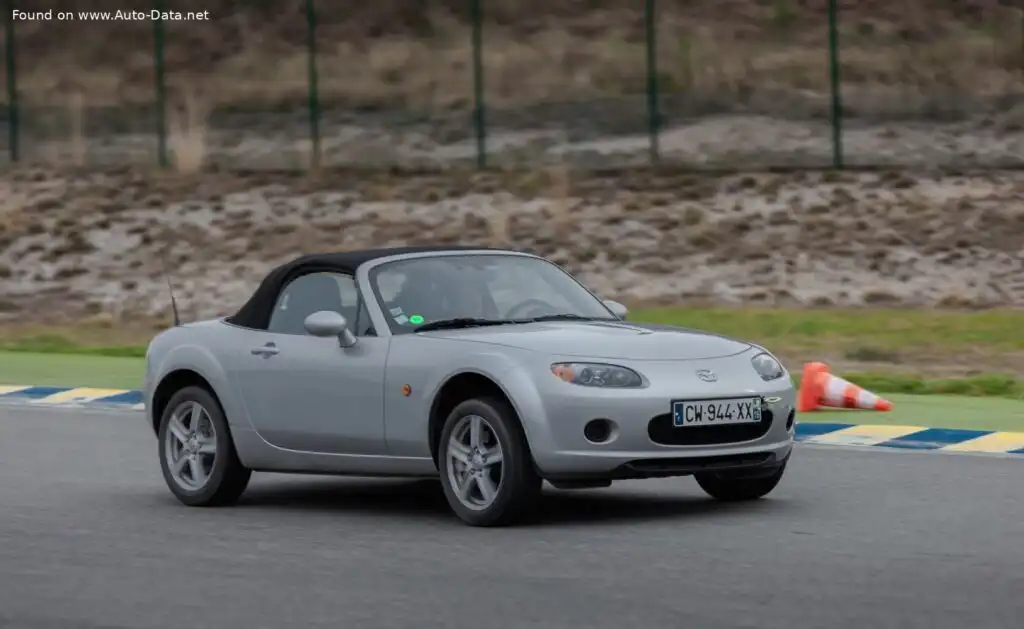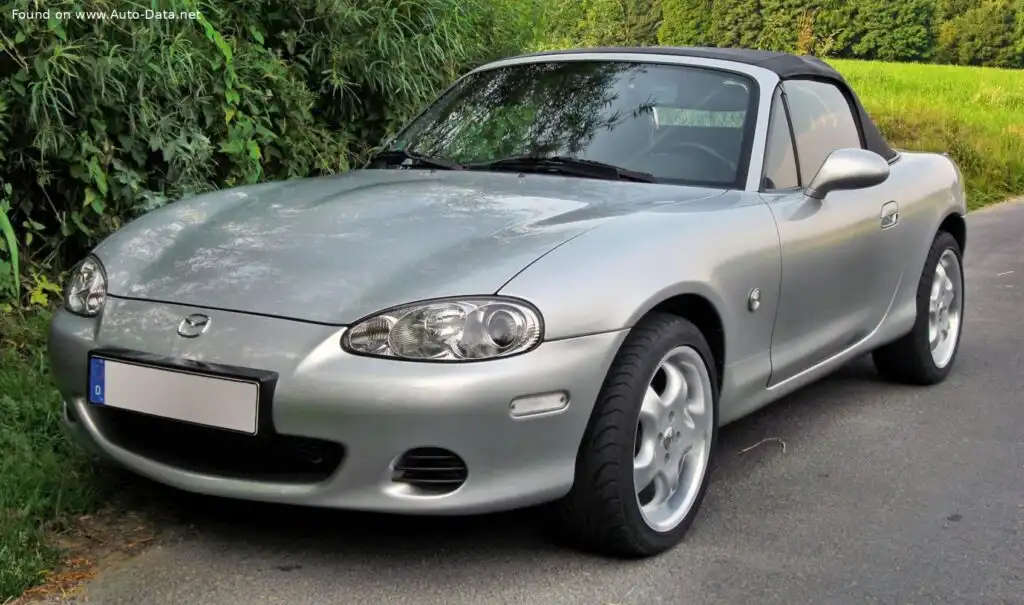
The Mazda MX-5 II (NB) 1.8 i 16V, produced between 1998 and 2000, represents a significant evolution of Mazda’s iconic roadster. Falling within the second generation (NB) of the MX-5, this variant occupied a sweet spot in the lineup, offering a balance of performance and affordability. It built upon the success of the original NA model, addressing some of its shortcomings while retaining the core principles of lightweight, rear-wheel drive fun. The NB generation, and specifically this 1.8L engine, was aimed at a broader audience than its predecessor, seeking to increase sales volume in both North American and European markets. This model is often considered a particularly desirable iteration due to its improved refinement and readily available parts.
Technical Specifications
| Brand | Mazda |
| Model | MX-5 |
| Generation | MX-5 II (NB) |
| Type (Engine) | 1.8 i 16V (140 Hp) |
| Start of production | 1998 |
| End of production | 2000 |
| Powertrain Architecture | Internal Combustion engine |
| Body type | Roadster |
| Seats | 2 |
| Doors | 2 |
| Fuel consumption (urban) | 11.2 l/100 km (21 US mpg) |
| Fuel consumption (extra urban) | 7 l/100 km (33.6 US mpg) |
| Fuel Type | Petrol (Gasoline) |
| Acceleration 0 – 100 km/h | 8 sec |
| Acceleration 0 – 62 mph | 8 sec |
| Acceleration 0 – 60 mph | 7.6 sec |
| Maximum speed | 205 km/h (127.38 mph) |
| Weight-to-power ratio | 7.3 kg/Hp |
| Weight-to-torque ratio | 6.3 kg/Nm |
| Power | 140 Hp @ 6500 rpm |
| Power per litre | 76.1 Hp/l |
| Torque | 162 Nm @ 4500 rpm (119.49 lb.-ft. @ 4500 rpm) |
| Engine layout | Front, Longitudinal |
| Engine displacement | 1840 cm3 (112.28 cu. in.) |
| Number of cylinders | 4 |
| Engine configuration | Inline |
| Cylinder Bore | 83 mm (3.27 in.) |
| Piston Stroke | 85 mm (3.35 in.) |
| Compression ratio | 9.5:1 |
| Number of valves per cylinder | 4 |
| Fuel injection system | Multi-port manifold injection |
| Engine aspiration | Naturally aspirated engine |
| Valvetrain | DOHC |
| Kerb Weight | 1025 kg (2259.74 lbs.) |
| Max. weight | 1265 kg (2788.85 lbs.) |
| Max load | 240 kg (529.11 lbs.) |
| Trunk (boot) space – maximum | 145 l (5.12 cu. ft.) |
| Fuel tank capacity | 50 l (13.21 US gal | 11 UK gal) |
| Length | 3975 mm (156.5 in.) |
| Width | 1680 mm (66.14 in.) |
| Height | 1225 mm (48.23 in.) |
| Wheelbase | 2265 mm (89.17 in.) |
| Front track | 1410 mm (55.51 in.) |
| Minimum turning circle | 9.7 m (31.82 ft.) |
| Drivetrain Architecture | Rear wheel drive |
| Number of gears | 6 gears, manual transmission |
| Front suspension | Spring Strut |
| Rear suspension | Coil spring |
| Front brakes | Ventilated discs |
| Rear brakes | Disc |
| Assisting systems | ABS (Anti-lock braking system) |
| Steering type | Steering rack and pinion |
| Power steering | Hydraulic Steering |
| Tires size | 195/50 R15 82 H |
| Wheel rims size | 6J x 15 ET 40 |
Powertrain & Engine Architecture
The heart of the NB 1.8 i 16V is the BP-ME engine, a 1.8-liter inline-four cylinder powerplant. This engine represented a significant upgrade over the 1.6L engine offered in earlier NA models and some base NB trims. The BP-ME featured a dual overhead camshaft (DOHC) valvetrain with four valves per cylinder, contributing to its improved breathing and power output. Fuel delivery was handled by a multi-port fuel injection system, ensuring precise fuel metering for optimal combustion. The engine’s 9.5:1 compression ratio further enhanced its performance. The six-speed manual transmission, standard on this variant, was a key component of the driving experience, offering precise shifts and allowing the driver to fully exploit the engine’s powerband. The engine is longitudinally mounted, driving the rear wheels, a configuration central to the MX-5’s handling characteristics.
Driving Characteristics
The 140 hp and 162 Nm (119 lb-ft) of torque delivered by the 1.8L engine provided a noticeable step up in performance compared to the lower-powered 1.6L versions. While not a powerhouse, the engine felt responsive and eager, particularly when revved. The six-speed manual transmission allowed for close gear ratios, keeping the engine within its optimal powerband during spirited driving. Acceleration from 0-60 mph took around 7.6 seconds, respectable for a lightweight roadster of this era. Compared to the later 1.9L engine, the 1.8L offered a slightly more linear power delivery, making it more accessible for everyday driving. The rear-wheel drive configuration and well-tuned suspension contributed to the MX-5’s renowned handling balance, providing a connected and engaging driving experience.
Equipment & Trim Levels
The 1.8 i 16V typically came well-equipped, though options allowed for further customization. Standard features generally included power steering, disc brakes on all four wheels, alloy wheels, and a basic audio system. Interior appointments included cloth upholstery and a straightforward dashboard layout. Popular optional extras included a limited-slip differential (LSD), which further enhanced handling, air conditioning, and a premium audio system. The NB generation also saw the introduction of features like power windows and locks, becoming more common as standard equipment on this trim level. The overall interior design prioritized functionality and a driver-focused experience.
Chassis & Braking
The MX-5 NB retained the lightweight philosophy of the original NA model, utilizing a predominantly steel unibody construction. The suspension consisted of independent double wishbones at the front and a multi-link setup at the rear, providing a comfortable yet controlled ride. The 1.8L variant typically featured ventilated disc brakes at the front and solid discs at the rear, providing adequate stopping power for its weight and performance. Anti-lock braking system (ABS) was standard, enhancing safety. The relatively narrow tires (195/50 R15) contributed to the car’s nimble handling, prioritizing grip and responsiveness over outright straight-line speed.
Market Reception & Comparison
The MX-5 NB 1.8 i 16V was generally well-received by automotive critics. It was praised for its engaging driving dynamics, refined engine, and improved build quality compared to the NA model. Compared to the base 1.6L versions, the 1.8L offered a significant performance boost, making it a more appealing option for enthusiasts. Fuel economy was respectable, averaging around 25-30 mpg in mixed driving. Reliability was generally good, although routine maintenance was essential to prevent issues with the cooling system and oil consumption, common to these engines. The 1.8L variant struck a good balance between performance, affordability, and practicality, making it a popular choice among roadster buyers.
Legacy
The Mazda MX-5 NB 1.8 i 16V continues to hold a strong following among automotive enthusiasts. Its simple mechanical design and readily available parts make it relatively easy to maintain and repair. The engine, while not overly complex, is known for its durability when properly cared for. In the used car market, well-maintained examples command a premium, reflecting the model’s enduring appeal. The NB generation, and this 1.8L variant in particular, cemented the MX-5’s reputation as one of the best affordable sports cars ever made, and a benchmark for lightweight, rear-wheel drive roadsters.