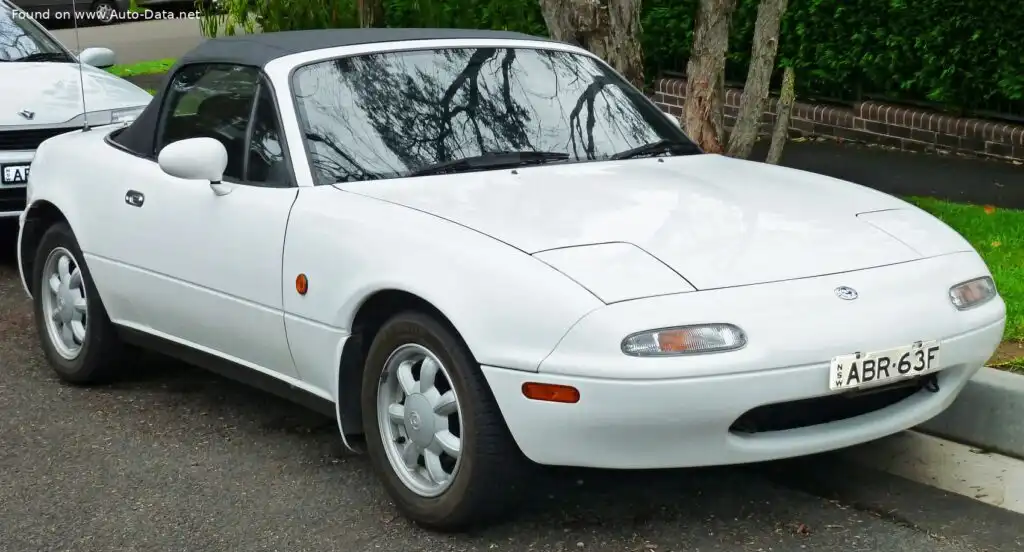
The Mazda MX-5 NC 2.0i 16V R5, produced from 2005 to 2008, represents a significant iteration of Mazda’s iconic roadster. Falling within the third generation (NC) of the MX-5, this variant was positioned as a mid-range offering, balancing performance and affordability. It served as a key model in both the North American and European markets, where the MX-5 consistently enjoyed a strong following as an accessible and engaging sports car. The NC generation aimed to broaden the MX-5’s appeal with a more refined interior and improved practicality compared to its predecessor, while retaining the core principles of lightweight design and rear-wheel drive fun.
Technical Specifications
| Brand | Mazda |
| Model | MX-5 |
| Generation | MX-5 III (NC) |
| Type (Engine) | 2.0 i 16V R5 (160 Hp) |
| Start of production | 2005 |
| End of production | 2008 |
| Powertrain Architecture | Internal Combustion engine |
| Body type | Roadster |
| Seats | 2 |
| Doors | 2 |
| Fuel consumption (urban) | 10.6 l/100 km (22.2 US mpg) |
| Fuel consumption (extra urban) | 6 l/100 km (39.2 US mpg) |
| Fuel Type | Petrol (Gasoline) |
| Acceleration 0 – 100 km/h | 7.9 sec |
| Acceleration 0 – 62 mph | 7.9 sec |
| Acceleration 0 – 60 mph | 7.5 sec |
| Maximum speed | 210 km/h (130.49 mph) |
| Weight-to-power ratio | 6.6 kg/Hp |
| Weight-to-torque ratio | 5.6 kg/Nm |
| Power | 160 Hp @ 6700 rpm |
| Power per litre | 80 Hp/l |
| Torque | 188 Nm @ 5000 rpm (138.66 lb.-ft. @ 5000 rpm) |
| Engine layout | Front, Longitudinal |
| Engine displacement | 1999 cm3 (121.99 cu. in.) |
| Number of cylinders | 4 |
| Engine configuration | Inline |
| Cylinder Bore | 87.5 mm (3.44 in.) |
| Piston Stroke | 83.1 mm (3.27 in.) |
| Compression ratio | 10.8:1 |
| Number of valves per cylinder | 4 |
| Fuel injection system | Multi-port manifold injection |
| Engine aspiration | Naturally aspirated engine |
| Valvetrain | DOHC |
| Engine oil capacity | 4.3 l (4.54 US qt | 3.78 UK qt) |
| Coolant capacity | 7.6 l (8.03 US qt | 6.69 UK qt) |
| Kerb Weight | 1055 kg (2325.88 lbs.) |
| Max. weight | 1355 kg (2987.26 lbs.) |
| Max load | 300 kg (661.39 lbs.) |
| Trunk (boot) space – minimum | 150 l (5.3 cu. ft.) |
| Fuel tank capacity | 50 l (13.21 US gal | 11 UK gal) |
| Length | 3995 mm (157.28 in.) |
| Width | 1720 mm (67.72 in.) |
| Height | 1245 mm (49.02 in.) |
| Wheelbase | 2330 mm (91.73 in.) |
| Front track | 1490 mm (58.66 in.) |
| Rear (Back) track | 1495 mm (58.86 in.) |
| Drivetrain Architecture | Rear wheel drive |
| Number of gears | 5 |
| Gearbox type | Manual transmission |
| Front suspension | Spring Strut |
| Rear suspension | Spring Strut |
| Front brakes | Ventilated discs |
| Rear brakes | Disc |
| Assisting systems | ABS (Anti-lock braking system) |
| Steering type | Steering rack and pinion |
| Tires size | 205/50 R16 |
| Wheel rims size | 16 |
Powertrain & Engine Architecture
The heart of the MX-5 NC 2.0i R5 is the MZR 1.8/2.0-liter inline-four cylinder engine. Specifically, this variant utilizes the 2.0-liter version, designated as the LF-VE engine. This engine is a naturally aspirated powerplant featuring a double overhead camshaft (DOHC) valvetrain with four valves per cylinder. The engine employs multi-point fuel injection, delivering fuel directly into the intake ports. The 16-valve configuration and a compression ratio of 10.8:1 contribute to its respectable power output. The engine’s longitudinal mounting within the front of the vehicle, coupled with rear-wheel drive, is a defining characteristic of the MX-5’s driving dynamics. The 5-speed manual transmission was the standard offering, providing a direct connection between the engine and the rear wheels. The transmission’s gear ratios were tuned to maximize acceleration and provide a sporty driving experience.
Driving Characteristics
The 160 hp and 138.66 lb-ft of torque delivered by the 2.0-liter engine, combined with the relatively lightweight chassis (around 2326 lbs), resulted in a lively and engaging driving experience. Acceleration from 0-60 mph took approximately 7.5 seconds, making it competitive within its class. While not a powerhouse, the engine provided sufficient power for spirited driving on winding roads. The 5-speed manual transmission allowed for precise gear selection, enhancing driver control. Compared to the base 1.8-liter models, the 2.0i offered a noticeable improvement in performance, particularly in mid-range acceleration. However, it didn’t possess the higher-end grunt of later, more powerful MX-5 variants. The rear-wheel drive configuration contributed to balanced handling and a playful character, making it a favorite among driving enthusiasts.
Equipment & Trim Levels
The MX-5 NC 2.0i R5 typically came equipped with standard features such as power windows, power locks, and a basic audio system. Interior upholstery was generally cloth, with options for leather available. The dashboard layout was driver-focused, with clearly visible gauges and intuitive controls. Optional extras included a premium sound system, air conditioning, and a limited-slip differential, which further enhanced handling performance. The R5 trim level generally represented a step up from the base model, offering a more comprehensive set of features without reaching the luxury of higher-end trims.
Chassis & Braking
The MX-5 NC utilized a MacPherson strut suspension setup for both the front and rear axles. This configuration provided a good balance of ride comfort and handling precision. The relatively low curb weight of the vehicle contributed to its agile handling characteristics. Braking duties were handled by ventilated discs at the front and solid discs at the rear, equipped with an Anti-lock Braking System (ABS) as standard. The braking system provided adequate stopping power for everyday driving and spirited performance. The chassis was designed to be rigid, minimizing body roll and enhancing steering responsiveness.
Market Reception & Comparison
The MX-5 NC 2.0i R5 was generally well-received by automotive critics. It was praised for its engaging driving dynamics, responsive handling, and overall fun-to-drive character. Compared to the base 1.8-liter models, the 2.0i offered a noticeable performance upgrade, making it a more appealing option for drivers seeking a more exhilarating experience. Fuel economy was respectable, averaging around 22 mpg in the city and 39 mpg on the highway. Reliability was generally good, with the MZR engine proving to be a durable and dependable powerplant. However, some critics noted that the interior, while improved over previous generations, still lacked the refinement of some competitors.
Legacy
The Mazda MX-5 NC 2.0i R5 remains a popular choice among used car buyers seeking an affordable and engaging sports car. The MZR engine is known for its reliability, and maintenance costs are generally reasonable. The NC generation MX-5 is considered a sweet spot in the model’s history, offering a blend of modern features and classic roadster charm. Today, these vehicles are often sought after by enthusiasts for their driving dynamics and potential for modification. The 2.0i R5 variant, in particular, is valued for its balance of performance and affordability, making it a compelling option in the used sports car market.