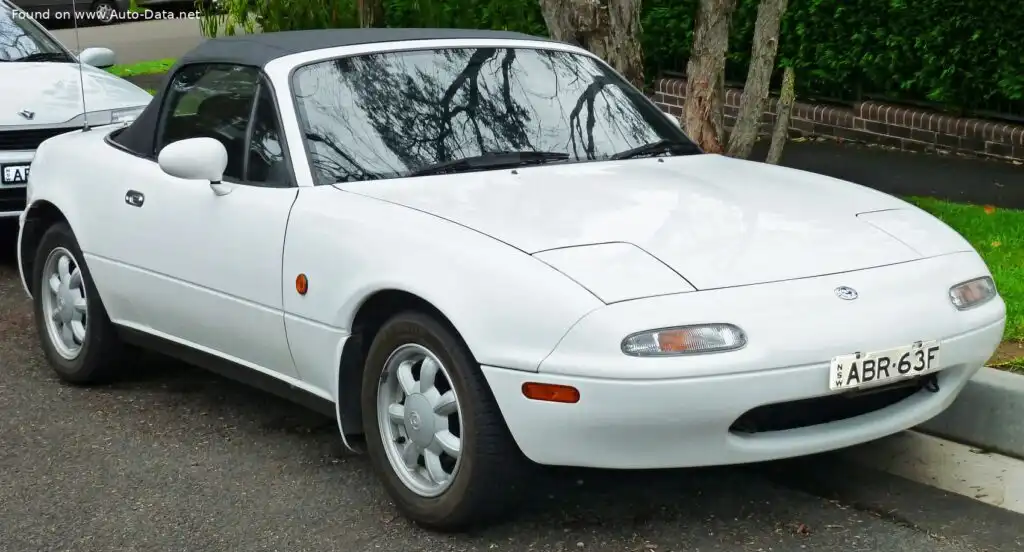
The Mazda MX-5 NC, produced from 2005 to 2015, represented the third generation of Mazda’s iconic roadster. The 2.0i 16V R6 (160 hp) variant, available from 2005-2008, served as a key offering within the NC lineup, providing a balance between performance and affordability. It was positioned as the higher-output engine option, appealing to drivers seeking a more spirited driving experience than the base 1.8-liter model, but without the added cost of the later PRHT (Power Retractable Hard Top) versions or performance packages. This model was primarily sold in global markets, including North America, Europe, and Japan, with a strong emphasis on the enthusiast driver.
Technical Specifications
| Brand | Mazda |
| Model | MX-5 |
| Generation | MX-5 III (NC) |
| Type (Engine) | 2.0 i 16V R6 (160 Hp) |
| Start of production | 2005 |
| End of production | 2008 |
| Powertrain Architecture | Internal Combustion engine |
| Body type | Roadster |
| Seats | 2 |
| Doors | 2 |
| Fuel consumption (urban) | 11.2 l/100 km (21 US mpg) |
| Fuel consumption (extra urban) | 6.5 l/100 km (36.2 US mpg) |
| Fuel Type | Petrol (Gasoline) |
| Acceleration 0 – 100 km/h | 7.9 sec |
| Acceleration 0 – 62 mph | 7.9 sec |
| Acceleration 0 – 60 mph | 7.5 sec |
| Maximum speed | 210 km/h (130.49 mph) |
| Weight-to-power ratio | 6.7 kg/Hp |
| Weight-to-torque ratio | 5.7 kg/Nm |
| Power | 160 Hp @ 6700 rpm |
| Power per litre | 80 Hp/l |
| Torque | 188 Nm @ 5000 rpm (138.66 lb.-ft. @ 5000 rpm) |
| Engine layout | Front, Longitudinal |
| Engine displacement | 1999 cm3 (121.99 cu. in.) |
| Number of cylinders | 4 |
| Engine configuration | Inline |
| Cylinder Bore | 87.5 mm (3.44 in.) |
| Piston Stroke | 83.1 mm (3.27 in.) |
| Compression ratio | 10.8:1 |
| Number of valves per cylinder | 4 |
| Fuel injection system | Multi-port manifold injection |
| Engine aspiration | Naturally aspirated engine |
| Valvetrain | DOHC |
| Engine oil capacity | 4.3 l (4.54 US qt | 3.78 UK qt) |
| Coolant capacity | 7.6 l (8.03 US qt | 6.69 UK qt) |
| Kerb Weight | 1070 kg (2358.95 lbs.) |
| Max. weight | 1355 kg (2987.26 lbs.) |
| Max load | 285 kg (628.32 lbs.) |
| Trunk (boot) space – minimum | 150 l (5.3 cu. ft.) |
| Fuel tank capacity | 50 l (13.21 US gal | 11 UK gal) |
| Length | 3995 mm (157.28 in.) |
| Width | 1720 mm (67.72 in.) |
| Height | 1245 mm (49.02 in.) |
| Wheelbase | 2330 mm (91.73 in.) |
| Front track | 1490 mm (58.66 in.) |
| Rear track | 1495 mm (58.86 in.) |
| Drivetrain Architecture | Rear wheel drive |
| Number of gears | 6 gears, manual transmission |
| Front suspension | Spring Strut |
| Rear suspension | Spring Strut |
| Front brakes | Ventilated discs |
| Rear brakes | Disc |
| Assisting systems | ABS (Anti-lock braking system) |
| Steering type | Steering rack and pinion |
| Tires size | 205/45 R17 |
| Wheel rims size | 7J x 17 ET 55 |
INTRODUCTION
The Mazda MX-5 NC 2.0i, launched in 2005, represented a significant evolution of the MX-5 formula. Building upon the success of the NA and NB generations, the NC aimed to broaden the appeal of the roadster while retaining its core values of lightweight construction, rear-wheel drive, and engaging handling. The 2.0-liter engine variant, producing 160 horsepower, was a key component of this strategy, offering a noticeable performance upgrade over the earlier 1.8-liter models. It was built on the Mazda B platform, shared with other Mazda vehicles of the era, and offered a more refined and comfortable driving experience than its predecessors.
Powertrain & Engine Architecture
The heart of the MX-5 NC 2.0i is the MZR (Mazda Zoom-Zoom) 1.8L inline-four cylinder engine. While designated as a 2.0-liter, it’s more accurately described as a 1999cc unit. This engine utilized a cast iron block with an aluminum cylinder head, featuring dual overhead camshafts (DOHC) and four valves per cylinder. Fuel delivery was managed by a multi-port fuel injection system, providing precise control over the air-fuel mixture. The engine’s design prioritized a balance between power and torque, making it responsive across a wide range of engine speeds. The 6-speed manual transmission was the standard offering, known for its precise shift feel and relatively short throw. This transmission was crucial in maximizing the engine’s potential and delivering a connected driving experience.
Driving Characteristics
The 2.0-liter engine and 6-speed manual transmission combination in the MX-5 NC provided a noticeably more engaging driving experience compared to the 1.8-liter variant. Acceleration from 0-60 mph was achieved in approximately 7.5 seconds, and the car felt lively and responsive on winding roads. The relatively short wheelbase and well-tuned suspension contributed to the MX-5’s renowned handling characteristics. While not a high-horsepower machine, the 2.0i offered ample power for spirited driving and provided a satisfying level of performance for both daily commutes and weekend excursions. The gear ratios in the 6-speed transmission were well-matched to the engine’s powerband, allowing drivers to keep the engine in its sweet spot for optimal acceleration and responsiveness.
Equipment & Trim Levels
The MX-5 NC 2.0i typically came standard with features such as power windows, power locks, air conditioning, and a basic audio system. Interior upholstery was typically cloth, with options for leather available. Dashboard configuration was relatively simple and driver-focused, emphasizing functionality over luxury. Common optional extras included a premium audio system, alloy wheels, a limited-slip differential, and a hardtop roof. The trim levels varied slightly depending on the market, but generally offered a progression of features and equipment. The 2.0i often served as a base for adding these optional packages, allowing buyers to customize their MX-5 to their preferences.
Chassis & Braking
The MX-5 NC utilized a lightweight chassis construction, employing high-strength steel in key areas to minimize weight while maximizing rigidity. The suspension system consisted of independent double wishbones at the front and a multi-link setup at the rear. This configuration provided excellent handling and ride quality. Braking duties were handled by ventilated discs at the front and solid discs at the rear, equipped with an Anti-lock Braking System (ABS) as standard. The braking system provided adequate stopping power for the car’s weight and performance capabilities. The relatively low curb weight of around 2359 lbs contributed significantly to the MX-5’s agile handling and braking performance.
Market Reception & Comparison
The MX-5 NC 2.0i was generally well-received by automotive critics, who praised its engaging driving dynamics, responsive engine, and overall refinement. Compared to the 1.8-liter version, the 2.0i offered a noticeable performance improvement, making it a more appealing option for driving enthusiasts. Fuel economy was respectable, averaging around 21 mpg in the city and 36 mpg on the highway. Reliability was generally good, with the MZR engine proving to be durable and relatively maintenance-free. However, some owners reported minor issues with the soft top mechanism and occasional oil consumption. Compared to other roadsters of the era, such as the BMW Z4 and Porsche Boxster, the MX-5 NC offered a more affordable and accessible entry point into the open-top sports car market.
Legacy
The Mazda MX-5 NC 2.0i has established itself as a popular choice among used car buyers, particularly those seeking an affordable and engaging roadster. The MZR engine has proven to be relatively reliable, and parts availability remains good. The car’s simple design and robust construction contribute to its long-term durability. Today, the MX-5 NC 2.0i is often seen as a well-rounded and enjoyable sports car that offers a unique driving experience. Its continued popularity in the used car market is a testament to its enduring appeal and the MX-5’s legacy as one of the most iconic roadsters of all time.