
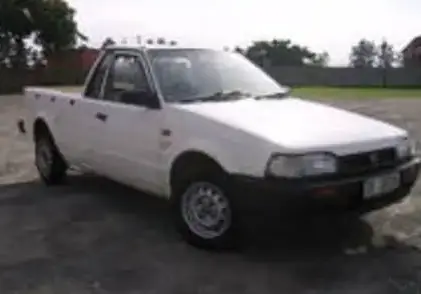
The Mazda Rustler 1.3, producing 65 horsepower, was a compact pickup truck manufactured by Mazda from 1985 to 2000. It represented Mazda’s entry into the small pickup segment, primarily aimed at utility and affordability. The Rustler, known as the B-Series in North America, shared a platform with the Ford Ranger, a result of a joint venture between the two manufacturers. This collaboration allowed both companies to expand their offerings in the pickup market without incurring the full development costs independently. The 1.3-liter engine variant was particularly significant in markets outside of North America, where smaller displacement engines were favored due to tax regulations and fuel economy considerations. It served as the base model, offering a practical and economical transportation solution for both commercial and personal use.
Technical Specifications
| Brand | Mazda |
| Model | Rustler |
| Generation | Rustler |
| Type (Engine) | 1.3 (65 Hp) |
| Start of Production | 1985 |
| End of Production | 2000 |
| Powertrain Architecture | Internal Combustion Engine |
| Body Type | Pick-up |
| Fuel Type | Petrol (Gasoline) |
| Power | 65 Hp |
| Engine Aspiration | Naturally Aspirated |
Powertrain & Engine Architecture
The Mazda Rustler 1.3 was powered by a 1.3-liter, naturally aspirated four-cylinder gasoline engine. While specific engine codes varied depending on the market, it generally fell within the EA series of Mazda engines. This engine was known for its simplicity and durability, rather than outright performance. It utilized a single overhead camshaft (SOHC) valvetrain, operating two valves per cylinder. Fuel delivery was managed by a carburetor in earlier models (primarily pre-1990s), transitioning to multi-point fuel injection in later iterations to improve efficiency and reduce emissions. The fuel injection system, when equipped, was a relatively basic electronic system, prioritizing reliability over sophisticated control. The engine’s modest output of 65 horsepower and approximately 78 lb-ft of torque was delivered at relatively high engine speeds. The transmission options for this variant typically included a four-speed manual and a three-speed automatic. The automatic transmission was designed for smooth, if not particularly quick, operation, prioritizing ease of use over sporty performance. It was a conventional hydraulic automatic, lacking the electronic controls found in more modern transmissions.
Driving Characteristics
The driving experience in the Rustler 1.3 was characterized by its utilitarian nature. Acceleration was modest, particularly with the automatic transmission. The 1.3-liter engine required frequent downshifting to maintain momentum when climbing hills or carrying a load. The three-speed automatic transmission had relatively wide gear ratios, contributing to a noticeable “hunting” for the correct gear in certain driving situations. Compared to the larger engine options available in the Rustler lineup (such as the 2.0-liter or 2.2-liter engines), the 1.3-liter version felt significantly underpowered. However, this was offset by its improved fuel economy. The suspension was tuned for comfort and durability, rather than sporty handling. The rear leaf spring suspension provided a reasonably comfortable ride when unladen, but could become harsh when the bed was fully loaded. Steering was typically recirculating ball, offering a somewhat vague feel but requiring minimal effort.
Equipment & Trim Levels
The Mazda Rustler 1.3, as the base model, was typically equipped with minimal features. Standard equipment generally included a basic vinyl interior, a simple dashboard with analog gauges, and manual windows and locks. Air conditioning was often an optional extra, as were power steering and a radio. Trim levels were generally limited, with the primary differentiation being the addition of optional equipment packages. Later models saw a slight increase in standard features, such as a more modern dashboard design and improved seat upholstery. The focus remained on providing a functional and affordable vehicle, rather than luxury or advanced features. The exterior typically featured steel wheels, black plastic bumpers, and minimal chrome trim.
Chassis & Braking
The Rustler 1.3 utilized a body-on-frame construction, typical of pickup trucks of its era. The chassis was relatively simple and robust, designed to withstand the rigors of hauling and off-road use. The front suspension consisted of independent double wishbones with coil springs, while the rear suspension employed leaf springs. Braking systems varied depending on the year and market. Earlier models typically featured drum brakes on all four wheels, while later models often upgraded to front disc brakes and rear drum brakes. Power steering was an optional extra, and anti-lock braking systems (ABS) were not typically available on the 1.3-liter variant. The relatively light weight of the 1.3-liter engine helped to reduce stress on the braking system, but stopping distances were still longer compared to more powerful models.
Market Reception & Comparison
The Mazda Rustler 1.3 was generally well-received as an affordable and reliable pickup truck, particularly in markets where smaller displacement engines were preferred. Critics praised its fuel economy and ease of maintenance, but noted its lack of power and refinement compared to larger pickup trucks. Compared to other small pickups of the time, such as the Toyota Hilux or Nissan Datsun, the Rustler 1.3 offered a competitive price point but lacked some of the build quality and reputation for longevity of its Japanese rivals. Within the Rustler lineup, the 1.3-liter version was positioned as the entry-level model, appealing to budget-conscious buyers who prioritized practicality over performance. The larger engine options offered significantly more power and towing capacity, but at a higher price.
Legacy
The Mazda Rustler 1.3, while not a performance icon, has developed a following among enthusiasts seeking a simple, reliable, and affordable pickup truck. The 1.3-liter engine, while modest in output, proved to be remarkably durable and relatively easy to repair. Parts availability remains reasonable, making it a viable option for restoration projects. In the used car market, the Rustler 1.3 typically commands lower prices than its larger-engined siblings, making it an attractive option for those seeking a basic work truck or a project vehicle. Its simplicity and affordability have contributed to its continued presence on roads and in the hands of enthusiasts decades after its production ended. The Rustler, in general, represents a significant period in Mazda’s history, showcasing their collaboration with Ford and their commitment to offering a diverse range of vehicles to meet the needs of a global market.
