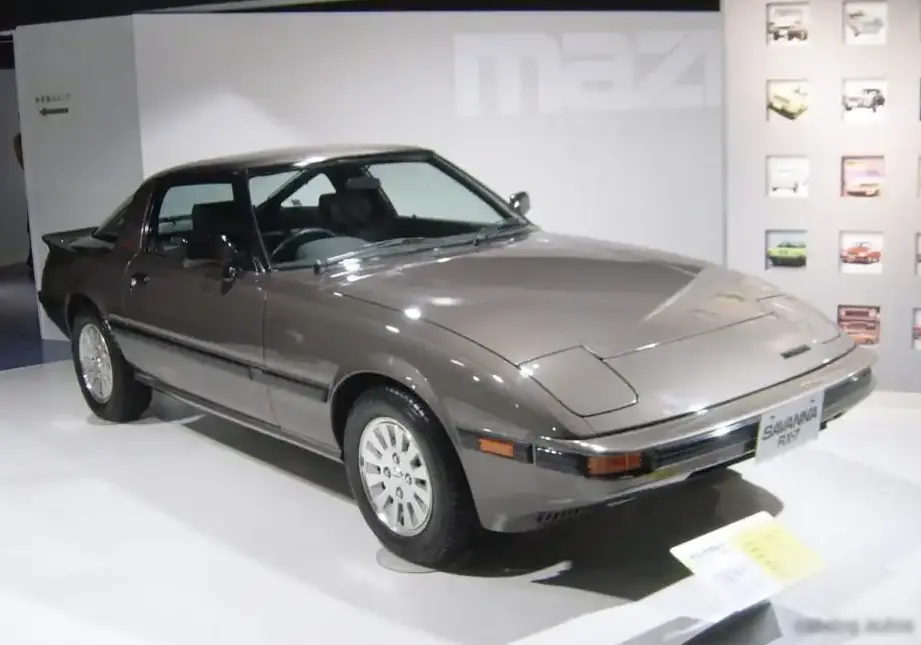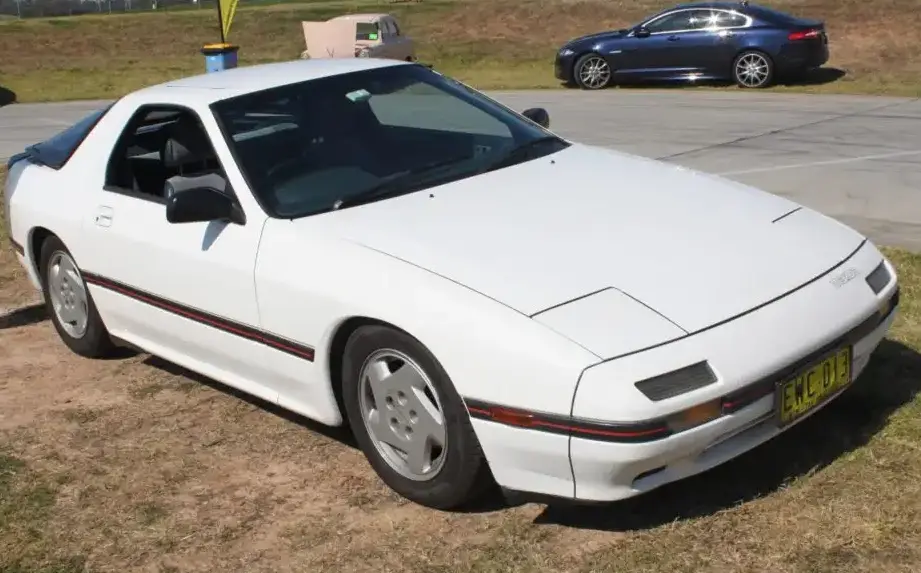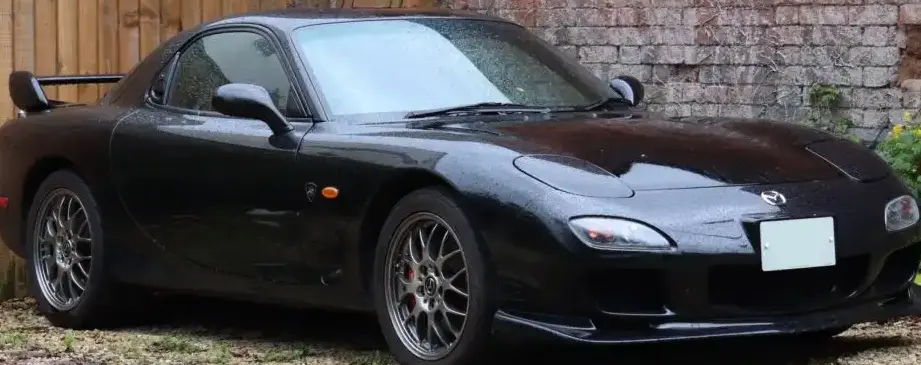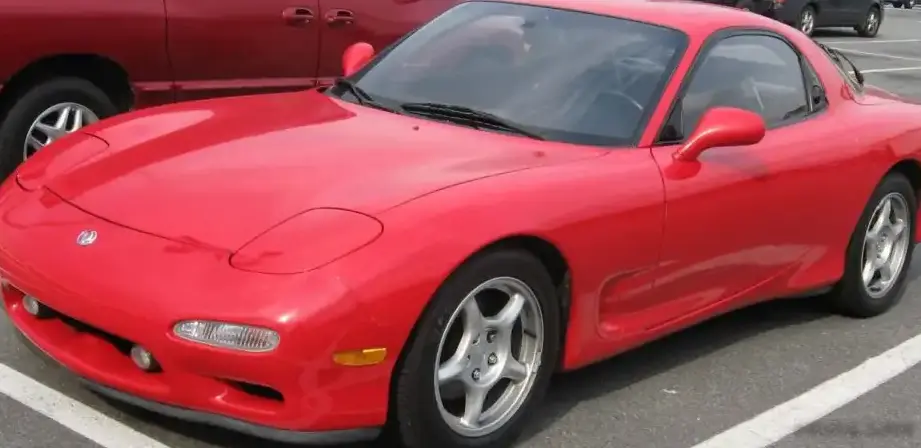
The Mazda RX-7 (FD) represents the third and final generation of Mazda’s iconic rotary-powered sports car. Produced from 1992 to 2000, the FD RX-7 was a significant departure from its predecessors, boasting a more refined chassis, sophisticated suspension, and, most notably, a twin-turbocharged rotary engine. This generation was primarily aimed at the Japanese domestic market (JDM), but also saw limited exports to the United States, Canada, and Europe. The FD RX-7 is celebrated for its exceptional handling, lightweight construction, and unique engine characteristics, cementing its status as a modern classic. The 239 horsepower twin-turbo variant represents the pinnacle of the FD’s performance capabilities.
Technical Specifications
| Brand | Mazda |
| Model | RX-7 |
| Generation | RX 7 III (FD) |
| Type (Engine) | Wankel Twin Turbo (239 Hp) |
| Start of production | 1992 |
| End of production | 2000 |
| Powertrain Architecture | Internal Combustion engine |
| Body type | Coupe |
| Seats | 4 |
| Doors | 2 |
| Fuel consumption (combined) | 11.1 l/100 km |
| Fuel consumption (US mpg) | 21.2 US mpg |
| Fuel consumption (UK mpg) | 25.4 UK mpg |
| Fuel consumption (km/l) | 9 km/l |
| Fuel Type | Petrol (Gasoline) |
| Acceleration 0 – 100 km/h | 5.3 sec |
| Acceleration 0 – 62 mph | 5.3 sec |
| Acceleration 0 – 60 mph | 5 sec |
| Maximum speed | 250 km/h (155.34 mph) |
| Weight-to-power ratio | 5.4 kg/Hp, 186.7 Hp/tonne |
| Weight-to-torque ratio | 4.4 kg/Nm, 229.7 Nm/tonne |
| Power | 239 Hp @ 6500 rpm |
| Power per litre | 182.7 Hp/l |
| Torque | 294 Nm @ 5000 rpm (216.84 lb.-ft. @ 5000 rpm) |
| Engine layout | Front, Longitudinal |
| Engine displacement | 1308 cm3 (79.82 cu. in.) |
| Engine configuration | Rotary (Wankel) |
| Compression ratio | 9:1 |
| Fuel injection system | Multi-port manifold injection |
| Engine aspiration | Turbocharger |
| Kerb Weight | 1280 kg (2821.92 lbs) |
| Max. weight | 1500 kg (3306.93 lbs) |
| Max load | 220 kg (485.02 lbs) |
| Trunk (boot) space – minimum | 160 l (5.65 cu. ft.) |
| Fuel tank capacity | 76 l (20.08 US gal | 16.72 UK gal) |
| Length | 4285 mm (168.7 in) |
| Width | 1760 mm (69.29 in) |
| Height | 1230 mm (48.43 in) |
| Wheelbase | 2465 mm (97.05 in) |
| Front track | 1460 mm (57.48 in) |
| Rear (Back) track | 1460 mm (57.48 in) |
| Drivetrain Architecture | The Internal combustion engine (ICE) drives the rear wheels of the vehicle. |
| Drive wheel | Rear wheel drive |
| Number of gears and type of gearbox | 5 gears, manual transmission |
| Front suspension | Double wishbone |
| Rear suspension | Coil spring |
| Front brakes | Ventilated discs |
| Rear brakes | Ventilated discs |
| Assisting systems | ABS (Anti-lock braking system) |
| Steering type | Steering rack and pinion |
| Power steering | Hydraulic Steering |
| Tires size | 225/50 R16 |
| Wheel rims size | 16 |
Powertrain & Engine Architecture
The heart of the FD RX-7 is its 13B Wankel rotary engine. The 239 hp version utilizes a sequential twin-turbocharger system. This setup employs two small turbochargers, one operating at low engine speeds to eliminate turbo lag and provide immediate response, and the second engaging at higher RPMs to deliver peak power. The engine features multi-port fuel injection and a compression ratio of 9:1. The rotary engine’s unique design, lacking traditional pistons, results in a remarkably smooth and high-revving power delivery. The 13B engine is known for its relatively small size and lightweight construction, contributing to the RX-7’s balanced handling. The five-speed manual transmission was the standard offering, designed to handle the engine’s power and torque characteristics. The engine codes associated with this variant are often found as variations within the 13B family, with specific calibrations for the turbo system and fuel management.
Driving Characteristics
The 239 hp twin-turbo RX-7 offered a thrilling driving experience. Acceleration from 0 to 60 mph was achieved in around 5 seconds, and the car could reach a top speed of 155 mph. The sequential turbo system minimized turbo lag, providing a linear powerband that encouraged spirited driving. Compared to naturally aspirated versions of the FD, the twin-turbo model offered significantly more power and torque throughout the rev range. While the manual transmission provided precise control, the rotary engine demanded frequent shifting to stay within its optimal powerband. The FD’s lightweight chassis and well-tuned suspension contributed to exceptional handling and cornering ability, making it a favorite among driving enthusiasts. The gear ratios were tuned for acceleration, with a slightly shorter final drive compared to some of the more comfort-oriented trims.
Equipment & Trim Levels
The 239 hp twin-turbo RX-7 typically represented the highest trim level available. Standard features included power windows, power locks, air conditioning, and a premium sound system. Interior upholstery was typically leather or a high-quality cloth. Optional extras included a sunroof, upgraded audio systems, and various cosmetic enhancements. The dashboard layout was driver-focused, with clearly visible gauges and controls, including a boost gauge to monitor turbocharger performance. The FD RX-7’s interior, while comfortable, prioritized functionality and a sporty driving experience over outright luxury. This top-tier trim often included unique badging and exterior styling cues to differentiate it from lower-spec models.
Chassis & Braking
The FD RX-7 featured a lightweight and rigid chassis, contributing to its exceptional handling. The suspension utilized a double wishbone setup at the front and a multi-link coil spring setup at the rear. This configuration provided excellent control and minimized body roll. Braking duties were handled by ventilated disc brakes on all four wheels, providing ample stopping power. An Anti-lock Braking System (ABS) was standard, enhancing safety and stability. The FD’s relatively low weight, combined with its effective braking system, resulted in confident and predictable stopping performance. The chassis was specifically engineered to handle the increased power output of the turbocharged engine, with reinforced components in key areas.
Market Reception & Comparison
The FD RX-7 was widely praised by automotive critics for its handling, performance, and unique engine. However, the rotary engine’s inherent complexities and potential for maintenance issues were also noted. Compared to other sports cars of the era, such as the Toyota Supra or Nissan 300ZX, the RX-7 offered a more raw and engaging driving experience. Fuel economy was relatively poor, averaging around 21 mpg. Reliability was a concern for some owners, as the rotary engine required more frequent maintenance than traditional piston engines. Despite these drawbacks, the FD RX-7 quickly gained a devoted following and became a highly sought-after sports car. The twin-turbo model, while more expensive than the base models, was seen as offering the best overall performance and driving experience.
Legacy
The Mazda RX-7 FD remains a highly collectible and desirable sports car. The twin-turbo variant, with its 239 horsepower engine, is particularly prized by enthusiasts. While the rotary engine’s maintenance requirements can be demanding, many owners are willing to accept these challenges in exchange for the unique driving experience it provides. The FD RX-7’s influence can be seen in subsequent Mazda models, particularly in the development of the Renesis rotary engine. Today, well-maintained examples of the FD RX-7 command high prices in the used car market, reflecting its enduring appeal and status as a modern automotive icon. The car’s unique engine and handling characteristics continue to captivate driving enthusiasts worldwide. The FD RX-7 is often cited as a benchmark for sports car handling and a testament to Mazda’s engineering innovation.