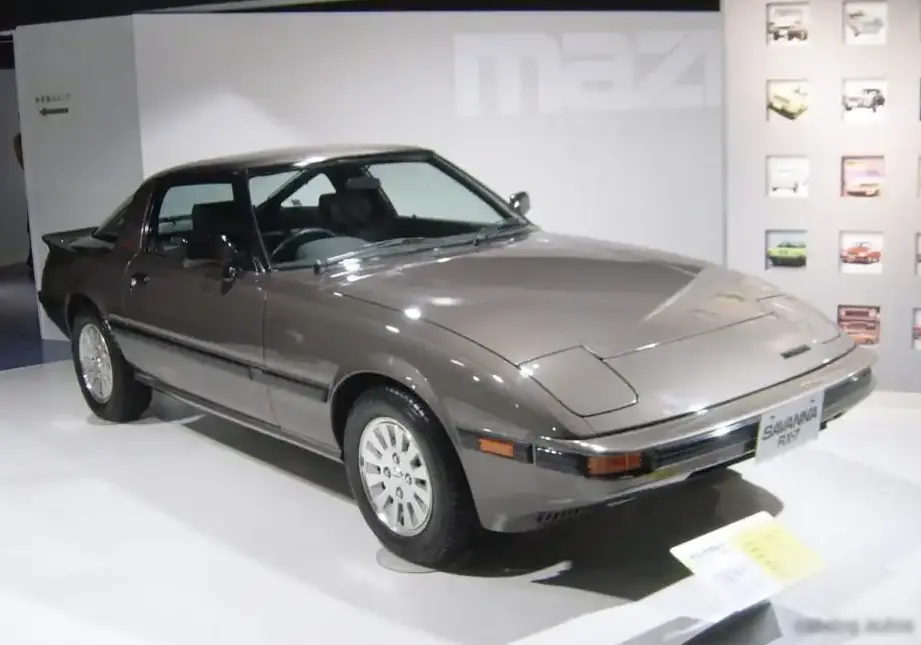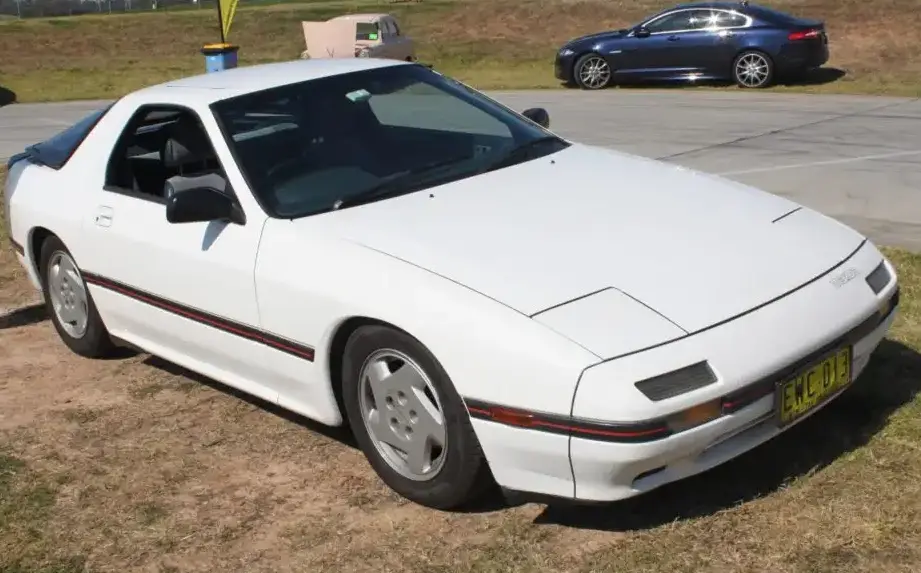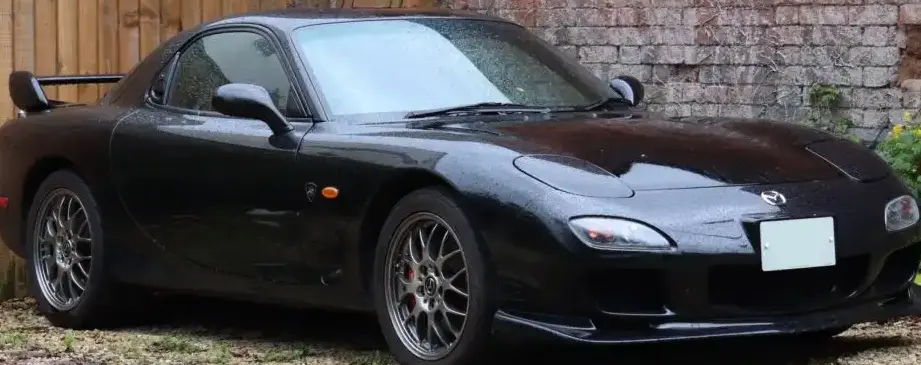
The Mazda RX-7 (FD) IV 1.3 Wankel, produced from 2000 to 2002, represents the final iteration of Mazda’s iconic rotary-powered sports car. This variant, equipped with a 1.3-liter twin-turbocharged rotary engine producing 255 horsepower, was primarily sold in the Japanese domestic market (JDM) and select export markets. It marked the culmination of three generations of RX-7 development, offering a unique driving experience centered around its high-revving, lightweight engine and sophisticated chassis. The FD RX-7, in general, is highly regarded for its handling balance and aesthetic design, and this final version refined those qualities while addressing some of the earlier models’ shortcomings.
Technical Specifications
| Brand | Mazda |
| Model | RX-7 |
| Generation | RX 7 IV |
| Type (Engine) | 1.3 Wankel (255 Hp) |
| Start of production | 2000 year |
| End of production | 2002 year |
| Powertrain Architecture | Internal Combustion engine |
| Body type | Coupe |
| Seats | 4 |
| Doors | 2 |
| Fuel Type | Petrol (Gasoline) |
| Maximum speed | 250 km/h (155.34 mph) |
| Weight-to-power ratio | 4.9 kg/Hp, 205.6 Hp/tonne |
| Weight-to-torque ratio | 4.2 kg/Nm, 237.1 Nm/tonne |
| Power | 255 Hp @ 6500 rpm |
| Power per litre | 195 Hp/l |
| Torque | 294 Nm @ 5000 rpm (216.84 lb.-ft. @ 5000 rpm) |
| Engine layout | Front, Longitudinal |
| Engine displacement | 1308 cm3 (79.82 cu. in.) |
| Number of cylinders | 4 (Rotary) |
| Engine configuration | Rotary (Wankel) |
| Compression ratio | 9.1:1 |
| Fuel injection system | Multi-port manifold injection |
| Engine aspiration | Twin-Turbo, Intercooler |
| Kerb Weight | 1240 kg (2733.73 lbs) |
| Max. weight | 1490 kg (3284.89 lbs) |
| Max load | 250 kg (551.16 lbs) |
| Fuel tank capacity | 76 l (20.08 US gal | 16.72 UK gal) |
| Length | 4285 mm (168.7 in) |
| Width | 1760 mm (69.29 in) |
| Height | 1230 mm (48.43 in) |
| Wheelbase | 2425 mm (95.47 in) |
| Front track | 1460 mm (57.48 in) |
| Rear track | 1460 mm (57.48 in) |
| Drivetrain Architecture | Rear wheel drive |
| Drive wheel | Rear wheel drive |
| Number of gears and type of gearbox | 4 gears, automatic transmission |
| Front suspension | Double wishbone |
| Rear suspension | Coil spring |
| Front brakes | Ventilated discs |
| Rear brakes | Ventilated discs |
| Assisting systems | ABS (Anti-lock braking system) |
| Steering type | Steering rack and pinion |
| Power steering | Hydraulic Steering |
| Tires size | 225/50 R16 |
| Wheel rims size | 16 |
Powertrain & Engine Architecture
The heart of the RX-7 IV 1.3 Wankel is the 13B-REW rotary engine. Unlike traditional piston engines, the 13B utilizes a triangular rotor spinning within a specially shaped housing to generate power. This design allows for a remarkably compact and lightweight engine capable of high RPMs. The 1.3-liter displacement refers to the equivalent piston engine capacity. The twin-turbocharger setup, featuring sequential turbochargers, was crucial to delivering a broad powerband. A smaller turbocharger provides boost at low RPMs for improved responsiveness, while a larger turbocharger kicks in at higher RPMs for maximum power. The engine employs multi-port fuel injection and an intercooler to optimize combustion and reduce intake temperatures. This particular variant was paired with a four-speed automatic transmission, a less common choice than the five-speed manual, and geared towards a smoother, more comfortable driving experience.
Driving Characteristics
The RX-7 IV 1.3 Wankel with the automatic transmission offers a distinct driving experience. While not as engaging as the manual version, the automatic provides seamless gear changes and makes the car more accessible to a wider range of drivers. The 255 horsepower and 216.84 lb-ft of torque provide brisk acceleration, but the rotary engine’s power delivery is notably different from a piston engine. Peak torque arrives relatively high in the rev range, requiring the driver to keep the engine spinning to maintain momentum. The automatic transmission’s gear ratios are tuned for a balance of acceleration and fuel efficiency, but it doesn’t offer the same level of control as a manual gearbox. Compared to the manual transmission RX-7s, the automatic version feels slightly less responsive and engaging, but it remains a capable and enjoyable sports car.
Equipment & Trim Levels
The RX-7 IV 1.3 Wankel automatic typically came well-equipped, though specific features varied depending on the market. Standard features generally included power windows, power locks, air conditioning, and a premium sound system. Interior upholstery was typically leather or a high-quality cloth. Optional extras could include a sunroof, upgraded audio systems, and various cosmetic enhancements. The interior design was driver-focused, with well-placed controls and comfortable seats. The dashboard layout was clean and functional, providing easy access to essential information.
Chassis & Braking
The RX-7 IV boasts a lightweight and rigid chassis, contributing significantly to its exceptional handling. The suspension system features double wishbones at the front and a multi-link setup at the rear, providing excellent control and responsiveness. Ventilated disc brakes on all four wheels, coupled with an Anti-lock Braking System (ABS), ensure confident stopping power. The steering is a rack-and-pinion system with hydraulic power assistance, offering precise and communicative steering feel. The car rides on 16-inch wheels with 225/50 R16 tires, providing a good balance of grip and ride comfort.
Market Reception & Comparison
The RX-7 IV 1.3 Wankel was generally well-received by automotive critics, who praised its performance, handling, and unique engine. However, the automatic transmission version was often seen as a compromise compared to the manual. Critics noted that the automatic didn’t fully exploit the engine’s potential and diminished the overall driving experience. Fuel economy was also a concern, as rotary engines are inherently less efficient than piston engines. Compared to other trims, such as the manual transmission versions or those with slightly less power, the automatic offered a more comfortable and convenient driving experience, but at the expense of some performance and engagement.
Legacy
The Mazda RX-7 IV 1.3 Wankel holds a special place in automotive history as the last of the RX-7 lineage. The 13B-REW engine, while complex, is known for its durability when properly maintained. However, rotary engines require diligent care, including regular apex seal inspections and oil changes. Today, the RX-7 IV is a highly sought-after collector’s car, particularly in its original, unmodified condition. The automatic transmission version, while less common, is still valued by enthusiasts who appreciate its unique character and relative ease of use. Finding well-maintained examples can be challenging, and prices have been steadily increasing in recent years, reflecting the car’s iconic status and enduring appeal.