
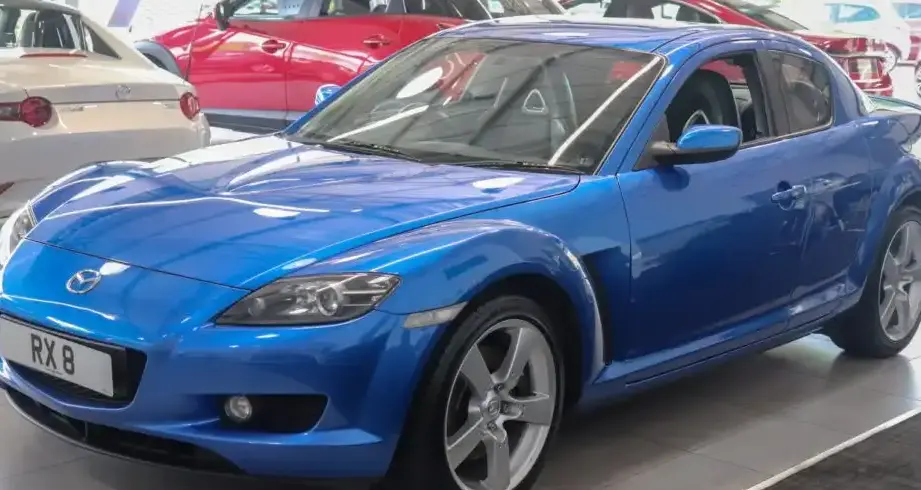
The Mazda RX-8, produced from 2003 to 2009, represented a unique approach to the sports car market. Distinguished by its rotary engine, the RX-8 aimed to blend the performance of a sports coupe with the practicality of a four-seat configuration. This article focuses specifically on the 1.3 Wankel engine variant producing 240 horsepower, a configuration primarily sold in select markets outside of North America. It occupied the top performance tier of the RX-8 lineup, offering a more engaging driving experience than lower-powered versions.
Technical Specifications
| Brand | Mazda |
| Model | RX-8 |
| Generation | RX-8 |
| Type (Engine) | 1.3 Wankel (240 Hp) |
| Start of production | 2003 |
| End of production | 2009 |
| Powertrain Architecture | Internal Combustion engine |
| Body type | Coupe |
| Seats | 4 |
| Doors | 4 |
| Fuel consumption (combined) | 11.4 l/100 km (20.6 US mpg, 24.8 UK mpg, 8.8 km/l) |
| Fuel Type | Petrol (Gasoline) |
| Acceleration 0 – 100 km/h | 6.5 sec |
| Acceleration 0 – 62 mph | 6.5 sec |
| Acceleration 0 – 60 mph | 6.2 sec |
| Maximum speed | 240 km/h (149.13 mph) |
| Weight-to-power ratio | 5.5 kg/Hp, 180.5 Hp/tonne |
| Weight-to-torque ratio | 6.2 kg/Nm, 162.4 Nm/tonne |
| Power | 240 Hp @ 8200 rpm |
| Power per litre | 183.5 Hp/l |
| Torque | 216 Nm @ 7500 rpm (159.31 lb.-ft. @ 7500 rpm) |
| Engine layout | Front, Longitudinal |
| Engine Model/Code | 13B-MSP |
| Engine displacement | 1308 cm3 (79.82 cu. in.) |
| Number of cylinders | 2 |
| Engine configuration | Rotary (Wankel) |
| Compression ratio | 10:1 |
| Fuel injection system | Multi-port manifold injection |
| Engine aspiration | Naturally aspirated engine |
| Engine oil capacity | 4.4 l (4.65 US qt | 3.87 UK qt) |
| Coolant capacity | 10 l (10.57 US qt | 8.8 UK qt) |
| Kerb Weight | 1330 kg (2932.15 lbs.) |
| Max. weight | 1728 kg (3809.59 lbs.) |
| Max load | 398 kg (877.44 lbs.) |
| Trunk (boot) space – minimum | 290 l (10.24 cu. ft.) |
| Fuel tank capacity | 61 l (16.11 US gal | 13.42 UK gal) |
| Length | 4435 mm (174.61 in.) |
| Width | 1770 mm (69.69 in.) |
| Height | 1340 mm (52.76 in.) |
| Wheelbase | 2700 mm (106.3 in.) |
| Front track | 1500 mm (59.06 in.) |
| Rear track | 1505 mm (59.25 in.) |
| Drivetrain Architecture | Rear wheel drive |
| Number of gears and type of gearbox | 6 gears, manual transmission |
| Front suspension | Spring Strut |
| Rear suspension | Coil spring |
| Front brakes | Ventilated discs |
| Rear brakes | Disc |
| Assisting systems | ABS (Anti-lock braking system) |
| Steering type | Steering rack and pinion |
| Tires size | 245/45 R18 |
| Wheel rims size | 18 |
Introduction
The Mazda RX-8, launched in 2003, was a four-seat sports coupe designed to revive the spirit of the iconic RX-7. Unlike traditional piston engines, the RX-8 utilized Mazda’s RENESIS rotary engine, a 1.3-liter Wankel engine. The 240 hp variant, available primarily outside of North America, represented the highest output offered in the RX-8 range. Built on the 1HX0/A3 platform, the RX-8 aimed to provide a unique driving experience characterized by its high-revving engine, balanced handling, and distinctive “freestyle” doors (rear-hinged rear doors).
Powertrain & Engine Architecture
The heart of the RX-8 240 hp variant is the 13B-MSP rotary engine. This engine differs significantly from conventional piston engines, employing a triangular rotor spinning within a specially shaped housing to generate power. The 13B-MSP featured improvements over previous RENESIS iterations, including enhanced intake and exhaust porting, a higher compression ratio (10:1), and revised engine management software. These changes contributed to the increased horsepower output. The engine utilizes a multi-port fuel injection system to deliver fuel directly into the intake ports. The 6-speed manual transmission was the only transmission option available with this engine configuration. The rotary engine’s unique design allows it to rev to higher RPMs than comparable piston engines, contributing to its sporty character. However, it also necessitates a unique oil injection system to lubricate the rotor tips, and is known for its relatively high oil consumption.
Driving Characteristics
The RX-8 240 hp model delivered a distinctly different driving experience compared to its lower-powered siblings. The higher output provided noticeably quicker acceleration – a 0-60 mph time of around 6.2 seconds – and a more engaging feel. The engine’s willingness to rev was a key characteristic, with peak power arriving at 8200 rpm. The six-speed manual transmission allowed drivers to fully exploit the engine’s powerband. While the 240 hp RX-8 wasn’t a torque monster (producing 159.31 lb.-ft.), the engine’s responsiveness and the car’s balanced chassis made it a rewarding vehicle to drive on winding roads. Compared to the automatic transmission equipped models, the manual offered a more direct connection to the engine and a more sporty driving experience. The rear-wheel-drive layout further enhanced the RX-8’s handling characteristics.
Equipment & Trim Levels
The 240 hp RX-8 typically came well-equipped, though specific features varied depending on the market. Standard equipment generally included power windows, power locks, air conditioning, and a premium audio system. Interior upholstery was typically cloth or leather, with sport seats providing additional support. Optional extras included a sunroof, navigation system, and upgraded audio systems. The trim level often dictated the availability of these options. The focus of this variant was performance, so luxury features were often secondary. The interior design was driver-focused, with a clear instrument cluster and well-placed controls.
Chassis & Braking
The RX-8 featured a lightweight chassis designed to maximize handling performance. The suspension utilized a MacPherson strut setup at the front and a multi-link coil spring setup at the rear. The 240 hp variant often benefited from slightly stiffer suspension components compared to lower-powered models. Braking duties were handled by ventilated discs at the front and solid discs at the rear, equipped with an Anti-lock Braking System (ABS). The car’s relatively low curb weight (approximately 2932 lbs) contributed to its agile handling. The steering was a rack and pinion system, providing precise and responsive control.
Market Reception & Comparison
The RX-8 240 hp variant was generally well-received by automotive critics, who praised its unique engine, engaging driving dynamics, and distinctive styling. However, the rotary engine’s fuel economy (around 20.6 US mpg combined) and oil consumption were often cited as drawbacks. Compared to the lower-powered RX-8 models, the 240 hp version offered a significant performance upgrade, but at a higher price point. It also required more frequent maintenance due to the complexities of the rotary engine. Compared to traditional piston-engine sports cars like the Honda S2000 or Nissan 350Z, the RX-8 offered a different driving experience, prioritizing high-revving power and balanced handling over raw torque.
Legacy
The Mazda RX-8, despite its relatively short production run, has gained a dedicated following among enthusiasts. The 13B-MSP rotary engine, while complex, is capable of delivering reliable performance with proper maintenance. However, rotary engines are known to require more frequent apex seal replacements than traditional piston engines, making maintenance costs potentially higher. Today, well-maintained RX-8s, particularly the 240 hp variants, are sought after by collectors and driving enthusiasts. The RX-8 represents a bold and innovative approach to sports car design, and its unique rotary engine continues to captivate automotive enthusiasts worldwide. The car’s distinctive styling and engaging driving experience ensure its place in automotive history.
