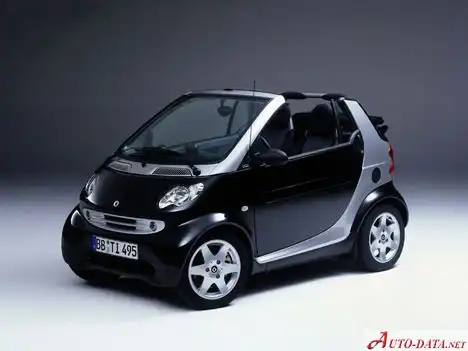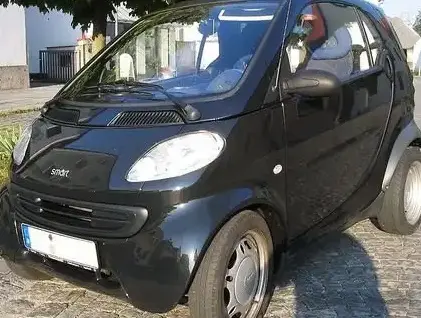
The MCC Smart (MC01) 0.6, producing 45 horsepower, represents the initial entry point into the first generation of Smart city cars, produced between 1998 and 2000. This diminutive hatchback, built by Micro Compact Car AG – a joint venture between Mercedes-Benz and Swatch – aimed to revolutionize urban transportation with its incredibly compact size and fuel efficiency. The MC01 platform, the foundation for the first Smart cars, was a radical departure from conventional automotive design, prioritizing maneuverability and parking ease in congested city environments. The 0.6-liter variant served as the base model, intended for buyers seeking the most affordable and economical Smart available.
Technical Specifications
| Brand | MCC |
| Model | Smart |
| Generation | Smart (MC01) |
| Type (Engine) | 0.6 (45 Hp) |
| Start of production | 1998 |
| End of production | 2000 |
| Powertrain Architecture | Internal Combustion engine |
| Body type | Hatchback |
| Fuel Type | Petrol (Gasoline) |
| Power | 45 Hp |
| Engine Model/Code | M 160.910 |
| Engine aspiration | Naturally aspirated engine |
| Engine oil capacity | 2.5 l (2.64 US qt | 2.2 UK qt) |
| Coolant capacity | 4.2 l (4.44 US qt | 3.7 UK qt) |
Powertrain & Engine Architecture
The heart of the Smart MC01 0.6 is the M 160.910, a 599cc three-cylinder, naturally aspirated gasoline engine. This engine, while small, was a significant engineering achievement, designed to maximize efficiency and minimize size. It features a single overhead camshaft operating four valves per cylinder. Fuel delivery is managed by a Bosch Motronic engine control unit, utilizing sequential fuel injection. The engine’s compact dimensions were achieved through innovative design, including a tilted configuration to reduce height. The engine is mated to a six-speed automated manual transmission (AMT), often referred to as “Softouch” or “Softdrive.” This transmission, while technically an automatic, lacks a traditional torque converter and instead uses electro-hydraulic actuators to shift gears. It’s known for its somewhat jerky shifts, particularly at lower speeds, a characteristic that would be refined in later Smart models. The AMT was chosen to provide fuel efficiency and ease of use in urban driving, while minimizing weight and complexity.
Driving Characteristics
The 45 horsepower output of the 0.6-liter engine translates to modest performance. Acceleration is slow, with a 0-60 mph time estimated to be well over 17 seconds. However, the Smart MC01 was never intended to be a performance car. Its strengths lie in its agility and ease of maneuvering in tight spaces. The six-speed AMT offers a wide range of gear ratios, allowing the engine to operate efficiently at various speeds. The gear ratios are relatively tall, prioritizing fuel economy over rapid acceleration. The steering is light and precise, making parking effortless. Compared to later, more powerful Smart variants (like the 0.7 or 0.8-liter models), the 0.6 feels noticeably underpowered, especially when climbing hills or merging onto highways. The AMT’s shift quality, while improving with later iterations, is a noticeable difference compared to a traditional automatic transmission or a manual gearbox.
Equipment & Trim Levels
The base-level Smart MC01 0.6 was relatively sparsely equipped, reflecting its position as the entry-level model. Standard features typically included power steering, central locking, and basic instrumentation. The interior was functional and minimalist, with durable plastic trim and cloth upholstery. Air conditioning was often an optional extra, as were power windows and upgraded audio systems. The exterior featured steel wheels with hubcaps, and the body panels were available in a range of bright colors. Safety features were limited by the car’s size and weight, but included a driver’s airbag and anti-lock brakes (ABS) on some models. Trim levels were limited, with most customization options revolving around exterior color and optional equipment packages.
Chassis & Braking
The Smart MC01 features a monocoque steel chassis with a reinforced Tridion safety cell – a unique structural design that provides exceptional crash protection relative to the car’s size. The suspension consists of independent suspension all around, utilizing MacPherson struts at the front and a De Dion axle at the rear. This setup provides a surprisingly comfortable ride, considering the car’s short wheelbase. Braking is handled by disc brakes at the front and drum brakes at the rear. ABS was available as an option, enhancing braking performance and stability. The relatively light weight of the 0.6-liter model contributes to its nimble handling and efficient braking. Stabilizer bars were not standard on the base model, further emphasizing the focus on comfort and affordability.
Market Reception & Comparison
The Smart MC01 0.6 received mixed reviews upon its launch. Critics praised its innovative design, compact size, and fuel efficiency. However, the car was also criticized for its limited performance, jerky AMT transmission, and relatively high price for such a small vehicle. Compared to other city cars of the time, such as the Fiat Cinquecento or the Peugeot 106, the Smart offered a more sophisticated and technologically advanced package, but at a higher cost. The 0.6-liter engine was often considered underpowered, leading many buyers to opt for the more powerful 0.7 or 0.8-liter variants. Fuel economy was a strong point, with the 0.6-liter model achieving around 50-60 mpg in real-world driving. Reliability was generally good, although the AMT transmission proved to be a potential source of issues for some owners.
Legacy
The Smart MC01 0.6 laid the foundation for the Smart brand and its vision of urban mobility. While the initial 0.6-liter variant was relatively short-lived, it established the Smart as a unique and innovative player in the automotive market. Today, the MC01 0.6 is a sought-after vehicle among collectors and enthusiasts, particularly those interested in automotive history and microcars. The M 160.910 engine, while simple in design, proved to be relatively durable and reliable. However, finding parts for these early Smart models can be challenging, and the AMT transmission remains a potential weak point. The Smart MC01 0.6 represents a bold and unconventional approach to automotive design, and its legacy continues to influence the development of urban transportation solutions.