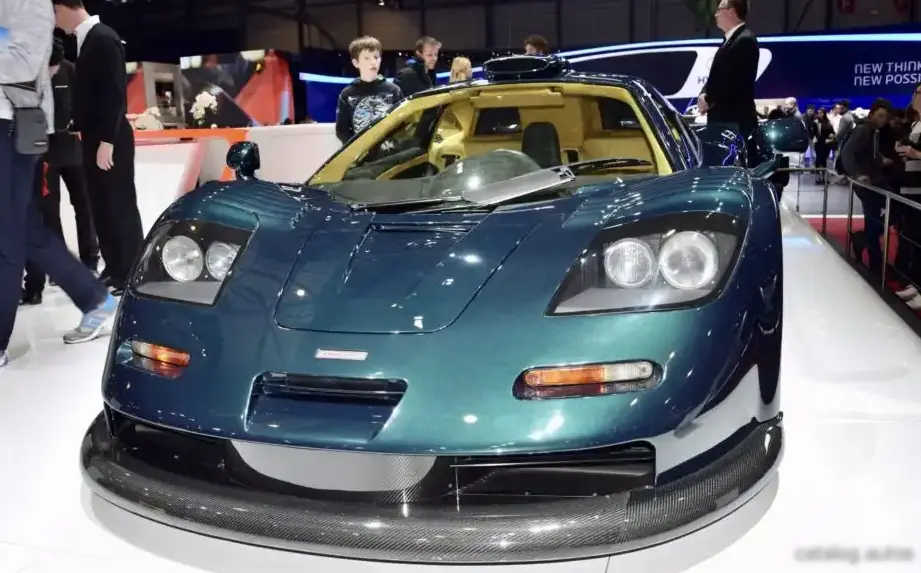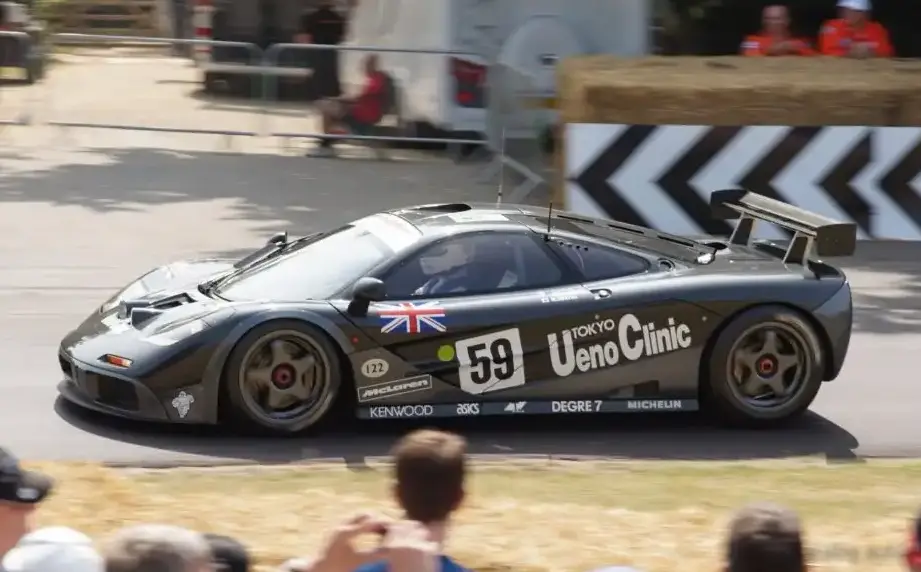
The McLaren F1 GTR 6.0 V12, producing 600 horsepower, represents the pinnacle of McLaren’s racing development in the late 1990s. Produced in 1997, this variant was specifically engineered for GT racing homologation, building upon the already groundbreaking road-going McLaren F1. It was a direct response to the growing competition in the BPR Global GT Series and later the FIA GT Championship, aiming to dominate the racing scene with its advanced technology and formidable power. The GTR was not simply a modified road car; it was a purpose-built racing machine, though retaining the core layout and aesthetic of its predecessor. Only a limited number were constructed, making it one of the most exclusive and sought-after racing cars ever created.
Technical Specifications
| Brand | McLaren |
| Model | F1 |
| Generation | F1 GTR |
| Type (Engine) | 6.0 V12 (600 Hp) |
| Start of production | 1997 |
| End of production | 1997 |
| Powertrain Architecture | Internal Combustion engine |
| Body type | Coupe |
| Seats | 1 |
| Doors | 2 |
| Fuel Type | Petrol (Gasoline) |
| Maximum speed | 317 km/h (196.97 mph) |
| Weight-to-power ratio | 1.5 kg/Hp, 655.7 Hp/tonne |
| Weight-to-torque ratio | 1.7 kg/Nm, 576 Nm/tonne |
| Power | 600 Hp @ 7500 rpm |
| Power per litre | 100.2 Hp/l |
| Torque | 527 Nm @ 5600 rpm (388.7 lb.-ft. @ 5600 rpm) |
| Engine layout | Middle, Longitudinal |
| Engine Model/Code | S70/3 |
| Engine displacement | 5990 cm3 (365.53 cu. in.) |
| Number of cylinders | 12 |
| Engine configuration | V-engine |
| Cylinder Bore | 86 mm (3.39 in.) |
| Piston Stroke | 85.9 mm (3.38 in.) |
| Compression ratio | 11:1 |
| Number of valves per cylinder | 4 |
| Fuel injection system | Multi-port manifold injection |
| Engine aspiration | Naturally aspirated engine |
| Valvetrain | DOHC |
| Kerb Weight | 915 kg (2017.23 lbs.) |
| Fuel tank capacity | 100 l (26.42 US gal | 22 UK gal) |
| Length | 4933 mm (194.21 in.) |
| Width | 1920 mm (75.59 in.) |
| Height | 1200 mm (47.24 in.) |
| Wheelbase | 2723 mm (107.2 in.) |
| Front track | 1617 mm (63.66 in.) |
| Rear track | 1582 mm (62.28 in.) |
| Front overhang | 1120 mm (44.09 in.) |
| Rear overhang | 1090 mm (42.91 in.) |
| Ride height (ground clearance) | 70 mm (2.76 in.) |
| Drivetrain Architecture | The Internal combustion engine (ICE) drives the rear wheels of the vehicle. |
| Drive wheel | Rear wheel drive |
| Number of gears and type of gearbox | 6 gears, manual transmission |
| Front suspension | Coil spring, Double wishbone, Transverse stabilizer |
| Rear suspension | Double wishbone, Coil spring |
| Front brakes | Ventilated discs, 380×36 mm |
| Rear brakes | Ventilated discs, 355×36 mm |
| Steering type | Steering rack and pinion |
| Wheel rims size | 18 |
Powertrain & Engine Architecture
At the heart of the F1 GTR 6.0 lay the BMW S70/3 engine, a naturally aspirated 6.0-liter V12. This engine was a significant upgrade over the road car’s engine, specifically tuned for racing applications. While retaining the fundamental V12 layout, the GTR’s engine featured revised internals, including strengthened connecting rods and pistons, to withstand the stresses of prolonged high-speed track use. The engine utilized a multi-port fuel injection system, carefully calibrated to optimize power delivery and fuel efficiency under racing conditions. The double overhead camshaft (DOHC) valvetrain, with four valves per cylinder, ensured efficient cylinder filling and exhaust scavenging. Crucially, the GTR retained a six-speed manual transmission, a deliberate choice to provide drivers with maximum control and responsiveness on the track. The transmission was reinforced to handle the increased power and torque output.
Driving Characteristics
The driving experience in the F1 GTR 6.0 was dramatically different from the road car. The 600 hp output, combined with the relatively lightweight construction (915 kg), resulted in blistering acceleration and exceptional cornering ability. The manual transmission demanded precise gear changes, rewarding skilled drivers with a direct connection to the engine’s power. The GTR’s suspension, featuring coil springs and double wishbone setups at both ends, was tuned for track performance, providing a firm but controlled ride. While the power delivery was linear, the engine’s substantial torque meant that the car was always eager to accelerate. Compared to potential future iterations with more advanced driver aids, the GTR demanded a high level of driver skill and finesse.
Equipment & Trim Levels
As a dedicated racing car, the F1 GTR 6.0 was stripped of most road-going luxuries. The interior was spartan, focused entirely on functionality. A single racing seat, a roll cage for safety, and a racing steering wheel were the primary features. There was no carpeting, sound deadening, or air conditioning. The dashboard was minimal, displaying only essential information such as speed, engine RPM, and oil pressure. Optional extras were limited to racing-specific components, such as data logging systems and upgraded braking systems.
Chassis & Braking
The F1 GTR’s chassis was a carbon fiber monocoque, providing exceptional rigidity and lightness. This construction technique was revolutionary at the time and contributed significantly to the car’s performance. The suspension geometry was optimized for track use, with adjustable dampers and anti-roll bars allowing teams to fine-tune the handling characteristics. Braking was handled by ventilated disc brakes at all four corners, providing ample stopping power. The front brakes measured 380x36mm, while the rear brakes were 355x36mm. The steering system was a rack and pinion setup, offering precise and responsive control.
Market Reception & Comparison
The McLaren F1 GTR 6.0 was immediately recognized as a dominant force in GT racing. It achieved numerous victories in the BPR Global GT Series and the FIA GT Championship, establishing McLaren as a serious competitor in motorsport. Critics praised the car’s exceptional performance, advanced technology, and uncompromising focus on racing. Compared to other GT cars of the era, the F1 GTR stood out for its innovative carbon fiber construction, powerful V12 engine, and sophisticated suspension system. Its reliability, while generally good, was dependent on meticulous maintenance and careful preparation.
Legacy
The McLaren F1 GTR 6.0 remains a legendary racing car, highly prized by collectors and enthusiasts. Its success on the track cemented its place in motorsport history. The technologies pioneered in the F1 GTR, such as the carbon fiber monocoque and advanced suspension systems, have influenced the design of subsequent racing cars and even road cars. Today, original F1 GTRs command astronomical prices, reflecting their rarity, historical significance, and exceptional performance. The powertrain, while requiring specialized maintenance, is generally considered robust when properly cared for, and the car continues to be actively raced in historic motorsport events.