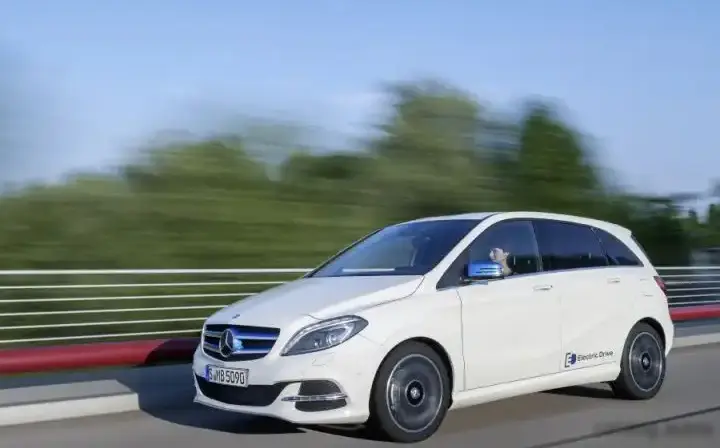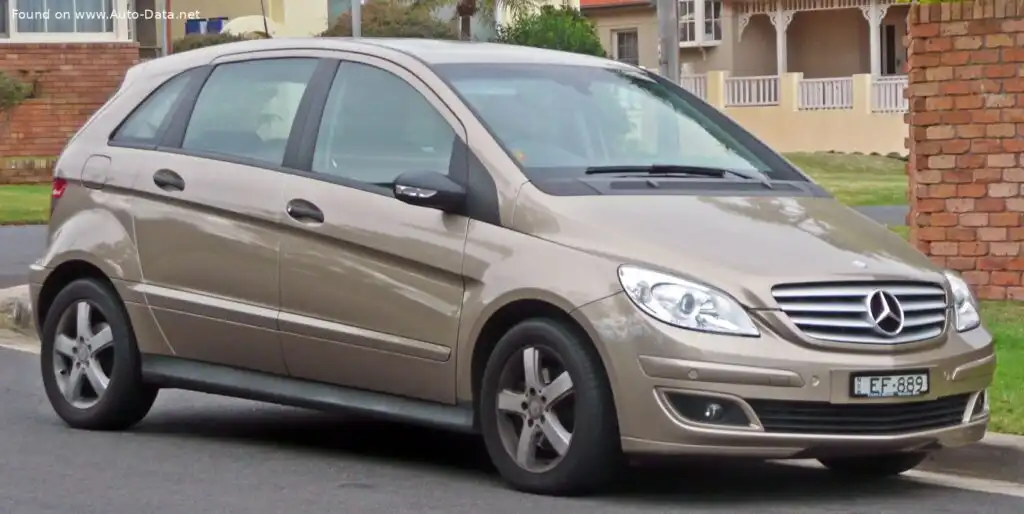
The Mercedes-Benz B-Class (W245) B 200 CDI Autotronic, produced from April 2005 to April 2008, represented a key offering in Mercedes-Benz’s compact multi-purpose vehicle (MPV) lineup. Positioned as a practical and efficient option, the B 200 CDI Autotronic aimed to provide a comfortable and economical driving experience, particularly appealing to families and those seeking a versatile vehicle. It was built on the W245 platform, also known as the first generation B-Class, which prioritized a high roofline and flexible interior space. This variant combined a diesel engine with Mercedes’ Autotronic continuously variable transmission (CVT), a relatively uncommon pairing that defined its character.
Technical Specifications
| Brand | Mercedes-Benz |
| Model | B-class |
| Generation | B-class (W245) |
| Type (Engine) | B 200 CDI (140 Hp) Autotronic |
| Start of production | April, 2005 |
| End of production | April, 2008 |
| Powertrain Architecture | Internal Combustion engine |
| Body type | MPV |
| Seats | 5 |
| Doors | 5 |
| Fuel consumption (urban) | 7.6-8 l/100 km (30.9 – 29.4 US mpg) |
| Fuel consumption (extra urban) | 5-5.3 l/100 km (47 – 44.4 US mpg) |
| Fuel consumption (combined) | 6-6.3 l/100 km (39.2 – 37.3 US mpg) |
| CO2 emissions | 159-165 g/km |
| Fuel Type | Diesel |
| Acceleration 0 – 100 km/h | 9.7 sec |
| Acceleration 0 – 62 mph | 9.7 sec |
| Acceleration 0 – 60 mph | 9.2 sec |
| Maximum speed | 195 km/h (121.17 mph) |
| Emission standard | Euro 4 |
| Weight-to-power ratio | 10 kg/Hp |
| Weight-to-torque ratio | 4.7 kg/Nm |
| Power | 140 Hp @ 4200 rpm |
| Torque | 300 Nm @ 1600-3000 rpm (221.27 lb.-ft.) |
| Engine layout | Front, Transverse |
| Engine Model/Code | OM 640.941 |
| Engine displacement | 1991 cm3 (121.5 cu. in.) |
| Number of cylinders | 4 |
| Engine configuration | Inline |
| Cylinder Bore | 83 mm (3.27 in.) |
| Piston Stroke | 92 mm (3.62 in.) |
| Compression ratio | 18:1 |
| Number of valves per cylinder | 4 |
| Fuel injection system | Diesel Commonrail |
| Engine aspiration | Turbocharger, Intercooler |
| Valvetrain | DOHC |
| Engine oil capacity | 5.8 l (6.13 US qt | 5.1 UK qt) |
| Coolant capacity | 9.7 l (10.25 US qt | 8.53 UK qt) |
| Kerb Weight | 1395 kg (3075.45 lbs.) |
| Max. weight | 1880 kg (4144.69 lbs.) |
| Max load | 485 kg (1069.24 lbs.) |
| Trunk (boot) space – minimum | 544 l (19.21 cu. ft.) |
| Trunk (boot) space – maximum | 2245 l (79.28 cu. ft.) |
| Fuel tank capacity | 54 l (14.27 US gal | 11.88 UK gal) |
| Max. roof load | 75 kg (165.35 lbs.) |
| Permitted trailer load (braked) | 1500 kg (3306.93 lbs.) |
| Permitted trailer load (unbraked) | 715 kg (1576.31 lbs.) |
| Length | 4270 mm (168.11 in.) |
| Width | 1777 mm (69.96 in.) |
| Width including mirrors | 1975 mm (77.76 in.) |
| Height | 1604 mm (63.15 in.) |
| Wheelbase | 2778 mm (109.37 in.) |
| Front track | 1552 mm (61.1 in.) |
| Rear track | 1547 mm (60.91 in.) |
| Drag coefficient (Cd) | 0.30 |
| Minimum turning circle | 11.95 m (39.21 ft.) |
| Drivetrain | Front wheel drive |
| Gearbox | automatic transmission Autotronic |
| Front suspension | Independent type McPherson, Transverse stabilizer |
| Rear suspension | Transverse stabilizer, Coil spring |
| Front brakes | Ventilated discs, 288×25 mm |
| Rear brakes | Disc, 258×8 mm |
Powertrain & Engine Architecture
The B 200 CDI Autotronic was powered by the OM 640.941, a 2.0-liter inline-four cylinder diesel engine. This engine was a common sight in various Mercedes-Benz models of the era. It featured a turbocharger with an intercooler to boost power and efficiency. The engine utilized a diesel common rail direct injection system, delivering fuel directly into the combustion chamber at extremely high pressure for optimized combustion. The double overhead camshaft (DOHC) valvetrain, with four valves per cylinder, further enhanced breathing and performance. The Autotronic transmission, a continuously variable transmission (CVT), was designed to provide smooth, stepless gear changes, prioritizing fuel economy and comfort over outright performance. Unlike traditional automatic transmissions with fixed gear ratios, the Autotronic used a belt-and-pulley system to offer an infinite number of ratios within its operating range.
Driving Characteristics
The B 200 CDI Autotronic offered a relaxed and refined driving experience. The 140 horsepower and 300 Nm (221 lb-ft) of torque provided adequate performance for everyday driving, with a 0-60 mph time of around 9.2 seconds. However, the Autotronic transmission, while smooth, didn’t offer the responsiveness of a traditional automatic or manual gearbox. Acceleration felt somewhat muted, particularly during quick overtaking maneuvers. The CVT tended to hold the engine at a constant RPM during acceleration, which could be perceived as droning by some drivers. Compared to the more powerful B 200 Turbo, the CDI version prioritized fuel efficiency, achieving combined fuel economy figures of 6.0-6.3 liters per 100 kilometers (39.2-37.3 US mpg). The B 200 CDI was also noticeably more economical than the petrol-powered B 180 and B 200 models.
Equipment & Trim Levels
The B 200 CDI Autotronic typically came equipped with a reasonable level of standard features. These included air conditioning, power windows, central locking, and an audio system. Interior upholstery was generally cloth, although leather options were available. Dashboard configuration was functional and straightforward, typical of Mercedes-Benz interiors of the period. Optional extras included a panoramic sunroof, upgraded audio systems, navigation, and parking sensors. The B-Class was designed with practicality in mind, offering a versatile interior with folding rear seats and a large cargo area.
Chassis & Braking
The W245 B-Class featured an independent McPherson strut suspension at the front and a semi-independent torsion beam suspension at the rear. This setup provided a comfortable ride, although it wasn’t particularly sporty. The B 200 CDI was equipped with ventilated disc brakes at the front and solid disc brakes at the rear. Anti-lock Braking System (ABS) was standard. The suspension was tuned to prioritize comfort and stability, rather than aggressive handling. Stabilizer bars were fitted to both the front and rear axles to reduce body roll.
Market Reception & Comparison
The B 200 CDI Autotronic was generally well-received by critics as a practical and economical MPV. Its fuel efficiency and comfortable ride were praised, but the Autotronic transmission drew some criticism for its lack of responsiveness. Compared to other trims in the B-Class lineup, the B 200 CDI appealed to buyers who prioritized fuel economy and low running costs. The B 200 Turbo offered more performance, while the petrol-powered B 180 and B 200 were less expensive but also less fuel-efficient. The B 200 CDI was often seen as a sensible and pragmatic choice for families and commuters.
Legacy
The OM 640 engine family, including the OM 640.941 found in the B 200 CDI, is generally considered to be reliable, although the Autotronic transmission has a reputation for being less durable than traditional automatic gearboxes. Proper maintenance, including regular oil changes and transmission fluid services, is crucial for long-term reliability. Today, the W245 B-Class B 200 CDI Autotronic can be found on the used car market at relatively affordable prices. It remains a practical and economical option for those seeking a compact MPV, but potential buyers should be aware of the potential maintenance costs associated with the Autotronic transmission.