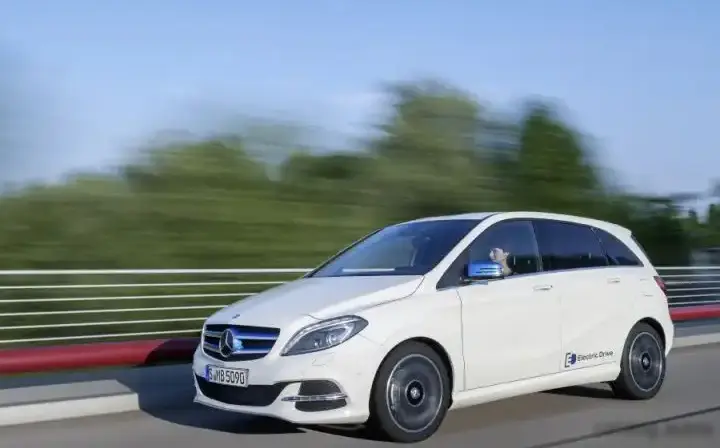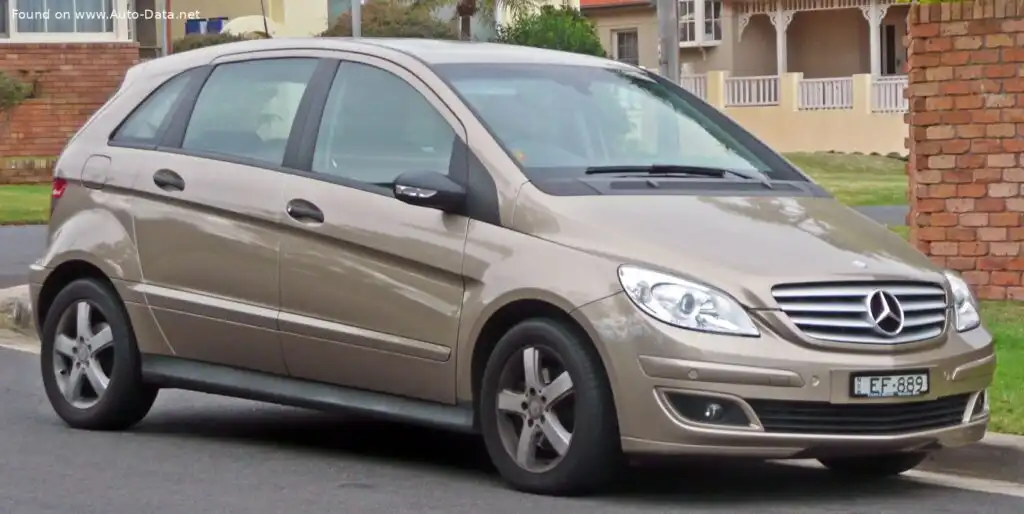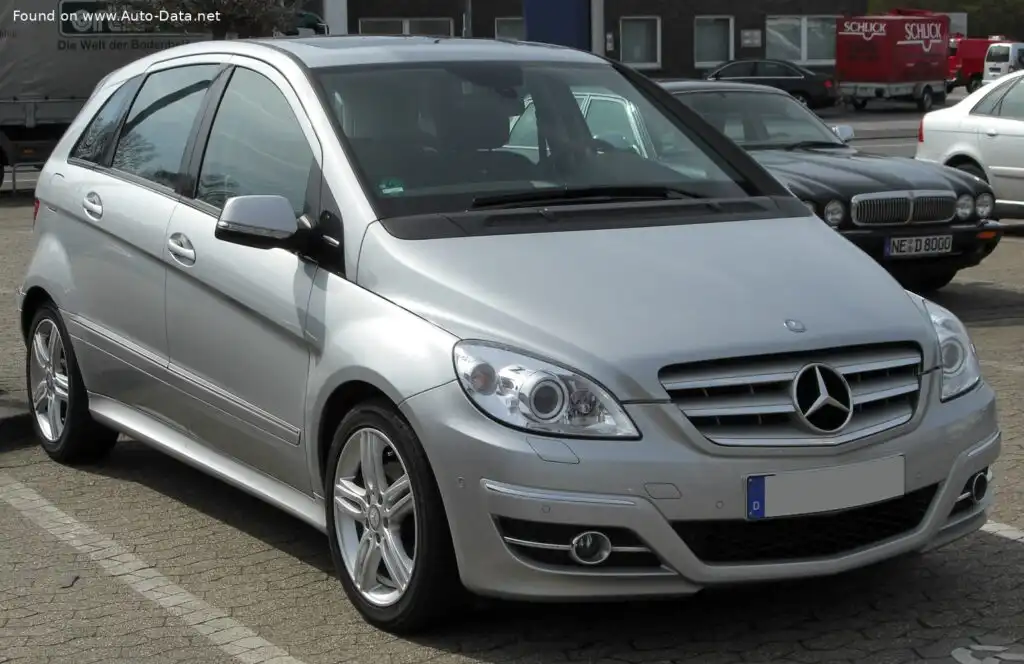
The Mercedes-Benz B 200 Turbo, part of the W245 facelift series produced from April 2008 to November 2010, represented a significant offering in the compact multi-purpose vehicle (MPV) segment. Positioned as a mid-range trim within the B-Class lineup, it aimed to balance performance and fuel efficiency with the practicality expected of a family vehicle. The W245 B-Class, and specifically the B 200 Turbo, was primarily marketed in Europe, offering a more premium alternative to traditional hatchback options. This variant distinguished itself with a turbocharged engine, providing a noticeable step up in power compared to the base models.
Technical Specifications
| Brand | Mercedes-Benz |
| Model | B-class |
| Generation | B-class (W245 facelift 2008) |
| Type (Engine) | B 200 Turbo (193 Hp) |
| Start of production | April, 2008 |
| End of production | November, 2010 |
| Powertrain Architecture | Internal Combustion engine |
| Body type | MPV |
| Seats | 5 |
| Doors | 5 |
| Fuel consumption (urban) | 10.3-10.6 l/100 km (22.8 – 22.2 US mpg) |
| Fuel consumption (extra urban) | 6.2-6.3 l/100 km (37.9 – 37.3 US mpg) |
| Fuel consumption (combined) | 7.7-7.9 l/100 km (30.5 – 29.8 US mpg) |
| CO2 emissions | 184-188 g/km |
| Fuel Type | Petrol (Gasoline) |
| Acceleration 0 – 100 km/h | 7.6 sec |
| Acceleration 0 – 62 mph | 7.6 sec |
| Acceleration 0 – 60 mph | 7.2 sec |
| Maximum speed | 225 km/h (139.81 mph) |
| Emission standard | Euro 4 |
| Weight-to-power ratio | 6.7 kg/Hp |
| Weight-to-torque ratio | 4.6 kg/Nm |
| Power | 193 Hp @ 5000 rpm |
| Torque | 280 Nm @ 1800-4850 rpm (206.52 lb.-ft. @ 1800-4850 rpm) |
| Engine layout | Front, Transverse |
| Engine Model/Code | M 266.980 |
| Engine displacement | 2034 cm3 (124.12 cu. in.) |
| Number of cylinders | 4 |
| Engine configuration | Inline |
| Cylinder Bore | 83 mm (3.27 in.) |
| Piston Stroke | 94 mm (3.7 in.) |
| Compression ratio | 9:1 |
| Number of valves per cylinder | 2 |
| Fuel injection system | Multi-port manifold injection |
| Engine aspiration | Turbocharger, Intercooler |
| Valvetrain | SOHC |
| Engine oil capacity | 5 l (5.28 US qt | 4.4 UK qt) |
| Coolant | 8.5 l (8.98 US qt | 7.48 UK qt) |
| Kerb Weight | 1295 kg (2854.99 lbs.) |
| Max. weight | 1880 kg (4144.69 lbs.) |
| Max load | 585 kg (1289.7 lbs.) |
| Trunk (boot) space – minimum | 544 l (19.21 cu. ft.) |
| Trunk (boot) space – maximum | 2245 l (79.28 cu. ft.) |
| Fuel tank capacity | 54 l (14.27 US gal | 11.88 UK gal) |
| Max. roof load | 75 kg (165.35 lbs.) |
| Permitted trailer load with brakes (12%) | 1500 kg (3306.93 lbs.) |
| Permitted trailer load without brakes | 645 kg (1421.98 lbs.) |
| Permitted towbar download | 75 kg (165.35 lbs.) |
| Length | 4273 mm (168.23 in.) |
| Width | 1777 mm (69.96 in.) |
| Width including mirrors | 2035 mm (80.12 in.) |
| Height | 1604 mm (63.15 in.) |
| Wheelbase | 2778 mm (109.37 in.) |
| Front track | 1552 mm (61.1 in.) |
| Rear track | 1547 mm (60.91 in.) |
| Drag coefficient (Cd) | 0.31 |
| Minimum turning circle | 11.95 m (39.21 ft.) |
| Drivetrain | Front wheel drive |
| Number of gears | 6 |
| Gearbox type | Manual transmission |
| Front suspension | Independent type McPherson, Transverse stabilizer |
| Rear suspension | Transverse stabilizer, Coil spring |
| Front brakes | Ventilated discs |
| Rear brakes | Disc |
| Assisting systems | ABS (Anti-lock braking system) |
| Steering type | Steering rack and pinion |
| Power steering | Electric Steering |
| Tires size | 205/55 R16 |
| Wheel rims size | 6J x 16 |
Powertrain & Engine Architecture
The B 200 Turbo was powered by the M 266.980, a 2.0-liter inline-four cylinder gasoline engine. This engine was a key component of Mercedes-Benz’s efforts to offer a balance between performance and efficiency. The engine featured multi-port fuel injection and a turbocharger with an intercooler, allowing it to produce 193 horsepower at 5000 rpm and 280 Nm (206.52 lb-ft) of torque between 1800 and 4850 rpm. The engine’s single overhead camshaft (SOHC) valvetrain design contributed to its relatively simple and reliable operation. The 6-speed manual transmission was standard, providing drivers with direct control over the engine’s power. The engine’s transverse mounting and front-wheel-drive configuration were typical for vehicles in this class.
Driving Characteristics
The B 200 Turbo offered a noticeable improvement in performance over the lower-powered B-Class variants. The turbocharger provided a good amount of low-end torque, making it responsive in everyday driving situations. Acceleration from 0 to 100 km/h (0-62 mph) took approximately 7.6 seconds, and the car had a top speed of 225 km/h (139.81 mph). While not a sports car, the B 200 Turbo provided ample power for highway merging and overtaking. The manual transmission allowed for precise gear changes, enhancing the driving experience. Compared to the automatic transmission options available on other B-Class models, the manual offered a more engaging and connected feel.
Equipment & Trim Levels
The B 200 Turbo typically came equipped with features such as air conditioning, power windows, central locking, and an audio system. Standard safety features included ABS, airbags, and seatbelt pretensioners. Optional extras included a panoramic sunroof, leather upholstery, navigation system, and parking sensors. The interior generally featured a functional and well-built design, typical of Mercedes-Benz vehicles. The dashboard layout was straightforward and easy to use, with clear instrumentation. The B 200 Turbo aimed to provide a comfortable and practical interior for families.
Chassis & Braking
The W245 B-Class utilized an independent McPherson strut suspension at the front and a semi-independent torsion beam suspension at the rear. This setup provided a good balance between ride comfort and handling. The front brakes were ventilated discs, while the rear brakes were solid discs. The inclusion of ABS (Anti-lock Braking System) enhanced braking performance and safety. The steering was rack and pinion with electric power assistance, providing precise and responsive steering feel. The chassis was designed to provide a stable and predictable driving experience, even when fully loaded.
Market Reception & Comparison
The B 200 Turbo was generally well-received by automotive critics. It was praised for its strong engine performance, comfortable ride, and practical interior. However, some critics noted that the styling was somewhat conservative. Compared to other B-Class variants, the B 200 Turbo offered a significant performance upgrade. The 1.5-liter models were more fuel-efficient but lacked the power of the B 200 Turbo. The B 200 CDI diesel model offered comparable torque but a different driving experience. Fuel economy was respectable for a vehicle in this class, with combined fuel consumption ranging from 7.7 to 7.9 l/100 km.
Legacy
The M 266.980 engine, found in the B 200 Turbo, proved to be a relatively reliable powertrain. While some minor issues, such as turbocharger wear and oil leaks, could occur with age, the engine generally held up well with proper maintenance. Today, the W245 B-Class, including the B 200 Turbo, can be found on the used car market at affordable prices. It remains a practical and comfortable option for those seeking a compact MPV. The B 200 Turbo’s combination of performance and practicality has ensured its continued appeal to a wide range of buyers.