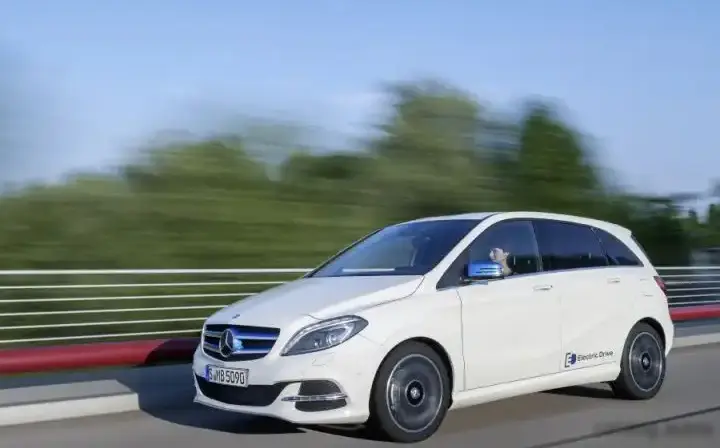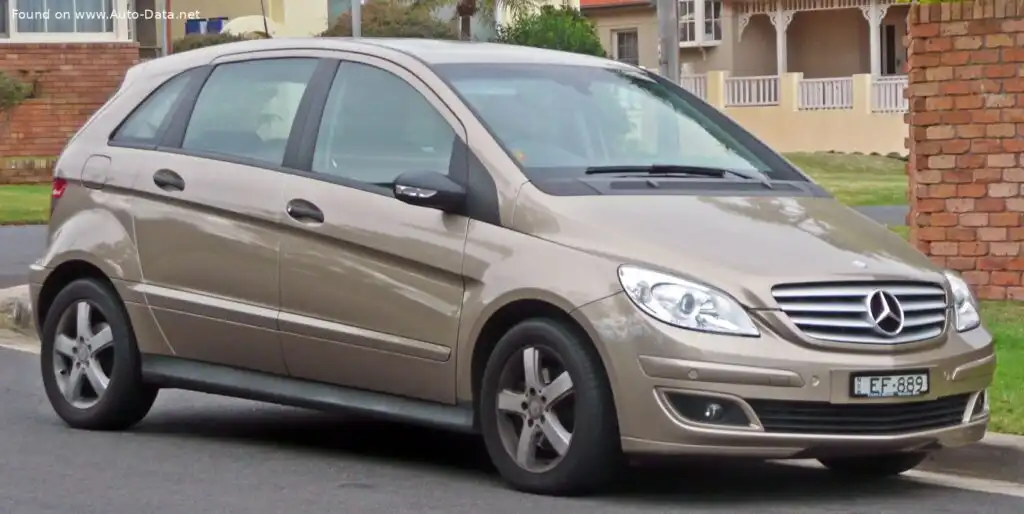
The Mercedes-Benz B-Class (W246) B 180 1.8 CDI, produced from 2011 to 2013, represented an entry point into the second generation of the compact multi-purpose vehicle (MPV) from Mercedes-Benz. Positioned within the W246 series, which utilized the shared platform with the second-generation A-Class, the B 180 CDI offered a diesel-powered, automatic transmission option aimed at buyers prioritizing fuel efficiency and practicality. This variant served as a more economical alternative to the higher-performance gasoline models and other diesel trims within the B-Class range. It was primarily marketed in Europe, where compact MPVs were a popular segment, offering a blend of hatchback convenience and increased interior space.
Technical Specifications
| Brand | Mercedes-Benz |
| Model | B-class |
| Generation | B-class (W246) |
| Type (Engine) | B 180 1.8 CDI (109 Hp) DCT |
| Start of production | 2011 |
| End of production | 2013 |
| Powertrain Architecture | Internal Combustion engine |
| Body type | Hatchback |
| Seats | 5 |
| Doors | 5 |
| Fuel consumption (urban) | 5.1-4.9 l/100 km (46.1 – 48 US mpg, 55.4 – 57.6 UK mpg, 19.6 – 20.4 km/l) |
| Fuel consumption (extra urban) | 4.2-3.9 l/100 km (56 – 60.3 US mpg, 67.3 – 72.4 UK mpg, 23.8 – 25.6 km/l) |
| Fuel consumption (combined) | 4.5-4.2 l/100 km (52.3 – 56 US mpg, 62.8 – 67.3 UK mpg, 22.2 – 23.8 km/l) |
| CO2 emissions | 121-113 g/km |
| Fuel Type | Diesel |
| Acceleration 0 – 100 km/h | 10.7 sec |
| Acceleration 0 – 62 mph | 10.7 sec |
| Acceleration 0 – 60 mph | 10.2 sec |
| Maximum speed | 190 km/h (118.06 mph) |
| Emission standard | Euro 5 |
| Weight-to-power ratio | 13.8 kg/Hp, 72.4 Hp/tonne |
| Weight-to-torque ratio | 6 kg/Nm, 166.1 Nm/tonne |
| Power | 109 Hp @ 3200-4600 rpm |
| Power per litre | 60.7 Hp/l |
| Torque | 250 Nm @ 1400-2800 rpm (184.39 lb.-ft. @ 1400-2800 rpm) |
| Engine layout | Front, Transverse |
| Engine Model/Code | OM 651.901 |
| Engine displacement | 1796 cm3 (109.6 cu. in.) |
| Number of cylinders | 4 |
| Engine configuration | Inline |
| Compression ratio | 16.2:1 |
| Number of valves per cylinder | 4 |
| Fuel injection system | Diesel Commonrail |
| Engine aspiration | Turbocharger, Intercooler |
| Engine oil capacity | 7 l (7.4 US qt | 6.16 UK qt) |
| Coolant | 9.5 l (10.04 US qt | 8.36 UK qt) |
| Kerb Weight | 1505 kg (3317.96 lbs.) |
| Max. weight | 2025 kg (4464.36 lbs.) |
| Max load | 520 kg (1146.4 lbs.) |
| Trunk (boot) space – minimum | 488 l (17.23 cu. ft.) |
| Trunk (boot) space – maximum | 1547 l (54.63 cu. ft.) |
| Fuel tank capacity | 50 l (13.21 US gal | 11 UK gal) |
| Length | 4359 mm (171.61 in.) |
| Width | 1786 mm (70.31 in.) |
| Height | 1557 mm (61.3 in.) |
| Wheelbase | 2699 mm (106.26 in.) |
| Front track | 1552 mm (61.1 in.) |
| Rear (Back) track | 1549 mm (60.98 in.) |
| Minimum turning circle | 11 m (36.09 ft.) |
| Drivetrain Architecture | The Internal combustion engine (ICE) drives the front wheels of the vehicle. |
| Drive wheel | Front wheel drive |
| Number of gears and type of gearbox | 7 gears, automatic transmission G-DCT |
| Front suspension | Independent type McPherson |
| Rear suspension | Trailing arm |
| Front brakes | Ventilated discs |
| Rear brakes | Disc |
| Assisting systems | ABS (Anti-lock braking system) |
| Steering type | Steering rack and pinion |
| Power steering | Electric Steering |
| Tires size | 195/65 R15 |
| Wheel rims size | 15 |
INTRODUCTION
The W246 B-Class, launched in 2011, represented a significant step forward for Mercedes-Benz’s compact offerings. Moving away from the sandwich floor construction of its predecessor, the W246 adopted a more conventional front-wheel-drive platform. The B 180 1.8 CDI, equipped with a 1.8-liter turbocharged diesel engine and a 7-speed dual-clutch transmission (DCT), was a key variant in the lineup. It aimed to provide a balance between fuel economy, reasonable performance, and the practicality expected of a compact MPV. This model was particularly popular in European markets where diesel engines and automatic transmissions were highly favored.
Powertrain & Engine Architecture
The heart of the B 180 CDI is the OM651.901 1.8-liter inline-four cylinder diesel engine. This engine utilizes a common rail direct injection system, delivering fuel at extremely high pressure for optimized combustion. A turbocharger with an intercooler further enhances performance by forcing more air into the cylinders. The engine produces 109 horsepower at 3200-4600 rpm and 250 Nm (184 lb-ft) of torque between 1400-2800 rpm. The 7G-DCT (7-speed dual-clutch transmission) provides quick and smooth gear changes, contributing to both fuel efficiency and a more engaging driving experience compared to a traditional automatic. The DCT operates with two separate clutches, one for odd and one for even gears, allowing for pre-selection of the next gear and minimizing interruption in power delivery.
Driving Characteristics
The B 180 CDI 1.8, while not a performance-oriented model, offered adequate power for everyday driving. Acceleration from 0-100 km/h (0-62 mph) took approximately 10.7 seconds. The DCT transmission contributed to a relatively responsive feel, although it wasn’t as sporty as some other dual-clutch systems. The engine’s torque peak, available from a low 1400 rpm, provided good pulling power for overtaking and navigating city traffic. Compared to the more powerful B 200 CDI or gasoline-powered variants, the B 180 CDI prioritized fuel economy over outright speed. The gear ratios in the 7G-DCT were tuned for efficiency, resulting in a comfortable and economical cruising experience on the highway.
Equipment & Trim Levels
The B 180 CDI typically came equipped with a reasonable level of standard features. These included air conditioning, power windows, central locking, and an audio system with a CD player. Safety features such as ABS, ESP (Electronic Stability Program), and multiple airbags were also standard. Optional extras included a panoramic sunroof, leather upholstery, navigation system, and parking sensors. Interior trim levels varied, with base models featuring cloth upholstery and simpler dashboard materials, while higher trim levels offered more luxurious appointments. The B-Class generally offered a well-appointed interior for its class, with a focus on practicality and comfort.
Chassis & Braking
The W246 B-Class utilized an independent McPherson strut suspension at the front and a semi-independent trailing arm suspension at the rear. This setup provided a comfortable ride quality, absorbing bumps and imperfections in the road effectively. The B 180 CDI, being the entry-level diesel, typically featured ventilated disc brakes at the front and solid disc brakes at the rear. The electric power steering offered light and precise steering feel, making it easy to maneuver in urban environments. Stabilizer bars were fitted to both the front and rear axles to reduce body roll during cornering.
Market Reception & Comparison
The B 180 CDI was generally well-received by automotive critics as a practical and fuel-efficient option. Its main strengths were its low running costs and spacious interior. However, some reviewers noted that the engine lacked the refinement and power of some of its competitors. Compared to the B 200 CDI, the B 180 CDI offered lower fuel consumption but significantly less performance. Against gasoline-powered B-Class models, the B 180 CDI provided superior fuel economy but a less engaging driving experience. The B-Class as a whole faced competition from other compact MPVs such as the Volkswagen Touran and the Citroën C4 Picasso.
Legacy
The OM651 engine family, used in the B 180 CDI, is known for its durability and reliability, provided it receives regular maintenance. The 7G-DCT transmission, while generally reliable, can be susceptible to issues if not serviced properly. In the used car market, the B 180 CDI remains a popular choice for buyers seeking an economical and practical vehicle. Its relatively low purchase price and excellent fuel economy make it an attractive option for those on a budget. However, potential buyers should be aware of the importance of maintaining the diesel particulate filter (DPF) and ensuring the transmission fluid is changed at the recommended intervals to avoid costly repairs.