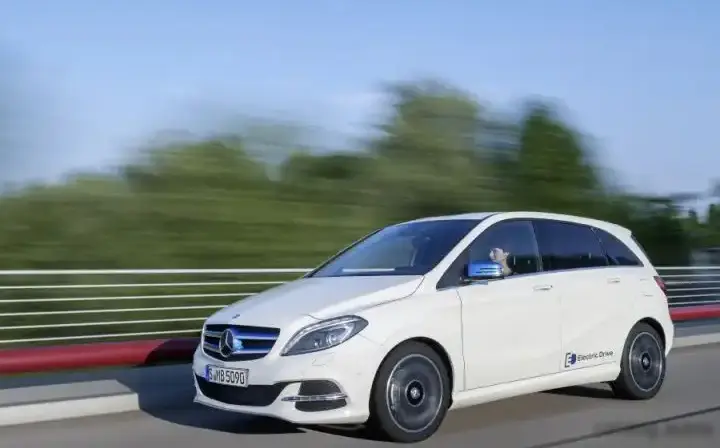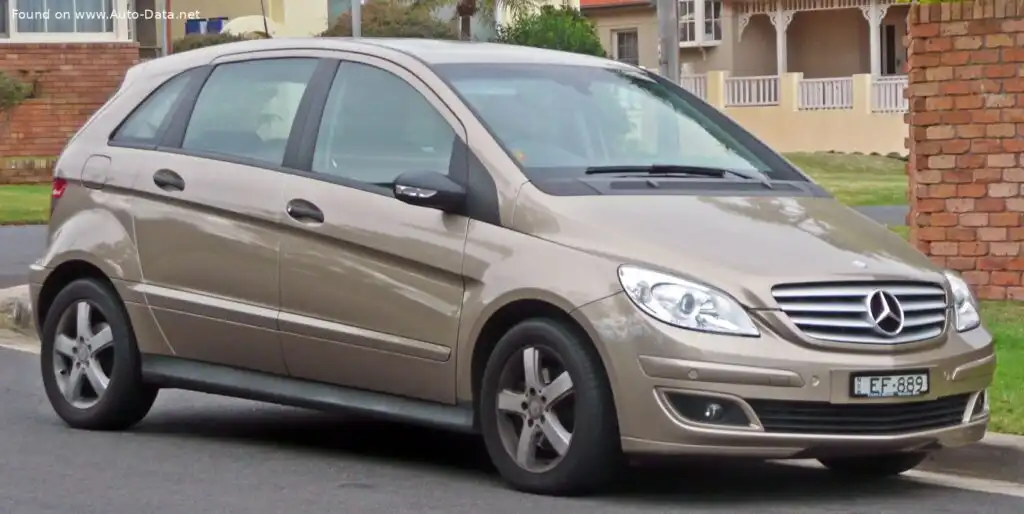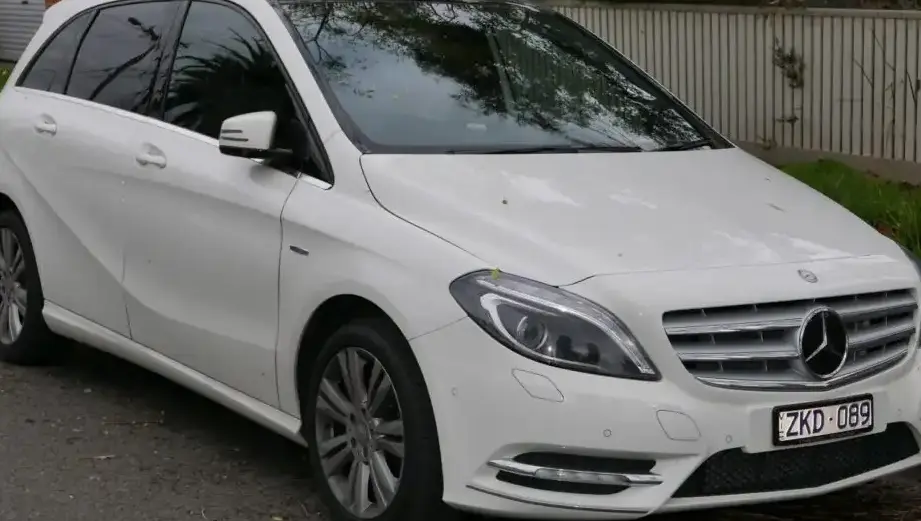
The Mercedes-Benz B-Class (W246) B 180, produced from 2011 to 2014, represented an entry point into the second generation of the compact multi-purpose vehicle (MPV) from Mercedes-Benz. Positioned within the W246 series, which utilized the shared platform with the second-generation A-Class, the B 180 aimed to provide a practical and efficient option for buyers seeking a versatile hatchback with the prestige of the Mercedes-Benz brand. This variant was primarily marketed in Europe and other international markets, offering a balance between affordability and the features expected from a premium automaker. It served as a stepping stone to the more powerful B 200 and B 250 models.
Technical Specifications
| Brand | Mercedes-Benz |
| Model | B-class |
| Generation | B-class (W246) |
| Type (Engine) | B 180 (122 Hp) |
| Start of production | 2011 |
| End of production | 2014 |
| Powertrain Architecture | Internal Combustion engine |
| Body type | Hatchback |
| Seats | 5 |
| Doors | 5 |
| Fuel consumption (urban) | 8.3-8.0 l/100 km (28.3 – 29.4 US mpg, 34 – 35.3 UK mpg, 12 – 12.5 km/l) |
| Fuel consumption (extra urban) | 5.0-4.7 l/100 km (47 – 50 US mpg, 56.5 – 60.1 UK mpg, 20 – 21.3 km/l) |
| Fuel consumption (combined) | 6.2-5.9 l/100 km (37.9 – 39.9 US mpg, 45.6 – 47.9 UK mpg, 16.1 – 16.9 km/l) |
| CO2 emissions | 144-137 g/km |
| Fuel Type | Petrol (Gasoline) |
| Acceleration 0 – 100 km/h | 10.4 sec |
| Acceleration 0 – 62 mph | 10.4 sec |
| Acceleration 0 – 60 mph | 9.9 sec |
| Maximum speed | 190 km/h (118.06 mph) |
| Emission standard | Euro 5 |
| Weight-to-power ratio | 11.4 kg/Hp, 87.5 Hp/tonne |
| Weight-to-torque ratio | 7 kg/Nm, 143.4 Nm/tonne |
| Power | 122 Hp @ 5000 rpm |
| Power per litre | 76.5 Hp/l |
| Torque | 200 Nm @ 1250-4000 rpm (147.51 lb.-ft. @ 1250-4000 rpm) |
| Engine layout | Front, Transverse |
| Engine Model/Code | M 270.910 |
| Engine displacement | 1595 cm3 (97.33 cu. in.) |
| Number of cylinders | 4 |
| Engine configuration | Inline |
| Compression ratio | 10.3:1 |
| Number of valves per cylinder | 4 |
| Fuel injection system | Direct injection |
| Engine aspiration | Turbocharger, Intercooler |
| Engine oil capacity | 5.8 l (6.13 US qt | 5.1 UK qt) |
| Coolant | 7 l (7.4 US qt | 6.16 UK qt) |
| Kerb Weight | 1395 kg (3075.45 lbs.) |
| Max. weight | 1960 kg (4321.06 lbs.) |
| Max load | 565 kg (1245.61 lbs.) |
| Trunk (boot) space – minimum | 488 l (17.23 cu. ft.) |
| Trunk (boot) space – maximum | 1547 l (54.63 cu. ft.) |
| Fuel tank capacity | 50 l (13.21 US gal | 11 UK gal) |
| Length | 4359 mm (171.61 in.) |
| Width | 1786 mm (70.31 in.) |
| Height | 1557 mm (61.3 in.) |
| Wheelbase | 2699 mm (106.26 in.) |
| Front track | 1552 mm (61.1 in.) |
| Rear (Back) track | 1549 mm (60.98 in.) |
| Minimum turning circle | 11 m (36.09 ft.) |
| Drivetrain Architecture | The Internal combustion engine (ICE) drives the front wheels of the vehicle. |
| Drive wheel | Front wheel drive |
| Number of gears and type of gearbox | 6 gears, manual transmission |
| Front suspension | Independent type McPherson |
| Rear suspension | Trailing arm |
| Front brakes | Ventilated discs |
| Rear brakes | Disc |
| Assisting systems | ABS (Anti-lock braking system) |
| Steering type | Steering rack and pinion |
| Power steering | Electric Steering |
| Tires size | 195/65 R15 |
| Wheel rims size | 15 |
Powertrain & Engine Architecture
The B 180 was powered by the M 270.910 engine, a 1.6-liter inline-four cylinder gasoline engine. This engine was part of Mercedes-Benz’s modular engine family, designed for flexibility and efficiency. It featured direct fuel injection and a single turbocharger with an intercooler, allowing for a good balance of power and fuel economy. The engine produced 122 horsepower at 5000 rpm and 200 Nm (147.51 lb-ft) of torque between 1250 and 4000 rpm. The engine’s compression ratio was 10.3:1. The B 180 was typically equipped with a 7-speed dual-clutch transmission (7G-DCT), although a 6-speed manual transmission was also available in some markets. The 7G-DCT offered smooth and quick gear changes, contributing to a more refined driving experience.
Driving Characteristics
The B 180, with its 122 hp and front-wheel drive configuration, offered adequate performance for everyday driving. Acceleration from 0 to 100 km/h (0-62 mph) took around 10.4 seconds. While not particularly sporty, the turbocharger provided a noticeable boost in power, making overtaking maneuvers manageable. Compared to the more powerful B 200 and B 250 models, the B 180 felt less responsive, especially at higher speeds. The 7G-DCT transmission helped to maximize the engine’s efficiency and provided a comfortable driving experience. The gear ratios were tuned for fuel economy rather than outright performance. The suspension was tuned for comfort, providing a relatively smooth ride, although it wasn’t as engaging as some of its rivals.
Equipment & Trim Levels
The B 180 typically came with a reasonable level of standard equipment, including air conditioning, a multi-function steering wheel, and an audio system with a display screen. Safety features such as ABS, ESP (Electronic Stability Program), and multiple airbags were standard. Optional extras included a panoramic sunroof, leather upholstery, navigation system, and parking sensors. Trim levels varied depending on the market, but generally, the B 180 was positioned as the entry-level model, offering a more affordable way to access the B-Class range. Interior upholstery was typically cloth, with the option to upgrade to leatherette or leather. The dashboard layout was functional and modern, with a focus on ergonomics.
Chassis & Braking
The W246 B-Class featured an independent McPherson strut suspension at the front and a semi-independent trailing arm suspension at the rear. This setup provided a good balance between ride comfort and handling. The B 180 was equipped with ventilated disc brakes at the front and solid disc brakes at the rear. ABS (Anti-lock Braking System) was standard, providing enhanced braking performance and stability. The steering was electrically assisted, offering a light and precise feel. The chassis was designed to maximize interior space while maintaining a relatively low weight.
Market Reception & Comparison
The B 180 was generally well-received by critics as a practical and efficient MPV. However, some reviewers noted that the engine lacked the punch of its more powerful siblings. Fuel economy was a strong point, with combined fuel consumption figures ranging from 5.9 to 6.2 l/100 km. Compared to the B 200, the B 180 offered lower running costs but less performance. The B 250, with its more powerful engine, provided a significantly more engaging driving experience but at a higher price point. The B 180 competed with other compact MPVs such as the Volkswagen Golf Sportsvan and the Ford C-Max.
Legacy
The M 270 engine family, including the 1.6-liter unit found in the B 180, proved to be generally reliable, although some owners have reported issues with the turbocharger and fuel injectors. The 7G-DCT transmission is also known to be durable when properly maintained. In the used car market, the B 180 represents a relatively affordable entry point into Mercedes-Benz ownership. Its practicality, fuel efficiency, and reasonable running costs make it a popular choice for buyers seeking a versatile and reliable compact MPV. However, potential buyers should be aware of the potential for turbocharger and fuel injector issues and ensure that the vehicle has been regularly serviced.