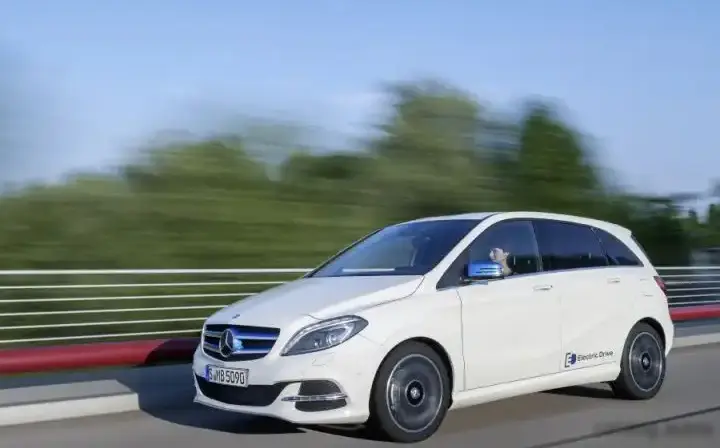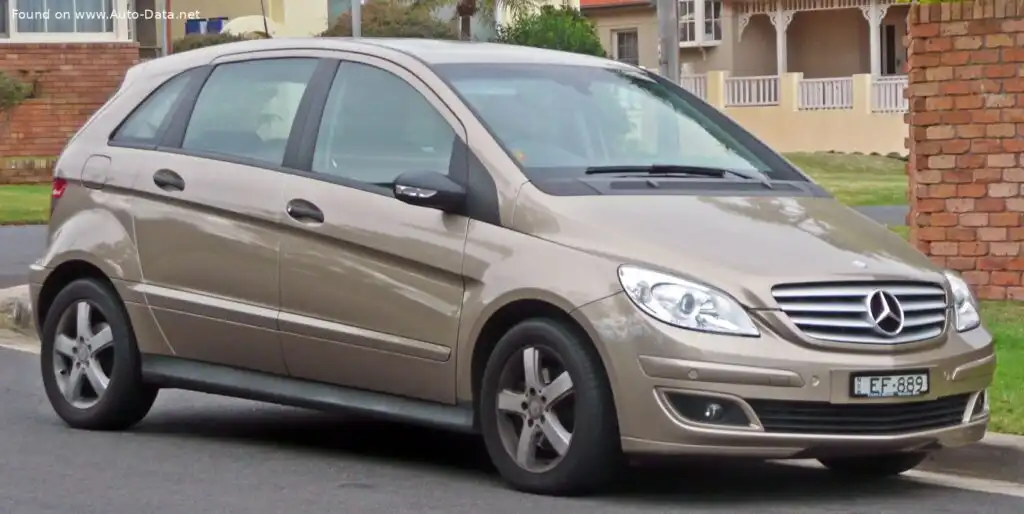
The Mercedes-Benz B-Class (W246) B 180 CDI BlueEFFICIENCY, produced from 2013 to 2014, represented an entry-level offering within the second generation of the B-Class compact hatchback. Positioned as a fuel-efficient and practical option, it catered to buyers prioritizing economy and usability over outright performance. This variant was a key component of Mercedes-Benz’s strategy to broaden the appeal of the B-Class, offering a diesel-powered alternative to the gasoline-fueled models. It was built on the W246 platform, shared with other compact Mercedes-Benz vehicles of the era.
Technical Specifications
| Brand | Mercedes-Benz |
| Model | B-class |
| Generation | B-class (W246) |
| Type (Engine) | B 180 CDI (109 Hp) BlueEFFICIENCY |
| Start of production | 2013 |
| End of production | 2014 |
| Powertrain Architecture | Internal Combustion engine |
| Body type | Hatchback |
| Seats | 5 |
| Doors | 5 |
| Fuel consumption (urban) | 4.4 l/100 km (53.5 US mpg, 64.2 UK mpg, 22.7 km/l) |
| Fuel consumption (extra urban) | 3.4 l/100 km (69.2 US mpg, 83.1 UK mpg, 29.4 km/l) |
| Fuel consumption (combined) | 3.8 l/100 km (61.9 US mpg, 74.3 UK mpg, 26.3 km/l) |
| CO2 emissions | 98 g/km |
| Fuel Type | Diesel |
| Acceleration 0 – 100 km/h | 11.6 sec |
| Acceleration 0 – 62 mph | 11.6 sec |
| Acceleration 0 – 60 mph | 11 sec |
| Maximum speed | 190 km/h (118.06 mph) |
| Emission standard | Euro 5 |
| Weight-to-power ratio | 13.1 kg/Hp, 76.5 Hp/tonne |
| Weight-to-torque ratio | 5.5 kg/Nm, 182.5 Nm/tonne |
| Power | 109 Hp @ 4000 rpm |
| Power per litre | 74.6 Hp/l |
| Torque | 260 Nm @ 1750-2500 rpm (191.77 lb.-ft. @ 1750-2500 rpm) |
| Engine layout | Front, Transverse |
| Engine Model/Code | OM 607.951 |
| Engine displacement | 1461 cm3 (89.16 cu. in.) |
| Number of cylinders | 4 |
| Engine configuration | Inline |
| Compression ratio | 15.5:1 |
| Number of valves per cylinder | 4 |
| Fuel injection system | Diesel Commonrail |
| Engine aspiration | Turbocharger, Intercooler |
| Engine oil capacity | 4.5 l (4.76 US qt | 3.96 UK qt) |
| Coolant capacity | 6.3 l (6.66 US qt | 5.54 UK qt) |
| Kerb Weight | 1425 kg (3141.59 lbs.) |
| Max. weight | 1900 kg (4188.78 lbs.) |
| Max load | 475 kg (1047.2 lbs.) |
| Trunk (boot) space – minimum | 488 l (17.23 cu. ft.) |
| Trunk (boot) space – maximum | 1547 l (54.63 cu. ft.) |
| Fuel tank capacity | 40 l (10.57 US gal | 8.8 UK gal) |
| Length | 4359 mm (171.61 in.) |
| Width | 1786 mm (70.31 in.) |
| Height | 1557 mm (61.3 in.) |
| Wheelbase | 2699 mm (106.26 in.) |
| Front track | 1552 mm (61.1 in.) |
| Rear track | 1549 mm (60.98 in.) |
| Minimum turning circle | 11 m (36.09 ft.) |
| Drivetrain Architecture | Front wheel drive |
| Number of gears | 6 gears, manual transmission |
| Front suspension | Independent type McPherson |
| Rear suspension | Trailing arm |
| Front brakes | Ventilated discs |
| Rear brakes | Disc |
| Assisting systems | ABS (Anti-lock braking system) |
| Steering type | Steering rack and pinion |
| Power steering | Electric Steering |
| Tires size | 195/65 R15 |
| Wheel rims size | 15 |
INTRODUCTION
The W246 B-Class, launched in 2011, represented a significant departure from its predecessor, moving towards a more conventional hatchback design. The B 180 CDI BlueEFFICIENCY, introduced in 2013, was a diesel-powered variant aimed at maximizing fuel economy. It slotted into the B-Class range as the entry-level diesel option, positioned below the more powerful B 200 CDI and B 220 CDI models. The “BlueEFFICIENCY” designation indicated the inclusion of various fuel-saving technologies, aligning with Mercedes-Benz’s commitment to reducing emissions and improving efficiency.
Powertrain & Engine Architecture
At the heart of the B 180 CDI BlueEFFICIENCY lies the OM607.951 1.5-liter inline-four cylinder diesel engine. This engine is a member of Mercedes-Benz’s modular engine family, known for its compact size and efficiency. It features a turbocharger with an intercooler to boost power and torque, and utilizes a common-rail direct fuel injection system for precise fuel delivery. The engine produces 109 horsepower at 4000 rpm and 260 Nm (192 lb-ft) of torque between 1750 and 2500 rpm. The engine boasts a high compression ratio of 15.5:1, contributing to its thermal efficiency. The B 180 CDI was typically paired with a six-speed manual transmission, although a dual-clutch automatic transmission (7G-DCT) was also available as an option. The 7G-DCT offered quicker shifts and improved fuel economy compared to a traditional automatic.
Driving Characteristics
The B 180 CDI BlueEFFICIENCY prioritized fuel economy over outright performance. Acceleration from 0 to 62 mph (0-100 km/h) took approximately 11.6 seconds, and the top speed was 190 km/h (118 mph). While not particularly sporty, the engine provided adequate power for everyday driving situations. The turbocharger helped to mitigate turbo lag, delivering a usable amount of torque at lower engine speeds. The manual transmission offered precise gear changes, while the optional 7G-DCT provided smooth and rapid shifts. Compared to the more powerful B 200 CDI, the B 180 CDI felt noticeably slower, particularly during overtaking maneuvers. However, its lower power output also translated to improved fuel economy.
Equipment & Trim Levels
The B 180 CDI BlueEFFICIENCY came standard with a respectable level of equipment. Standard features typically included air conditioning, a multi-function steering wheel, electric windows, and a basic audio system. Safety features such as ABS, ESP (Electronic Stability Program), and multiple airbags were also standard. Optional extras included a more advanced infotainment system with navigation, leather upholstery, panoramic sunroof, and parking sensors. Trim levels varied depending on the market, but generally offered progressively more luxurious features and equipment. The interior design was functional and modern, with a focus on practicality and usability.
Chassis & Braking
The B-Class (W246) featured a McPherson strut front suspension and a multi-link rear suspension, providing a comfortable and controlled ride. The B 180 CDI, being the entry-level diesel, typically came equipped with ventilated front disc brakes and solid rear disc brakes. The braking system was adequate for the vehicle’s weight and performance, and ABS (Anti-lock Braking System) was standard. The steering was electrically assisted, providing light and precise steering feel. The suspension was tuned for comfort, prioritizing ride quality over sporty handling.
Market Reception & Comparison
The B 180 CDI BlueEFFICIENCY was generally well-received by critics for its fuel efficiency and practicality. It was praised for its comfortable ride and spacious interior. However, some reviewers criticized its lack of performance and relatively basic interior trim. Compared to the B 200 CDI, the B 180 CDI offered significantly better fuel economy but at the expense of performance. The B 200 CDI provided a more engaging driving experience, while the B 180 CDI was better suited for drivers prioritizing economy and low running costs. The B 180 CDI also competed with other compact hatchbacks, such as the Volkswagen Golf and Ford Focus, offering a more premium experience but at a higher price point.
Legacy
The OM607.951 engine, used in the B 180 CDI, proved to be a reliable and durable unit when properly maintained. While diesel engines are generally more complex than their gasoline counterparts, the OM607.951 has a reputation for longevity. In the used car market, the B 180 CDI BlueEFFICIENCY remains a popular choice for buyers seeking a fuel-efficient and practical compact hatchback. However, potential buyers should be aware of the potential for diesel particulate filter (DPF) issues, particularly if the vehicle has been primarily used for short journeys. Regular servicing and the use of high-quality diesel fuel are essential for maintaining the long-term reliability of this powertrain.