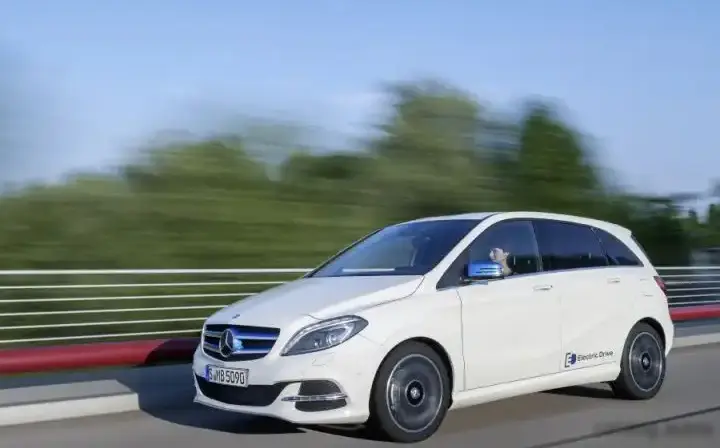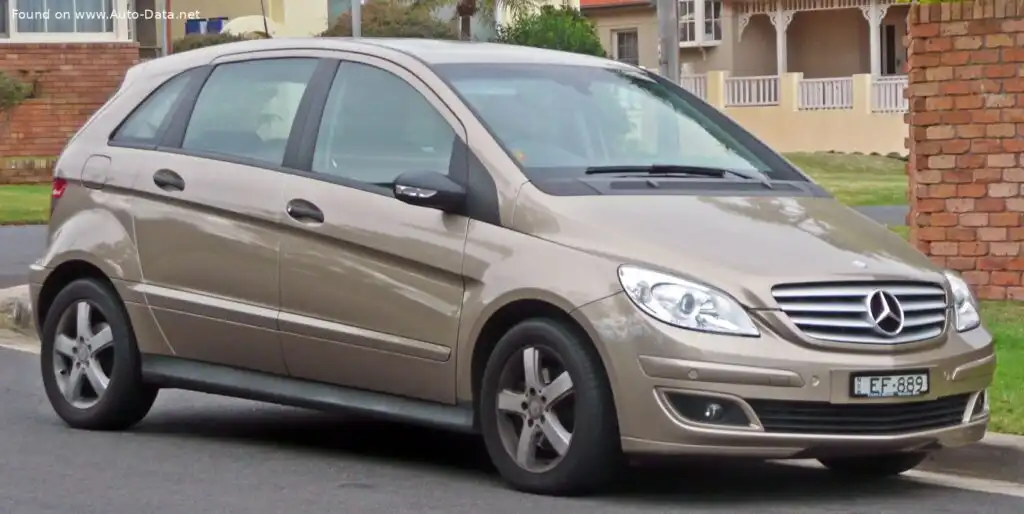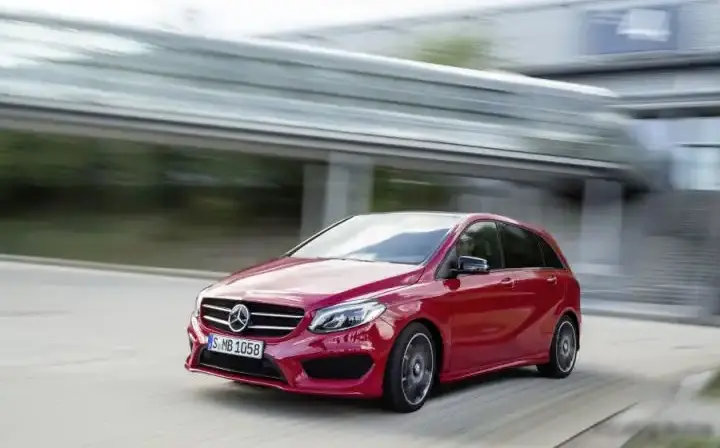
The Mercedes-Benz B 160, part of the W246 facelift generation produced from 2015 to 2018, represented the entry point into the revised B-Class range. Positioned as a practical and relatively affordable compact hatchback, it aimed to deliver Mercedes-Benz quality and comfort in a user-friendly package. The W246 B-Class, launched in 2011 and facelifted in 2014, was a significant departure from its predecessor, moving towards a more conventional hatchback design and offering increased interior space and improved driving dynamics. The B 160 specifically targeted buyers prioritizing fuel efficiency and lower running costs over outright performance, making it a popular choice in European markets.
Technical Specifications
| Brand | Mercedes-Benz |
| Model | B-class |
| Generation | B-class (W246 facelift 2014) |
| Type (Engine) | B 160 (102 Hp) |
| Start of production | 2015 |
| End of production | 2018 |
| Powertrain Architecture | Internal Combustion engine |
| Body type | Hatchback |
| Seats | 5 |
| Doors | 5 |
| Fuel consumption (urban) | 7.2 l/100 km (32.7 US mpg, 39.2 UK mpg, 13.9 km/l) |
| Fuel consumption (extra urban) | 4.4-4.6 l/100 km (53.5 – 51.1 US mpg, 64.2 – 61.4 UK mpg, 22.7 – 21.7 km/l) |
| Fuel consumption (combined) | 5.5-5.6 l/100 km (42.8 – 42 US mpg, 51.4 – 50.4 UK mpg, 18.2 – 17.9 km/l) |
| CO2 emissions | 126-130 g/km |
| Fuel Type | Petrol (Gasoline) |
| Acceleration 0 – 100 km/h | 10.7 sec |
| Acceleration 0 – 62 mph | 10.7 sec |
| Acceleration 0 – 60 mph | 10.2 sec |
| Maximum speed | 190 km/h (118.06 mph) |
| Emission standard | Euro 6 |
| Weight-to-power ratio | 12.9 kg/Hp, 77.3 Hp/tonne |
| Weight-to-torque ratio | 7.3 kg/Nm, 136.4 Nm/tonne |
| Power | 102 Hp @ 4500-6000 rpm |
| Power per litre | 63.9 Hp/l |
| Torque | 180 Nm @ 1200-3500 rpm (132.76 lb.-ft. @ 1200-3500 rpm) |
| Engine layout | Front, Transverse |
| Engine Model/Code | M 270.910 |
| Engine displacement | 1595 cm3 (97.33 cu. in.) |
| Number of cylinders | 4 |
| Engine configuration | Inline |
| Compression ratio | 10.3:1 |
| Fuel injection system | Direct injection |
| Engine aspiration | Turbocharger, Intercooler |
| Engine oil capacity | 5.8 l (6.13 US qt | 5.1 UK qt) |
| Coolant | 7 l (7.4 US qt | 6.16 UK qt) |
| Kerb Weight | 1320 kg (2910.1 lbs.) |
| Max. weight | 1960 kg (4321.06 lbs.) |
| Max load | 640 kg (1410.96 lbs.) |
| Trunk (boot) space – minimum | 488 l (17.23 cu. ft.) |
| Trunk (boot) space – maximum | 1547 l (54.63 cu. ft.) |
| Fuel tank capacity | 50 l (13.21 US gal | 11 UK gal) |
| Max. roof load | 75 kg (165.35 lbs.) |
| Permitted trailer load with brakes (12%) | 1000 kg (2204.62 lbs.) |
| Permitted trailer load without brakes | 695 kg (1532.21 lbs.) |
| Length | 4393 mm (172.95 in.) |
| Width | 1786 mm (70.31 in.) |
| Width including mirrors | 2010 mm (79.13 in.) |
| Height | 1557 mm (61.3 in.) |
| Wheelbase | 2699 mm (106.26 in.) |
| Front track | 1552 mm (61.1 in.) |
| Rear (Back) track | 1549 mm (60.98 in.) |
| Front overhang | 914 mm (35.98 in.) |
| Rear overhang | 780 mm (30.71 in.) |
| Drag coefficient (Cd) | 0.26 |
| Minimum turning circle (turning diameter) | 11.00 m (36.09 ft.) |
| Drivetrain Architecture | The Internal combustion engine (ICE) drives the front wheels of the vehicle. |
| Drive wheel | Front wheel drive |
| Number of gears and type of gearbox | 6 gears, manual transmission |
| Front suspension | Independent, type McPherson with coil spring and anti-roll bar |
| Rear suspension | Independent multi-link suspension |
| Front brakes | Ventilated discs |
| Rear brakes | Disc |
| Assisting systems | ABS (Anti-lock braking system) |
| Steering type | Steering rack and pinion |
| Power steering | Electric Steering |
| Tires size | 195/65 R15 |
| Wheel rims size | 15 |
INTRODUCTION
The Mercedes-Benz B 160 (W246 facelift) offered from 2015-2018, was a front-wheel-drive, five-door hatchback designed to appeal to buyers seeking a practical and comfortable compact car. It sat at the base of the B-Class lineup, providing an accessible entry point into the Mercedes-Benz brand. The W246 generation, and particularly the facelifted model, represented a move upmarket for the B-Class, with a more refined interior and improved build quality. The B 160 was primarily sold in European markets, where compact hatchbacks are highly popular, and competed with vehicles like the Audi A3, BMW 1 Series, and Volkswagen Golf.
Powertrain & Engine Architecture
The B 160 was powered by the M 270.910 1.6-liter inline-four cylinder gasoline engine. This engine featured direct fuel injection and a single turbocharger with an intercooler, producing 102 horsepower at 4500-6000 rpm and 180 Nm (132.76 lb-ft) of torque between 1200-3500 rpm. The engine was transversely mounted at the front of the vehicle. The M 270 family of engines was known for its relatively compact size and efficiency. The B 160 was exclusively offered with a 6-speed manual transmission. This transmission was chosen to maximize fuel economy and provide a more engaging driving experience compared to an automatic option. The engine’s turbocharger provided a noticeable boost in power at lower engine speeds, helping to compensate for the relatively small displacement.
Driving Characteristics
The B 160, with its 102 hp and 6-speed manual transmission, offered adequate performance for everyday driving. Acceleration from 0-100 km/h (0-62 mph) took approximately 10.7 seconds, and top speed was limited to 190 km/h (118 mph). While not particularly sporty, the engine provided sufficient power for merging onto highways and overtaking slower traffic. The 6-speed manual transmission allowed drivers to keep the engine in its optimal power band, maximizing efficiency and responsiveness. Compared to higher-output B-Class variants, such as the B 200 or B 250, the B 160 felt noticeably less powerful, especially at higher speeds. However, the lighter engine weight contributed to a more balanced feel in corners. The gear ratios were tuned for fuel efficiency, resulting in a slightly taller overall gearing compared to sportier models.
Equipment & Trim Levels
The B 160 typically came standard with features such as air conditioning, power windows, power mirrors, a multi-function steering wheel, and a basic audio system. Safety features included ABS, ESP (Electronic Stability Program), and multiple airbags. Interior upholstery was typically cloth, with options for leather or leatherette available at an extra cost. Optional extras included a larger infotainment screen with navigation, parking sensors, a panoramic sunroof, and upgraded audio systems. The dashboard layout was relatively straightforward and functional, with a focus on ease of use. Trim levels were generally kept simple, with the B 160 representing the base specification. Higher trim levels, available on other B-Class models, offered more luxurious appointments and additional features.
Chassis & Braking
The W246 B-Class featured an independent suspension system at all four wheels. The front suspension utilized a McPherson strut design with coil springs and an anti-roll bar, while the rear suspension employed a multi-link setup. This configuration provided a comfortable ride and good handling characteristics. The B 160 was equipped with ventilated disc brakes at the front and solid disc brakes at the rear. ABS (Anti-lock Braking System) was standard, providing enhanced braking performance and stability. The steering system was a rack-and-pinion type with electric power assistance, offering precise and responsive steering feel. The relatively lightweight engine contributed to a balanced chassis, improving handling and cornering stability.
Market Reception & Comparison
The B 160 was generally well-received by critics as a practical and affordable entry-level option in the B-Class range. It was praised for its fuel efficiency, comfortable ride, and spacious interior. However, some reviewers noted that the engine lacked outright power, particularly when fully loaded or driving on steep inclines. Compared to the more powerful B 200 and B 250 models, the B 160 offered significantly lower running costs but at the expense of performance. Fuel economy figures of 5.5-5.6 l/100 km (42.8-42 US mpg) were competitive for its class. Reliability was generally good, with the M 270 engine proving to be a durable and dependable unit.
Legacy
The Mercedes-Benz B 160 (W246 facelift) remains a relatively common sight on the used car market. Its reputation for reliability and fuel efficiency makes it an attractive option for buyers seeking a practical and affordable compact hatchback. While not a performance-oriented vehicle, the B 160 provides a comfortable and refined driving experience, typical of the Mercedes-Benz brand. The M 270 engine, when properly maintained, is known to be a long-lasting unit. However, potential buyers should be aware of the potential for turbocharger issues and ensure that the vehicle has been regularly serviced. The B 160 represents a solid and dependable choice for those prioritizing practicality and economy over outright performance.