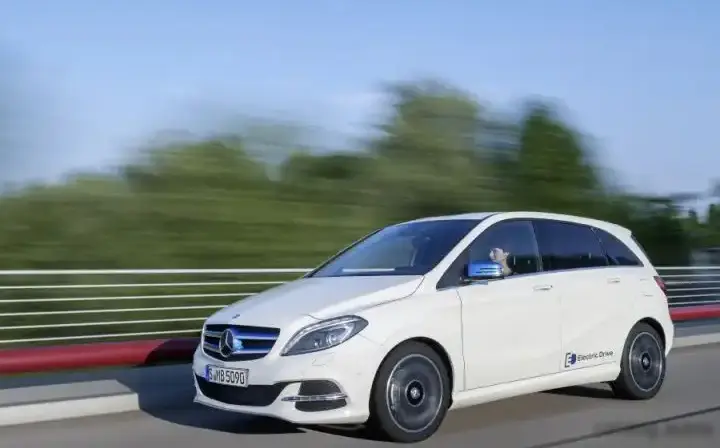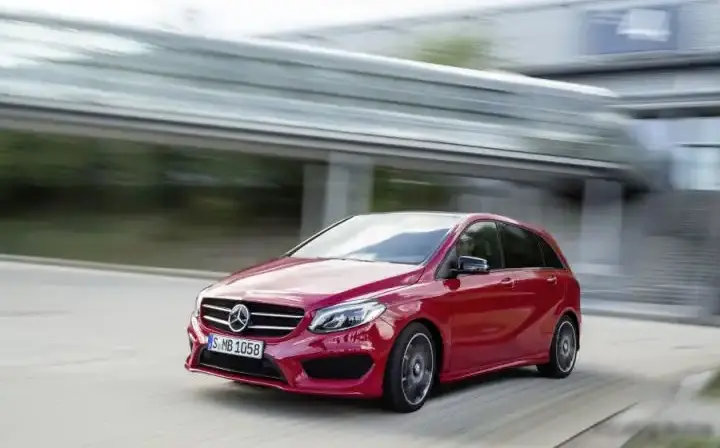
The Mercedes-Benz B-Class (W246 facelift) B 160 CDI, powered by a 90 horsepower diesel engine, was a key variant in the second generation of the B-Class, produced from 2014 to 2018. This model represented an entry point into the premium compact multi-purpose vehicle (MPV) segment, offering a blend of practicality, fuel efficiency, and Mercedes-Benz refinement. Positioned below the more powerful B 180 d and B 200 d models, the B 160 CDI catered to buyers prioritizing economy and lower running costs. It was primarily sold in European markets, where diesel engines held significant popularity due to favorable taxation and fuel prices.
Technical Specifications
| Brand | Mercedes-Benz |
| Model | B-class |
| Generation | B-class (W246 facelift 2014) |
| Type (Engine) | B 160 CDI (90 Hp) |
| Start of production | 2014 |
| End of production | 2018 |
| Powertrain Architecture | Internal Combustion engine |
| Body type | Hatchback |
| Seats | 5 |
| Doors | 5 |
| Fuel consumption (urban) | 5.0-4.9 l/100 km (47 – 48 US mpg, 56.5 – 57.6 UK mpg, 20 – 20.4 km/l) |
| Fuel consumption (extra urban) | 3.9-3.7 l/100 km (60.3 – 63.6 US mpg, 72.4 – 76.3 UK mpg, 25.6 – 27 km/l) |
| Fuel consumption (combined) | 4.3-4.1 l/100 km (54.7 – 57.4 US mpg, 65.7 – 68.9 UK mpg, 23.3 – 24.4 km/l) |
| CO2 emissions | 112-108 g/km |
| Fuel Type | Diesel |
| Acceleration 0 – 100 km/h | 14 sec |
| Acceleration 0 – 62 mph | 14 sec |
| Acceleration 0 – 60 mph | 13.3 sec |
| Maximum speed | 180 km/h (111.85 mph) |
| Emission standard | Euro 6 |
| Weight-to-power ratio | 15.8 kg/Hp, 63.4 Hp/tonne |
| Weight-to-torque ratio | 5.9 kg/Nm, 169 Nm/tonne |
| Power | 90 Hp @ 2750-4000 rpm |
| Power per litre | 61.6 Hp/l |
| Torque | 240 Nm @ 1700-2500 rpm (177.01 lb.-ft. @ 1700-2500 rpm) |
| Engine layout | Front, Transverse |
| Engine Model/Code | OM 607.951 |
| Engine displacement | 1461 cm3 (89.16 cu. in.) |
| Number of cylinders | 4 |
| Engine configuration | Inline |
| Compression ratio | 15.5:1 |
| Fuel injection system | Diesel Commonrail |
| Engine aspiration | Turbocharger, Intercooler |
| Engine oil capacity | 4.5 l (4.76 US qt | 3.96 UK qt) |
| Coolant | 6.3 l (6.66 US qt | 5.54 UK qt) |
| Kerb Weight | 1420 kg (3130.56 lbs.) |
| Max. weight | 1985 kg (4376.18 lbs.) |
| Max load | 565 kg (1245.61 lbs.) |
| Trunk (boot) space – minimum | 488 l (17.23 cu. ft.) |
| Trunk (boot) space – maximum | 1547 l (54.63 cu. ft.) |
| Fuel tank capacity | 50 l (13.21 US gal | 11 UK gal) |
| Length | 4393 mm (172.95 in.) |
| Width | 1786 mm (70.31 in.) |
| Height | 1557 mm (61.3 in.) |
| Wheelbase | 2699 mm (106.26 in.) |
| Front track | 1552 mm (61.1 in.) |
| Rear track | 1549 mm (60.98 in.) |
| Ride height (ground clearance) | 98 mm (3.86 in.) |
| Minimum turning circle | 11 m (36.09 ft.) |
| Drivetrain Architecture | Front wheel drive |
| Number of gears and type of gearbox | 6 gears, manual transmission |
| Front suspension | Independent, type McPherson with coil spring and anti-roll bar |
| Rear suspension | Independent coil spring |
| Front brakes | Ventilated discs |
| Rear brakes | Disc |
| Assisting systems | ABS (Anti-lock braking system) |
| Steering type | Steering rack and pinion |
| Tires size | 195/65 R15 |
| Wheel rims size | 15 |
INTRODUCTION
The W246 B-Class, launched in 2011 and facelifted in 2014, represented a significant step forward for Mercedes-Benz in the compact MPV segment. The facelift brought revised styling, improved interior quality, and updated technology. The B 160 CDI, introduced with the facelift, was designed to offer an economical and practical option for buyers seeking a versatile vehicle. It slotted into the range as the base diesel model, appealing to those who didn’t require the extra performance of the B 180 d or B 200 d. The B-Class competed with vehicles like the BMW 2 Series Active Tourer, Audi A3 Sportback, and Volkswagen Golf Sportsvan.
Powertrain & Engine Architecture
The heart of the B 160 CDI is the OM607.951 1.5-liter inline-four cylinder diesel engine. This engine is part of Mercedes-Benz’s modular engine family and features a turbocharger with an intercooler to boost power and efficiency. It utilizes a second-generation common rail direct injection system, delivering fuel at extremely high pressures for optimized combustion. The engine produces 90 horsepower at 2750-4000 rpm and 240 Nm (177 lb-ft) of torque between 1700-2500 rpm. The engine boasts a high compression ratio of 15.5:1, typical for diesel engines, contributing to its thermal efficiency. The B 160 CDI was typically paired with a 6-speed manual transmission, although a 7-speed dual-clutch automatic (7G-DCT) was available as an option. The automatic transmission offered smoother shifts and enhanced convenience, but at a slight cost to fuel economy.
Driving Characteristics
The B 160 CDI, with its 90 horsepower and relatively low weight, offered adequate performance for everyday driving. Acceleration from 0 to 100 km/h (0-62 mph) took around 14 seconds, making it no performance car. However, the engine’s strong low-end torque made it feel more responsive in urban environments and during overtaking maneuvers. The manual transmission provided a direct connection to the engine, allowing drivers to maximize fuel efficiency. The automatic transmission, while convenient, could sometimes feel hesitant during quick acceleration. The B-Class’s suspension provided a comfortable ride, absorbing bumps and imperfections in the road well. Steering was light and precise, making it easy to maneuver in tight spaces.
Equipment & Trim Levels
The B 160 CDI came with a reasonable level of standard equipment, including air conditioning, a multi-function steering wheel, electric windows, and a basic audio system. Higher trim levels, such as the Style and AMG Line, added features like alloy wheels, upgraded interior trim, and more advanced infotainment systems. Optional extras included navigation, parking sensors, a panoramic sunroof, and leather upholstery. Interior upholstery was typically cloth, but leather options were available. The dashboard layout was modern and functional, with a central display screen providing access to various vehicle settings and information.
Chassis & Braking
The W246 B-Class featured a McPherson strut front suspension and an independent multi-link rear suspension, providing a good balance of comfort and handling. The front brakes were ventilated discs, while the rear brakes were solid discs. Anti-lock Braking System (ABS) was standard, enhancing safety during emergency braking. The B 160 CDI’s relatively low weight helped to reduce stress on the braking system. Stabilizer bars were fitted to both the front and rear axles to minimize body roll during cornering.
Market Reception & Comparison
The B 160 CDI was generally well-received by critics for its fuel efficiency and practicality. However, some reviewers noted its lack of outright performance compared to higher-powered variants. Compared to the B 180 d, the B 160 CDI offered significantly lower running costs but sacrificed acceleration and overall refinement. The B 200 d provided a more compelling blend of performance and economy, but at a higher price point. Fuel economy was a major selling point, with the B 160 CDI achieving combined fuel consumption figures of around 4.1-4.3 l/100 km (54.7-57.4 US mpg). Reliability was generally good, although some owners reported minor issues with the diesel particulate filter (DPF).
Legacy
The B 160 CDI, while not the most exciting variant in the W246 B-Class lineup, remains a popular choice in the used car market, particularly for buyers seeking an economical and practical MPV. The OM607.951 engine is known for its durability and relatively low maintenance costs, provided it is properly serviced. The availability of spare parts is good, and the B-Class’s overall build quality is generally high. However, potential buyers should be aware of the potential for DPF issues, especially if the vehicle has primarily been used for short journeys. The B 160 CDI represents a sensible and affordable entry point into the world of Mercedes-Benz ownership.