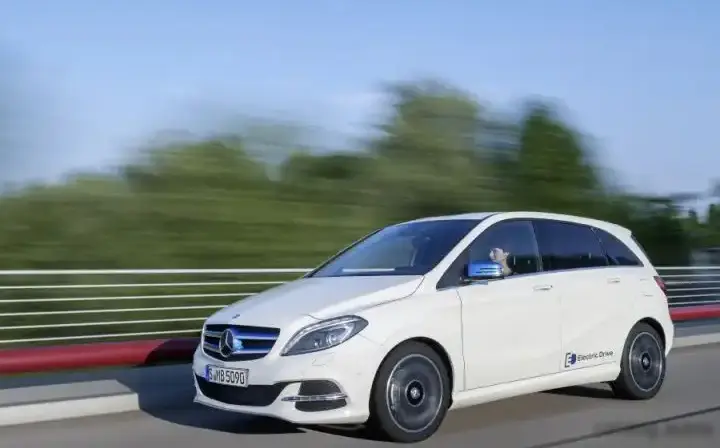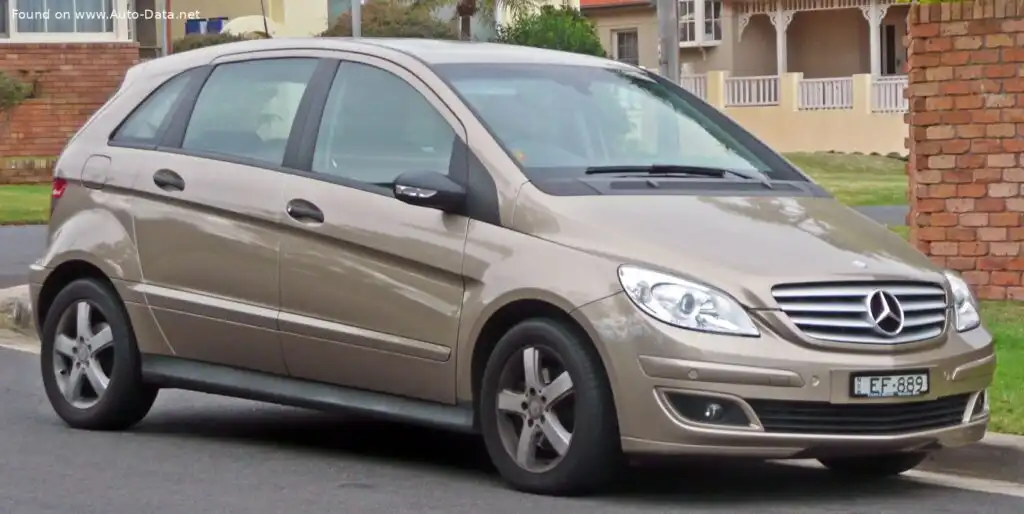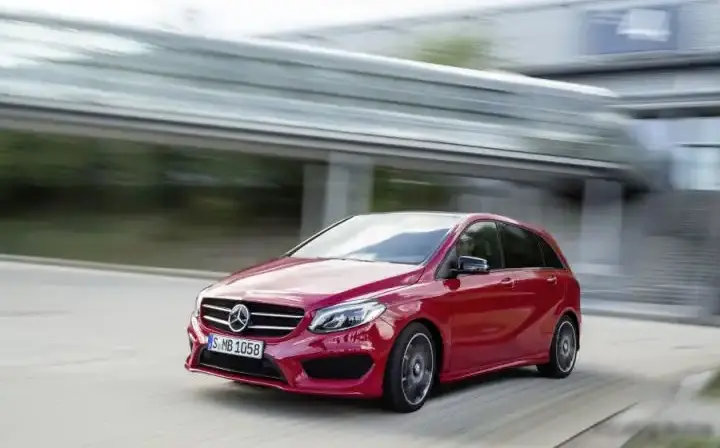
The Mercedes-Benz B 160 CDI, produced from 2014 to 2018 as part of the W246 facelift generation of the B-Class, represented an entry point into the premium compact multi-purpose vehicle (MPV) segment. This variant, powered by a 1.5-liter turbocharged diesel engine producing 90 horsepower and paired with a 7-speed dual-clutch transmission (DCT), was primarily aimed at European markets where fuel efficiency and lower running costs were highly valued. It occupied the base trim level within the B-Class range, positioned below higher-powered diesel and petrol variants like the B 180 d and B 200.
Technical Specifications
| Brand | Mercedes-Benz |
| Model | B-class |
| Generation | B-class (W246 facelift 2014) |
| Type (Engine) | B 160 CDI (90 Hp) DCT |
| Start of production | 2014 |
| End of production | 2018 |
| Powertrain Architecture | Internal Combustion engine |
| Body type | Hatchback |
| Seats | 5 |
| Doors | 5 |
| Fuel consumption (urban) | 4.5-4.0 l/100 km (52.3 – 58.8 US mpg, 62.8 – 70.6 UK mpg, 22.2 – 25 km/l) |
| Fuel consumption (extra urban) | 4.0-3.7 l/100 km (58.8 – 63.6 US mpg, 70.6 – 76.3 UK mpg, 25 – 27 km/l) |
| Fuel consumption (combined) | 4.2-4.0 l/100 km (56 – 58.8 US mpg, 67.3 – 70.6 UK mpg, 23.8 – 25 km/l) |
| CO2 emissions | 111-104 g/km |
| Fuel Type | Diesel |
| Acceleration 0 – 100 km/h | 14.3 sec |
| Acceleration 0 – 62 mph | 14.3 sec |
| Acceleration 0 – 60 mph | 13.6 sec |
| Maximum speed | 180 km/h (111.85 mph) |
| Emission standard | Euro 6 |
| Weight-to-power ratio | 16.1 kg/Hp, 62.1 Hp/tonne |
| Weight-to-torque ratio | 6 kg/Nm, 165.5 Nm/tonne |
| Power | 90 Hp @ 2750-4000 rpm |
| Power per litre | 61.6 Hp/l |
| Torque | 240 Nm @ 1700-2500 rpm (177.01 lb.-ft. @ 1700-2500 rpm) |
| Engine layout | Front, Transverse |
| Engine Model/Code | OM 607.951 |
| Engine displacement | 1461 cm3 (89.16 cu. in.) |
| Number of cylinders | 4 |
| Engine configuration | Inline |
| Compression ratio | 15.5:1 |
| Fuel injection system | Diesel Commonrail |
| Engine aspiration | Turbocharger, Intercooler |
| Engine oil capacity | 4.5 l (4.76 US qt | 3.96 UK qt) |
| Coolant capacity | 6.3 l (6.66 US qt | 5.54 UK qt) |
| Kerb Weight | 1450 kg (3196.7 lbs.) |
| Max. weight | 1985 kg (4376.18 lbs.) |
| Max load | 535 kg (1179.47 lbs.) |
| Trunk (boot) space – minimum | 488 l (17.23 cu. ft.) |
| Trunk (boot) space – maximum | 1547 l (54.63 cu. ft.) |
| Fuel tank capacity | 50 l (13.21 US gal | 11 UK gal) |
| Length | 4393 mm (172.95 in.) |
| Width | 1786 mm (70.31 in.) |
| Height | 1557 mm (61.3 in.) |
| Wheelbase | 2699 mm (106.26 in.) |
| Front track | 1552 mm (61.1 in.) |
| Rear track | 1549 mm (60.98 in.) |
| Ride height (ground clearance) | 98 mm (3.86 in.) |
| Minimum turning circle | 11 m (36.09 ft.) |
| Drivetrain Architecture | Front wheel drive |
| Number of gears and type of gearbox | 7 gears, automatic transmission G-DCT |
| Front suspension | Independent, type McPherson with coil spring and anti-roll bar |
| Rear suspension | Independent coil spring |
| Front brakes | Ventilated discs |
| Rear brakes | Disc |
| Assisting systems | ABS (Anti-lock braking system) |
| Steering type | Steering rack and pinion |
| Tires size | 195/65 R15 |
| Wheel rims size | 15 |
INTRODUCTION
The W246 B-Class, launched in 2011 and facelifted in 2014, aimed to broaden Mercedes-Benz’s appeal by offering a more practical and affordable alternative to traditional saloon cars. The B 160 CDI, introduced with the facelift, was a key component of this strategy. It utilized a downsized 1.5-liter diesel engine, a move reflecting the industry trend towards improved fuel economy and reduced emissions. This variant was primarily sold in Europe, where diesel engines and compact MPVs were particularly popular. The facelift brought styling updates, improved interior quality, and enhanced safety features to the B-Class range.
Powertrain & Engine Architecture
The heart of the B 160 CDI is the OM 607.951, a 1.5-liter inline-four cylinder diesel engine. This engine is a member of Mercedes-Benz’s modular engine family, designed for efficiency and scalability. It features a turbocharger with an intercooler to boost power output, and a common rail direct fuel injection system operating at very high pressures (typically around 2000 bar) for optimized combustion. The engine also incorporates advanced technologies like variable valve timing and a particulate filter to meet stringent Euro 6 emission standards. The 7-speed G-DCT (Getriebe Doppelkupplungsgetriebe) dual-clutch transmission provides quick and smooth gear changes, contributing to both performance and fuel efficiency. This transmission is known for its responsiveness and ability to anticipate driver inputs.
Driving Characteristics
The B 160 CDI, with its 90 horsepower and 240 Nm (177 lb-ft) of torque, wasn’t designed for outright speed. Acceleration from 0 to 100 km/h (0-62 mph) takes around 14.3 seconds, and its top speed is limited to 180 km/h (112 mph). However, the engine delivers a usable amount of torque from low engine speeds, making it suitable for everyday driving and urban commutes. The DCT transmission helps to mask the engine’s limitations, providing brisk acceleration during overtaking maneuvers. Compared to the more powerful B 180 d or petrol-powered B 200, the B 160 CDI offers a more relaxed driving experience, prioritizing fuel economy over performance. The gear ratios are tuned for efficiency, with taller gearing in higher gears to reduce engine revs at cruising speeds.
Equipment & Trim Levels
The B 160 CDI typically came equipped with a reasonable level of standard features, including air conditioning, a multi-function steering wheel, electric windows, and a basic audio system. Safety features such as ABS, ESP (Electronic Stability Program), and multiple airbags were also standard. Interior upholstery was typically cloth, although leather options were available as upgrades. Optional extras included a larger infotainment screen with navigation, parking sensors, a panoramic sunroof, and various driver assistance systems like lane keeping assist and collision prevention assist. The dashboard layout was functional and modern, with a focus on ergonomics. Trim levels were relatively simple, with options primarily revolving around adding comfort and convenience features.
Chassis & Braking
The B-Class W246 utilizes an independent suspension setup at both the front (McPherson strut) and rear (multi-link). This provides a comfortable ride quality, absorbing bumps and imperfections in the road surface effectively. The front suspension incorporates an anti-roll bar to reduce body roll during cornering. Braking duties are handled by ventilated discs at the front and solid discs at the rear, providing adequate stopping power for the vehicle’s weight and performance. ABS (Anti-lock Braking System) is standard, enhancing braking performance and stability in emergency situations.
Market Reception & Comparison
The B 160 CDI was generally well-received by critics as a practical and economical MPV. Its fuel efficiency was a major selling point, and the DCT transmission was praised for its smoothness and responsiveness. However, some reviewers noted that the engine lacked outright power, particularly when fully loaded or driving on uphill roads. Compared to the B 180 d, the B 160 CDI offered lower running costs but sacrificed performance. Against competitors like the BMW 2 Series Active Tourer and Audi A3 Sportback, the B 160 CDI offered a competitive package in terms of price, fuel economy, and practicality.
Legacy
The OM 607.951 engine, while not known for being a powerhouse, has proven to be relatively reliable in the B 160 CDI. With regular maintenance, these engines can cover high mileages without major issues. Common issues reported include occasional problems with the turbocharger and the diesel particulate filter (DPF), particularly on vehicles that are primarily used for short journeys. In the used car market, the B 160 CDI remains an affordable option for those seeking a practical and fuel-efficient MPV. Its relatively low purchase price and running costs make it an attractive choice for budget-conscious buyers.