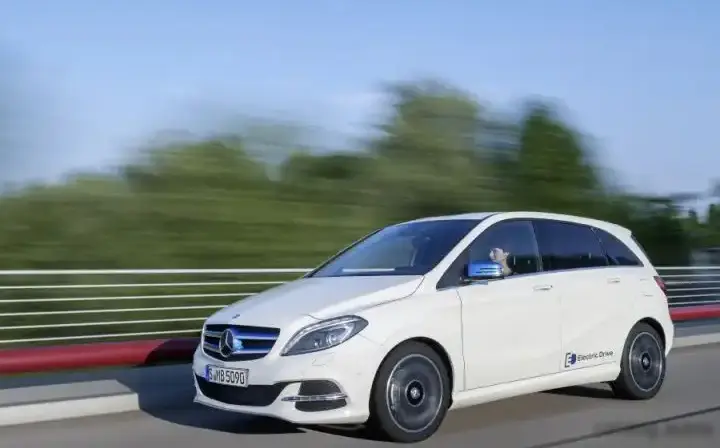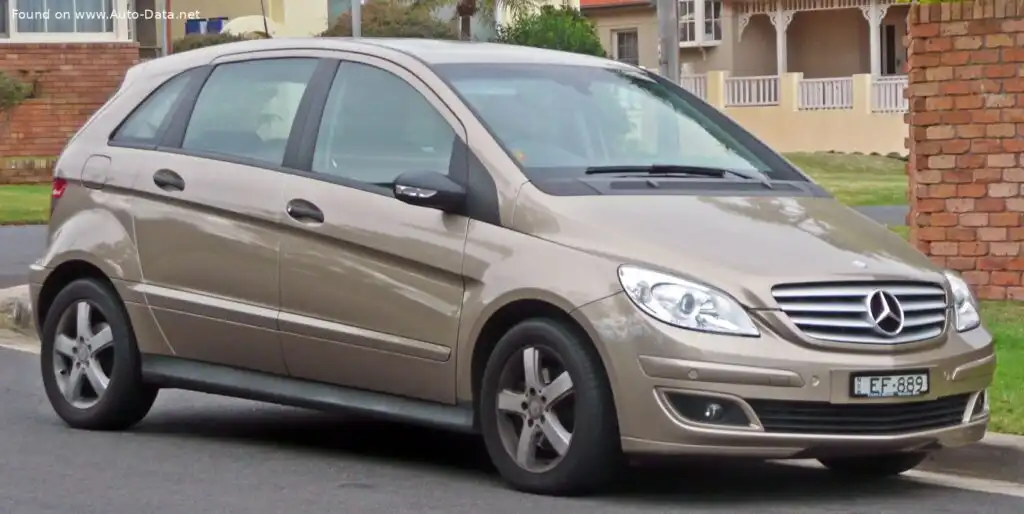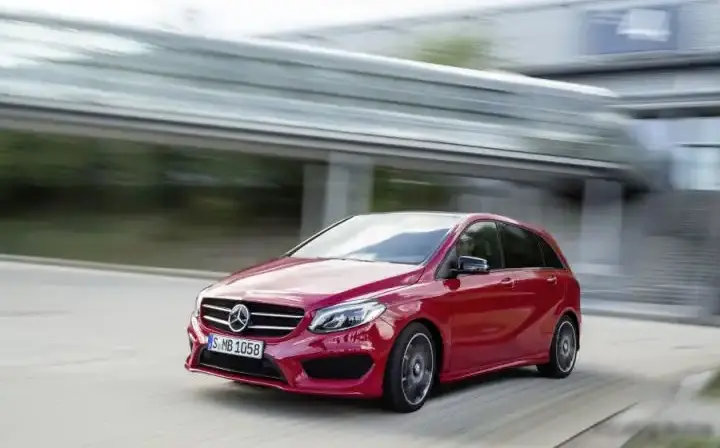
The Mercedes-Benz B-Class (W246 facelift) B 180, produced from 2014 to 2018, represents a key entry point into the compact luxury hatchback segment for Mercedes-Benz. This variant, equipped with a 1.6-liter turbocharged engine producing 122 horsepower, was positioned as a fuel-efficient and practical option within the broader B-Class range, which also included more powerful engine choices like the B 250. The W246 facelift brought styling updates and technological enhancements to the second generation of the B-Class, aiming to broaden its appeal to a wider customer base. It served as a competitor to vehicles like the BMW 2 Series Active Tourer, Audi A3 Sportback, and Volkswagen Golf.
Technical Specifications
| Brand | Mercedes-Benz |
| Model | B-class |
| Generation | B-class (W246 facelift 2014) |
| Type (Engine) | B 180 (122 Hp) |
| Start of production | 2014 |
| End of production | 2018 |
| Powertrain Architecture | Internal Combustion engine |
| Body type | Hatchback |
| Seats | 5 |
| Doors | 5 |
| Fuel consumption (urban) | 7.6-7.4 l/100 km (30.9 – 31.8 US mpg, 37.2 – 38.2 UK mpg, 13.2 – 13.5 km/l) |
| Fuel consumption (extra urban) | 4.7-4.5 l/100 km (50 – 52.3 US mpg, 60.1 – 62.8 UK mpg, 21.3 – 22.2 km/l) |
| Fuel consumption (combined) | 5.8-5.6 l/100 km (40.6 – 42 US mpg, 48.7 – 50.4 UK mpg, 17.2 – 17.9 km/l) |
| CO2 emissions | 134-129 g/km |
| Fuel Type | Petrol (Gasoline) |
| Acceleration 0 – 100 km/h | 9.2 sec |
| Acceleration 0 – 62 mph | 9.2 sec |
| Acceleration 0 – 60 mph | 8.7 sec |
| Maximum speed | 200 km/h (124.27 mph) |
| Emission standard | Euro 6 |
| Weight-to-power ratio | 11.4 kg/Hp, 87.5 Hp/tonne |
| Weight-to-torque ratio | 7 kg/Nm, 143.4 Nm/tonne |
| Power | 122 Hp @ 5000 rpm |
| Power per litre | 76.5 Hp/l |
| Torque | 200 Nm @ 1250-4000 rpm (147.51 lb.-ft. @ 1250-4000 rpm) |
| Engine layout | Front, Transverse |
| Engine Model/Code | M 270.910 |
| Engine displacement | 1595 cm3 (97.33 cu. in.) |
| Number of cylinders | 4 |
| Engine configuration | Inline |
| Compression ratio | 10.3:1 |
| Fuel injection system | Direct injection |
| Engine aspiration | Turbocharger, Intercooler |
| Engine oil capacity | 5.8 l (6.13 US qt | 5.1 UK qt) |
| Coolant | 7 l (7.4 US qt | 6.16 UK qt) |
| Kerb Weight | 1395 kg (3075.45 lbs.) |
| Max. weight | 1960 kg (4321.06 lbs.) |
| Max load | 565 kg (1245.61 lbs.) |
| Trunk (boot) space – minimum | 488 l (17.23 cu. ft.) |
| Trunk (boot) space – maximum | 1547 l (54.63 cu. ft.) |
| Fuel tank capacity | 50 l (13.21 US gal | 11 UK gal) |
| Length | 4393 mm (172.95 in.) |
| Width | 1786 mm (70.31 in.) |
| Height | 1557 mm (61.3 in.) |
| Wheelbase | 2699 mm (106.26 in.) |
| Front track | 1552 mm (61.1 in.) |
| Rear (Back) track | 1549 mm (60.98 in.) |
| Ride height (ground clearance) | 98 mm (3.86 in.) |
| Minimum turning circle (turning diameter) | 11 m (36.09 ft.) |
| Approach angle | 14.2° |
| Departure angle | 19.9° |
| Drivetrain Architecture | The Internal combustion engine (ICE) drives the front wheels of the vehicle. |
| Drive wheel | Front wheel drive |
| Number of gears and type of gearbox | 6 gears, manual transmission |
| Front suspension | Independent, type McPherson with coil spring and anti-roll bar |
| Rear suspension | Independent coil spring |
| Front brakes | Ventilated discs |
| Rear brakes | Disc |
| Assisting systems | ABS (Anti-lock braking system) |
| Steering type | Steering rack and pinion |
| Tires size | 195/65 R15 |
| Wheel rims size | 15 |
INTRODUCTION
The B 180 variant of the W246 facelift B-Class, launched in 2014, was designed to offer a balance of practicality, comfort, and efficiency. Built on the Mercedes-Benz 246 platform (shared with the A-Class), the B-Class aimed to provide a more spacious and versatile alternative to traditional compact hatchbacks. The facelift brought revised front and rear styling, updated interior materials, and improvements to the infotainment system. The B 180 served as the entry-level model, appealing to buyers prioritizing fuel economy and a lower price point compared to the more powerful B 200 and B 250 models.
Powertrain & Engine Architecture
At the heart of the B 180 lies the M 270.910 1.6-liter inline-four cylinder engine. This engine is a key member of Mercedes-Benz’s modular engine family, known for its compact design and efficiency. It features direct fuel injection, a single turbocharger with an intercooler, and variable valve timing. The engine produces 122 horsepower at 5000 rpm and 200 Nm (147.51 lb-ft) of torque between 1250 and 4000 rpm. The engine is transversely mounted at the front of the vehicle. The B 180 was typically paired with a 7-speed dual-clutch transmission (7G-DCT), although a 6-speed manual transmission was also available in some markets. The 7G-DCT provides quick and smooth gear changes, contributing to both performance and fuel efficiency.
Driving Characteristics
The B 180, with its 122 hp and 7-speed dual-clutch transmission, delivers adequate performance for everyday driving. Acceleration from 0 to 100 km/h (0-62 mph) takes around 9.2 seconds. While not particularly sporty, the engine provides sufficient power for merging onto highways and overtaking slower traffic. The turbocharger helps to deliver a relatively flat torque curve, providing good responsiveness at lower engine speeds. Compared to the more powerful B 250, the B 180 feels less eager to accelerate, but its lighter weight and efficient engine contribute to better fuel economy. The transmission is well-tuned for smooth shifts, and the steering is light and precise, making the B 180 easy to maneuver in urban environments.
Equipment & Trim Levels
The B 180 typically came standard with features such as air conditioning, a multi-function steering wheel, power windows, and a basic audio system. Higher trim levels offered options like leather upholstery, a panoramic sunroof, a more advanced infotainment system with navigation, and parking sensors. The interior design of the W246 B-Class is generally considered to be functional and well-built, with a focus on practicality. The rear seats offer ample legroom for passengers, and the cargo area is generously sized, especially with the rear seats folded down.
Chassis & Braking
The B-Class W246 utilizes an independent suspension setup at all four wheels. The front suspension employs McPherson struts with coil springs and an anti-roll bar, while the rear suspension features a multi-link design with coil springs. This setup provides a comfortable ride quality, absorbing bumps and imperfections in the road effectively. The B 180 is equipped with ventilated disc brakes at the front and solid disc brakes at the rear. Anti-lock braking system (ABS) is standard, providing enhanced braking performance and stability. The steering is a rack-and-pinion system with electric power assistance.
Market Reception & Comparison
The B 180 was generally well-received by automotive critics as a practical and fuel-efficient option in the compact hatchback segment. It was praised for its comfortable ride, spacious interior, and user-friendly technology. However, some critics noted that its performance was not as exciting as some of its rivals. Compared to the B 200 and B 250, the B 180 offered a more affordable entry point into the B-Class range, but at the expense of some performance. Its fuel economy figures were competitive with other compact hatchbacks, making it an attractive option for buyers prioritizing efficiency.
Legacy
The W246 B-Class, including the B 180 variant, has proven to be a relatively reliable vehicle in the used car market. The M 270 engine, while not without its potential issues (such as occasional oil leaks and turbocharger wear), is generally considered to be durable when properly maintained. The 7G-DCT transmission is also known for its reliability. Today, the B 180 represents a good value proposition for buyers seeking a practical, comfortable, and fuel-efficient compact hatchback. Its spacious interior and versatile cargo area make it a suitable choice for small families or individuals who need a flexible vehicle for everyday use.