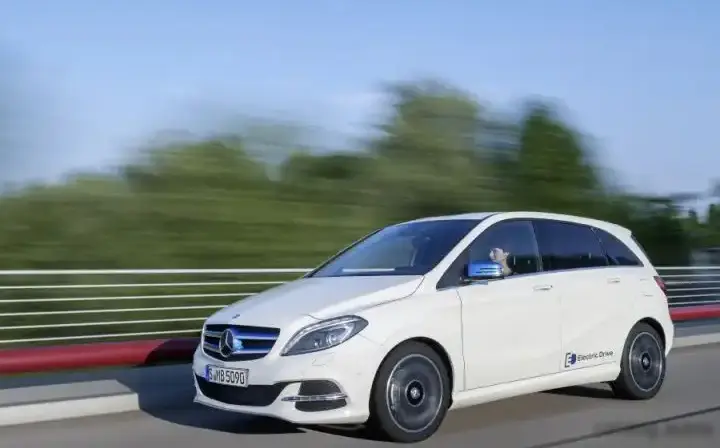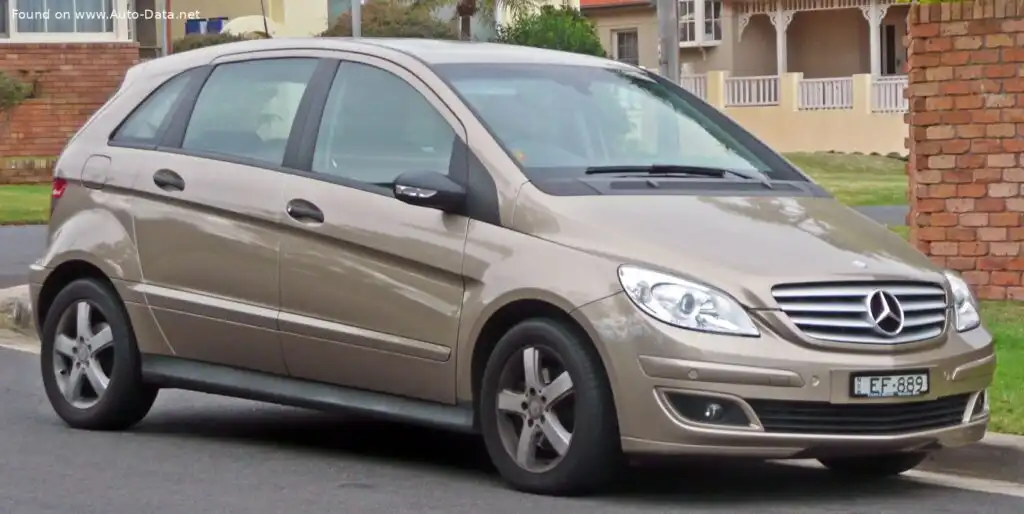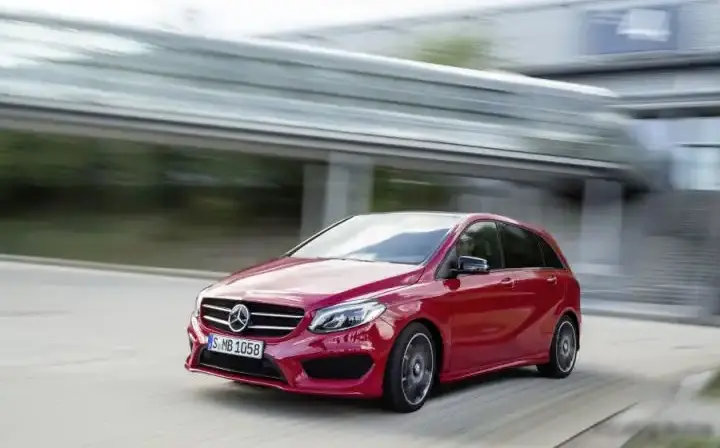
Technical Specifications
| Brand | Mercedes-Benz |
| Model | B-class |
| Generation | B-class (W246 facelift 2014) |
| Type (Engine) | B 200 (156 Hp) |
| Start of production | 2014 |
| End of production | 2018 |
| Powertrain Architecture | Internal Combustion engine |
| Body type | Hatchback |
| Seats | 5 |
| Doors | 5 |
| Fuel consumption (urban) | 7.6-7.5 l/100 km (30.9 – 31.4 US mpg, 37.2 – 37.7 UK mpg, 13.2 – 13.3 km/l) |
| Fuel consumption (extra urban) | 4.7-4.5 l/100 km (50 – 52.3 US mpg, 60.1 – 62.8 UK mpg, 21.3 – 22.2 km/l) |
| Fuel consumption (combined) | 5.8-5.6 l/100 km (40.6 – 42 US mpg, 48.7 – 50.4 UK mpg, 17.2 – 17.9 km/l) |
| CO2 emissions | 134-130 g/km |
| Fuel Type | Petrol (Gasoline) |
| Acceleration 0 – 100 km/h | 8.6 sec |
| Acceleration 0 – 62 mph | 8.6 sec |
| Acceleration 0 – 60 mph | 8.2 sec |
| Maximum speed | 220 km/h (136.7 mph) |
| Emission standard | Euro 6 |
| Weight-to-power ratio | 8.9 kg/Hp, 111.8 Hp/tonne |
| Weight-to-torque ratio | 5.6 kg/Nm, 179.2 Nm/tonne |
| Power | 156 Hp @ 5300 rpm |
| Power per litre | 97.8 Hp/l |
| Torque | 250 Nm @ 1250-4000 rpm (184.39 lb.-ft. @ 1250-4000 rpm) |
| Engine layout | Front, Transverse |
| Engine Model/Code | M 270.910 |
| Engine displacement | 1595 cm3 (97.33 cu. in.) |
| Number of cylinders | 4 |
| Engine configuration | Inline |
| Compression ratio | 10.3:1 |
| Fuel injection system | Direct injection |
| Engine aspiration | Turbocharger, Intercooler |
| Engine oil capacity | 5.8 l (6.13 US qt | 5.1 UK qt) |
| Coolant | 7 l (7.4 US qt | 6.16 UK qt) |
| Kerb Weight | 1395 kg (3075.45 lbs.) |
| Max. weight | 1960 kg (4321.06 lbs.) |
| Max load | 565 kg (1245.61 lbs.) |
| Trunk (boot) space – minimum | 488 l (17.23 cu. ft.) |
| Trunk (boot) space – maximum | 1547 l (54.63 cu. ft.) |
| Fuel tank capacity | 50 l (13.21 US gal | 11 UK gal) |
| Length | 4393 mm (172.95 in.) |
| Width | 1786 mm (70.31 in.) |
| Height | 1557 mm (61.3 in.) |
| Wheelbase | 2699 mm (106.26 in.) |
| Front track | 1552 mm (61.1 in.) |
| Rear (Back) track | 1549 mm (60.98 in.) |
| Ride height (ground clearance) | 98 mm (3.86 in.) |
| Minimum turning circle (turning diameter) | 11 m (36.09 ft.) |
| Approach angle | 14.2° |
| Departure angle | 19.9° |
| Drivetrain Architecture | The Internal combustion engine (ICE) drives the front wheels of the vehicle. |
| Drive wheel | Front wheel drive |
| Number of gears and type of gearbox | 6 gears, manual transmission |
| Front suspension | Independent, type McPherson with coil spring and anti-roll bar |
| Rear suspension | Independent coil spring |
| Front brakes | Ventilated discs |
| Rear brakes | Disc |
| Assisting systems | ABS (Anti-lock braking system) |
| Steering type | Steering rack and pinion |
| Tires size | 205/55 R16 |
| Wheel rims size | 16 |
The Mercedes-Benz B 200 (W246 facelift) debuted in 2014 as part of a comprehensive refresh of the second-generation B-Class. Built on the 1HX0/A3 platform shared with the A-Class, the B-Class aimed to provide a more practical and family-oriented alternative. The facelift brought revised styling, improved interior materials, and updated technology. The B 200, powered by a 1.6-liter turbocharged engine, was designed to offer a balance between performance and fuel economy, making it a popular choice for buyers seeking a versatile and comfortable compact vehicle. It was sold primarily in Europe and other international markets, with limited availability in the United States.
Powertrain & Engine Architecture
At the heart of the B 200 lies the M 270.910 1.6-liter inline-four cylinder engine. This engine is a key member of Mercedes-Benz’s modular engine family, known for its compact design and efficiency. The M 270 features direct fuel injection, a single turbocharger with an intercooler, and variable valve timing. The engine code signifies a specific iteration of the M 270 family, optimized for the B-Class application. The direct injection system delivers fuel directly into the combustion chamber, improving combustion efficiency and reducing emissions. The turbocharger provides a boost in power, allowing the relatively small engine to produce 156 horsepower and 250 Nm (184 lb-ft) of torque. The B 200 was typically paired with a 7-speed dual-clutch transmission (7G-DCT), although a 6-speed manual transmission was also available in some markets. The 7G-DCT offers quick and smooth gear changes, enhancing both performance and fuel economy.
Driving Characteristics
The B 200 delivers a comfortable and refined driving experience. While not overtly sporty, the 1.6-liter turbo engine provides adequate power for everyday driving and highway cruising. Acceleration from 0 to 62 mph takes approximately 8.6 seconds, and the car has a top speed of 136.7 mph. The 7G-DCT transmission contributes to a smooth and responsive feel, with minimal hesitation during gear changes. Compared to the base B 180, the B 200 offers noticeably more power and torque, resulting in improved acceleration and overtaking ability. However, it doesn’t match the performance of the more powerful B 250. The suspension is tuned for comfort, absorbing bumps and imperfections in the road effectively. Steering is precise and well-weighted, providing a confident feel behind the wheel. The front-wheel-drive configuration offers good traction in most conditions.
Equipment & Trim Levels
The B 200 typically came equipped with a generous array of standard features. These included automatic climate control, a multi-function steering wheel, power windows and mirrors, and a high-quality audio system. Higher trim levels offered additional features such as leather upholstery, a panoramic sunroof, and a navigation system. Optional extras included parking sensors, a rearview camera, and advanced driver-assistance systems like lane keeping assist and collision prevention assist. Interior upholstery was typically a combination of fabric and synthetic leather, with leather options available as an upgrade. The dashboard layout was modern and functional, with a central display screen providing access to various vehicle settings and infotainment features.
Chassis & Braking
The B-Class W246 utilizes an independent suspension system on both the front and rear axles. The front suspension employs a McPherson strut design with coil springs and an anti-roll bar, while the rear suspension features an independent multi-link setup. This configuration provides a good balance between ride comfort and handling. The B 200 is equipped with ventilated disc brakes on the front wheels and solid disc brakes on the rear wheels. Anti-lock braking system (ABS) is standard, along with electronic brakeforce distribution (EBD). The braking system provides adequate stopping power and control in various driving conditions. The car’s weight distribution is relatively balanced, contributing to stable handling characteristics.
Market Reception & Comparison
The B 200 was generally well-received by automotive critics. It was praised for its comfortable ride, spacious interior, and refined driving experience. The 1.6-liter turbo engine was considered a good compromise between performance and fuel economy. However, some critics noted that the B-Class lacked the sporty character of some of its rivals. Compared to the B 180, the B 200 offered a significant improvement in performance, making it a more appealing option for drivers who frequently travel on highways or carry passengers. Fuel economy was comparable to other compact hatchbacks in its class, with combined fuel consumption ranging from 5.6 to 5.8 liters per 100 kilometers (40.6 to 42 US mpg). The B 200 offered a more practical and versatile alternative to the A-Class, with a larger cargo area and a more comfortable rear seat.
Legacy
The Mercedes-Benz B 200 (W246 facelift) has proven to be a reliable and durable vehicle. The M 270 engine, while not without its occasional issues (such as potential carbon buildup on the intake valves), is generally considered to be a robust and long-lasting unit. The 7G-DCT transmission is also known for its reliability, provided it is properly maintained. On the used car market, the B 200 represents a good value proposition, offering a comfortable and well-equipped vehicle at an affordable price. Regular maintenance, including oil changes and timely servicing of the transmission, is crucial to ensure the long-term reliability of this powertrain. The B-Class, in general, remains a popular choice for buyers seeking a practical and refined compact vehicle.