Technical Specifications
| Brand | Mercedes-Benz |
| Model | B-class |
| Generation | B-class (W247) |
| Type (Engine) | B 180d (116 Hp) |
| Start of production | December, 2018 |
| End of production | October, 2020 |
| Powertrain Architecture | Internal Combustion engine |
| Body type | Hatchback |
| Seats | 5 |
| Doors | 5 |
| Fuel consumption (economy) – urban (NEDC) | 6.2-6.7 l/100 km (37.9 – 35.1 US mpg, 45.6 – 42.2 UK mpg, 16.1 – 14.9 km/l) |
| Fuel consumption (economy) – extra urban (NEDC) | 3.8-4.2 l/100 km (61.9 – 56 US mpg, 74.3 – 67.3 UK mpg, 26.3 – 23.8 km/l) |
| Fuel consumption (economy) – combined (NEDC) | 4.7-5.1 l/100 km (50 – 46.1 US mpg, 60.1 – 55.4 UK mpg, 21.3 – 19.6 km/l) |
| CO2 emissions (NEDC) | 124-134 g/km |
| Fuel Type | Diesel |
| Acceleration 0 – 100 km/h | 10.4 sec |
| Acceleration 0 – 62 mph | 10.4 sec |
| Acceleration 0 – 60 mph | 9.9 sec |
| Maximum speed | 200 km/h (124.27 mph) |
| Emission standard | EURO 6D-ISC-FCM |
| Weight-to-power ratio | 12.4 kg/Hp, 80.8 Hp/tonne |
| Weight-to-torque ratio | 5.1 kg/Nm, 195 Nm/tonne |
| Power | 116 Hp @ 3400 rpm |
| Power per litre | 59.5 Hp/l |
| Torque | 280 Nm @ 1750 rpm (206.52 lb.-ft. @ 1750 rpm) |
| Engine layout | Front, Transverse |
| Engine Model/Code | OM 654.920 |
| Engine displacement | 1950 cm3 (119 cu. in.) |
| Number of cylinders | 4 |
| Engine configuration | Inline |
| Cylinder Bore | 82 mm (3.23 in.) |
| Piston Stroke | 92.3 mm (3.63 in.) |
| Number of valves per cylinder | 4 |
| Fuel injection system | Diesel Commonrail |
| Engine aspiration | Turbocharger, Intercooler |
| Valvetrain | DOHC |
| Engine oil capacity | 6.8 l (7.19 US qt | 5.98 UK qt) |
| Coolant | 10 l (10.57 US qt | 8.8 UK qt) |
| Kerb Weight | 1436 kg (3165.84 lbs.) |
| Max. weight | 2051 kg (4521.68 lbs.) |
| Max load | 615 kg (1355.84 lbs.) |
| Trunk (boot) space – minimum | 445 l (15.72 cu. ft.) |
| Trunk (boot) space – maximum | 4530 l (159.98 cu. ft.) |
| Fuel tank capacity | 43 l (11.36 US gal | 9.46 UK gal) |
| Max. roof load | 75 kg (165.35 lbs.) |
| Permitted trailer load with brakes (12%) | 1400 kg (3086.47 lbs.) |
| Permitted trailer load without brakes | 750 kg (1653.47 lbs.) |
| Permitted towbar download | 80 kg (176.37 lbs.) |
| Length | 4419 mm (173.98 in.) |
| Width | 1796 mm (70.71 in.) |
| Width including mirrors | 2020 mm (79.53 in.) |
| Height | 1562 mm (61.5 in.) |
| Wheelbase | 2729 mm (107.44 in.) |
| Front track | 1567 mm (61.69 in.) |
| Rear (Back) track | 1547 mm (60.91 in.) |
| Front overhang | 914 mm (35.98 in.) |
| Rear overhang | 776 mm (30.55 in.) |
| Ride height (ground clearance) | 104 mm (4.09 in.) |
| Minimum turning circle (turning diameter) | 11 m (36.09 ft.) |
| Approach angle | 13.4° |
| Departure angle | 17.2° |
| Ramp-over (brakeover) angle | 9.4° |
| Drivetrain Architecture | The Internal combustion engine (ICE) drives the front wheels of the vehicle. |
| Drive wheel | Front wheel drive |
| Number of gears and type of gearbox | 6 gears, manual transmission |
| Front suspension | Independent type McPherson |
| Rear suspension | Torsion |
| Front brakes | Ventilated discs |
| Rear brakes | Disc |
| Assisting systems | ABS (Anti-lock braking system) |
| Steering type | Steering rack and pinion |
| Power steering | Electric Steering |
| Tires size | 205/60 R16; 205/55 R17 |
| Wheel rims size | 6.5J x 16; 6.5J x 17 |
Introduction
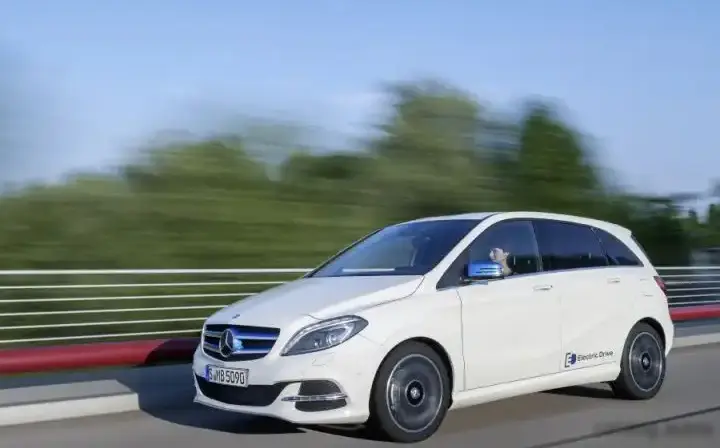
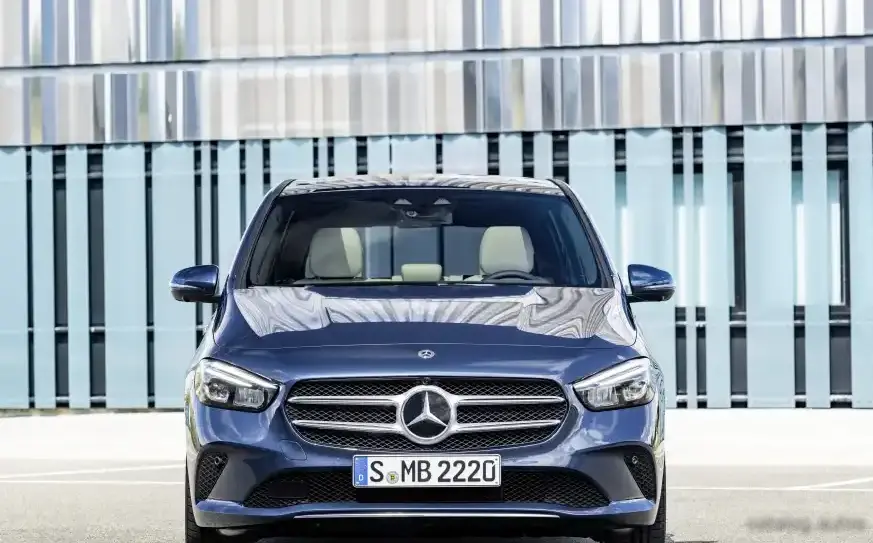
The Mercedes-Benz B 180d, produced between December 2018 and October 2020, was a significant variant within the W247 generation of the B-Class. Positioned as an entry-level diesel option, it aimed to provide fuel efficiency and practicality for buyers seeking a compact, five-door hatchback. This model played a crucial role in the European market, where diesel engines remained popular due to their economy and lower running costs. The B 180d offered a balance between affordability and the premium experience expected from the Mercedes-Benz brand, serving as a gateway into the B-Class range for many customers. It was built on the 1HX0/A3 platform, shared with other compact Mercedes-Benz models.
Powertrain & Engine Architecture
The B 180d was powered by the OM 654.920, a 1.95-liter inline-four cylinder diesel engine. This engine is part of Mercedes-Benz’s modular engine family, known for its lightweight construction and efficiency. It featured a cast iron block and aluminum cylinder head, incorporating a turbocharger with an intercooler to boost power and torque. The engine utilized a common-rail direct fuel injection system, delivering fuel at extremely high pressure for optimized combustion. The valvetrain employed a double overhead camshaft (DOHC) configuration with four valves per cylinder, enhancing breathing and overall performance. The engine was transversely mounted at the front of the vehicle. The B 180d was typically paired with a 7-speed dual-clutch transmission (7G-DCT), known for its quick and smooth gear changes. This transmission contributed to the car’s fuel efficiency and responsive driving experience. The 7G-DCT utilizes two separate clutches, one for even and one for odd gears, allowing for seamless shifts and reduced power interruption.
Driving Characteristics
The B 180d, with its 116 horsepower and 280 Nm (206 lb-ft) of torque, offered adequate performance for everyday driving. Acceleration from 0 to 100 km/h (0-62 mph) took around 10.4 seconds, and top speed was limited to 200 km/h (124 mph). While not a particularly sporty vehicle, the B 180d provided sufficient power for merging onto highways and overtaking slower traffic. The 7G-DCT transmission helped to keep the engine in its optimal power band, delivering smooth and efficient acceleration. Compared to higher-output versions like the B 200, the B 180d felt less eager to accelerate, but its fuel economy was significantly better. The gear ratios were tuned for efficiency rather than outright performance, prioritizing comfortable cruising and low-speed maneuverability. The engine provided a usable powerband, with peak torque available from a relatively low 1750 rpm, making it well-suited for city driving and relaxed highway cruising.
Equipment & Trim Levels
The B 180d typically came standard with features such as automatic climate control, a touchscreen infotainment system with Bluetooth connectivity, and a suite of safety features including ABS, ESP, and multiple airbags. Interior upholstery was usually a fabric material, with options for leather upgrades. Standard dashboard configuration included analog gauges with a central display screen. Optional extras included a panoramic sunroof, navigation system, parking assist, and upgraded sound system. Trim levels varied depending on the market, but generally offered progressive enhancements in terms of comfort, convenience, and aesthetics. Higher trim levels often included features like larger infotainment screens, upgraded interior materials, and advanced driver-assistance systems. The ‘Style’ and ‘AMG Line’ packages were common options, offering cosmetic and performance enhancements.
Chassis & Braking
The W247 B-Class featured an independent McPherson strut suspension at the front and a torsion beam suspension at the rear. This setup provided a good balance between ride comfort and handling. The B 180d was equipped with ventilated disc brakes at the front and solid disc brakes at the rear. The braking system was assisted by ABS (Anti-lock Braking System) and ESP (Electronic Stability Program) to ensure safe and controlled stopping power. The steering system was a rack-and-pinion type with electric power assistance, providing precise and responsive steering feel. The suspension was tuned for comfort, absorbing bumps and imperfections in the road surface effectively. The torsion beam rear suspension, while simpler than a fully independent setup, offered a good compromise between cost, weight, and handling.
Market Reception & Comparison
The B 180d was generally well-received by critics as a practical and fuel-efficient option within the B-Class range. It was praised for its comfortable ride, spacious interior, and economical diesel engine. However, some reviewers noted that its performance was somewhat underwhelming compared to higher-powered variants. In terms of fuel economy, the B 180d consistently outperformed the gasoline-powered B 200, making it an attractive choice for drivers who prioritized efficiency. Compared to other diesel-powered compact hatchbacks in the European market, the B 180d offered a premium experience with a higher level of refinement and technology. Rivals like the Volkswagen Golf TDI and Audi A3 TDI offered similar fuel economy and performance, but the B 180d distinguished itself with its more luxurious interior and advanced features.
Legacy
The OM 654 engine family, including the 1.95-liter unit in the B 180d, has proven to be relatively reliable. While diesel engines can be susceptible to issues with the diesel particulate filter (DPF) if not properly maintained, the OM 654 is generally considered a robust and durable engine. On the used car market, the B 180d remains a popular choice for buyers seeking a fuel-efficient and practical hatchback. Its relatively low running costs and comfortable driving experience continue to make it an appealing option, although potential buyers should be aware of the importance of regular maintenance, particularly regarding the DPF system. Properly maintained examples of the B 180d are expected to provide many years of reliable service, making it a sensible choice for budget-conscious buyers seeking a premium compact car.