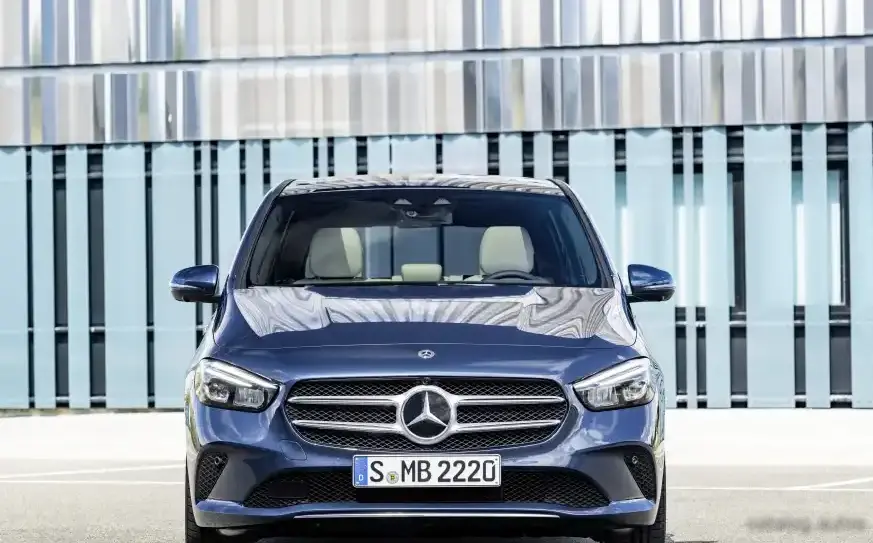
The Mercedes-Benz B 200, part of the W247 B-Class generation produced from 2018 to 2022, represented a key offering in the compact multi-purpose vehicle (MPV) segment. Positioned as a mid-range trim, the B 200 aimed to balance practicality, comfort, and reasonable performance for everyday use. It served as a more accessible entry point into the B-Class range compared to the more powerful B 250, while offering a step up in refinement over the base B 180 model. The W247 B-Class, overall, was designed to appeal to buyers seeking a versatile and technologically advanced vehicle, blending hatchback convenience with the elevated experience expected from the Mercedes-Benz brand.
Technical Specifications
| Brand | Mercedes-Benz |
| Model | B-class |
| Generation | B-class (W247) |
| Type (Engine) | B 200 (163 Hp) |
| Start of production | 2018 year |
| End of production | 2022 year |
| Powertrain Architecture | Internal Combustion engine |
| Body type | Hatchback |
| Seats | 5 |
| Doors | 5 |
| Fuel consumption at Low speed (WLTP) | 6 l/100 km (39.2 US mpg, 47.1 UK mpg, 16.7 km/l) |
| Fuel consumption at very high speed (WLTP) | 6.9 l/100 km (34.1 US mpg, 40.9 UK mpg, 14.5 km/l) |
| CO2 emissions (WLTP) | 135-157 g/km |
| Fuel consumption (economy) – urban | 7.9-8.3 l/100 km (29.8 – 28.3 US mpg, 35.8 – 34 UK mpg, 12.7 – 12 km/l) |
| Fuel consumption (economy) – extra urban | 4.6-4.9 l/100 km (51.1 – 48 US mpg, 61.4 – 57.6 UK mpg, 21.7 – 20.4 km/l) |
| Fuel consumption (economy) – combined | 5.9-6.2 l/100 km (39.9 – 37.9 US mpg, 47.9 – 45.6 UK mpg, 16.9 – 16.1 km/l) |
| CO2 emissions | 134-141 g/km |
| Fuel Type | Petrol (Gasoline) |
| Acceleration 0 – 100 km/h | 8.5 sec |
| Acceleration 0 – 62 mph | 8.5 sec |
| Acceleration 0 – 60 mph | 8.1 sec |
| Maximum speed | 223 km/h (138.57 mph) |
| Emission standard | Euro 6d – TEMP |
| Weight-to-power ratio | 8.2 kg/Hp, 122.1 Hp/tonne |
| Weight-to-torque ratio | 5.3 kg/Nm, 187.3 Nm/tonne |
| Power | 163 Hp |
| Power per litre | 122.4 Hp/l |
| Torque | 250 Nm @ 1620 rpm (184.39 lb.-ft. @ 1620 rpm) |
| Engine layout | Front, Transverse |
| Engine Model/Code | M 282.914 |
| Engine displacement | 1332 cm3 (81.28 cu. in.) |
| Number of cylinders | 4 |
| Engine configuration | Inline |
| Number of valves per cylinder | 4 |
| Fuel injection system | Direct injection |
| Engine aspiration | Turbocharger, Intercooler |
| Engine oil capacity | 5.1 l (5.39 US qt, 4.49 UK qt) |
| Coolant | 6.8 l (7.19 US qt, 5.98 UK qt) |
| Kerb Weight | 1335 kg (2943.17 lbs.) |
| Max. weight | 1960 kg (4321.06 lbs.) |
| Max load | 625 kg (1377.89 lbs.) |
| Trunk (boot) space – minimum | 445 l (15.72 cu. ft.) |
| Trunk (boot) space – maximum | 1540 l (54.38 cu. ft.) |
| Fuel tank capacity | 43 l (11.36 US gal, 9.46 UK gal) |
| Permitted trailer load with brakes (12%) | 1600 kg (3527.4 lbs.) |
| Permitted trailer load without brakes | 705 kg (1554.26 lbs.) |
| Length | 4419 mm (173.98 in.) |
| Width | 1796 mm (70.71 in.) |
| Height | 1562 mm (61.5 in.) |
| Wheelbase | 2729 mm (107.44 in.) |
| Front track | 1567 mm (61.69 in.) |
| Front overhang | 914 mm (35.98 in.) |
| Rear overhang | 776 mm (30.55 in.) |
| Approach angle | 13.4° |
| Departure angle | 17.2° |
| Drivetrain Architecture | The Internal combustion engine (ICE) drives the front wheels of the vehicle. |
| Drive wheel | Front wheel drive |
| Number of gears and type of gearbox | 6 gears, manual transmission |
| Front brakes | Ventilated discs |
| Rear brakes | Disc |
Powertrain & Engine Architecture
The B 200 is powered by Mercedes-Benz’s M 282.914 1.3-liter inline-four cylinder gasoline engine. This engine is part of the modular M282 family, known for its compact design and efficiency. It utilizes direct fuel injection and is equipped with a single turbocharger and intercooler to boost power output. The engine produces 163 horsepower and 250 Nm (184 lb-ft) of torque, peaking at 1620 rpm. The engine’s architecture emphasizes thermal management, featuring a dedicated cooling circuit for the cylinder head and exhaust manifold to reduce emissions and improve responsiveness. The B 200 typically came equipped with a 7-speed dual-clutch transmission (DCT), offering quick and smooth gear changes. This transmission contributes to the vehicle’s overall efficiency and driving experience.
Driving Characteristics
The B 200 with the 1.3-liter turbo engine and 7-speed DCT delivers a comfortable and refined driving experience. Acceleration from 0 to 100 km/h (0-62 mph) takes approximately 8.5 seconds. While not a performance-oriented vehicle, the engine provides adequate power for everyday driving situations, including highway merging and overtaking. The DCT transmission contributes to a responsive feel, with quick shifts and minimal torque interruption. Compared to the base B 180, the B 200 offers noticeably more power and a more relaxed driving experience, especially when fully loaded or traveling uphill. However, it doesn’t match the more spirited performance of the B 250. The suspension is tuned for comfort, providing a smooth ride over most road surfaces, though it may exhibit some body roll during aggressive cornering.
Equipment & Trim Levels
The B 200 typically came standard with features such as automatic climate control, a touchscreen infotainment system with Apple CarPlay and Android Auto compatibility, and a suite of safety features including automatic emergency braking, lane keeping assist, and traffic sign recognition. Interior upholstery was generally a combination of fabric and synthetic leather, with options for full leather available. Common optional extras included a panoramic sunroof, upgraded sound system, and various driver assistance packages. The dashboard layout was modern and functional, with a focus on intuitive controls and a high-quality feel. Trim levels could vary slightly depending on the market, but generally, the B 200 offered a good balance of standard features and available upgrades.
Chassis & Braking
The W247 B-Class utilizes a MacPherson strut front suspension and a multi-link rear suspension. The B 200 typically featured ventilated disc brakes at the front and solid disc brakes at the rear. The braking system is assisted by ABS (Anti-lock Braking System) and electronic brake-force distribution. The steering is electric power-assisted, providing a light and precise feel. The chassis is designed to provide a comfortable ride while maintaining good handling characteristics. Stabilizer bars are fitted to both the front and rear axles to reduce body roll during cornering. The overall chassis setup is geared towards providing a balanced and predictable driving experience.
Market Reception & Comparison
The Mercedes-Benz B 200 was generally well-received by automotive critics as a practical and comfortable MPV. Reviewers praised its spacious interior, refined ride quality, and advanced technology features. However, some criticized its relatively modest performance compared to competitors. In terms of fuel economy, the B 200 offered competitive figures, typically achieving around 38-42 mpg in combined driving. Compared to the B 180, the B 200 offered a significant improvement in performance, justifying the higher price tag for many buyers. Against the B 250, the B 200 represented a more affordable option for those who didn’t require the extra power. Reliability reports suggest that the M 282 engine is generally reliable, although some owners have reported minor issues with the turbocharger and fuel injection system.
Legacy
The W247 B-Class, including the B 200 variant, has established itself as a popular choice in the compact MPV segment. The 1.3-liter turbo engine, while not known for its outright performance, has proven to be relatively reliable and fuel-efficient. On the used car market, the B 200 offers a good value proposition, providing a comfortable and well-equipped vehicle at a reasonable price. Its combination of practicality, refinement, and technology continues to appeal to buyers seeking a versatile and premium compact vehicle. While newer models have since been released, the W247 B 200 remains a viable option for those looking for a dependable and well-rounded MPV.