Technical Specifications
| Brand | Mercedes-Benz |
| Model | B-class |
| Generation | B-class (W247) |
| Type (Engine) | B 200d (150 Hp) DCT |
| Start of production | 2018 year |
| End of production | 2022 year |
| Powertrain Architecture | Internal Combustion engine |
| Body type | Hatchback |
| Seats | 5 |
| Doors | 5 |
| Fuel consumption at Low speed (WLTP) | 4.9 l/100 km (48 US mpg, 57.6 UK mpg, 20.4 km/l) |
| Fuel consumption at very high speed (WLTP) | 5.6 l/100 km (42 US mpg, 50.4 UK mpg, 17.9 km/l) |
| CO2 emissions (WLTP) | 128-146 g/km |
| Fuel consumption (economy) – urban | 5.2-5.5 l/100 km (45.2 – 42.8 US mpg, 54.3 – 51.4 UK mpg, 19.2 – 18.2 km/l) |
| Fuel consumption (economy) – extra urban | 3.7-4.0 l/100 km (63.6 – 58.8 US mpg, 76.3 – 70.6 UK mpg, 27 – 25 km/l) |
| Fuel consumption (economy) – combined | 4.2-4.5 l/100 km (56 – 52.3 US mpg, 67.3 – 62.8 UK mpg, 23.8 – 22.2 km/l) |
| CO2 emissions | 112-119 g/km |
| Fuel Type | Diesel |
| Acceleration 0 – 100 km/h | 8.3 sec |
| Acceleration 0 – 62 mph | 8.3 sec |
| Acceleration 0 – 60 mph | 7.9 sec |
| Maximum speed | 219 km/h (136.08 mph) |
| Emission standard | Euro 6d |
| Weight-to-power ratio | 10.2 kg/Hp, 97.7 Hp/tonne |
| Weight-to-torque ratio | 4.8 kg/Nm, 208.5 Nm/tonne |
| Power | 150 Hp |
| Power per litre | 76.9 Hp/l |
| Torque | 320 Nm @ 1400-3200 rpm (236.02 lb.-ft. @ 1400-3200 rpm) |
| Engine layout | Front, Transverse |
| Engine Model/Code | OM 654.920 |
| Engine displacement | 1950 cm3 (119 cu. in.) |
| Number of cylinders | 4 |
| Engine configuration | Inline |
| Number of valves per cylinder | 4 |
| Fuel injection system | Diesel Commonrail |
| Engine aspiration | Turbocharger, Intercooler |
| Engine oil capacity | 6.8 l (7.19 US qt | 5.98 UK qt) |
| Coolant | 10 l (10.57 US qt | 8.8 UK qt) |
| Kerb Weight | 1535 kg (3384.1 lbs.) |
| Max. weight | 2055 kg (4530.5 lbs.) |
| Max load | 520 kg (1146.4 lbs.) |
| Trunk (boot) space – minimum | 445 l (15.72 cu. ft.) |
| Trunk (boot) space – maximum | 1530 l (54.03 cu. ft.) |
| Fuel tank capacity | 43 l (11.36 US gal | 9.46 UK gal) |
| Permitted trailer load with brakes (12%) | 1600 kg (3527.4 lbs.) |
| Permitted trailer load without brakes | 750 kg (1653.47 lbs.) |
| Length | 4419 mm (173.98 in.) |
| Width | 1796 mm (70.71 in.) |
| Height | 1562 mm (61.5 in.) |
| Wheelbase | 2729 mm (107.44 in.) |
| Front track | 1567 mm (61.69 in.) |
| Front overhang | 914 mm (35.98 in.) |
| Rear overhang | 776 mm (30.55 in.) |
| Approach angle | 13.4° |
| Departure angle | 17.2° |
| Drivetrain Architecture | The Internal combustion engine (ICE) drives the front wheels of the vehicle. |
| Drive wheel | Front wheel drive |
| Number of gears and type of gearbox | 8 gears, automatic transmission DCT |
| Front brakes | Ventilated discs |
| Rear brakes | Disc |
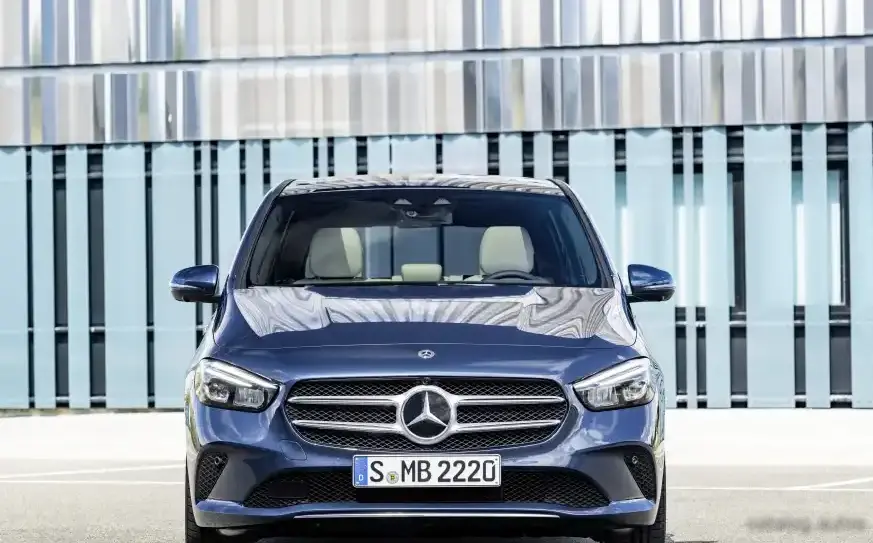
The Mercedes-Benz B 200d (150 Hp) DCT, produced between 2018 and 2022, represents a significant iteration of the W247 B-Class generation. Positioned as a mid-range offering within the B-Class lineup, it aimed to balance fuel efficiency with respectable performance, appealing to buyers seeking a practical and refined compact hatchback. This variant combined a diesel engine with a dual-clutch transmission (DCT), a configuration increasingly common in European markets for its blend of economy and driving convenience. The W247 B-Class, overall, was designed as a premium compact multi-purpose vehicle (MPV), offering a more sophisticated alternative to traditional hatchbacks and small SUVs.
Powertrain & Engine Architecture
The B 200d is powered by the OM 654.920, a 1.95-liter inline-four cylinder diesel engine. This engine is part of Mercedes-Benz’s modular engine family, known for its lightweight construction and advanced technology. It utilizes a cast iron block with aluminum cylinder heads, contributing to both durability and reduced weight. The engine employs a second-generation common-rail direct injection system, delivering fuel at pressures up to 2,700 bar for optimized combustion and reduced emissions. A single turbocharger with variable geometry turbine (VGT) provides boost, enhancing both low-end torque and overall power output. The engine also features an intercooler to further cool the intake air, increasing efficiency. The 8-speed dual-clutch transmission (DCT) is a key component of this powertrain. This transmission offers quick and smooth gear changes, contributing to a more engaging driving experience and improved fuel economy compared to a traditional automatic transmission. The DCT operates with two separate clutches, one for odd-numbered gears and one for even-numbered gears, allowing for pre-selection of the next gear and seamless shifts.
Driving Characteristics
The B 200d DCT delivers a comfortable and refined driving experience. The 150 horsepower and 320 Nm (236 lb-ft) of torque provide adequate performance for everyday driving situations. Acceleration from 0 to 100 km/h (0-62 mph) takes approximately 8.3 seconds. While not a particularly sporty vehicle, the DCT transmission allows for responsive acceleration and smooth gear changes. Compared to the more powerful B 220d, the B 200d offers slightly less performance, but it compensates with improved fuel economy. The DCT transmission’s gear ratios are tuned for efficiency, prioritizing fuel savings over outright acceleration. The steering is light and precise, making the B 200d easy to maneuver in urban environments. The suspension is tuned for comfort, absorbing bumps and imperfections in the road surface effectively.
Equipment & Trim Levels
The B 200d typically came equipped with a generous amount of standard features. These included automatic climate control, a touchscreen infotainment system with smartphone integration (Apple CarPlay and Android Auto), and a suite of safety features such as automatic emergency braking, lane keeping assist, and traffic sign recognition. Interior upholstery was typically a combination of fabric and synthetic leather, with options for full leather available at an extra cost. Higher trim levels offered additional features such as a panoramic sunroof, upgraded sound system, and adaptive cruise control. Optional extras included navigation system, heated seats, and parking assist.
Chassis & Braking
The W247 B-Class utilizes a MacPherson strut front suspension and a multi-link rear suspension. This setup provides a good balance between ride comfort and handling. The B 200d is equipped with ventilated disc brakes at the front and solid disc brakes at the rear. Anti-lock Braking System (ABS) and Electronic Stability Program (ESP) are standard safety features. The steering system is an electric power steering (EPS) system, providing precise and responsive steering feel.
Market Reception & Comparison
The B 200d was generally well-received by automotive critics. It was praised for its fuel efficiency, comfortable ride, and refined interior. However, some critics noted that the performance was not particularly exciting. Compared to the petrol-powered B 200, the B 200d offered significantly better fuel economy, making it a more practical choice for drivers who cover long distances. The B 200d also offered a more refined driving experience than some of its competitors, such as the BMW 2 Series Active Tourer and the Audi Q3.
Legacy
The OM 654 engine family, including the OM 654.920 found in the B 200d, has proven to be a reliable and durable powertrain. While long-term reliability data is still accumulating, early indications suggest that this engine is relatively trouble-free. The DCT transmission has also proven to be generally reliable, although some owners have reported minor issues with software glitches. On the used car market, the B 200d remains a popular choice for buyers seeking a practical and fuel-efficient compact hatchback. Its combination of comfort, refinement, and economy makes it a compelling alternative to traditional petrol-powered vehicles.