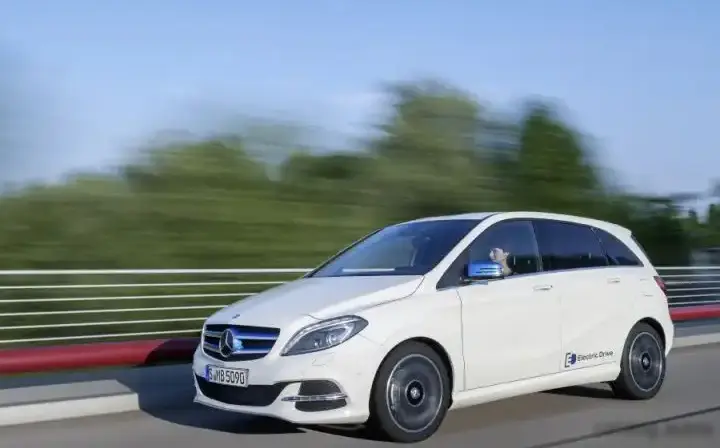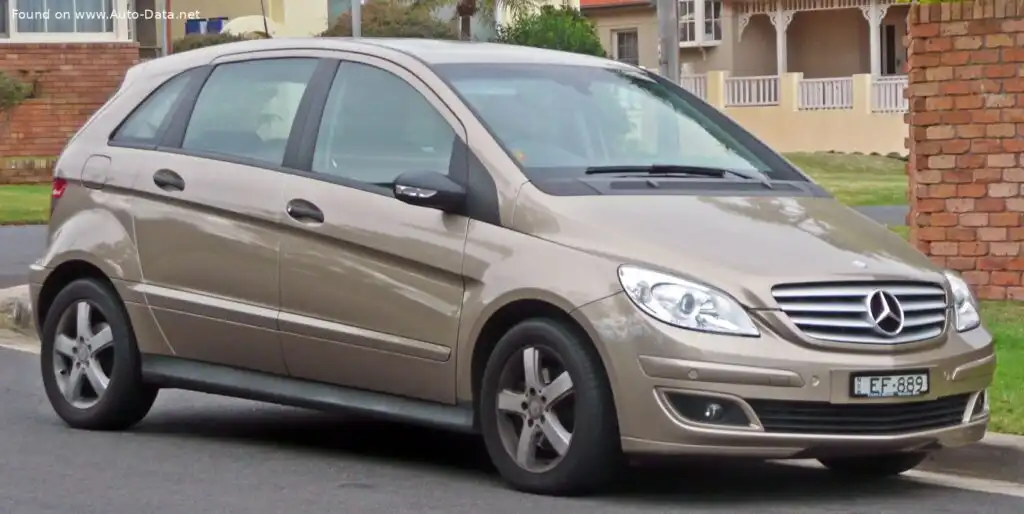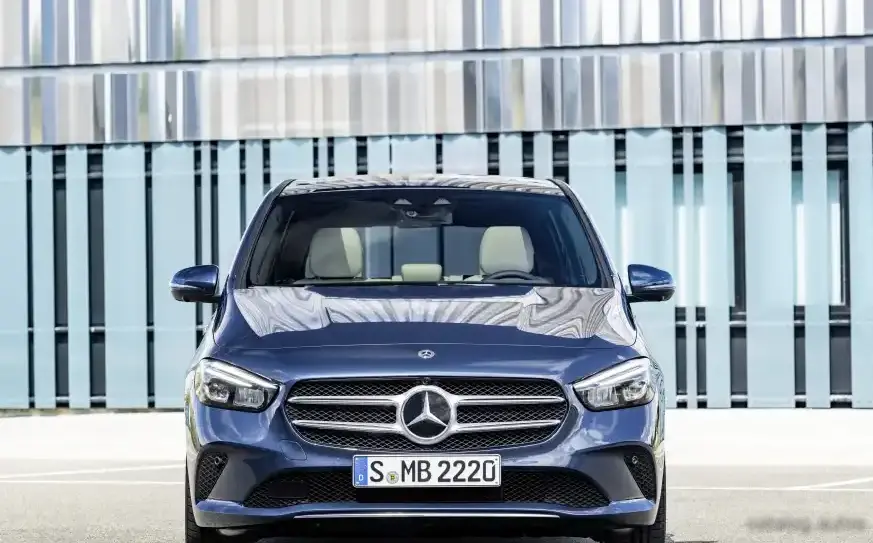
The Mercedes-Benz B-Class (W247) B 250, equipped with a 224 horsepower engine and a dual-clutch transmission (DCT), represents a significant offering within the compact luxury hatchback segment. Produced from 2019 to 2022, this variant occupied a mid-to-upper position in the W247 B-Class lineup, bridging the gap between more economical engine options and the performance-oriented AMG models. It was primarily marketed in Europe and other international markets, offering a blend of practicality, comfort, and spirited driving dynamics. The B 250 aimed to appeal to buyers seeking a premium hatchback experience with a focus on technology and refinement.
Technical Specifications
| Brand | Mercedes-Benz |
| Model | B-class |
| Generation | B-class (W247) |
| Type (Engine) | B 250 (224 Hp) DCT |
| Start of production | 2019 year |
| End of production | 2022 year |
| Powertrain Architecture | Internal Combustion engine |
| Body type | Hatchback |
| Seats | 5 |
| Doors | 5 |
| Fuel consumption at Low speed (WLTP) | 6.8 l/100 km (34.6 US mpg, 41.5 UK mpg, 14.7 km/l) |
| Fuel consumption at very high speed (WLTP) | 7.8 l/100 km (30.2 US mpg, 36.2 UK mpg, 12.8 km/l) |
| CO2 emissions (WLTP) | 155-177 g/km |
| Fuel consumption (economy) – urban | 8.1-8.3 l/100 km (29 – 28.3 US mpg, 34.9 – 34 UK mpg, 12.3 – 12 km/l) |
| Fuel consumption (economy) – extra urban | 5.2-5.4 l/100 km (45.2 – 43.6 US mpg, 54.3 – 52.3 UK mpg, 19.2 – 18.5 km/l) |
| Fuel consumption (economy) – combined | 6.3-6.4 l/100 km (37.3 – 36.8 US mpg, 44.8 – 44.1 UK mpg, 15.9 – 15.6 km/l) |
| CO2 emissions | 143-147 g/km |
| Fuel Type | Petrol (Gasoline) |
| Acceleration 0 – 100 km/h | 6.4 sec |
| Acceleration 0 – 62 mph | 6.4 sec |
| Acceleration 0 – 60 mph | 6.1 sec |
| Maximum speed | 250 km/h (155.34 mph) |
| Emission standard | Euro 6d – TEMP |
| Weight-to-power ratio | 6.3 kg/Hp, 157.7 Hp/tonne |
| Weight-to-torque ratio | 4.1 kg/Nm, 246.5 Nm/tonne |
| Power | 224 Hp |
| Power per litre | 112.5 Hp/l |
| Torque | 350 Nm @ 1800 rpm (258.15 lb.-ft. @ 1800 rpm) |
| Engine layout | Front, Transverse |
| Engine Model/Code | M 260.920 |
| Engine displacement | 1991 cm3 (121.5 cu. in.) |
| Number of cylinders | 4 |
| Engine configuration | Inline |
| Number of valves per cylinder | 4 |
| Fuel injection system | Direct injection |
| Engine aspiration | Turbocharger, Intercooler |
| Engine oil capacity | 5.5 l (5.81 US qt | 4.84 UK qt) |
| Coolant | 10 l (10.57 US qt | 8.8 UK qt) |
| Kerb Weight | 1420 kg (3130.56 lbs.) |
| Max. weight | 2040 kg (4497.43 lbs.) |
| Max load | 620 kg (1366.87 lbs.) |
| Trunk (boot) space – minimum | 445 l (15.72 cu. ft.) |
| Trunk (boot) space – maximum | 1540 l (54.38 cu. ft.) |
| Fuel tank capacity | 43 l (11.36 US gal | 9.46 UK gal) |
| Permitted trailer load with brakes (12%) | 1600 kg (3527.4 lbs.) |
| Permitted trailer load without brakes | 745 kg (1642.44 lbs.) |
| Length | 4419 mm (173.98 in.) |
| Width | 1796 mm (70.71 in.) |
| Height | 1562 mm (61.5 in.) |
| Wheelbase | 2729 mm (107.44 in.) |
| Front track | 1567 mm (61.69 in.) |
| Front overhang | 914 mm (35.98 in.) |
| Rear overhang | 776 mm (30.55 in.) |
| Approach angle | 13.4° |
| Departure angle | 17.2° |
| Drivetrain Architecture | The Internal combustion engine (ICE) drives the front wheels of the vehicle. |
| Drive wheel | Front wheel drive |
| Number of gears and type of gearbox | 7 gears, automatic transmission DCT |
| Front brakes | Ventilated discs |
| Rear brakes | Disc |
Powertrain & Engine Architecture
The B 250 utilizes the M 260.920, a 2.0-liter turbocharged inline-four cylinder gasoline engine. This engine is part of Mercedes-Benz’s modular engine family, known for its efficiency and performance. It features direct fuel injection and a single scroll turbocharger with an intercooler, producing 224 horsepower and 350 Nm (258 lb-ft) of torque at 1800 rpm. The engine is transversely mounted in the front of the vehicle. The engine’s control unit manages fuel delivery, ignition timing, and turbocharger boost to optimize performance and fuel economy. The engine is paired with a 7-speed dual-clutch transmission (DCT), offering quick and smooth gear changes. This DCT is a key component in delivering the B 250’s responsive driving experience.
Driving Characteristics
The B 250 with the DCT delivers a noticeably more engaging driving experience compared to lower-powered B-Class variants. Acceleration from 0 to 60 mph is achieved in approximately 6.1 seconds, and the car has a governed top speed of 155 mph. The DCT provides rapid shifts, minimizing power interruption during acceleration. The gear ratios are tuned for a balance between performance and fuel efficiency, with taller gears for highway cruising and shorter gears for quicker acceleration. While not a dedicated sports car, the B 250 offers ample power for everyday driving and confident overtaking maneuvers. The front-wheel-drive configuration provides good traction in most conditions, although torque steer can be noticeable under hard acceleration.
Equipment & Trim Levels
The B 250 typically came standard with features such as automatic climate control, a touchscreen infotainment system with Apple CarPlay and Android Auto compatibility, and a suite of safety features including automatic emergency braking and lane keeping assist. Interior upholstery was generally a combination of fabric and synthetic leather, with optional upgrades to full leather available. Common optional extras included a panoramic sunroof, premium sound system, and advanced driver-assistance systems like adaptive cruise control and blind-spot monitoring. Trim levels varied by market, but generally offered progressive upgrades in terms of interior materials, exterior styling, and technology features.
Chassis & Braking
The W247 B-Class features a MacPherson strut front suspension and a multi-link rear suspension. The B 250 typically received slightly stiffer suspension tuning compared to lower-powered models to better manage the increased power and weight. The braking system consists of ventilated discs at the front and solid discs at the rear. Anti-lock braking system (ABS) and electronic stability control (ESC) are standard features. The steering is electrically assisted, providing a light and precise feel. The chassis is designed to provide a comfortable ride while maintaining good handling characteristics.
Market Reception & Comparison
The B 250 was generally well-received by automotive critics, who praised its responsive engine, smooth-shifting DCT, and comfortable interior. Compared to the B 180 and B 200 variants, the B 250 offered a significant performance upgrade. However, it was more expensive and slightly less fuel-efficient. Compared to rivals like the Audi A3 and BMW 2 Series Active Tourer, the B 250 offered a competitive blend of features, performance, and price. Fuel economy figures typically ranged from 37 to 45 mpg combined, depending on driving conditions. Reliability reports suggest that the M 260 engine and DCT transmission are generally reliable, although some owners have reported minor issues with electronic components.
Legacy
The Mercedes-Benz B-Class (W247) B 250 represents a well-rounded and capable compact hatchback. Its combination of performance, practicality, and technology has made it a popular choice in the used car market. The M 260 engine and DCT transmission have proven to be relatively durable, making the B 250 a potentially reliable long-term ownership proposition. As a used vehicle, the B 250 offers a compelling value proposition for buyers seeking a premium hatchback experience without the high price tag of a new car. Its continued presence on the used car market is a testament to its enduring appeal and overall quality.