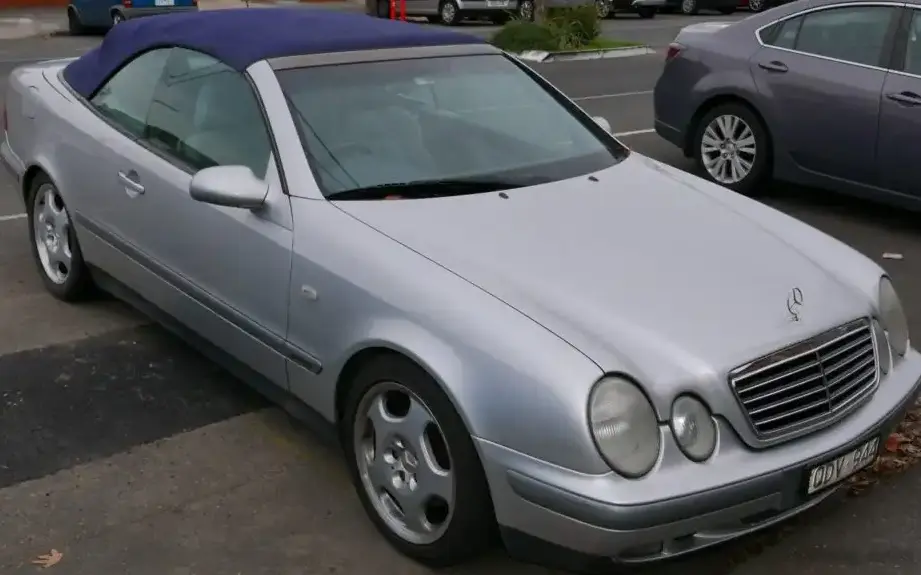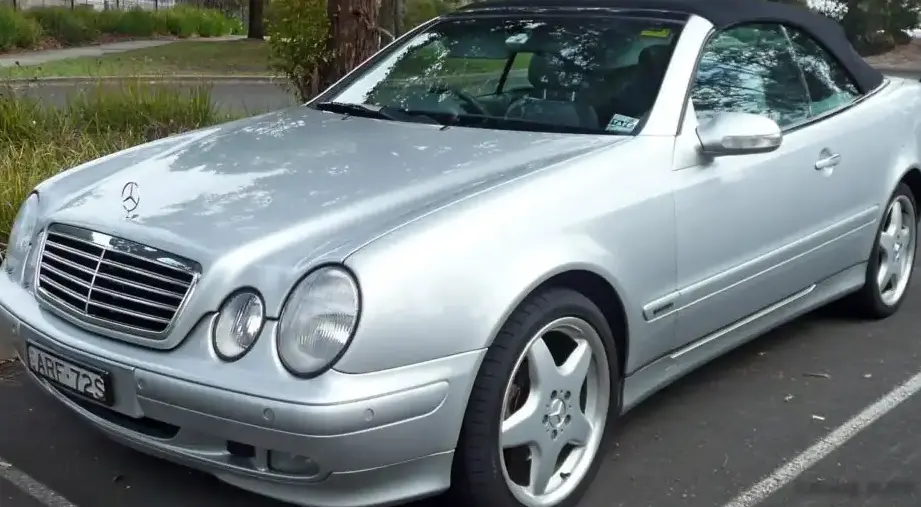
The Mercedes-Benz CLK 200, produced from August 1999 to June 2000, represents a key entry point into the A208 CLK range following the 1999 facelift. Positioned as a more accessible alternative to the higher-performance CLK 320 and CLK 430 models, the CLK 200 offered the elegant styling and comfortable ride of the CLK platform with a focus on fuel efficiency and affordability. Available exclusively as a two-door cabriolet during this period, it aimed to attract buyers seeking a stylish open-top experience without the premium price tag of its more powerful siblings. The CLK 200 played a significant role in broadening the appeal of the CLK series, particularly in markets where taxation favored smaller displacement engines.
Technical Specifications
| Brand | Mercedes-Benz |
| Model | CLK |
| Generation | CLK (A208, facelift 1999) |
| Type (Engine) | CLK 200 (136 Hp) |
| Start of production | August, 1999 |
| End of production | June, 2000 |
| Powertrain Architecture | Internal Combustion engine |
| Body type | Cabriolet |
| Seats | 4 |
| Doors | 2 |
| Fuel consumption (urban) | 13.1 l/100 km (18 US mpg, 21.6 UK mpg, 7.6 km/l) |
| Fuel consumption (extra urban) | 7.3 l/100 km (32.2 US mpg, 38.7 UK mpg, 13.7 km/l) |
| Fuel consumption (combined) | 9.4 l/100 km (25 US mpg, 30.1 UK mpg, 10.6 km/l) |
| Fuel Type | Petrol (Gasoline) |
| Acceleration 0 – 100 km/h | 12 sec |
| Acceleration 0 – 62 mph | 12 sec |
| Acceleration 0 – 60 mph | 11.4 sec |
| Maximum speed | 204 km/h (126.76 mph) |
| Weight-to-power ratio | 11.6 kg/Hp, 86.3 Hp/tonne |
| Weight-to-torque ratio | 8.3 kg/Nm, 120.6 Nm/tonne |
| Power | 136 Hp @ 5500 rpm |
| Power per litre | 68.1 Hp/l |
| Torque | 190 Nm @ 3700-4500 rpm (140.14 lb.-ft. @ 3700-4500 rpm) |
| Engine layout | Front, Longitudinal |
| Engine Model/Code | M 111.945 |
| Engine displacement | 1998 cm3 (121.93 cu. in.) |
| Number of cylinders | 4 |
| Engine configuration | Inline |
| Cylinder Bore | 89.9 mm (3.54 in.) |
| Piston Stroke | 78.7 mm (3.1 in.) |
| Compression ratio | 10.4:1 |
| Number of valves per cylinder | 4 |
| Fuel injection system | Multi-port manifold injection |
| Engine aspiration | Naturally aspirated engine |
| Valvetrain | DOHC |
| Engine oil capacity | 5.5 l (5.81 US qt | 4.84 UK qt) |
| Coolant | 8 l (8.45 US qt | 7.04 UK qt) |
| Kerb Weight | 1575 kg (3472.28 lbs.) |
| Max. weight | 1980 kg (4365.15 lbs.) |
| Max load | 405 kg (892.87 lbs.) |
| Fuel tank capacity | 62 l (16.38 US gal | 13.64 UK gal) |
| Permitted trailer load with brakes (12%) | 1500 kg (3306.93 lbs.) |
| Permitted trailer load without brakes | 750 kg (1653.47 lbs.) |
| Length | 4567 mm (179.8 in.) |
| Width | 1722 mm (67.8 in.) |
| Height | 1380 mm (54.33 in.) |
| Wheelbase | 2690 mm (105.91 in.) |
| Front track | 1505 mm (59.25 in.) |
| Rear (Back) track | 1474 mm (58.03 in.) |
| Minimum turning circle (turning diameter) | 10.70 m (35.1 ft.) |
| Drivetrain Architecture | The Internal combustion engine (ICE) drives the rear wheels of the vehicle. |
| Drive wheel | Rear wheel drive |
| Number of gears and type of gearbox | 5 gears, manual transmission |
| Front suspension | Double wishbone, Transverse stabilizer |
| Rear suspension | Independent multi-link spring suspension with stabilizer |
| Front brakes | Ventilated discs |
| Rear brakes | Disc |
| Assisting systems | ABS (Anti-lock braking system) |
| Steering type | Cone worm with recirculation balls |
| Power steering | Hydraulic Steering |
| Tires size | 205/55 R16 |
| Wheel rims size | 7J x 16 |
Powertrain & Engine Architecture
The CLK 200 was powered by the M111.945, a 1.998-liter (2.0L) inline-four cylinder engine. This engine was a mainstay of the Mercedes-Benz lineup during the late 1990s and early 2000s, known for its reliability and relatively smooth operation. The M111 featured multi-port fuel injection and a double overhead camshaft (DOHC) valvetrain with four valves per cylinder. This configuration allowed for efficient combustion and a respectable power output of 136 horsepower at 5500 rpm and 190 Nm (140 lb-ft) of torque between 3700 and 4500 rpm. The engine’s compression ratio was 10.4:1. The CLK 200 was exclusively offered with a 5-speed manual transmission during its limited production run. This transmission was chosen to balance cost and efficiency, contributing to the car’s positioning as an entry-level CLK model.
Driving Characteristics
The CLK 200, with its 136 hp and 5-speed manual gearbox, offered a comfortable and relaxed driving experience. Acceleration from 0 to 60 mph took approximately 11.4 seconds, and it had a top speed of 204 km/h (126.76 mph). While not particularly sporty, the engine provided adequate power for everyday driving and cruising. The 5-speed manual transmission allowed for reasonable control, but the gear ratios were optimized for fuel economy rather than outright performance. Compared to the CLK 320 or CLK 430, the CLK 200 felt noticeably less powerful, especially during overtaking maneuvers. However, its lighter weight and more efficient engine contributed to better fuel economy, making it a more practical choice for drivers prioritizing cost-effectiveness.
Equipment & Trim Levels
The CLK 200, being the entry-level model, came standard with a respectable level of equipment. Standard features included power windows, central locking, an AM/FM radio, and cloth upholstery. Safety features such as ABS brakes and airbags were also standard. Optional extras included leather upholstery, automatic climate control, a sunroof, and upgraded audio systems. The interior design was typical of Mercedes-Benz at the time, with a focus on quality materials and a comfortable layout. The dashboard featured wood trim accents, and the seats provided good support. The overall ambiance was one of understated luxury.
Chassis & Braking
The CLK 200 utilized a double wishbone suspension at the front and an independent multi-link spring suspension at the rear, both incorporating a stabilizer bar. This suspension setup provided a comfortable ride and good handling characteristics. The braking system consisted of ventilated discs at the front and solid discs at the rear, providing adequate stopping power for the car’s weight and performance. The steering was a cone worm with recirculation balls, offering a reasonably precise feel. The tires were typically 205/55 R16, mounted on 7J x 16 alloy wheels.
Market Reception & Comparison
The CLK 200 received mixed reviews from automotive critics. While praised for its stylish design and comfortable ride, it was often criticized for its lack of performance compared to its more powerful siblings. Fuel economy was generally considered to be good, and the car was seen as a relatively affordable entry point into the CLK range. Compared to other cabriolets in its class, such as the BMW 3 Series Convertible and the Audi A4 Cabriolet, the CLK 200 offered a more luxurious interior and a more comfortable ride, but it lacked the sporty handling of its German rivals.
Legacy
The M111 engine, found in the CLK 200, is known for its durability and reliability. With proper maintenance, these engines can last for many years and accumulate high mileage. The CLK 200, while not the most sought-after model in the CLK range, has developed a following among enthusiasts who appreciate its classic styling and affordability. In the used car market, the CLK 200 represents a relatively inexpensive way to experience the Mercedes-Benz CLK platform. However, potential buyers should be aware of the potential for age-related issues, such as wear and tear on the suspension components and the convertible top mechanism.