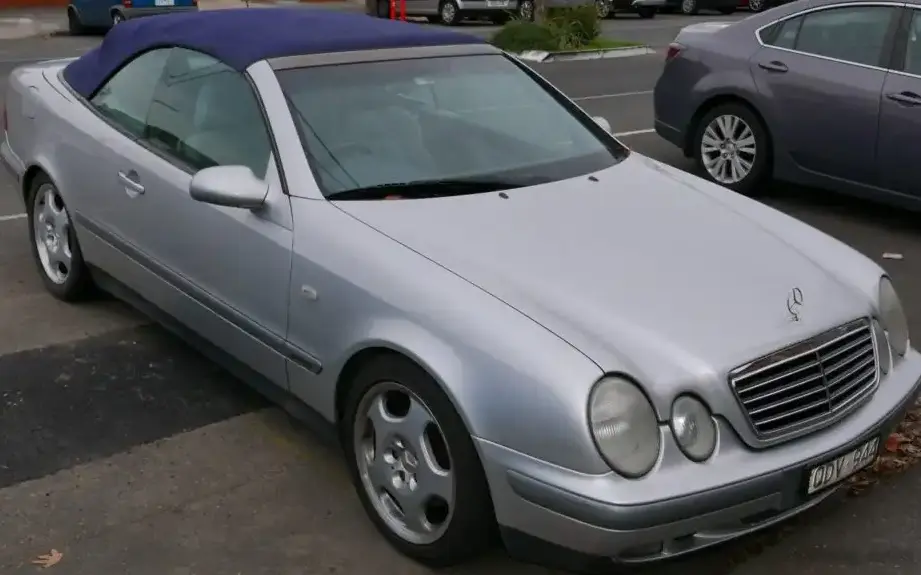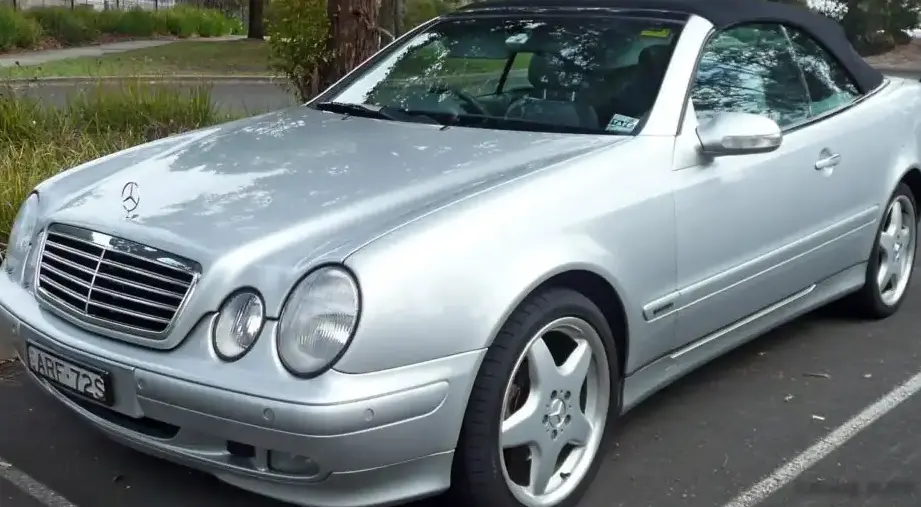
The Mercedes-Benz CLK 230 Kompressor, produced from 2000 to 2003, represented a compelling blend of performance and luxury within the A208 CLK generation (following the 1999 facelift). Positioned as a mid-range offering, it bridged the gap between the entry-level CLK 200 Kompressor and the more potent CLK 320. This variant was primarily aimed at buyers seeking a sophisticated grand tourer with a responsive engine and the convenience of an automatic transmission. The CLK A208 series, built upon the W202 C-Class platform, aimed to recapture the spirit of the classic Mercedes-Benz CLK coupes of the 1960s and 70s, offering a more sporting alternative to the E-Class.
Technical Specifications
| Brand | Mercedes-Benz |
| Model | CLK |
| Generation | CLK (A208, facelift 1999) |
| Type | CLK 230 Kompressor (197 Hp) 5G-TRONIC |
| Start of production | March, 2000 |
| End of production | March, 2003 |
| Powertrain Architecture | Internal Combustion engine |
| Body type | Cabriolet |
| Seats | 4 |
| Doors | 2 |
| Fuel consumption (urban) | 13.9 l/100 km (16.9 US mpg, 20.3 UK mpg, 7.2 km/l) |
| Fuel consumption (extra urban) | 7.2 l/100 km (32.7 US mpg, 39.2 UK mpg, 13.9 km/l) |
| Fuel consumption (combined) | 9.6 l/100 km (24.5 US mpg, 29.4 UK mpg, 10.4 km/l) |
| Fuel Type | Petrol (Gasoline) |
| Acceleration 0 – 100 km/h | 8.6 sec |
| Acceleration 0 – 62 mph | 8.6 sec |
| Acceleration 0 – 60 mph | 8.2 sec |
| Maximum speed | 230 km/h (142.92 mph) |
| Weight-to-power ratio | 8.4 kg/Hp, 119.8 Hp/tonne |
| Weight-to-torque ratio | 5.9 kg/Nm, 170.2 Nm/tonne |
| Power | 197 Hp @ 5500 rpm |
| Power per litre | 85.8 Hp/l |
| Torque | 280 Nm @ 2500-4800 rpm (206.52 lb.-ft. @ 2500-4800 rpm) |
| Engine layout | Front, Longitudinal |
| Engine Model/Code | M 111.982 |
| Engine displacement | 2295 cm3 (140.05 cu. in.) |
| Number of cylinders | 4 |
| Engine configuration | Inline |
| Cylinder Bore | 90.9 mm (3.58 in.) |
| Piston Stroke | 88.4 mm (3.48 in.) |
| Compression ratio | 9:1 |
| Number of valves per cylinder | 4 |
| Fuel injection system | Multi-port manifold injection |
| Engine aspiration | Supercharger, Intercooler |
| Valvetrain | DOHC |
| Engine oil capacity | 5.5 l (5.81 US qt | 4.84 UK qt) |
| Coolant | 8 l (8.45 US qt | 7.04 UK qt) |
| Kerb Weight | 1645 kg (3626.6 lbs.) |
| Max. weight | 2050 kg (4519.48 lbs.) |
| Max load | 405 kg (892.87 lbs.) |
| Fuel tank capacity | 62 l (16.38 US gal | 13.64 UK gal) |
| Permitted trailer load with brakes (12%) | 1500 kg (3306.93 lbs.) |
| Permitted trailer load without brakes | 750 kg (1653.47 lbs.) |
| Length | 4567 mm (179.8 in.) |
| Width | 1722 mm (67.8 in.) |
| Height | 1380 mm (54.33 in.) |
| Wheelbase | 2690 mm (105.91 in.) |
| Front track | 1505 mm (59.25 in.) |
| Rear track | 1474 mm (58.03 in.) |
| Minimum turning circle | 10.70 m (35.1 ft.) |
| Drivetrain Architecture | Rear wheel drive |
| Number of gears | 5 |
| Gearbox type | automatic transmission G-TRONIC |
| Front suspension | Double wishbone, Transverse stabilizer |
| Rear suspension | Independent multi-link spring suspension with stabilizer |
| Front brakes | Ventilated discs |
| Rear brakes | Disc |
| Assisting systems | ABS (Anti-lock braking system) |
| Steering type | Cone worm with recirculation balls |
| Power steering | Hydraulic Steering |
| Tires size | 205/55 R16 |
| Wheel rims size | 7J x 16 |
Powertrain & Engine Architecture
The heart of the CLK 230 Kompressor is the M111.982 2.3-liter inline-four cylinder engine. This engine is notable for its use of a mechanically driven supercharger (Kompressor in Mercedes terminology) and an intercooler. The supercharger, unlike a turbocharger, provides boost across a wider RPM range, resulting in a more linear power delivery. Fuel is delivered via a multi-port fuel injection system, and the engine features a double overhead camshaft (DOHC) valvetrain with four valves per cylinder. The engine produces 197 horsepower at 5500 rpm and 280 Nm (206.52 lb-ft) of torque between 2500 and 4800 rpm. The engine is longitudinally mounted, driving the rear wheels. Paired with the engine is the 5G-TRONIC automatic transmission, a five-speed unit known for its smooth shifting and adaptability. This transmission was a significant upgrade over older Mercedes automatic gearboxes, offering a more responsive and refined driving experience.
Driving Characteristics
The CLK 230 Kompressor offered a balanced driving experience. While not as overtly sporty as some of its rivals, the supercharged engine provided ample power for comfortable cruising and spirited driving. The 5G-TRONIC transmission contributed to a relaxed driving style, with well-chosen gear ratios that maximized fuel efficiency and minimized engine noise. Compared to the naturally aspirated CLK 200 Kompressor, the 230 offered a noticeable increase in performance, particularly in mid-range acceleration. However, it lacked the outright punch of the CLK 320’s larger V6 engine. The rear-wheel drive configuration provided a traditional Mercedes driving feel, with predictable handling and good balance. The steering, while hydraulically assisted, was not overly communicative, prioritizing comfort over ultimate feedback.
Equipment & Trim Levels
The CLK 230 Kompressor typically came well-equipped, reflecting Mercedes-Benz’s reputation for luxury. Standard features included automatic climate control, power windows and locks, a multi-function steering wheel, and a high-quality audio system. Interior upholstery was typically a combination of leather and fabric, with options for full leather trim. Optional extras included a sunroof, heated seats, a premium sound system, and various cosmetic enhancements. The dashboard layout was typical of the A208 CLK, featuring a classic Mercedes-Benz design with wood trim and analog gauges. The Cabriolet version, of course, featured a power-operated soft top.
Chassis & Braking
The CLK 230 Kompressor utilized a double wishbone suspension at the front and an independent multi-link suspension at the rear, providing a comfortable and controlled ride. Stabilizer bars were fitted to both axles to reduce body roll during cornering. Braking duties were handled by ventilated discs at the front and solid discs at the rear, with ABS (Anti-lock Braking System) as standard. The suspension was tuned to prioritize comfort and stability, rather than outright sportiness. The chassis was reinforced to provide adequate rigidity for the convertible body style, minimizing scuttle shake.
Market Reception & Comparison
The CLK 230 Kompressor was generally well-received by automotive critics. It was praised for its refined engine, comfortable ride, and luxurious interior. However, some reviewers noted that the handling was not as sharp as some of its competitors, such as the BMW 3 Series Convertible. Fuel economy was considered reasonable for a vehicle in its class, averaging around 24.5 US mpg in combined driving. Compared to the CLK 200 Kompressor, the 230 offered a significant performance upgrade for a relatively modest price increase. The CLK 320, while more powerful, was considerably more expensive and less fuel-efficient.
Legacy
The M111 engine family, including the M111.982 found in the CLK 230 Kompressor, is generally considered to be a reliable and durable powerplant. With proper maintenance, these engines can accumulate high mileage without major issues. The 5G-TRONIC transmission is also known for its longevity, although regular fluid changes are essential. Today, the CLK 230 Kompressor represents an affordable entry point into Mercedes-Benz ownership, offering a stylish and comfortable grand touring experience. Values for well-maintained examples are steadily increasing, as enthusiasts recognize the appeal of this classic Mercedes-Benz model. Common issues include wear and tear on convertible top mechanisms (for Cabriolet models) and potential for oil leaks as the engine ages.