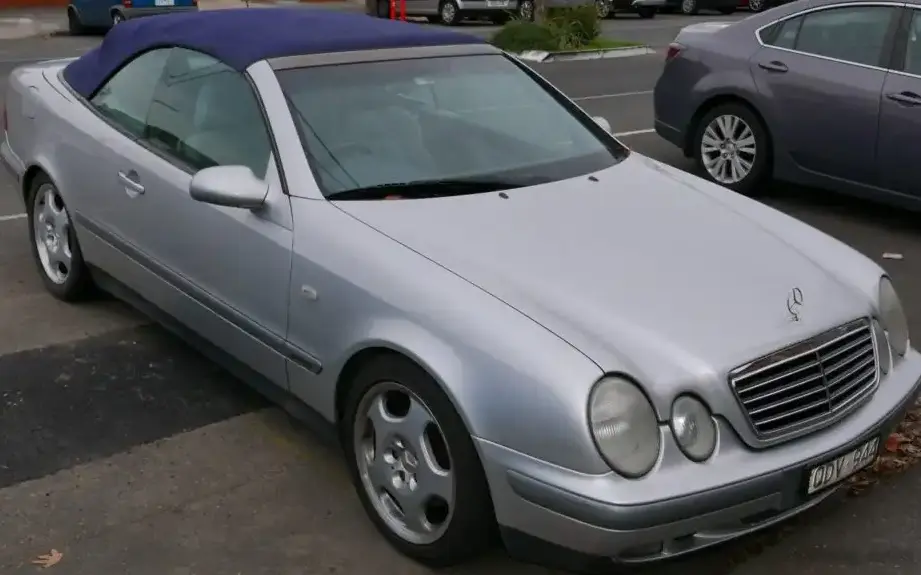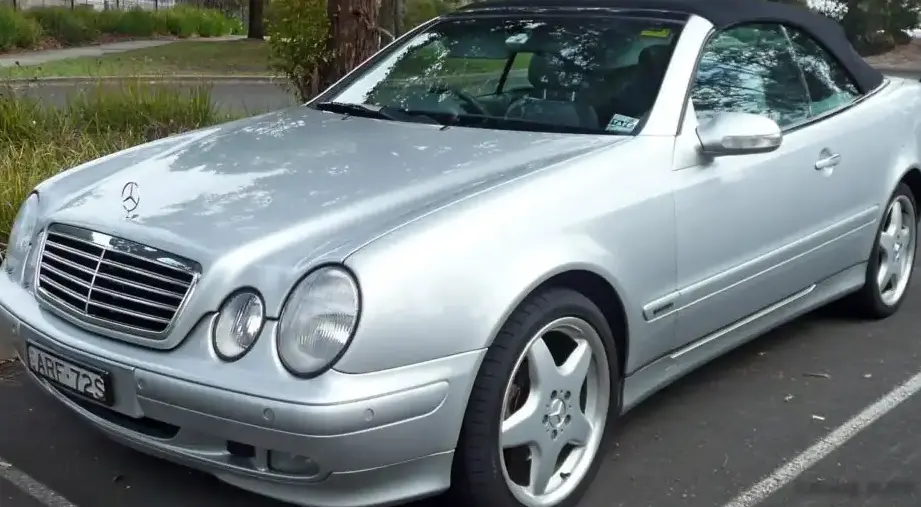
The Mercedes-Benz CLK 230 Kompressor, produced between April 1997 and August 1999, was a key variant within the C208 CLK generation. Positioned as a mid-range offering, it bridged the gap between the entry-level CLK 200 and the more potent CLK 320. This coupe aimed to deliver a blend of performance and luxury, appealing to buyers seeking a sporty yet comfortable grand tourer. The C208 CLK represented Mercedes-Benz’s return to the coupe market after a hiatus, and the 230 Kompressor was a significant contributor to its initial success, particularly in European markets.
Technical Specifications
| Brand | Mercedes-Benz |
| Model | CLK |
| Generation | CLK (C208) |
| Type (Engine) | CLK 230 Kompressor (193 Hp) 5G-TRONIC |
| Start of production | April, 1997 |
| End of production | August, 1999 |
| Powertrain Architecture | Internal Combustion engine |
| Body type | Coupe |
| Seats | 4 |
| Doors | 2 |
| Fuel consumption (economy) – urban (NEDC) | 14.2 l/100 km (16.6 US mpg, 19.9 UK mpg, 7 km/l) |
| Fuel consumption (economy) – extra urban (NEDC) | 7.4 l/100 km (31.8 US mpg, 38.2 UK mpg, 13.5 km/l) |
| Fuel consumption (economy) – combined (NEDC) | 9.9 l/100 km (23.8 US mpg, 28.5 UK mpg, 10.1 km/l) |
| CO2 emissions (NEDC) | 237 g/km |
| Fuel Type | Petrol (Gasoline) |
| Acceleration 0 – 100 km/h | 8.4 sec |
| Acceleration 0 – 62 mph | 8.4 sec |
| Acceleration 0 – 60 mph | 8 sec |
| Maximum speed | 231 km/h (143.54 mph) |
| Emission standard | Euro 3 |
| Weight-to-power ratio | 7 kg/Hp, 143 Hp/tonne |
| Weight-to-torque ratio | 4.8 kg/Nm, 207.4 Nm/tonne |
| Power | 193 Hp @ 5300 rpm |
| Power per litre | 84.1 Hp/l |
| Torque | 280 Nm @ 2500-4800 rpm (206.52 lb.-ft. @ 2500-4800 rpm) |
| Engine layout | Front, Longitudinal |
| Engine Model/Code | M 111.975 |
| Engine displacement | 2295 cm3 (140.05 cu. in.) |
| Number of cylinders | 4 |
| Engine configuration | Inline |
| Cylinder Bore | 90.9 mm (3.58 in.) |
| Piston Stroke | 88.4 mm (3.48 in.) |
| Compression ratio | 8.8:1 |
| Number of valves per cylinder | 4 |
| Fuel injection system | Multi-port manifold injection |
| Engine aspiration | Supercharger, Intercooler |
| Valvetrain | DOHC |
| Engine oil capacity | 5.5 l (5.81 US qt | 4.84 UK qt) |
| Coolant | 8 l (8.45 US qt | 7.04 UK qt) |
| Kerb Weight | 1350 kg (2976.24 lbs.) |
| Max. weight | 1850 kg (4078.55 lbs.) |
| Max load | 500 kg (1102.31 lbs.) |
| Trunk (boot) space – minimum | 420 l (14.83 cu. ft.) |
| Fuel tank capacity | 62 l (16.38 US gal | 13.64 UK gal) |
| Max. roof load | 100 kg (220.46 lbs.) |
| Permitted trailer load with brakes (12%) | 1500 kg (3306.93 lbs.) |
| Permitted trailer load without brakes | 710 kg (1565.28 lbs.) |
| Length | 4567 mm (179.8 in.) |
| Width | 1722 mm (67.8 in.) |
| Width including mirrors | 1960 mm (77.17 in.) |
| Height | 1371 mm (53.98 in.) |
| Wheelbase | 2690 mm (105.91 in.) |
| Front track | 1505 mm (59.25 in.) |
| Rear (Back) track | 1474 mm (58.03 in.) |
| Front overhang | 860 mm (33.86 in.) |
| Rear overhang | 1017 mm (40.04 in.) |
| Drag coefficient (Cd) | 0.31 |
| Minimum turning circle (turning diameter) | 10.7 m (35.1 ft.) |
| Drivetrain Architecture | The Internal combustion engine (ICE) drives the rear wheels of the vehicle. |
| Drive wheel | Rear wheel drive |
| Number of gears and type of gearbox | 5 gears, automatic transmission G-TRONIC |
| Front suspension | Coil spring, Double wishbone, Transverse stabilizer |
| Rear suspension | Independent multi-link suspension, Transverse stabilizer, Coil spring |
| Front brakes | Ventilated discs |
| Rear brakes | Disc |
| Assisting systems | ABS (Anti-lock braking system) |
| Steering type | Cone worm with recirculation balls |
| Power steering | Hydraulic Steering |
| Tires size | 205/55 R 16 |
| Wheel rims size | 7 J x 16 |
Powertrain & Engine Architecture
The heart of the CLK 230 Kompressor is the M111.975 2.3-liter inline-four cylinder engine. This engine is notable for its mechanically driven supercharger (Kompressor in Mercedes terminology), which provides increased torque at lower engine speeds compared to naturally aspirated engines. The supercharger, an Eaton M62 unit, is electromagnetic clutch-controlled, engaging at around 2000 rpm to boost power and responsiveness. Fuel delivery is managed by a multi-port fuel injection system, ensuring precise fuel metering. The engine features a double overhead camshaft (DOHC) valvetrain with four valves per cylinder, optimizing gas flow for improved performance. The 5G-TRONIC automatic transmission, a five-speed unit, was standard. This transmission offered smooth shifts and a relatively quick response, though it wasn’t as sporty as a manual gearbox.
Driving Characteristics
The CLK 230 Kompressor offered a comfortable and refined driving experience. The supercharger noticeably improved low-end torque, making it more tractable in everyday driving situations than the naturally aspirated CLK 200. While not a sports car, the 193 horsepower and 280 Nm of torque provided adequate performance for spirited driving. Acceleration from 0 to 60 mph took around 8 seconds, and the car could reach a top speed of 143.54 mph. Compared to the CLK 320 with its larger engine, the 230 Kompressor felt less powerful, particularly at higher speeds. However, the supercharger helped to mitigate some of the power deficit. The automatic transmission, while smooth, could sometimes feel hesitant during quick downshifts.
Equipment & Trim Levels
The CLK 230 Kompressor came reasonably well-equipped as standard. Interior features typically included leather upholstery, power-adjustable front seats, automatic climate control, and a multi-function steering wheel. Options included a sunroof, upgraded audio systems, and wood trim. The dashboard layout was typical of Mercedes-Benz at the time, with a focus on functionality and a premium feel. Exterior features included alloy wheels, body-colored bumpers, and a subtle rear spoiler.
Chassis & Braking
The CLK 230 Kompressor utilized a coil spring and double wishbone suspension setup at the front, providing a comfortable ride and good handling. The rear suspension featured an independent multi-link design, further enhancing ride quality and stability. Braking duties were handled by ventilated discs at the front and solid discs at the rear, equipped with ABS (Anti-lock Braking System) as standard. The steering was a hydraulic power-assisted system, offering a good balance of feel and assistance.
Market Reception & Comparison
The CLK 230 Kompressor was generally well-received by automotive critics. It was praised for its comfortable ride, refined interior, and the added performance provided by the supercharger. However, some critics noted that the automatic transmission could be slow to respond, and the car lacked the outright sporting character of some of its rivals. Compared to the CLK 200, the 230 Kompressor offered a significant performance upgrade for a relatively modest price increase. Fuel economy was reasonable for a car of its class, averaging around 23.8 US mpg in combined driving.
Legacy
The M111 engine, including the 2.3-liter supercharged variant found in the CLK 230 Kompressor, proved to be a reliable and durable powerplant. With proper maintenance, these engines can reach high mileage without major issues. Today, the C208 CLK 230 Kompressor represents an affordable entry point into Mercedes-Benz ownership. While not as sought-after as some of the more powerful CLK variants, it remains a stylish and comfortable coupe with a unique combination of performance and efficiency. Common issues include wear and tear on suspension components and potential leaks from the supercharger system, but these are generally manageable with regular maintenance. The car’s relative simplicity compared to modern vehicles makes it a popular choice for enthusiasts who enjoy working on their own cars.