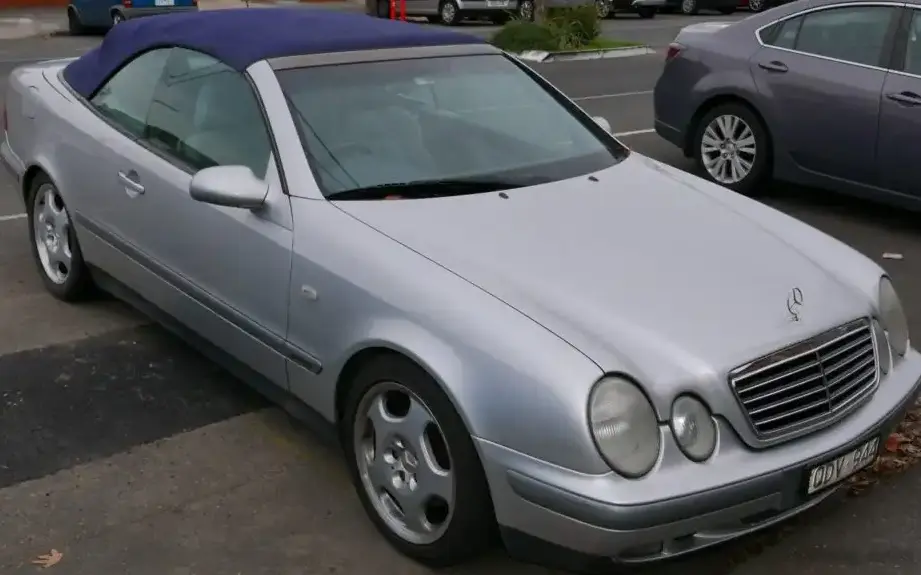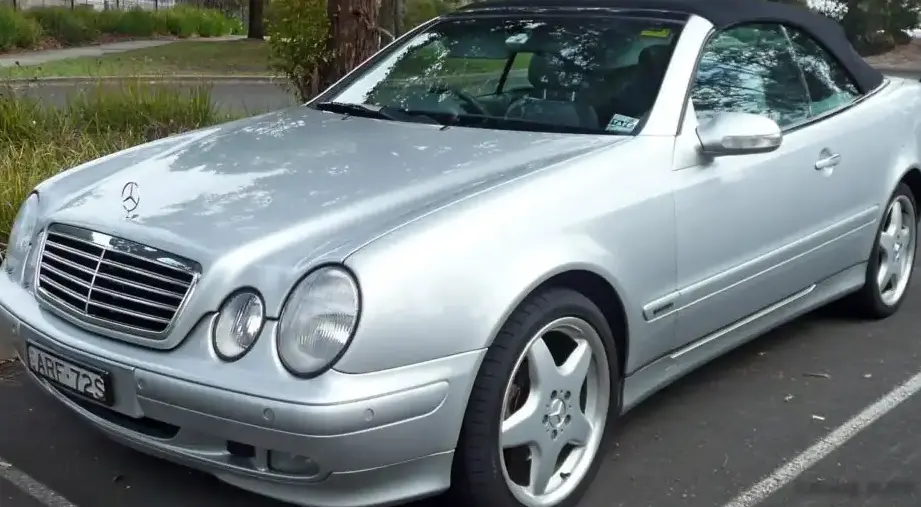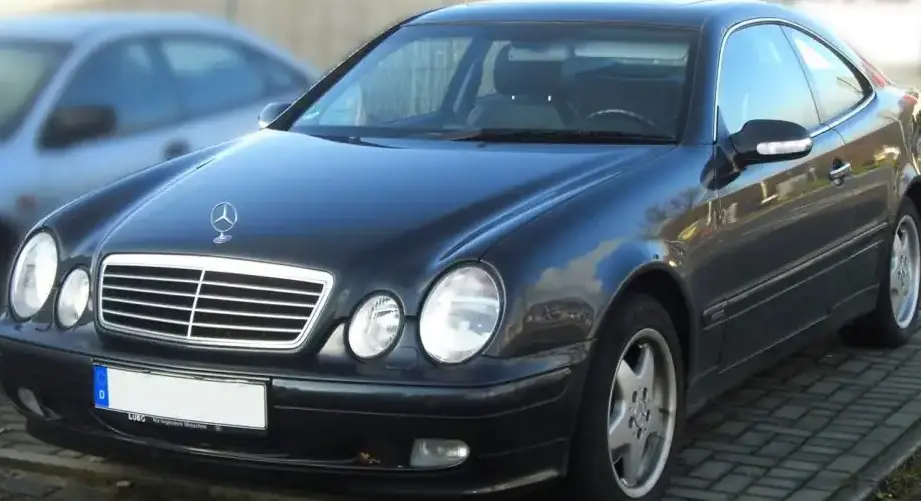
The Mercedes-Benz CLK 430, produced from 1999 to 2002 as part of the C208 facelift generation, represented a significant step up in performance and luxury within the CLK lineup. Positioned as the range-topping engine option, it catered to buyers seeking a powerful and refined grand tourer experience. The C208 CLK, launched in 1997, was Mercedes-Benz’s entry into the coupe market, aiming to blend the elegance of the SLK roadster with the practicality of the C-Class sedan. The 1999 facelift brought styling revisions and, crucially, the introduction of the M113 V8 engine in the CLK 430, solidifying its position as a true performance coupe.
Technical Specifications
| Brand | Mercedes-Benz |
| Model | CLK |
| Generation | CLK (C208, facelift 1999) |
| Type (Engine) | CLK 430 (279 Hp) 5G-TRONIC |
| Start of production | 1999 |
| End of production | 2002 |
| Powertrain Architecture | Internal Combustion engine |
| Body type | Coupe |
| Seats | 4 |
| Doors | 2 |
| Fuel consumption (urban) | 16.5 l/100 km (14.3 US mpg, 17.1 UK mpg, 6.1 km/l) |
| Fuel consumption (extra urban) | 8.5 l/100 km (27.7 US mpg, 33.2 UK mpg, 11.8 km/l) |
| Fuel consumption (combined) | 11.4 l/100 km (20.6 US mpg, 24.8 UK mpg, 8.8 km/l) |
| Fuel Type | Petrol (Gasoline) |
| Acceleration 0 – 100 km/h | 6.4 sec |
| Acceleration 0 – 62 mph | 6.4 sec |
| Acceleration 0 – 60 mph | 6.1 sec |
| Maximum speed | 250 km/h (155.34 mph) |
| Weight-to-power ratio | 5.6 kg/Hp, 179.4 Hp/tonne |
| Weight-to-torque ratio | 3.9 kg/Nm, 257.2 Nm/tonne |
| Power | 279 Hp @ 5750 rpm |
| Power per litre | 65.4 Hp/l |
| Torque | 400 Nm @ 3000-4400 rpm (295.02 lb.-ft. @ 3000-4400 rpm) |
| Engine layout | Front, Longitudinal |
| Engine Model/Code | M 113.943 |
| Engine displacement | 4266 cm3 (260.33 cu. in.) |
| Number of cylinders | 8 |
| Engine configuration | V-engine |
| Number of valves per cylinder | 4 |
| Fuel injection system | Multi-port manifold injection |
| Engine aspiration | Naturally aspirated engine |
| Engine oil capacity | 8 l (8.45 US qt | 7.04 UK qt) |
| Coolant capacity | 11 l (11.62 US qt | 9.68 UK qt) |
| Kerb Weight | 1555 kg (3428.19 lbs.) |
| Max. weight | 1960 kg (4321.06 lbs.) |
| Max load | 405 kg (892.87 lbs.) |
| Fuel tank capacity | 62 l (16.38 US gal | 13.64 UK gal) |
| Length | 4567 mm (179.8 in.) |
| Width | 1722 mm (67.8 in.) |
| Height | 1376 mm (54.17 in.) |
| Drag coefficient (Cd) | 0.30 |
| Minimum turning circle | 10.70 m (35.1 ft.) |
| Drivetrain Architecture | Rear wheel drive |
| Number of gears | 5 |
| Gearbox type | Automatic transmission 5G-TRONIC |
| Front brakes | Ventilated discs |
| Rear brakes | Disc |
| Assisting systems | ABS (Anti-lock braking system) |
| Steering type | Steering rack and pinion |
Powertrain & Engine Architecture
The heart of the CLK 430 is the M113.943 4.3-liter V8 engine. This engine, a cornerstone of Mercedes-Benz’s performance offerings in the late 1990s and early 2000s, is a naturally aspirated, all-aluminum alloy design featuring three valves per cylinder (two intake, one exhaust). It utilizes a SOHC (Single Overhead Cam) valvetrain per bank, and a multi-port fuel injection system. The M113 was known for its smooth power delivery and robust construction. The 5G-TRONIC automatic transmission, a five-speed unit, was specifically tuned to handle the V8’s substantial torque. This transmission offered a balance between comfort and responsiveness, with selectable modes for more spirited driving. The transmission’s programming prioritized smooth shifts over outright speed, aligning with the CLK 430’s grand touring character.
Driving Characteristics
The CLK 430’s driving experience is defined by its effortless power and comfortable ride. The 4.3-liter V8 delivers a broad torque curve, providing strong acceleration in virtually any gear. The 0-60 mph time of around 6.1 seconds, while not blistering by modern standards, was respectable for the era and felt considerably quicker in real-world driving. Compared to the CLK 320 (with its inline-six engine), the 430 offered a significantly more potent experience, with a noticeable increase in both acceleration and passing power. The 5G-TRONIC transmission, while not as quick-shifting as some contemporary automatics, provided smooth and predictable gear changes. The gear ratios were optimized for cruising comfort, making the CLK 430 an excellent long-distance companion. It lacked the sharp handling of some sportier coupes, prioritizing a more relaxed and refined driving experience.
Equipment & Trim Levels
The CLK 430 came generously equipped as standard. Interior features typically included leather upholstery, wood trim, automatic climate control, power-adjustable seats with memory function, and a premium sound system. Optional extras included a sunroof, navigation system, upgraded audio, and various cosmetic enhancements. The interior design was typical of Mercedes-Benz at the time – luxurious and well-appointed, with a focus on comfort and build quality. The exterior styling featured subtle but elegant touches, such as chrome accents and larger alloy wheels, to differentiate it from lower-trim models.
Chassis & Braking
The CLK 430 utilized a MacPherson strut front suspension and a multi-link independent rear suspension. The suspension was tuned for comfort, providing a smooth and controlled ride. Braking duties were handled by ventilated disc brakes at the front and solid discs at the rear. Anti-lock braking system (ABS) was standard. The CLK 430’s chassis was designed to provide a stable and predictable handling experience, but it wasn’t particularly focused on outright sportiness. The weight distribution, while reasonably balanced, contributed to a slight understeer bias.
Market Reception & Comparison
The CLK 430 was generally well-received by automotive critics. It was praised for its powerful engine, luxurious interior, and comfortable ride. However, some reviewers noted that its handling wasn’t as sharp as some of its competitors, such as the BMW 3 Series Coupe. Compared to the CLK 320, the 430 offered a significant performance upgrade, but at a higher price point. Fuel economy was also considerably lower with the V8 engine. The CLK 430 appealed to buyers who prioritized comfort, luxury, and effortless power over outright sportiness.
Legacy
The M113 V8 engine, found in the CLK 430, is known for its durability and reliability. With proper maintenance, these engines can easily exceed 150,000 miles. However, like any older vehicle, the CLK 430 is susceptible to age-related issues, such as worn suspension components, electrical glitches, and potential oil leaks. In the used car market, the CLK 430 remains a desirable option for those seeking a classic Mercedes-Benz coupe with a powerful V8 engine. Values have been steadily increasing in recent years, particularly for well-maintained examples. It represents a sweet spot in the CLK lineage, offering a blend of performance, luxury, and relative reliability that continues to appeal to enthusiasts today.