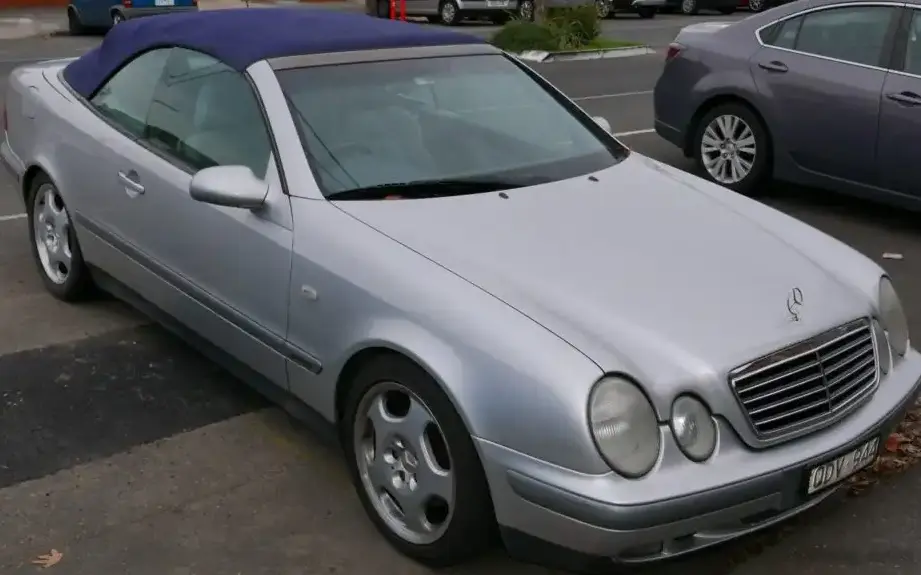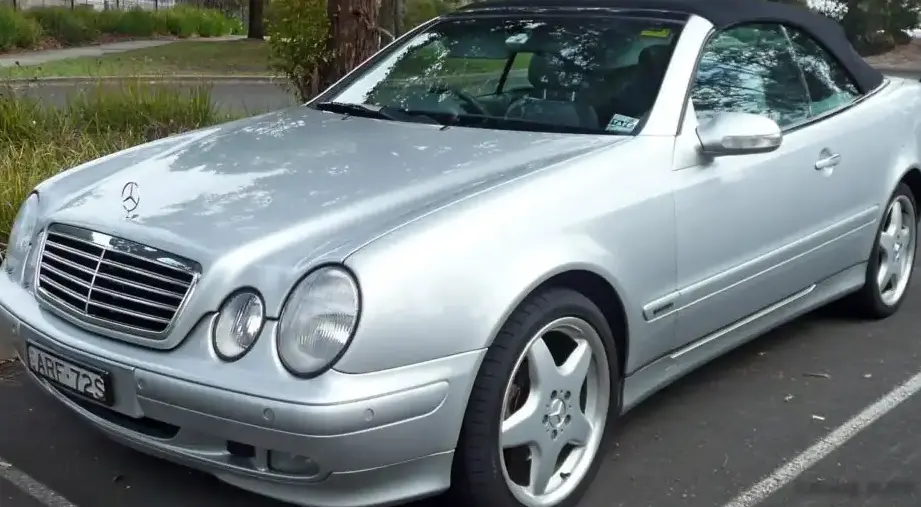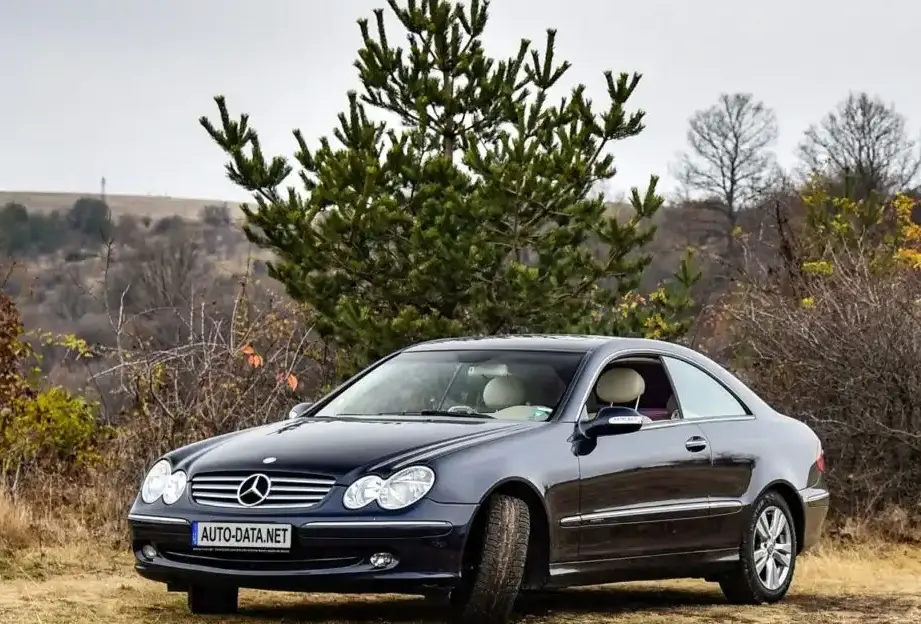
The Mercedes-Benz CLK 200 CGI, produced between 2002 and 2005, represented an entry point into the C209 CLK-Class coupe range. Positioned as a more accessible alternative to the higher-performance CLK 320 or the supercharged CLK 55 AMG, the 200 CGI offered a blend of Mercedes-Benz luxury and reasonable running costs. It was primarily marketed in Europe and other regions where smaller displacement engines were favored, offering a compelling package for buyers seeking a stylish coupe without the expense of the flagship models. The “CGI” designation denoted the use of direct injection technology, a relatively new feature for Mercedes-Benz at the time, aimed at improving fuel efficiency and engine responsiveness.
Technical Specifications
| Brand | Mercedes-Benz |
| Model | CLK |
| Generation | CLK (C209) |
| Type (Engine) | CLK 200 CGI (170 Hp) 5G-TRONIC |
| Start of production | 2002 |
| End of production | 2005 |
| Powertrain Architecture | Internal Combustion engine |
| Body type | Coupe |
| Seats | 4 |
| Doors | 2 |
| Fuel consumption (combined) | 8.2 l/100 km (28.7 US mpg, 34.4 UK mpg, 12.2 km/l) |
| Fuel Type | Petrol (Gasoline) |
| Acceleration 0 – 100 km/h | 9.8 sec |
| Acceleration 0 – 62 mph | 9.8 sec |
| Acceleration 0 – 60 mph | 9.3 sec |
| Maximum speed | 228 km/h (141.67 mph) |
| Weight-to-power ratio | 9.1 kg/Hp, 109.7 Hp/tonne |
| Weight-to-torque ratio | 6.2 kg/Nm, 161.3 Nm/tonne |
| Power | 170 Hp @ 5500 rpm |
| Power per litre | 94.7 Hp/l |
| Torque | 250 Nm @ 3500 rpm (184.39 lb.-ft. @ 3500 rpm) |
| Maximum engine speed | 6000 rpm |
| Engine layout | Front, Longitudinal |
| Engine Model/Code | M 271.942 |
| Engine displacement | 1796 cm3 (109.6 cu. in.) |
| Number of cylinders | 4 |
| Engine configuration | Inline |
| Cylinder Bore | 82 mm (3.23 in.) |
| Piston Stroke | 85 mm (3.35 in.) |
| Compression ratio | 10.5:1 |
| Number of valves per cylinder | 4 |
| Fuel injection system | Direct injection |
| Engine aspiration | Supercharger, Intercooler |
| Engine oil capacity | 5.5 l (5.81 US qt | 4.84 UK qt) |
| Coolant | 8 l (8.45 US qt | 7.04 UK qt) |
| Kerb Weight | 1550 kg (3417.17 lbs.) |
| Max. weight | 2020 kg (4453.34 lbs.) |
| Max load | 470 kg (1036.17 lbs.) |
| Trunk (boot) space – minimum | 435 l (15.36 cu. ft.) |
| Fuel tank capacity | 62 l (16.38 US gal | 13.64 UK gal) |
| Length | 4638 mm (182.6 in.) |
| Width | 1740 mm (68.5 in.) |
| Height | 1413 mm (55.63 in.) |
| Wheelbase | 2715 mm (106.89 in.) |
| Front track | 1493 mm (58.78 in.) |
| Rear (Back) track | 1474 mm (58.03 in.) |
| Front overhang | 840 mm (33.07 in.) |
| Rear overhang | 1083 mm (42.64 in.) |
| Drag coefficient (Cd) | 0.28 |
| Minimum turning circle | 10.76 m (35.3 ft.) |
| Drivetrain Architecture | Rear wheel drive |
| Drive wheel | Rear wheel drive |
| Number of gears and type of gearbox | 5 gears, automatic transmission |
| Front suspension | Spring Strut |
| Rear suspension | Independent multi-link suspension |
| Front brakes | Ventilated discs |
| Rear brakes | Disc |
| Assisting systems | ABS (Anti-lock braking system) |
| Steering type | Steering rack and pinion |
| Power steering | Electric Steering |
| Tires size | 205/55 R16; 225/50 R16 |
| Wheel rims size | 7J x 16; 8J x 16 |
INTRODUCTION
The CLK 200 CGI, launched in 2002 as part of the C209 series, occupied a crucial position in Mercedes-Benz’s coupe lineup. Built on the W203 C-Class platform (internally designated 1HX0/A3), the C209 CLK aimed to provide a more stylish and sporting alternative to the sedan. The 200 CGI variant, with its 1.8-liter supercharged engine and 5G-TRONIC automatic transmission, was designed to appeal to buyers prioritizing fuel efficiency and comfort over outright performance. It served as the entry-level CLK, offering a taste of the Mercedes-Benz experience at a more accessible price point.
Powertrain & Engine Architecture
The heart of the CLK 200 CGI is the M271.942 engine, a 1.8-liter (1796 cc) inline-four cylinder powerplant. This engine is notable for its use of direct fuel injection and a mechanically driven supercharger, a combination that allowed for increased power and torque compared to naturally aspirated engines of similar displacement. The supercharger, manufactured by IHI, provides boost across a wide RPM range, minimizing turbo lag and delivering a more linear power delivery. The engine features four valves per cylinder and a compression ratio of 10.5:1. The 5G-TRONIC automatic transmission, a five-speed unit, was standard. This transmission is known for its smooth shifting and adaptive learning capabilities, adjusting shift points based on driving style. The engine code ABS/ADZ were also used in other Mercedes-Benz models of the era.
Driving Characteristics
The CLK 200 CGI Automatic offered a comfortable and refined driving experience. While not a sports car, the supercharged engine provided adequate power for everyday driving and overtaking maneuvers. The 0-60 mph time of around 9.3 seconds and a top speed of 141.67 mph were respectable for the time, but significantly slower than the CLK 320 or CLK 55 AMG. The 5G-TRONIC transmission contributed to a smooth and effortless driving experience, although it could sometimes feel hesitant during quick downshifts. The gear ratios were optimized for fuel efficiency and cruising comfort rather than outright acceleration. Compared to the manual transmission versions (available in other CLK models), the automatic offered greater convenience but slightly reduced responsiveness.
Equipment & Trim Levels
The CLK 200 CGI typically came equipped with a reasonable level of standard features, including automatic climate control, power windows and mirrors, a multi-function steering wheel, and an audio system. Interior upholstery was typically cloth, although leather options were available. Standard dashboard trim was wood or aluminum. Optional extras included a sunroof, heated seats, upgraded audio systems, and parking sensors. The trim level was generally considered to be mid-range within the CLK lineup, offering a good balance of features and affordability.
Chassis & Braking
The CLK 200 CGI utilized a spring strut front suspension and an independent multi-link rear suspension, providing a comfortable ride and good handling characteristics. The front brakes were ventilated discs, while the rear brakes were solid discs. Anti-lock braking system (ABS) was standard. The suspension was tuned for comfort rather than outright sportiness, resulting in a slightly softer ride compared to the more powerful CLK variants. Stabilizer bars were fitted front and rear to reduce body roll during cornering.
Market Reception & Comparison
The CLK 200 CGI was generally well-received by automotive critics as a stylish and comfortable coupe. However, some reviewers noted that the engine lacked the punch of the larger displacement models. Fuel economy was praised, with combined figures around 28.7 US mpg. Compared to the CLK 320, the 200 CGI offered significantly lower running costs but also considerably less performance. The 200 CGI was often seen as a more sensible choice for buyers prioritizing practicality and affordability over outright driving thrills. Reliability was generally good, although the supercharger could require maintenance over time.
Legacy
The CLK 200 CGI, while not the most iconic variant of the C209 CLK-Class, remains a popular choice in the used car market. Its combination of Mercedes-Benz luxury, reasonable running costs, and relatively simple mechanicals makes it an attractive option for buyers seeking a stylish coupe. The M271 engine, while requiring periodic maintenance, is generally considered to be reliable. Today, well-maintained examples of the CLK 200 CGI can be found for relatively affordable prices, offering a taste of Mercedes-Benz ownership without breaking the bank.