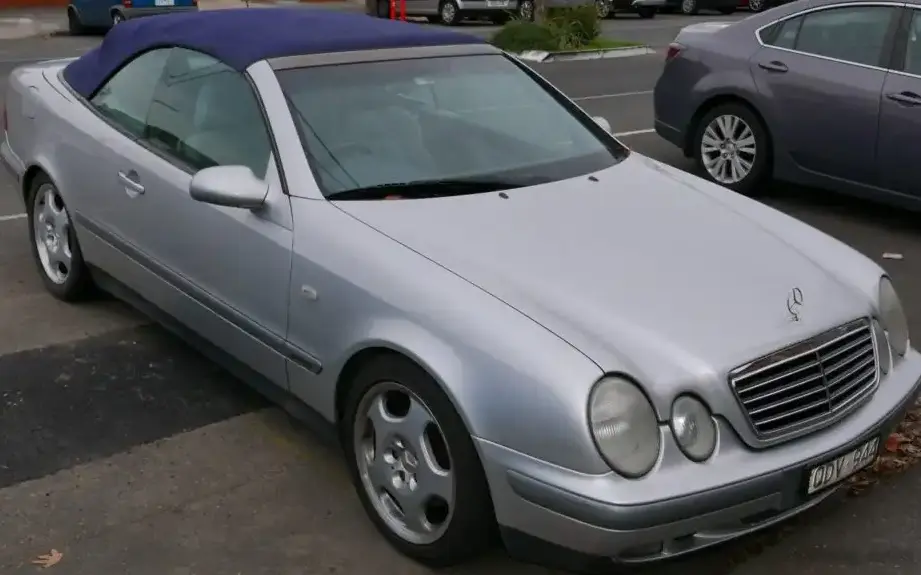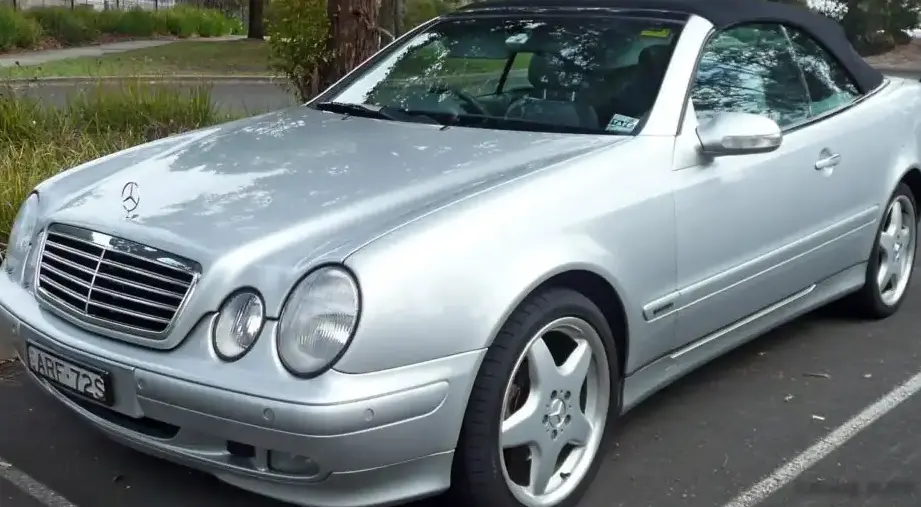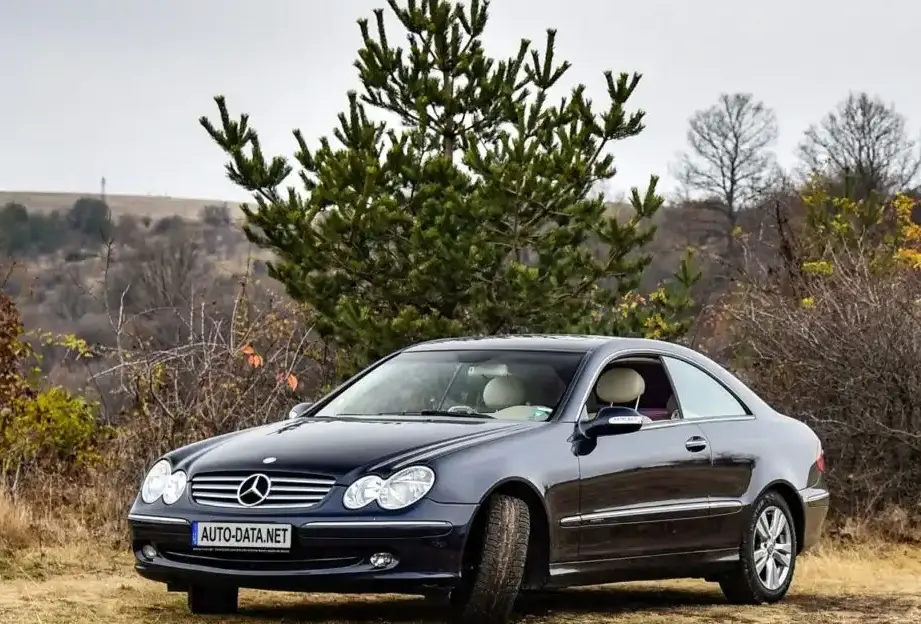
The Mercedes-Benz CLK 200 Kompressor, produced between July 2002 and May 2005, was a key variant within the C209 CLK-Class range. Positioned as an entry-level offering, it aimed to provide the elegant styling and comfortable ride of the CLK platform at a more accessible price point. This model served as a stepping stone into the CLK lineup, offering a balance between performance and fuel efficiency. It was built on the W203 C-Class platform, sharing many components but offering a more sophisticated and sporty coupe experience. The CLK 200 Kompressor competed with other premium coupes like the BMW 3 Series Coupe and the Audi A4 Cabriolet.
Technical Specifications
| Brand | Mercedes-Benz |
| Model | CLK |
| Generation | CLK (C209) |
| Type (Engine) | CLK 200 Kompressor (163 Hp) |
| Start of production | July, 2002 |
| End of production | May, 2005 |
| Powertrain Architecture | Internal Combustion engine |
| Body type | Coupe |
| Seats | 4 |
| Doors | 2 |
| Fuel consumption (economy) – urban (NEDC) | 12.3 l/100 km (19.1 US mpg, 23 UK mpg, 8.1 km/l) |
| Fuel consumption (economy) – extra urban (NEDC) | 6.5 l/100 km (36.2 US mpg, 43.5 UK mpg, 15.4 km/l) |
| Fuel consumption (economy) – combined (NEDC) | 8.6 l/100 km (27.4 US mpg, 32.8 UK mpg, 11.6 km/l) |
| CO2 emissions (NEDC) | 206 g/km |
| Fuel Type | Petrol (Gasoline) |
| Acceleration 0 – 100 km/h | 9.3 sec |
| Acceleration 0 – 62 mph | 9.3 sec |
| Acceleration 0 – 60 mph | 8.8 sec |
| Maximum speed | 230 km/h (142.92 mph) |
| Emission standard | Euro 4 |
| Weight-to-power ratio | 9 kg/Hp, 111.3 Hp/tonne |
| Weight-to-torque ratio | 6.1 kg/Nm, 163.8 Nm/tonne |
| Power | 163 Hp @ 5500 rpm |
| Power per litre | 90.8 Hp/l |
| Torque | 240 Nm @ 3000 rpm (177.01 lb.-ft. @ 3000 rpm) |
| Maximum engine speed | 6000 rpm |
| Engine layout | Front, Longitudinal |
| Engine Model/Code | M 271.940 |
| Engine displacement | 1796 cm3 (109.6 cu. in.) |
| Number of cylinders | 4 |
| Engine configuration | Inline |
| Cylinder Bore | 82 mm (3.23 in.) |
| Piston Stroke | 85 mm (3.35 in.) |
| Compression ratio | 9.5:1 |
| Number of valves per cylinder | 4 |
| Fuel injection system | Multi-port manifold injection |
| Engine aspiration | Supercharger, Intercooler |
| Valvetrain | DOHC |
| Engine oil capacity | 5.5 l (5.81 US qt | 4.84 UK qt) |
| Coolant | 8 l (8.45 US qt | 7.04 UK qt) |
| Kerb Weight | 1465 kg (3229.77 lbs.) |
| Max. weight | 2010 kg (4431.29 lbs.) |
| Max load | 545 kg (1201.52 lbs.) |
| Trunk (boot) space – minimum | 435 l (15.36 cu. ft.) |
| Fuel tank capacity | 62 l (16.38 US gal | 13.64 UK gal) |
| Max. roof load | 100 kg (220.46 lbs.) |
| Permitted trailer load with brakes (12%) | 1500 kg (3306.93 lbs.) |
| Permitted trailer load without brakes | 750 kg (1653.47 lbs.) |
| Length | 4638 mm (182.6 in.) |
| Width | 1740 mm (68.5 in.) |
| Width including mirrors | 1991 mm (78.39 in.) |
| Height | 1413 mm (55.63 in.) |
| Wheelbase | 2715 mm (106.89 in.) |
| Front track | 1493 mm (58.78 in.) |
| Rear (Back) track | 1474 mm (58.03 in.) |
| Front overhang | 840 mm (33.07 in.) |
| Rear overhang | 1083 mm (42.64 in.) |
| Drag coefficient (Cd) | 0.28 |
| Minimum turning circle (turning diameter) | 10.76 m (35.3 ft.) |
| Drivetrain Architecture | The Internal combustion engine (ICE) drives the rear wheels of the vehicle. |
| Drive wheel | Rear wheel drive |
| Number of gears and type of gearbox | 6 gears, manual transmission |
| Front suspension | Independent type McPherson, Transverse stabilizer |
| Rear suspension | Independent multi-link suspension, Transverse stabilizer |
| Front brakes | Ventilated discs, 288×25 mm |
| Rear brakes | Disc, 278×9 mm |
| Assisting systems | ABS (Anti-lock braking system) |
| Steering type | Steering rack and pinion |
| Power steering | Hydraulic Steering |
| Tires size | Front wheel tires: 205/55 R16 Rear wheel tires: 225/50 R16 |
| Wheel rims size | Front wheel rims: 7J x 16 Rear wheel rims: 8J x 16 |
INTRODUCTION
The CLK 200 Kompressor, launched in 2002 as part of the C209 generation of the CLK-Class, represented Mercedes-Benz’s entry point into the coupe and convertible market. The C209 CLK was a significant departure from its predecessor (the W208), sharing a platform with the W203 C-Class but boasting a more refined and modern design. The “Kompressor” designation indicated the presence of a mechanically driven supercharger, enhancing the engine’s power output. This variant was primarily aimed at buyers seeking a stylish and comfortable coupe without the higher price tag of the more powerful CLK 320 or CLK 500 models.
Powertrain & Engine Architecture
At the heart of the CLK 200 Kompressor lies the M271.940 1.8-liter inline-four cylinder engine. This engine is notable for its supercharging system, which utilizes a Lysholm-type compressor to force more air into the cylinders, boosting power and torque. The engine features multi-port fuel injection and a double overhead camshaft (DOHC) valvetrain with four valves per cylinder. The supercharger is belt-driven by the engine’s crankshaft, providing near-instant boost response. The engine’s electronic engine management system carefully controls fuel delivery and ignition timing to optimize performance and efficiency. The standard transmission for this model was a 6-speed manual, though a 5-speed automatic transmission was also available, impacting acceleration and fuel economy.
Driving Characteristics
The CLK 200 Kompressor offered a comfortable and refined driving experience, prioritizing smoothness over outright performance. With 163 horsepower and 240 Nm (177 lb-ft) of torque, acceleration from 0 to 60 mph took around 8.8 seconds, making it adequately quick for everyday driving. The supercharger provided a noticeable boost in power at lower engine speeds, improving responsiveness in city traffic. However, compared to the more powerful CLK variants, the 200 Kompressor felt less eager to rev and lacked the same level of dynamic capability. The automatic transmission, while smooth, could sometimes feel hesitant during quick downshifts. The suspension was tuned for comfort, absorbing bumps and imperfections in the road effectively, but at the expense of some body roll in corners.
Equipment & Trim Levels
The CLK 200 Kompressor came reasonably well-equipped as standard. Typical features included automatic climate control, power windows and mirrors, a multi-function steering wheel, and a basic audio system. Upholstery was generally cloth, though leather options were available. Optional extras included a premium sound system, sunroof, heated seats, and parking sensors. The interior design was typical of Mercedes-Benz at the time, emphasizing quality materials and a luxurious feel. Trim levels were relatively simple, with options primarily focused on adding comfort and convenience features rather than significantly altering the car’s appearance.
Chassis & Braking
The CLK 200 Kompressor utilized a McPherson strut front suspension and a multi-link independent rear suspension. This setup provided a good balance between ride comfort and handling. The front brakes were ventilated discs, while the rear brakes were solid discs. Anti-lock Braking System (ABS) was standard. The steering was a hydraulic power-assisted rack and pinion system, offering precise and responsive control. The car’s weight distribution was relatively balanced, contributing to its stable handling characteristics. Stabilizer bars were fitted to both the front and rear axles to reduce body roll during cornering.
Market Reception & Comparison
The CLK 200 Kompressor was generally well-received by automotive critics as an accessible entry point into the CLK range. It was praised for its stylish design, comfortable ride, and relatively fuel-efficient engine. However, some reviewers noted that its performance was somewhat underwhelming compared to its rivals and the more powerful CLK models. Compared to the CLK 320, the 200 Kompressor offered significantly less power and a less engaging driving experience, but at a lower price point. The 1.8L engine also proved to be more economical than the larger V6 engines found in the higher-spec CLK models. Reliability was generally good, although the supercharger system required periodic maintenance.
Legacy
The CLK 200 Kompressor has become a relatively affordable and desirable used car. The M271 engine, while requiring regular maintenance (particularly regarding the supercharger belt and electromagnetic clutch), is generally considered reliable. The car’s elegant styling and comfortable interior continue to appeal to buyers seeking a stylish and well-built coupe. Parts availability is generally good, and the car’s relatively simple mechanical design makes it relatively easy to maintain. Today, the CLK 200 Kompressor represents a good value proposition for those seeking a classic Mercedes-Benz coupe experience without breaking the bank.