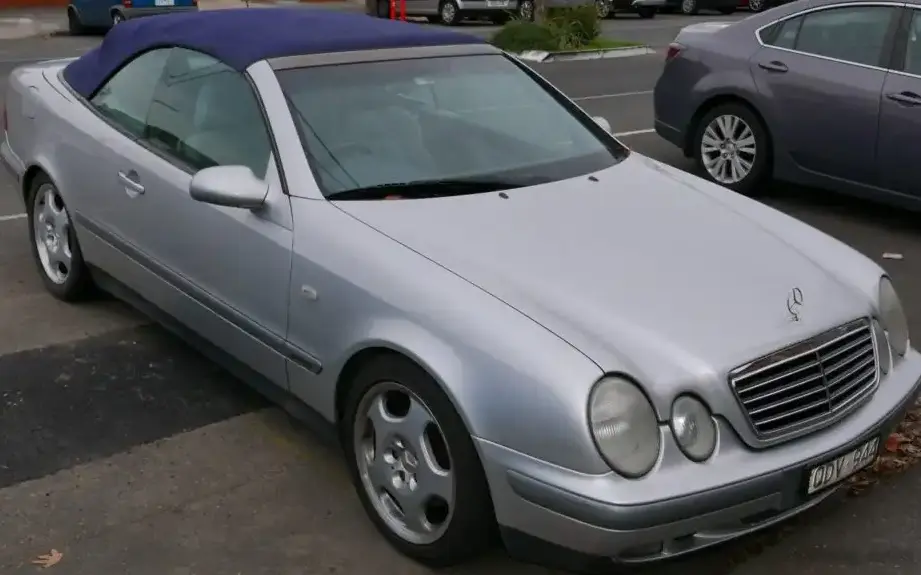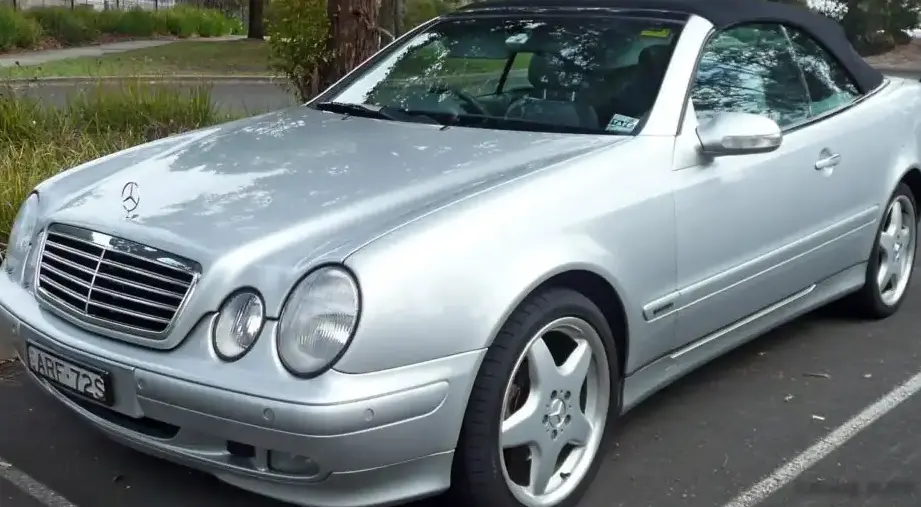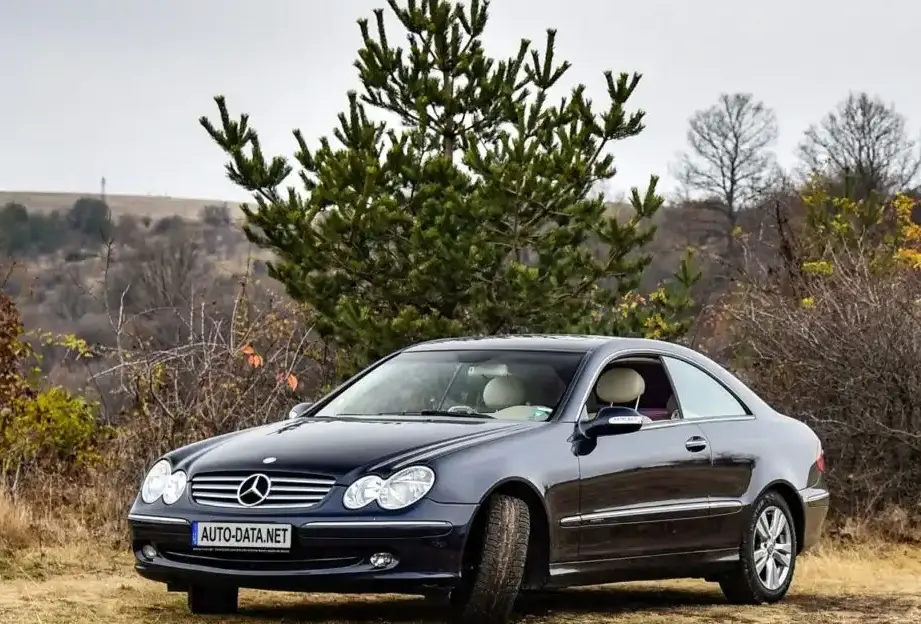
The Mercedes-Benz CLK 320 (C209) was a coupe produced between February 2002 and May 2005, representing a significant iteration of Mercedes-Benz’s mid-size luxury coupe offering. Positioned as a step up from the CLK 240 and 280 models, the CLK 320 aimed to deliver a more potent driving experience while maintaining the comfort and refinement expected of the Mercedes-Benz brand. It was built on the W209 C-Class platform, sharing many components but offering a more sporting aesthetic and grand touring focus. The CLK 320 occupied a middle ground in the CLK range, offering a balance between performance and price, appealing to buyers who desired more power than the base models but didn’t require the outright performance of the later CLK 500 or the AMG variants.
Technical Specifications
| Brand | Mercedes-Benz |
| Model | CLK |
| Generation | CLK (C209) |
| Type (Engine) | CLK 320 (218 Hp) 5G-TRONIC |
| Start of production | February, 2002 |
| End of production | May, 2005 |
| Powertrain Architecture | Internal Combustion engine |
| Body type | Coupe |
| Seats | 4 |
| Doors | 2 |
| Fuel consumption (economy) – urban (NEDC) | 14.9 l/100 km (15.8 US mpg, 19 UK mpg, 6.7 km/l) |
| Fuel consumption (economy) – extra urban (NEDC) | 7.5 l/100 km (31.4 US mpg, 37.7 UK mpg, 13.3 km/l) |
| Fuel consumption (economy) – combined (NEDC) | 10.2 l/100 km (23.1 US mpg, 27.7 UK mpg, 9.8 km/l) |
| CO2 emissions (NEDC) | 250 g/km |
| Fuel Type | Petrol (Gasoline) |
| Acceleration 0 – 100 km/h | 7.9 sec |
| Acceleration 0 – 62 mph | 7.9 sec |
| Acceleration 0 – 60 mph | 7.5 sec |
| Maximum speed | 244 km/h (151.61 mph) |
| Emission standard | Euro 4 |
| Weight-to-power ratio | 7 kg/Hp, 142.5 Hp/tonne |
| Weight-to-torque ratio | 4.9 kg/Nm, 202.6 Nm/tonne |
| Power | 218 Hp @ 5700 rpm |
| Power per litre | 68.1 Hp/l |
| Torque | 310 Nm @ 3000-4600 rpm (228.64 lb.-ft. @ 3000-4600 rpm) |
| Maximum engine speed | 6000 rpm |
| Engine layout | Front, Longitudinal |
| Engine Model/Code | M 112.955 |
| Engine displacement | 3199 cm3 (195.21 cu. in.) |
| Number of cylinders | 6 |
| Engine configuration | V-engine |
| Cylinder Bore | 89.9 mm (3.54 in.) |
| Piston Stroke | 84 mm (3.31 in.) |
| Compression ratio | 10:1 |
| Number of valves per cylinder | 3 |
| Fuel injection system | Multi-port manifold injection |
| Engine aspiration | Naturally aspirated engine |
| Valvetrain | SOHC |
| Engine oil capacity | 8 l (8.45 US qt, 7.04 UK qt) |
| Coolant | 10.5 l (11.1 US qt, 9.24 UK qt) |
| Kerb Weight | 1530 kg (3373.07 lbs.) |
| Max. weight | 2060 kg (4541.52 lbs.) |
| Max load | 530 kg (1168.45 lbs.) |
| Trunk (boot) space – minimum | 435 l (15.36 cu. ft.) |
| Fuel tank capacity | 62 l (16.38 US gal, 13.64 UK gal) |
| Max. roof load | 100 kg (220.46 lbs.) |
| Permitted trailer load with brakes (12%) | 1500 kg (3306.93 lbs.) |
| Permitted trailer load without brakes | 750 kg (1653.47 lbs.) |
| Length | 4638 mm (182.6 in.) |
| Width | 1740 mm (68.5 in.) |
| Width including mirrors | 1991 mm (78.39 in.) |
| Height | 1413 mm (55.63 in.) |
| Wheelbase | 2715 mm (106.89 in.) |
| Front track | 1493 mm (58.78 in.) |
| Rear (Back) track | 1474 mm (58.03 in.) |
| Front overhang | 840 mm (33.07 in.) |
| Rear overhang | 1083 mm (42.64 in.) |
| Drag coefficient (Cd) | 0.28 |
| Minimum turning circle (turning diameter) | 10.76 m (35.3 ft.) |
| Drivetrain Architecture | The Internal combustion engine (ICE) drives the rear wheels of the vehicle. |
| Drive wheel | Rear wheel drive |
| Number of gears and type of gearbox | 5 gears, automatic transmission |
| Front suspension | Independent type McPherson, Transverse stabilizer |
| Rear suspension | Independent multi-link suspension, Transverse stabilizer |
| Front brakes | Ventilated discs, 300×28 mm |
| Rear brakes | Disc, 290×10 mm |
| Assisting systems | ABS (Anti-lock braking system) |
| Steering type | Steering rack and pinion |
| Power steering | Hydraulic Steering |
| Tires size | Front wheel tires: 205/55 R16 Rear wheel tires: 225/50 R16 |
| Wheel rims size | Front wheel rims: 7J x 16 Rear wheel rims: 8J x 16 |
Powertrain & Engine Architecture
The CLK 320 was powered by the M112.955 3.2-liter naturally aspirated V6 engine. This engine was a cornerstone of Mercedes-Benz’s mid-range offerings in the early 2000s, known for its smooth operation and robust construction. The M112 featured all-aluminum construction, three valves per cylinder (two intake, one exhaust), and a single overhead camshaft (SOHC) design. Fuel delivery was handled by a multi-port fuel injection system, providing precise fuel metering for optimal combustion. The engine produced 218 horsepower at 5700 rpm and 310 Nm (228.64 lb-ft) of torque between 3000 and 4600 rpm. The engine was paired with Mercedes-Benz’s 5G-TRONIC five-speed automatic transmission. This transmission was designed for smooth and refined shifts, prioritizing comfort over outright performance. It featured a torque converter and electronically controlled gear changes.
Driving Characteristics
The CLK 320 with the 5G-TRONIC transmission offered a comfortable and relaxed driving experience. While not as overtly sporty as some of its competitors or even the manual-transmission equipped CLK variants, the 3.2-liter V6 provided ample power for everyday driving and confident highway cruising. Acceleration from 0-60 mph took approximately 7.5 seconds, and the car had a top speed of 151.61 mph. The automatic transmission’s gear ratios were tuned for fuel efficiency and smooth transitions, sometimes at the expense of immediate responsiveness. Compared to the CLK 240 or 280, the CLK 320 offered a noticeable increase in performance, particularly in mid-range acceleration. However, it lacked the sharper handling and more aggressive engine note of the higher-performance CLK 500 or AMG models.
Equipment & Trim Levels
The CLK 320 typically came well-equipped, reflecting its position as a mid-range luxury coupe. Standard features included leather upholstery, automatic climate control, power-adjustable front seats, a premium sound system, and alloy wheels. Optional extras included a sunroof, navigation system, heated seats, and upgraded interior trim materials. The interior design was characterized by Mercedes-Benz’s classic elegance, with a focus on high-quality materials and a comfortable layout. The dashboard featured analog gauges and a centrally mounted display for infotainment functions.
Chassis & Braking
The CLK 320 utilized an independent suspension system, with McPherson struts at the front and a multi-link setup at the rear. This configuration provided a good balance between ride comfort and handling. Stabilizer bars were fitted to both axles to reduce body roll during cornering. The braking system consisted of ventilated discs at the front and solid discs at the rear, equipped with ABS (Anti-lock Braking System) as standard. The CLK 320’s chassis was designed to provide a stable and predictable driving experience, prioritizing comfort and refinement over outright sportiness.
Market Reception & Comparison
The CLK 320 was generally well-received by automotive critics, who praised its smooth engine, comfortable ride, and luxurious interior. However, some reviewers noted that the 5G-TRONIC transmission could feel somewhat sluggish in certain situations. Compared to its siblings, the CLK 320 offered a compelling balance between performance and price. The CLK 240 and 280 were more affordable but lacked the 320’s power, while the CLK 500 and AMG models were significantly more expensive and focused on outright performance. Fuel economy was reasonable for a V6-powered coupe of its size, averaging around 23.1 US mpg in combined driving. Reliability was generally good, although some owners have reported issues with the electronic systems and the automatic transmission over the long term.
Legacy
The Mercedes-Benz CLK 320 (C209) remains a desirable used car today, appreciated for its classic styling, comfortable ride, and reliable powertrain. The M112 engine is known for its durability, and with proper maintenance, it can provide many years of trouble-free service. While the 5G-TRONIC transmission may require occasional servicing, it is generally a robust unit. The CLK 320 represents a sweet spot in the C209 lineup, offering a good balance of performance, luxury, and affordability. It’s a testament to Mercedes-Benz’s engineering prowess and a reminder of a time when coupes were designed for comfortable grand touring rather than outright track performance.