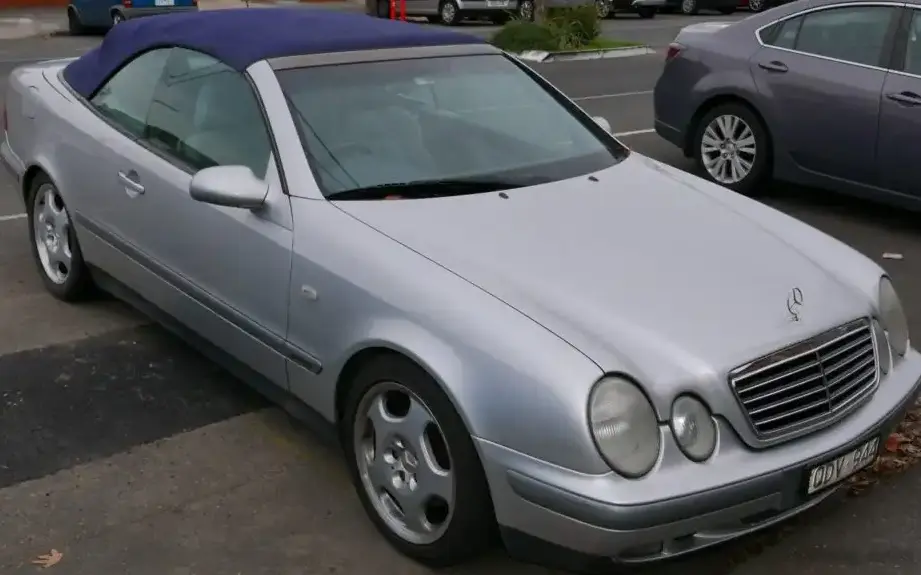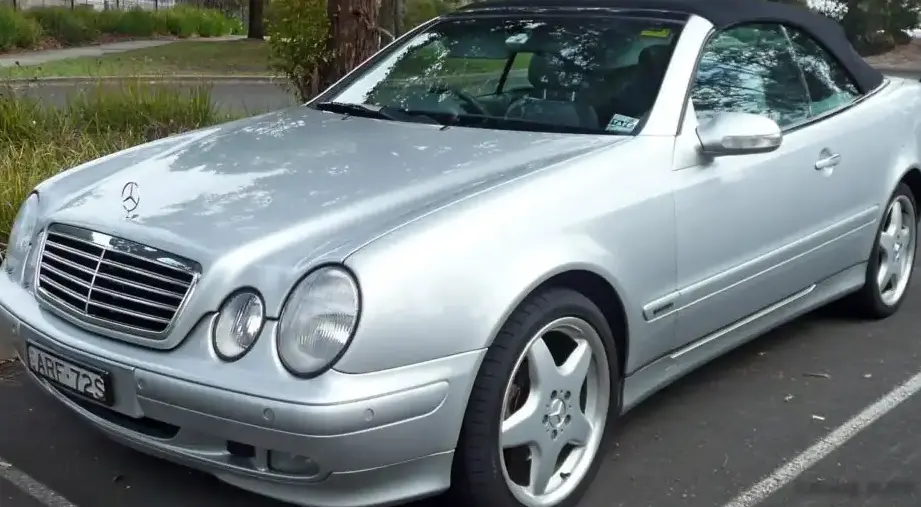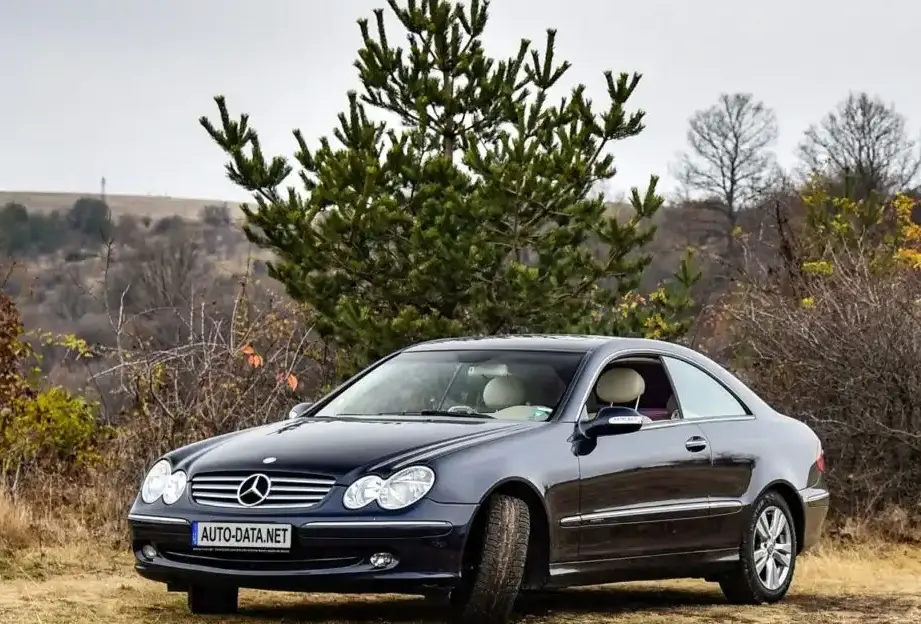
The Mercedes-Benz CLK 500 V8 (C209) was a high-performance coupe produced between June 2004 and May 2005. Positioned as the flagship of the C209 CLK range, it offered a significant step up in power and refinement compared to the four and six-cylinder models. The C209 CLK generation, built on the W203 C-Class platform, aimed to blend the luxury and comfort expected of Mercedes-Benz with a more sporting character. The CLK 500 represented the pinnacle of this ambition, offering a naturally aspirated V8 engine paired with Mercedes’ then-new 7G-TRONIC automatic transmission.
Technical Specifications
| Brand | Mercedes-Benz |
| Model | CLK |
| Generation | CLK (C209) |
| Type (Engine) | CLK 500 V8 (306 Hp) 7G-TRONIC |
| Start of production | June, 2004 |
| End of production | May, 2005 |
| Powertrain Architecture | Internal Combustion engine |
| Body type | Coupe |
| Seats | 4 |
| Doors | 2 |
| Fuel consumption (urban) | 16 l/100 km (14.7 US mpg, 17.7 UK mpg, 6.3 km/l) |
| Fuel consumption (extra urban) | 8 l/100 km (29.4 US mpg, 35.3 UK mpg, 12.5 km/l) |
| Fuel consumption (combined) | 10.9 l/100 km (21.6 US mpg, 25.9 UK mpg, 9.2 km/l) |
| CO2 emissions | 276 g/km |
| Fuel Type | Petrol (Gasoline) |
| Acceleration 0 – 100 km/h | 5.9 sec |
| Acceleration 0 – 62 mph | 5.9 sec |
| Acceleration 0 – 60 mph | 5.6 sec |
| Maximum speed | 250 km/h (155.34 mph) – Electronically limited |
| Emission standard | Euro 4 |
| Weight-to-power ratio | 5.2 kg/Hp, 193.1 Hp/tonne |
| Weight-to-torque ratio | 3.4 kg/Nm, 290.2 Nm/tonne |
| Power | 306 Hp @ 5600 rpm |
| Power per litre | 61.6 Hp/l |
| Torque | 460 Nm @ 2700-4250 rpm (339.28 lb.-ft. @ 2700-4250 rpm) |
| Engine layout | Front, Longitudinal |
| Engine Model/Code | M 113.968 |
| Engine displacement | 4966 cm3 (303.04 cu. in.) |
| Number of cylinders | 8 |
| Engine configuration | V-engine |
| Cylinder Bore | 97 mm (3.82 in.) |
| Piston Stroke | 84 mm (3.31 in.) |
| Compression ratio | 10:1 |
| Number of valves per cylinder | 3 |
| Fuel injection system | Multi-port manifold injection |
| Engine aspiration | Naturally aspirated engine |
| Valvetrain | SOHC |
| Engine oil capacity | 7.5 l (7.93 US qt | 6.6 UK qt) |
| Coolant capacity | 11.5 l (12.15 US qt | 10.12 UK qt) |
| Kerb Weight | 1585 kg (3494.33 lbs.) |
| Max. weight | 2115 kg (4662.78 lbs.) |
| Max load | 530 kg (1168.45 lbs.) |
| Trunk (boot) space – minimum | 435 l (15.36 cu. ft.) |
| Fuel tank capacity | 62 l (16.38 US gal | 13.64 UK gal) |
| Max. roof load | 100 kg (220.46 lbs.) |
| Permitted trailer load with brakes (12%) | 1500 kg (3306.93 lbs.) |
| Permitted trailer load without brakes | 750 kg (1653.47 lbs.) |
| Length | 4638 mm (182.6 in.) |
| Width | 1740 mm (68.5 in.) |
| Width including mirrors | 1991 mm (78.39 in.) |
| Height | 1415 mm (55.71 in.) |
| Wheelbase | 2715 mm (106.89 in.) |
| Front track | 1497 mm (58.94 in.) |
| Rear track | 1478 mm (58.19 in.) |
| Front overhang | 840 mm (33.07 in.) |
| Rear overhang | 1083 mm (42.64 in.) |
| Drag coefficient (Cd) | 0.28 |
| Minimum turning circle | 10.76 m (35.3 ft.) |
| Drivetrain Architecture | Rear wheel drive |
| Number of gears and type of gearbox | 7 gears, automatic transmission G-TRONIC |
| Front suspension | Independent type McPherson, Transverse stabilizer |
| Rear suspension | Independent multi-link suspension, Transverse stabilizer |
| Front brakes | Ventilated discs, 345×30 mm |
| Rear brakes | Ventilated discs, 300×22 mm |
| Assisting systems | ABS (Anti-lock braking system) |
| Steering type | Steering rack and pinion |
| Power steering | Hydraulic Steering |
| Front tires | 225/45 R17 |
| Rear tires | 245/40 R17 |
| Front wheel rims | 7.5J x 17 |
| Rear wheel rims | 8.5J x 17 |
Powertrain & Engine Architecture
The heart of the CLK 500 was the M113.968 4.966-liter (303.04 cubic inch) naturally aspirated V8 engine. This engine, a descendant of Mercedes’ long-running V8 family, featured a single overhead camshaft (SOHC) design per cylinder bank and three valves per cylinder (two intake, one exhaust). Multi-port fuel injection delivered fuel to the cylinders, and the engine boasted a compression ratio of 10:1. The M113 engine was known for its smooth power delivery and robust construction. Paired with the engine was the 7G-TRONIC automatic transmission, a seven-speed unit that offered smoother shifts and improved fuel efficiency compared to the five-speed automatic it replaced. The 7G-TRONIC allowed for closer gear ratios, keeping the engine in its optimal power band more frequently.
Driving Characteristics
The CLK 500 V8 offered a distinctly different driving experience compared to the four and six-cylinder CLK models. The V8’s 306 horsepower and 339.28 lb-ft of torque provided effortless acceleration. The 0-60 mph sprint took approximately 5.6 seconds, and the car was electronically limited to a top speed of 155 mph. The 7G-TRONIC transmission contributed to a refined driving experience, with smooth and almost imperceptible gear changes. While not a dedicated sports car, the CLK 500 offered a satisfying blend of performance and comfort. The relatively high weight of the vehicle (3494.33 lbs) did somewhat dampen the feeling of agility, but the V8’s ample torque made overtaking and highway cruising a breeze. Compared to a manual transmission equipped CLK, the 7G-TRONIC prioritized comfort and ease of use over outright driver engagement.
Equipment & Trim Levels
The CLK 500 V8 was generally well-equipped, reflecting its position as the range-topping model. Standard features typically included leather upholstery, automatic climate control, power-adjustable seats with memory function, a premium sound system, and rain-sensing wipers. Optional extras included a panoramic sunroof, upgraded interior trim materials (wood or carbon fiber), and a navigation system. The exterior styling was largely consistent across the CLK range, but the CLK 500 often featured unique badging and larger alloy wheels.
Chassis & Braking
The CLK 500 utilized an independent suspension system at all four corners, with a McPherson strut setup at the front and a multi-link suspension at the rear. Stabilizer bars were fitted front and rear to reduce body roll during cornering. Braking duties were handled by ventilated disc brakes on all four wheels, providing ample stopping power. The ABS (Anti-lock Braking System) was standard. The suspension was tuned to provide a comfortable ride while still offering reasonable handling characteristics. The heavier V8 engine necessitated slightly stiffer spring rates compared to the lighter CLK models.
Market Reception & Comparison
The CLK 500 V8 was generally well-received by automotive critics, who praised its powerful engine, smooth transmission, and luxurious interior. However, some reviewers noted that the car’s weight and size limited its agility. Compared to the CLK 320 (with its V6 engine), the CLK 500 offered a significant performance advantage, but at a higher price point and with slightly worse fuel economy. The CLK 500 also competed with other grand touring coupes from BMW and Audi, offering a different blend of luxury and performance. Fuel economy was rated at 21.6 US mpg combined, which was typical for a V8-powered coupe of that era.
Legacy
The M113 V8 engine used in the CLK 500 is known for its durability and reliability, provided it receives regular maintenance. The 7G-TRONIC transmission has also proven to be a robust unit. Today, the CLK 500 V8 represents a relatively affordable entry point into the world of Mercedes-Benz V8 ownership. While not as sought-after as some of the more iconic Mercedes-Benz models, the CLK 500 offers a compelling combination of performance, luxury, and value in the used car market. Common issues include wear and tear on suspension components and potential oil leaks from the engine, but these are generally manageable with proper maintenance.