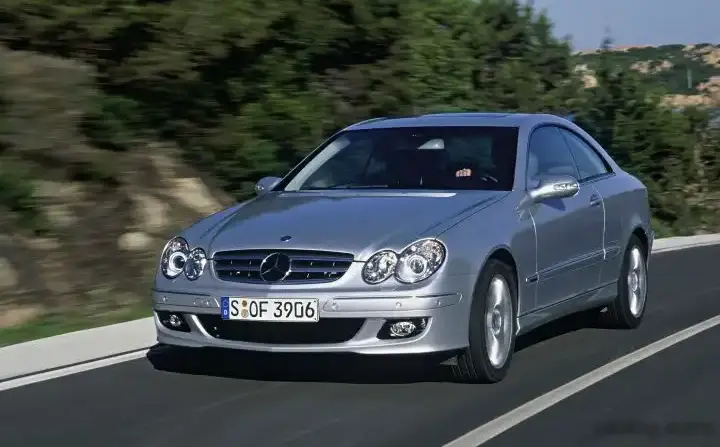
The Mercedes-Benz CLK 280, produced from 2005 to 2009 as part of the C209 facelift generation, represented a compelling blend of luxury, performance, and technology within the Mercedes-Benz lineup. Positioned as a mid-range offering within the CLK series, it slotted between the entry-level CLK 200 Kompressor and the higher-performance CLK 350 and CLK 55 AMG models. This variant aimed to provide a refined grand touring experience, appealing to buyers seeking a comfortable and capable coupe without the outright sporting focus of the AMG versions. The CLK 280 was primarily marketed in Europe, North America, and Asia, offering a sophisticated alternative to rivals like the BMW 3 Series Coupe and Audi TT.
Technical Specifications
| Brand | Mercedes-Benz |
| Model | CLK |
| Generation | CLK (C209, facelift 2005) |
| Type | CLK 280 (231 Hp) 7G-TRONIC |
| Start of production | 2005 |
| End of production | 2009 |
| Powertrain Architecture | Internal Combustion engine |
| Body type | Coupe |
| Seats | 4 |
| Doors | 2 |
| Fuel consumption (urban) | 13.2-13.5 l/100 km (17.8 – 17.4 US mpg, 21.4 – 20.9 UK mpg, 7.6 – 7.4 km/l) |
| Fuel consumption (extra urban) | 6.9-7.2 l/100 km (34.1 – 32.7 US mpg, 40.9 – 39.2 UK mpg, 14.5 – 13.9 km/l) |
| Fuel consumption (combined) | 9.2-9.5 l/100 km (25.6 – 24.8 US mpg, 30.7 – 29.7 UK mpg, 10.9 – 10.5 km/l) |
| CO2 emissions | 220-227 g/km |
| Fuel Type | Petrol (Gasoline) |
| Acceleration 0 – 100 km/h | 7.4 sec |
| Acceleration 0 – 62 mph | 7.4 sec |
| Acceleration 0 – 60 mph | 7 sec |
| Maximum speed | 250 km/h (155.34 mph) – Electronically limited |
| Emission standard | Euro 4 |
| Weight-to-power ratio | 6.5 kg/Hp, 153.5 Hp/tonne |
| Weight-to-torque ratio | 5 kg/Nm, 199.3 Nm/tonne |
| Power | 231 Hp @ 6000 rpm |
| Torque | 300 Nm @ 2500-5000 rpm (221.27 lb.-ft. @ 2500-5000 rpm) |
| Engine layout | Front, Longitudinal |
| Engine Model/Code | M 272.940 |
| Engine displacement | 2996 cm3 (182.83 cu. in.) |
| Number of cylinders | 6 |
| Engine configuration | V-engine |
| Cylinder Bore | 88 mm (3.46 in.) |
| Piston Stroke | 82.1 mm (3.23 in.) |
| Compression ratio | 11.3:1 |
| Number of valves per cylinder | 4 |
| Fuel injection system | Multi-port manifold injection |
| Engine aspiration | Naturally aspirated engine |
| Valvetrain | DOHC |
| Engine oil capacity | 8 l (8.45 US qt | 7.04 UK qt) |
| Coolant capacity | 10 l (10.57 US qt | 8.8 UK qt) |
| Kerb Weight | 1505 kg (3317.96 lbs.) |
| Max. weight | 2035 kg (4486.41 lbs.) |
| Max load | 530 kg (1168.45 lbs.) |
| Trunk (boot) space (minimum) | 435 l (15.36 cu. ft.) |
| Fuel tank capacity | 62 l (16.38 US gal | 13.64 UK gal) |
| Max. roof load | 100 kg (220.46 lbs.) |
| Permitted trailer load (with brakes) | 1500 kg (3306.93 lbs.) |
| Permitted trailer load (without brakes) | 750 kg (1653.47 lbs.) |
| Permitted towbar download | 75 kg (165.35 lbs.) |
| Length | 4652 mm (183.15 in.) |
| Width | 1740 mm (68.5 in.) |
| Width including mirrors | 1991 mm (78.39 in.) |
| Height | 1413 mm (55.63 in.) |
| Wheelbase | 2715 mm (106.89 in.) |
| Front track | 1493 mm (58.78 in.) |
| Rear track | 1474 mm (58.03 in.) |
| Front overhang | 854 mm (33.62 in.) |
| Rear overhang | 1083 mm (42.64 in.) |
| Drag coefficient (Cd) | 0.28 |
| Minimum turning circle | 10.76 m (35.3 ft.) |
| Drivetrain Architecture | Rear wheel drive |
| Number of gears | 7 |
| Gearbox type | Automatic transmission G-TRONIC |
| Front suspension | Independent type McPherson, Transverse stabilizer |
| Rear suspension | Independent multi-link suspension, Transverse stabilizer |
| Front brakes | Ventilated discs |
| Rear brakes | Disc |
| Assisting systems | ABS (Anti-lock braking system) |
| Steering type | Steering rack and pinion |
| Power steering | Hydraulic Steering |
| Front tires | 205/55 R 16; 225/45 R 17 |
| Rear tires | 225/50 R 16; 245/40 R 17 |
| Front wheel rims | 7 J x 16; 7.5 J x 17 |
| Rear wheel rims | 8 J x 16; 8.5 J x 17 |
Powertrain & Engine Architecture
The CLK 280 was powered by the M272.940 3.0-liter naturally aspirated V6 engine. This engine, a cornerstone of Mercedes-Benz’s mid-2000s offerings, featured a 60-degree V-angle and utilized a magnesium block for weight reduction. It employed a three-valve-per-cylinder design (two intake, one exhaust) and a double overhead camshaft (DOHC) valvetrain. Fuel delivery was managed by a multi-port fuel injection system, providing precise fuel metering for optimal combustion. The engine produced 231 horsepower at 6,000 rpm and 300 Nm (221 lb-ft) of torque between 2,500 and 5,000 rpm. This power was channeled through the 7G-TRONIC seven-speed automatic transmission, a sophisticated unit known for its smooth shifts and wide gear ratio spread. The 7G-TRONIC allowed for both fully automatic operation and manual gear selection via steering wheel-mounted paddles or the gear selector.
Driving Characteristics
The CLK 280 with the 7G-TRONIC transmission offered a comfortable and refined driving experience. While not overtly sporty, the engine provided adequate power for relaxed cruising and confident overtaking. The 7G-TRONIC’s close gear ratios helped to keep the engine within its optimal power band, contributing to responsive acceleration. Compared to the six-speed manual transmission available on some CLK models, the 7G-TRONIC prioritized smoothness and ease of use over outright performance. The automatic transmission did result in a slight performance deficit compared to the manual, with 0-60 mph times typically around 7.4 seconds, slightly slower than the manual versions. However, the convenience and refinement of the automatic were often considered worthwhile trade-offs.
Equipment & Trim Levels
The CLK 280 typically came well-equipped, reflecting its positioning as a mid-range luxury coupe. Standard features included leather upholstery, automatic climate control, a multi-function steering wheel, and a premium audio system. Optional extras included a sunroof, navigation system, heated seats, and upgraded interior trim materials. The CLK 280 could be further customized with various exterior options, such as different wheel designs and paint colors. The interior design was characterized by Mercedes-Benz’s signature blend of elegance and functionality, with a focus on high-quality materials and a driver-centric layout.
Chassis & Braking
The CLK 280 featured a McPherson strut front suspension and a multi-link independent rear suspension, providing a comfortable ride and predictable handling. Stabilizer bars were fitted to both axles to reduce body roll during cornering. The braking system consisted of ventilated discs at the front and solid discs at the rear, providing ample stopping power. Anti-lock braking system (ABS) was standard, enhancing safety and stability under hard braking. The steering was a hydraulic power-assisted rack and pinion system, offering precise and responsive steering feel.
Market Reception & Comparison
The CLK 280 was generally well-received by automotive critics, who praised its comfortable ride, refined interior, and capable engine. However, some reviewers noted that it lacked the sporting edge of its rivals, such as the BMW 3 Series Coupe. Fuel economy was considered average for its class, with combined fuel consumption figures around 9.2-9.5 l/100 km (25.6-24.8 US mpg). Compared to the CLK 350, the 280 offered a more affordable entry point into the CLK range, while still providing a luxurious and enjoyable driving experience. The CLK 280 also proved to be more fuel-efficient than the higher-performance CLK 55 AMG.
Legacy
The M272 engine family, including the one found in the CLK 280, has proven to be relatively reliable, although regular maintenance is crucial. Common issues include oil leaks from the valve cover gaskets and potential problems with the balance shaft. The 7G-TRONIC transmission is also generally durable, but fluid changes should be performed according to the manufacturer’s recommendations. Today, the CLK 280 represents a well-rounded and affordable entry point into the Mercedes-Benz coupe world. Well-maintained examples are sought after by enthusiasts who appreciate their blend of luxury, performance, and classic Mercedes-Benz styling. The CLK 280 remains a viable option for those seeking a comfortable and stylish grand tourer.