Technical Specifications
| Brand | Mercedes-Benz |
| Model | CLS |
| Generation | CLS coupe (C257) |
| Type (Engine) | CLS 300d (245 Hp) 9G-TRONIC |
| Start of production | 2018 |
| End of production | 2021 |
| Powertrain Architecture | Internal Combustion engine |
| Body type | Coupe |
| Seats | 5 |
| Doors | 4 |
| Fuel consumption at Low speed (WLTP) | 6.1 l/100 km (38.6 US mpg, 46.3 UK mpg, 16.4 km/l) |
| Fuel consumption at very high speed (WLTP) | 7 l/100 km (33.6 US mpg, 40.4 UK mpg, 14.3 km/l) |
| CO2 emissions (WLTP) | 161-183 g/km |
| Fuel consumption (economy) – urban | 6.5-6.7 l/100 km (36.2 – 35.1 US mpg, 43.5 – 42.2 UK mpg, 15.4 – 14.9 km/l) |
| Fuel consumption (economy) – extra urban | 4.3-4.6 l/100 km (54.7 – 51.1 US mpg, 65.7 – 61.4 UK mpg, 23.3 – 21.7 km/l) |
| Fuel consumption (economy) – combined | 5.2-5.4 l/100 km (45.2 – 43.6 US mpg, 54.3 – 52.3 UK mpg, 19.2 – 18.5 km/l) |
| CO2 emissions | 137-142 g/km |
| Fuel Type | Diesel |
| Acceleration 0 – 100 km/h | 6.4 sec |
| Acceleration 0 – 62 mph | 6.4 sec |
| Acceleration 0 – 60 mph | 6.1 sec |
| Maximum speed | 250 km/h (155.34 mph) |
| Emission standard | Euro 6 |
| Weight-to-power ratio | 7.1 kg/Hp, 140 Hp/tonne |
| Weight-to-torque ratio | 3.5 kg/Nm, 285.7 Nm/tonne |
| Power | 245 Hp @ 4200 rpm |
| Power per litre | 125.6 Hp/l |
| Torque | 500 Nm @ 1600-2400 rpm (368.78 lb.-ft. @ 1600-2400 rpm) |
| Engine layout | Front, Longitudinal |
| Engine Model/Code | OM 654.920 |
| Engine displacement | 1950 cm3 (119 cu. in.) |
| Number of cylinders | 4 |
| Engine configuration | Inline |
| Number of valves per cylinder | 4 |
| Fuel injection system | Diesel Commonrail |
| Engine aspiration | Turbocharger, Intercooler |
| Engine oil capacity | 6 l (6.34 US qt | 5.28 UK qt) |
| Coolant | 13 l (13.74 US qt | 11.44 UK qt) |
| Kerb Weight | 1750 kg (3858.09 lbs.) |
| Max. weight | 2445 kg (5390.3 lbs.) |
| Max load | 695 kg (1532.21 lbs.) |
| Fuel tank capacity | 50 l (13.21 US gal | 11 UK gal) |
| Permitted trailer load with brakes (12%) | 1900 kg (4188.78 lbs.) |
| Permitted trailer load without brakes | 750 kg (1653.47 lbs.) |
| Length | 4988 mm (196.38 in.) |
| Width | 1890 mm (74.41 in.) |
| Height | 1435 mm (56.5 in.) |
| Wheelbase | 2939 mm (115.71 in.) |
| Front track | 1618 mm (63.7 in.) |
| Front overhang | 888 mm (34.96 in.) |
| Rear overhang | 1161 mm (45.71 in.) |
| Ride height (ground clearance) | 93 mm (3.66 in.) |
| Drag coefficient (Cd) | 0.26 |
| Approach angle | 13.4° |
| Departure angle | 12.2° |
| Drivetrain Architecture | Rear wheel drive |
| Drive wheel | Rear wheel drive |
| Number of gears and type of gearbox | 9 gears, automatic transmission G-TRONIC |
| Front brakes | Ventilated discs |
| Rear brakes | Ventilated discs |
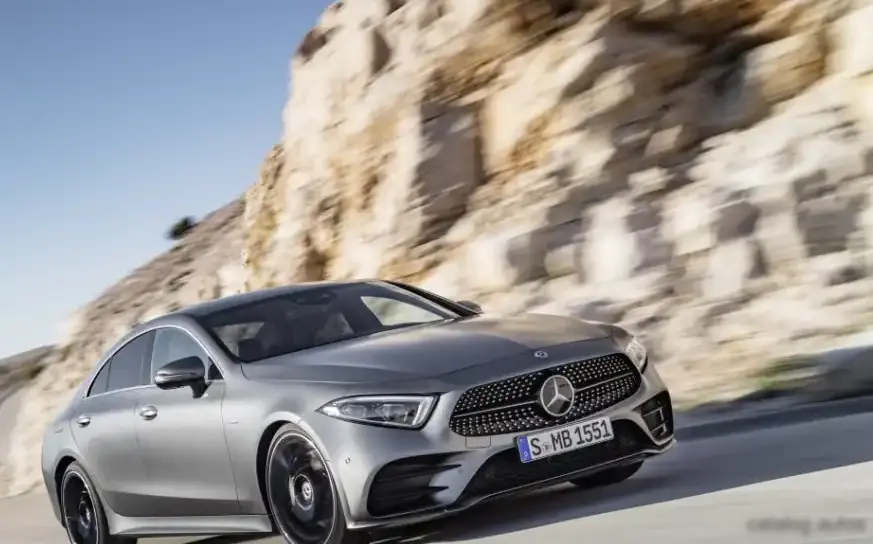
The Mercedes-Benz CLS 300d (C257), produced from 2018 to 2021, represents a compelling blend of luxury, performance, and efficiency within the CLS model range. Positioned as a mid-range offering, it served as a popular alternative to the more powerful CLS 450 and AMG variants, and the gasoline-powered CLS 350. This four-door coupe, built on the Mercedes-Benz MRA platform, aimed to deliver a sophisticated driving experience with a focus on diesel economy and refined comfort. The C257 generation marked a significant evolution in the CLS lineage, introducing a more sculpted exterior design and a technologically advanced interior.
Powertrain & Engine Architecture
At the heart of the CLS 300d lies the OM 654.920, a 2.0-liter inline-four cylinder diesel engine. This engine is a cornerstone of Mercedes-Benz’s modern diesel strategy, known for its efficiency and relatively low emissions. The OM 654 features a steel piston, a variable-geometry turbocharger, and a sophisticated common-rail direct injection system operating at pressures up to 2,700 bar. This high-pressure injection contributes to improved combustion efficiency and reduced particulate matter. The engine also incorporates a close-coupled Diesel Particulate Filter (DPF) to further minimize emissions, meeting stringent Euro 6 standards. Paired with the engine is the 9G-TRONIC nine-speed automatic transmission. This transmission is designed for smooth and efficient gear changes, contributing to both fuel economy and driving comfort. The 9G-TRONIC features a wide gear ratio spread, allowing the engine to operate in its optimal efficiency range more frequently.
Driving Characteristics
The CLS 300d delivers a surprisingly capable driving experience, despite its relatively modest horsepower output. The 500 Nm (368 lb-ft) of torque, available from a low 1600 rpm, provides strong acceleration and effortless cruising. While not as overtly sporty as the CLS 450 or AMG models, the 300d offers a refined and comfortable ride. The 9G-TRONIC transmission is generally smooth and responsive, although some drivers may find it occasionally hesitant during quick downshifts. The gear ratios are optimized for fuel efficiency, meaning the engine doesn’t always feel as eager to rev as it might in a more performance-oriented application. The rear-wheel drive configuration contributes to balanced handling, although it can be less forgiving in slippery conditions compared to all-wheel drive variants.
Equipment & Trim Levels
The CLS 300d typically came well-equipped, even in its base form. Standard features included leather upholstery, automatic climate control, a high-resolution infotainment system with a central touchscreen, and a suite of driver-assistance technologies such as adaptive cruise control and lane-keeping assist. Optional extras included a premium Burmester sound system, a panoramic sunroof, ventilated and massaging front seats, and a head-up display. Interior trim options ranged from aluminum to wood veneers, allowing buyers to personalize the cabin to their taste. The dashboard layout was characterized by a sleek, minimalist design with integrated digital displays.
Chassis & Braking
The CLS 300d utilizes a sophisticated chassis design featuring a four-link front suspension and a multi-link rear suspension. This setup provides a comfortable ride while maintaining good handling characteristics. The suspension is tuned to prioritize comfort over outright sportiness, but it still offers a reasonable level of control in corners. Braking duties are handled by ventilated disc brakes on all four wheels. The braking system is responsive and provides ample stopping power. Anti-lock braking system (ABS) and electronic stability control (ESC) are standard features, enhancing safety and stability.
Market Reception & Comparison
The CLS 300d was generally well-received by automotive critics. It was praised for its fuel efficiency, comfortable ride, and luxurious interior. However, some reviewers noted that the engine could feel a bit underpowered compared to the larger-displacement engines offered in other CLS models. Compared to the CLS 450, the 300d offered significantly better fuel economy but lacked the same level of performance. Against the gasoline-powered CLS 350, the 300d provided superior torque and fuel efficiency, making it a more practical choice for long-distance driving. The diesel engine also tended to hold its value well in the used car market.
Legacy
The OM 654 engine found in the CLS 300d has proven to be a reliable and durable powertrain. While diesel engines, in general, have faced increased scrutiny regarding emissions, the OM 654, with its advanced emissions control systems, has largely avoided major reliability issues. On the used car market, the CLS 300d represents a good value proposition, offering a luxurious and well-equipped coupe at a more affordable price point than its higher-performance siblings. Its fuel efficiency and relatively low running costs make it an attractive option for buyers seeking a stylish and practical grand tourer.