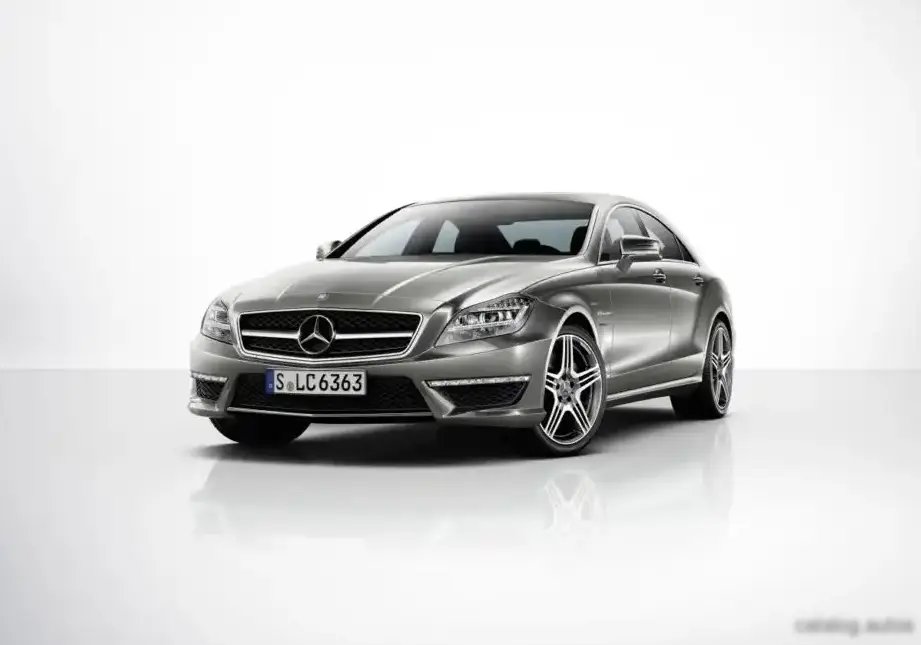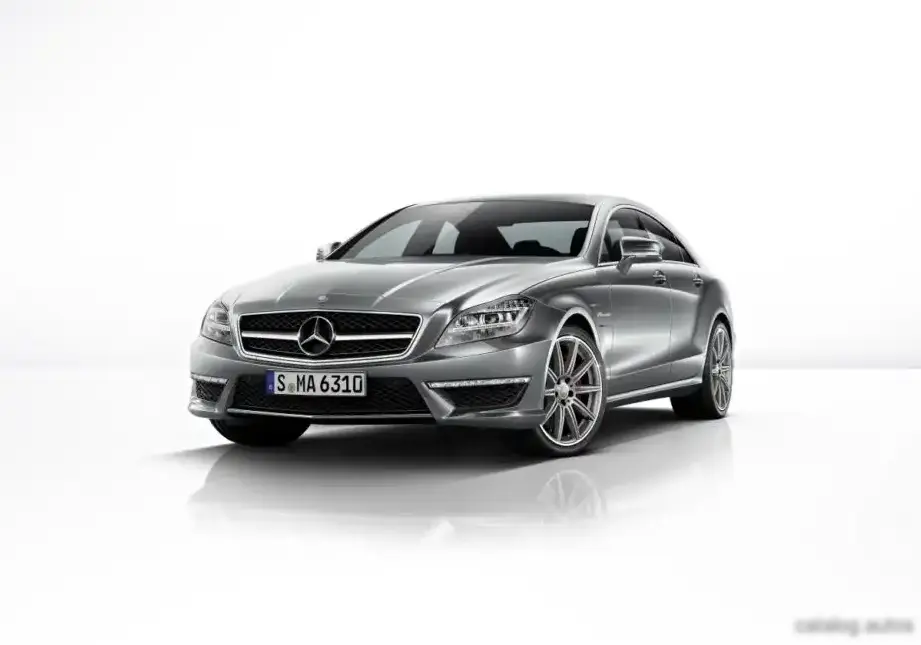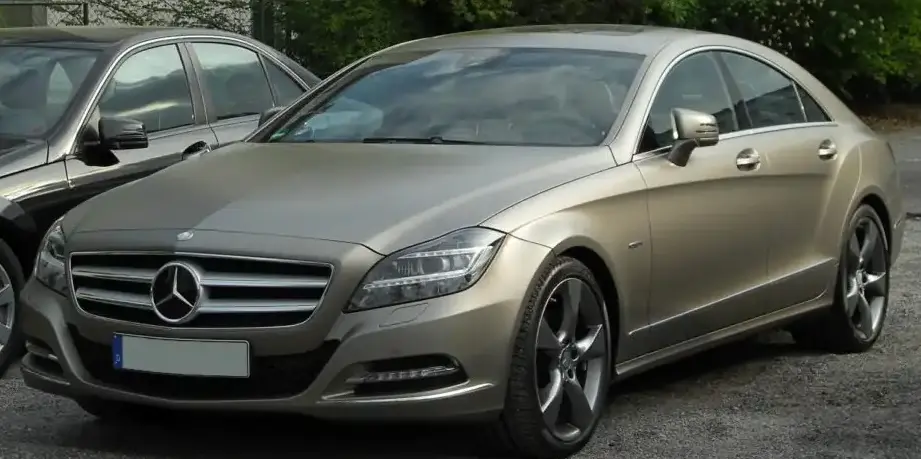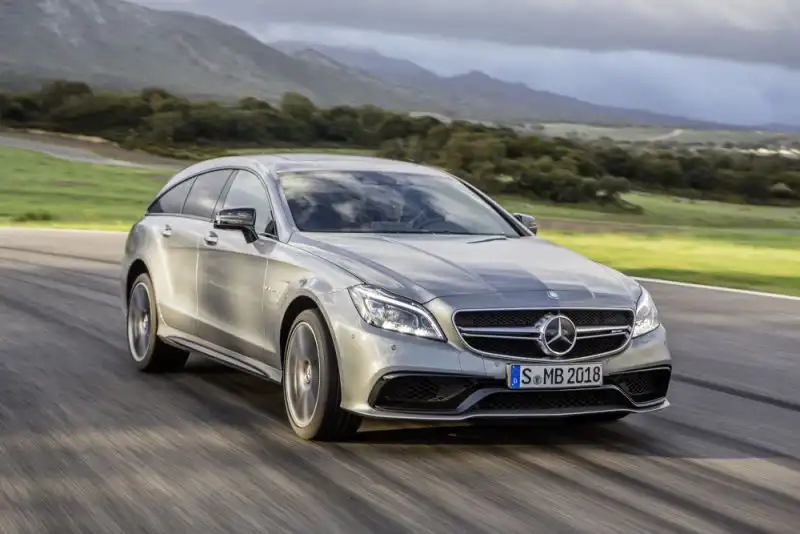
The Mercedes-Benz CLS 400 V6 (333 Hp) 9G-TRONIC, introduced as part of the X218 CLS Shooting Brake facelift in 2014, offered a compelling combination of luxury, performance, and practicality within the Mercedes-Benz lineup. Production of this specific configuration spanned from April 2016 to October 2017. Positioned as a mid-range offering within the CLS Shooting Brake family, it sat between the CLS 350 and the more powerful CLS 500 models. The X218 generation, based on the W212 E-Class platform, aimed to carve out a unique niche – a four-door coupe with the versatility of a station wagon, appealing to buyers desiring a stylish alternative to traditional sedans or estates.
Technical Specifications
| Brand | Mercedes-Benz |
| Model | CLS |
| Generation | CLS Shooting Brake (X218, facelift 2014) |
| Type (Engine) | CLS 400 V6 (333 Hp) 9G-TRONIC |
| Start of production | April, 2016 |
| End of production | October, 2017 |
| Powertrain Architecture | Internal Combustion engine |
| Body type | Station wagon (estate) |
| Seats | 5 |
| Doors | 5 |
| Fuel consumption (economy) – urban (NEDC) | 10.4 l/100 km (22.6 US mpg, 27.2 UK mpg, 9.6 km/l) |
| Fuel consumption (economy) – extra urban (NEDC) | 5.9-6 l/100 km (39.9 – 39.2 US mpg, 47.9 – 47.1 UK mpg, 16.9 – 16.7 km/l) |
| Fuel consumption (economy) – combined (NEDC) | 7.6 l/100 km (30.9 US mpg, 37.2 UK mpg, 13.2 km/l) |
| CO2 emissions (NEDC) | 170-172 g/km |
| Fuel Type | Petrol (Gasoline) |
| Acceleration 0 – 100 km/h | 5.4 sec |
| Acceleration 0 – 62 mph | 5.4 sec |
| Acceleration 0 – 60 mph | 5.1 sec |
| Maximum speed | 250 km/h (155.34 mph) – Electronically limited |
| Emission standard | Euro 6 |
| Weight-to-power ratio | 5.3 kg/Hp, 188.1 Hp/tonne |
| Weight-to-torque ratio | 3.7 kg/Nm, 271.2 Nm/tonne |
| Power | 333 Hp @ 5250-6000 rpm |
| Power per litre | 95.2 Hp/l |
| Torque | 480 Nm @ 1200-4000 rpm (354.03 lb.-ft. @ 1200-4000 rpm) |
| Engine layout | Front, Longitudinal |
| Engine Model/Code | M 276.850 |
| Engine displacement | 3498 cm3 (213.46 cu. in.) |
| Number of cylinders | 6 |
| Engine configuration | V-engine |
| Cylinder Bore | 92.9 mm (3.66 in.) |
| Piston Stroke | 86 mm (3.39 in.) |
| Compression ratio | 10.5:1 |
| Number of valves per cylinder | 4 |
| Fuel injection system | Direct injection |
| Engine aspiration | BiTurbo, Intercooler |
| Valvetrain | DOHC |
| Engine oil capacity | 6.5 l (6.87 US qt | 5.72 UK qt) |
| Coolant | 9.6 l (10.14 US qt | 8.45 UK qt) |
| Kerb Weight | 1770 kg (3902.18 lbs.) |
| Max. weight | 2370 kg (5224.96 lbs.) |
| Max load | 600 kg (1322.77 lbs.) |
| Trunk (boot) space – minimum | 590 l (20.84 cu. ft.) |
| Trunk (boot) space – maximum | 1550 l (54.74 cu. ft.) |
| Fuel tank capacity | 59 l (15.59 US gal | 12.98 UK gal) |
| Max. roof load | 100 kg (220.46 lbs.) |
| Permitted trailer load with brakes (12%) | 2100 kg (4629.71 lbs.) |
| Permitted trailer load without brakes | 750 kg (1653.47 lbs.) |
| Permitted towbar download | 84 kg (185.19 lbs.) |
| Length | 4953 mm (195 in.) |
| Width | 1881 mm (74.06 in.) |
| Width including mirrors | 2075 mm (81.69 in.) |
| Height | 1419 mm (55.87 in.) |
| Wheelbase | 2874 mm (113.15 in.) |
| Front track | 1596 mm (62.83 in.) |
| Rear (Back) track | 1629 mm (64.13 in.) |
| Front overhang | 898 mm (35.35 in.) |
| Rear overhang | 1181 mm (46.5 in.) |
| Drag coefficient (Cd) | 0.30 |
| Minimum turning circle (turning diameter) | 11.18 m (36.68 ft.) |
| Drivetrain Architecture | The Internal combustion engine (ICE) drives the rear wheels of the vehicle. |
| Drive wheel | Rear wheel drive |
| Number of gears and type of gearbox | 9 gears, automatic transmission G-TRONIC |
| Front suspension | Coil spring, Independent multi-link suspension, Transverse stabilizer, Air Suspension – Optional |
| Rear suspension | Independent multi-link spring suspension with stabilizer, Air Suspension – Optional |
| Front brakes | Ventilated discs |
| Rear brakes | Ventilated discs |
Powertrain & Engine Architecture
The CLS 400 V6 was powered by the M276.850 3.5-liter V6 engine. This engine, a common sight in many Mercedes-Benz models of the era, featured direct fuel injection and twin turbochargers. The twin-turbo setup, with one turbocharger per cylinder bank, aimed to provide a broad torque curve and minimize turbo lag. The engine produced 333 horsepower at 5250-6000 rpm and 480 Nm (354 lb-ft) of torque between 1200-4000 rpm. This power was channeled to the rear wheels via the 9G-TRONIC nine-speed automatic transmission. The 9G-TRONIC was engineered to improve fuel efficiency and deliver smoother shifts compared to the preceding seven-speed unit. It featured a wide gear ratio spread, enabling both relaxed cruising and responsive acceleration. The engine also incorporated a start/stop system to further enhance fuel economy.
Driving Characteristics
The CLS 400 V6 delivered a refined and comfortable driving experience. The 9G-TRONIC transmission, while generally smooth, could occasionally exhibit hesitant shifts, particularly at lower speeds. However, under normal driving conditions, it provided seamless gear changes. The engine provided ample power for effortless highway cruising and confident overtaking maneuvers. While not as overtly sporty as the CLS 500, the 400 offered a good balance between performance and efficiency. The rear-wheel-drive configuration contributed to a balanced feel, though it could be less forgiving in adverse weather conditions compared to all-wheel-drive variants. The steering was precise and well-weighted, providing good feedback to the driver.
Equipment & Trim Levels
The CLS 400 V6 came standard with a comprehensive array of features, including leather upholstery, automatic climate control, a premium sound system, and a suite of safety technologies. Optional extras included a panoramic sunroof, upgraded interior trim options, advanced driver-assistance systems (such as adaptive cruise control and lane-keeping assist), and a head-up display. The interior design was characterized by its elegant and modern aesthetic, with high-quality materials and meticulous attention to detail. The standard dashboard configuration featured analog gauges complemented by a central display screen for infotainment and vehicle information.
Chassis & Braking
The CLS 400 V6 utilized a sophisticated suspension system designed to balance comfort and handling. The front suspension featured a multi-link setup with coil springs, while the rear suspension employed a similar multi-link design. Air suspension was available as an option, further enhancing ride quality and allowing for adjustable ride height. The braking system consisted of ventilated discs on all four wheels, providing ample stopping power. Anti-lock brakes (ABS) and electronic stability control (ESC) were standard features, enhancing safety and control.
Market Reception & Comparison
The CLS 400 V6 was generally well-received by automotive critics. It was praised for its stylish design, comfortable interior, and refined driving experience. Some reviewers noted that the 9G-TRONIC transmission could occasionally be hesitant, and that the car’s price point was relatively high compared to some competitors. Compared to the CLS 350, the 400 offered a noticeable performance upgrade, while remaining more affordable than the range-topping CLS 500. Fuel economy was respectable for a vehicle of its size and performance, averaging around 30.9 US mpg in combined driving.
Legacy
The Mercedes-Benz CLS 400 V6 (X218) has proven to be a relatively reliable vehicle, with the M276 engine generally considered robust. However, like all complex modern vehicles, it is not without potential issues. Common concerns include occasional turbocharger failures and problems with the air suspension system (if equipped). In the used car market, the CLS 400 V6 represents a good value proposition for buyers seeking a stylish and well-equipped luxury shooting brake. Its combination of performance, comfort, and practicality continues to appeal to a wide range of drivers.