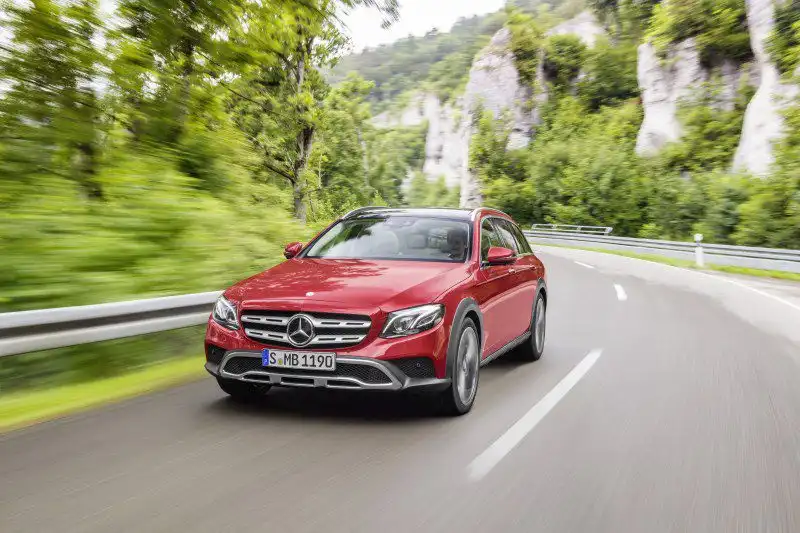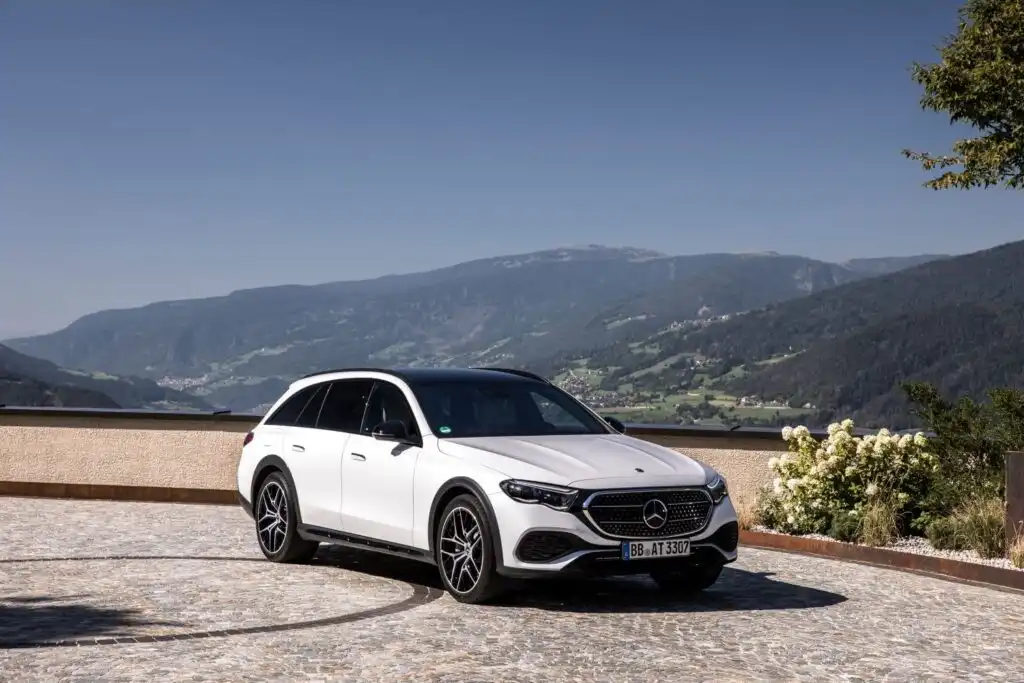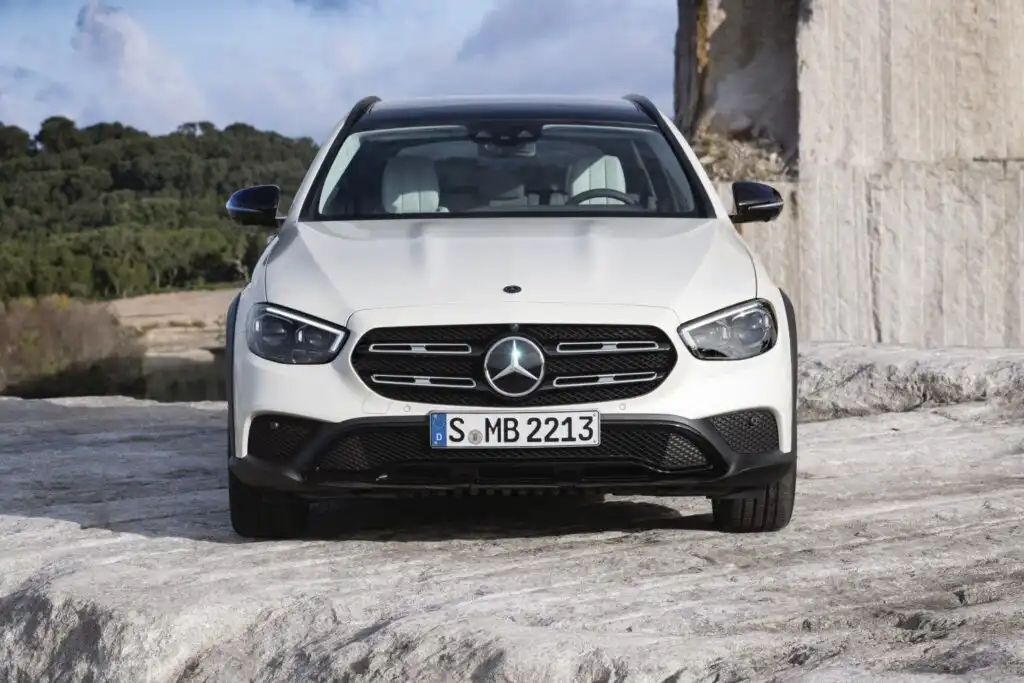
The Mercedes-Benz E-Class All-Terrain (S213, facelifted in 2020) E 200 4MATIC, equipped with EQ Boost and the 9G-TRONIC automatic transmission, represents a specific configuration within the broader All-Terrain lineup. Produced from 2020 to 2023, this variant aimed to blend the luxury and refinement of the E-Class with the practicality of a raised, all-wheel-drive wagon. It occupied a mid-range position in the All-Terrain series, offering a balance between performance, fuel efficiency, and price. The S213 generation All-Terrain models were designed to compete with vehicles like the Audi A6 allroad and Volvo V90 Cross Country, offering a more sophisticated alternative to traditional SUVs.
Technical Specifications
| Brand | Mercedes-Benz |
| Model | E-class |
| Generation | E-class All-Terrain (S213, facelift 2020) |
| Type (Engine) | E 200 (197 Hp) EQ Boost 4MATIC 9G-TRONIC |
| Start of production | 2020 |
| End of production | 2023 |
| Powertrain Architecture | MHEV (Mild Hybrid Electric Vehicle) |
| Body type | Station wagon (estate), Crossover |
| Seats | 5 |
| Doors | 5 |
| Fuel consumption (urban) | 9.8-10.0 l/100 km (24 – 23.5 US mpg) |
| Fuel consumption (extra urban) | 6.3-6.4 l/100 km (37.3 – 36.8 US mpg) |
| Fuel consumption (combined) | 7.6-7.7 l/100 km (30.9 – 30.5 US mpg) |
| CO2 emissions | 173-177 g/km |
| Fuel Type | Petrol (Gasoline) |
| Acceleration 0 – 100 km/h | 8.1 sec |
| Acceleration 0 – 62 mph | 8.1 sec |
| Acceleration 0 – 60 mph | 7.7 sec |
| Maximum speed | 225 km/h (139.81 mph) |
| Emission standard | EURO 6d-ISC-FCM |
| Weight-to-power ratio | 9.3 kg/Hp |
| Weight-to-torque ratio | 5.8 kg/Nm |
| Battery voltage | 48 V |
| Electric motor power | 14 Hp |
| Power | 197 Hp |
| Torque | 320 Nm @ 1650-4000 rpm (236.02 lb.-ft. @ 1650-4000 rpm) |
| Engine layout | Front, Longitudinal |
| Engine Model/Code | M 264 |
| Engine displacement | 1991 cm3 (121.5 cu. in.) |
| Number of cylinders | 4 |
| Engine configuration | Inline |
| Fuel injection system | Direct injection |
| Engine aspiration | Twin-scroll turbo, Intercooler |
| Engine oil capacity | 6 l (6.34 US qt | 5.28 UK qt) |
| Kerb Weight | 1840 kg (4056.51 lbs.) |
| Max. weight | 2540 kg (5599.74 lbs.) |
| Max load | 700 kg (1543.24 lbs.) |
| Trunk (boot) space – minimum | 640 l (22.6 cu. ft.) |
| Trunk (boot) space – maximum | 1820 l (64.27 cu. ft.) |
| Fuel tank capacity | 50 l (13.21 US gal | 11 UK gal) |
| Permitted trailer load with brakes (12%) | 2100 kg (4629.71 lbs.) |
| Permitted trailer load without brakes | 750 kg (1653.47 lbs.) |
| Length | 4947 mm (194.76 in.) |
| Width | 1861 mm (73.27 in.) |
| Height | 1497 mm (58.94 in.) |
| Wheelbase | 2939 mm (115.71 in.) |
| Front track | 1607 mm (63.27 in.) |
| Number of gears and type of gearbox | 9 gears, automatic transmission G-TRONIC |
| Front brakes | Ventilated discs |
| Rear brakes | Ventilated discs |
Powertrain & Engine Architecture
The E 200 All-Terrain utilizes the M 264 2.0-liter inline-four cylinder engine. This engine is a key component of Mercedes-Benz’s modular engine family, known for its efficiency and power density. It features direct fuel injection, a twin-scroll turbocharger, and an intercooler to maximize performance. The engine’s output of 197 horsepower and 320 Nm (236 lb-ft) of torque is augmented by a 48-volt EQ Boost mild-hybrid system. This system incorporates a belt-driven starter-generator that provides an additional 14 horsepower and allows for functions like extended coasting and smoother start/stop operation. The 9G-TRONIC nine-speed automatic transmission is standard, offering smooth and efficient gear changes. This transmission is specifically tuned for the All-Terrain’s off-road capabilities, with optimized gear ratios for both on- and off-road driving.
Driving Characteristics
The E 200 All-Terrain with the 9G-TRONIC transmission delivers a comfortable and refined driving experience. While not as overtly sporty as some of its higher-powered siblings, the 197 hp engine provides adequate performance for everyday driving and highway cruising. Acceleration from 0 to 60 mph takes approximately 7.7 seconds. The 9G-TRONIC transmission contributes to smooth gear changes and helps to keep the engine in its optimal power band. The EQ Boost system provides a noticeable boost during acceleration, enhancing responsiveness. Compared to manual transmission versions (not widely available in this configuration), the automatic offers greater convenience and ease of use, particularly in urban environments. The All-Terrain’s raised suspension and all-wheel-drive system provide increased ground clearance and improved traction on loose surfaces, making it capable of handling mild off-road conditions.
Equipment & Trim Levels
The E 200 All-Terrain typically came well-equipped as standard. Common features included leather upholstery, wood trim, a large infotainment screen with Mercedes-Benz’s MBUX system, and a comprehensive suite of safety features. Standard equipment also included automatic climate control, heated front seats, and a power liftgate. Optional extras included features like a panoramic sunroof, premium sound system, advanced driver-assistance systems (such as adaptive cruise control and lane-keeping assist), and various customization options for interior trim and exterior paint.
Chassis & Braking
The All-Terrain models feature a specifically tuned suspension system designed to provide both comfort and off-road capability. The suspension is raised compared to the standard E-Class wagon, providing increased ground clearance. The front suspension utilizes MacPherson struts, while the rear suspension employs a multi-link setup. The E 200 All-Terrain is equipped with ventilated disc brakes on all four wheels, providing ample stopping power. Anti-lock braking system (ABS), electronic stability control (ESC), and traction control are standard safety features. The steering system is a rack-and-pinion type with electric power assistance.
Market Reception & Comparison
The E 200 All-Terrain was generally well-received by automotive critics. It was praised for its comfortable ride, refined interior, and capable all-wheel-drive system. However, some reviewers noted that the 2.0-liter engine could feel somewhat underpowered when fully loaded or tackling steep inclines. Compared to the E 300 All-Terrain, the E 200 offered a more affordable entry point into the All-Terrain lineup, but at the expense of some performance. Fuel economy was considered competitive for its class, with combined fuel consumption figures ranging from 7.6 to 7.7 l/100 km (30.5 to 30.9 US mpg). The E 200’s mild-hybrid system contributed to improved fuel efficiency and reduced emissions.
Legacy
The M 264 engine and 9G-TRONIC transmission combination have proven to be relatively reliable in the E-Class All-Terrain. While some owners have reported minor issues with the EQ Boost system, these are generally infrequent. The All-Terrain’s robust construction and high-quality components contribute to its long-term durability. On the used car market, the E 200 All-Terrain represents a good value proposition for buyers seeking a luxurious and practical wagon with all-wheel-drive capability. Its blend of comfort, efficiency, and practicality continues to make it an appealing choice for those looking for an alternative to traditional SUVs.