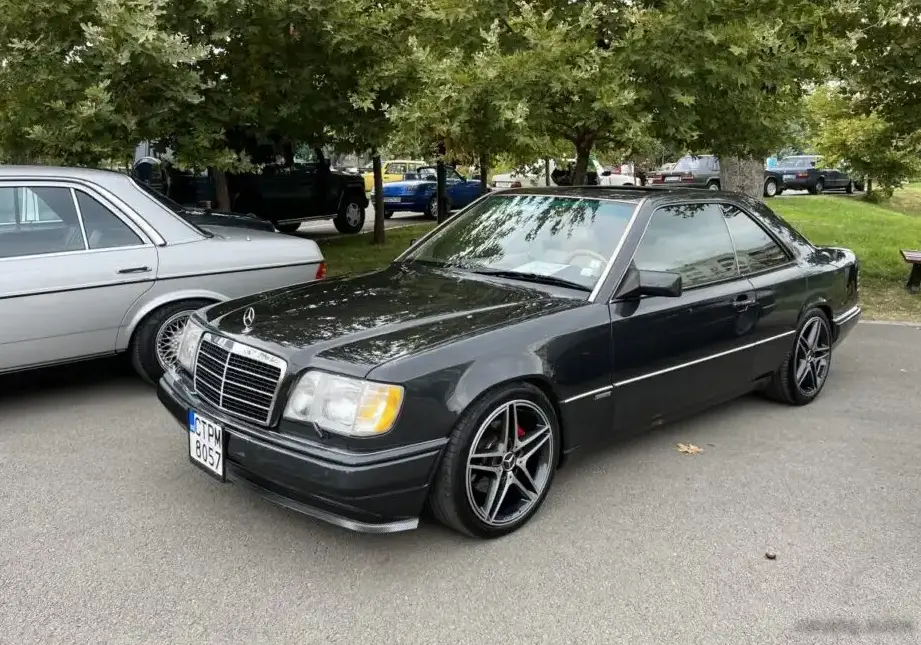
The Mercedes-Benz E-Class Coupe (C124) AMG E 36, produced between 1993 and 1996, represented a high-performance variant within the C124 coupe range. Positioned as a premium offering, it bridged the gap between the standard E-Class coupes and the more exclusive, hand-built AMG models. This vehicle was primarily marketed in Europe and North America to buyers seeking a blend of luxury, performance, and the prestige associated with the AMG brand. It utilized a naturally aspirated inline-six engine, tuned by AMG, paired with a four-speed automatic transmission, offering a unique driving experience within the C124 lineup.
Technical Specifications
| Brand | Mercedes-Benz |
| Model | E-Class |
| Generation | E-Class Coupe (C124) |
| Type | AMG E 36 (272 Hp) 4G-TRONIC |
| Start of production | 1993 |
| End of production | 1996 |
| Powertrain Architecture | Internal Combustion Engine |
| Body type | Coupe |
| Seats | 4 |
| Doors | 2 |
| Fuel consumption (urban) | 13.4 l/100 km (17.6 US mpg) |
| Fuel consumption (extra urban) | 8.5 l/100 km (27.7 US mpg) |
| Fuel Type | Petrol (Gasoline) |
| Acceleration 0 – 100 km/h | 7 sec |
| Acceleration 0 – 62 mph | 7 sec |
| Acceleration 0 – 60 mph | 6.7 sec |
| Maximum speed | 250 km/h (155.34 mph) |
| Weight-to-power ratio | 5.7 kg/Hp |
| Weight-to-torque ratio | 4 kg/Nm |
| Power | 272 Hp @ 5750 rpm |
| Torque | 385 Nm @ 3750-4500 rpm (283.96 lb.-ft.) |
| Engine layout | Front, Longitudinal |
| Engine Model/Code | M 104 E 36 AMG / 104.9936 |
| Engine displacement | 3604 cm3 (219.93 cu. in.) |
| Number of cylinders | 6 |
| Engine configuration | Inline |
| Cylinder Bore | 91 mm (3.58 in.) |
| Piston Stroke | 92.4 mm (3.64 in.) |
| Compression ratio | 10.5:1 |
| Number of valves per cylinder | 4 |
| Fuel injection system | Multi-port manifold injection |
| Engine aspiration | Naturally aspirated |
| Valvetrain | DOHC |
| Kerb Weight | 1540 kg (3395.12 lbs.) |
| Max. weight | 1980 kg (4365.15 lbs.) |
| Max load | 440 kg (970.03 lbs.) |
| Fuel tank capacity | 70 l (18.49 US gal) |
| Length | 4655 mm (183.27 in.) |
| Width | 1740 mm (68.5 in.) |
| Height | 1385 mm (54.53 in.) |
| Wheelbase | 2715 mm (106.89 in.) |
| Front track | 1516 mm (59.69 in.) |
| Rear track | 1507 mm (59.33 in.) |
| Drivetrain Architecture | Rear wheel drive |
| Number of gears | 4 |
| Gearbox type | Automatic transmission G-TRONIC |
| Front suspension | Wishbone, Torsion |
| Rear suspension | Independent multi-link suspension, Torsion |
| Front brakes | Ventilated discs |
| Rear brakes | Ventilated discs |
| Assisting systems | ABS (Anti-lock braking system) |
| Steering type | Cone worm with recirculation balls |
| Power steering | Hydraulic |
| Tires size | 225/45 ZR17 |
| Wheel rims size | 7.5Jx 17 |
Powertrain & Engine Architecture
The heart of the AMG E 36 was the M 104 E 36 AMG engine, a 3.6-liter inline-six cylinder powerplant. This engine was based on Mercedes-Benz’s M104 series, but significantly modified by AMG to increase output. Key enhancements included a higher compression ratio (10.5:1), optimized cylinder head porting, and a revised intake manifold. Fuel delivery was managed by a Bosch multi-port fuel injection system. The engine featured a double overhead camshaft (DOHC) valvetrain, contributing to its responsive nature. The engine produced 272 horsepower at 5750 rpm and 385 Nm (284 lb-ft) of torque between 3750 and 4500 rpm. This power was channeled through a four-speed 4G-TRONIC automatic transmission, a robust unit designed to handle the increased output. While not as technologically advanced as some contemporary transmissions, the 4G-TRONIC provided smooth shifts and adequate performance for the intended application.
Driving Characteristics
The AMG E 36 offered a noticeably more engaging driving experience compared to the standard E-Class coupes. The increased horsepower and torque resulted in brisk acceleration – 0 to 60 mph in approximately 6.7 seconds and a governed top speed of 155 mph. The automatic transmission, while smooth, did result in some power loss compared to a manual transmission. Gear ratios were tuned for a balance between acceleration and cruising efficiency. The car felt stable and planted at highway speeds, thanks to its well-tuned suspension and rear-wheel-drive configuration. However, the automatic transmission could sometimes feel hesitant during quick downshifts, and the engine lacked the immediate throttle response of some competitors.
Equipment & Trim Levels
The AMG E 36 came generously equipped, reflecting its premium positioning. Standard features typically included leather upholstery, power-adjustable front seats, climate control, a premium sound system, and alloy wheels. Exterior enhancements included AMG-specific body styling, including a front spoiler, side skirts, and a rear spoiler. Optional extras included a sunroof, upgraded sound systems, and various interior trim options. The interior generally followed the C124’s design language, with a focus on comfort and functionality, but with AMG-specific touches like unique gauges and badging.
Chassis & Braking
The C124 chassis provided a solid foundation for the AMG E 36. The suspension utilized a wishbone setup at the front and an independent multi-link suspension at the rear, offering a good balance between ride comfort and handling. The AMG E 36 featured ventilated disc brakes on all four wheels, providing ample stopping power. An Anti-lock Braking System (ABS) was standard, enhancing safety. Compared to lower-spec C124 coupes, the AMG E 36 often featured stiffer springs and dampers, along with a thicker stabilizer bar, to reduce body roll and improve handling.
Market Reception & Comparison
The AMG E 36 was generally well-received by automotive critics. It was praised for its strong performance, comfortable ride, and luxurious interior. However, some reviewers noted that the automatic transmission detracted slightly from the driving experience. Compared to the standard E-Class coupes, the AMG E 36 offered a significant performance upgrade. Compared to the more powerful and expensive AMG models, it provided a more accessible entry point into the AMG brand. Fuel economy was typical for a high-performance coupe of the era, averaging around 17.6 mpg in the city and 27.7 mpg on the highway.
Legacy
The AMG E 36 holds a respected position among enthusiasts of classic Mercedes-Benz vehicles. The M104 engine is known for its durability and relatively straightforward maintenance. While not immune to age-related issues, the powertrain is generally considered reliable. Today, well-maintained examples of the AMG E 36 are sought after by collectors and enthusiasts. Parts availability is generally good, although some AMG-specific components can be difficult to find. The car represents a significant chapter in the evolution of the AMG brand, showcasing the company’s ability to enhance the performance and appeal of Mercedes-Benz vehicles.