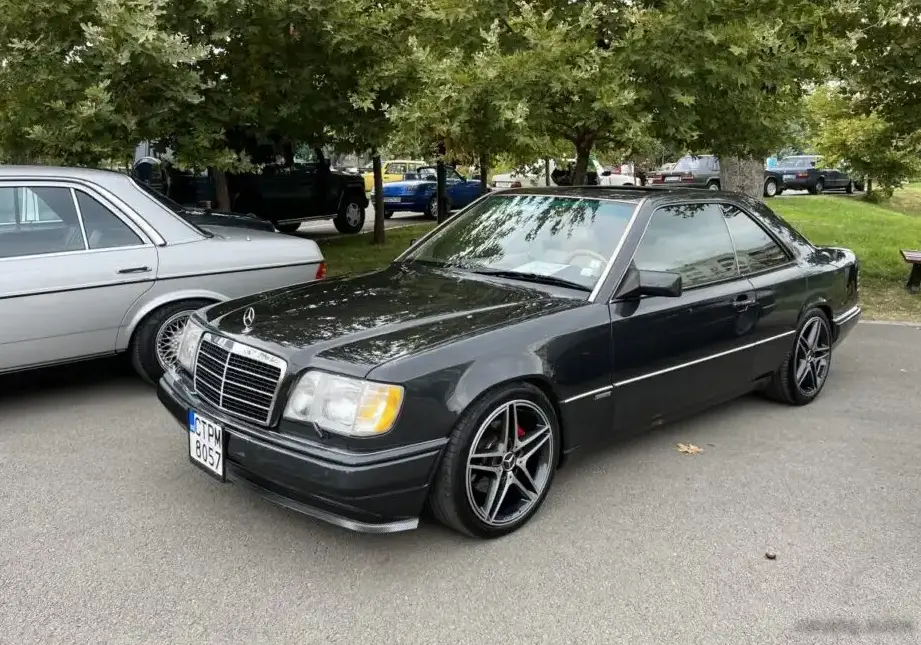
The Mercedes-Benz E 200 Coupe (C124) represents a compelling entry point into the iconic C124 series, produced between July 1993 and March 1996. Positioned as a more accessible alternative to the higher-performance E 320 and E 280 models, the E 200 offered a blend of Mercedes-Benz luxury, build quality, and respectable performance in a stylish two-door coupe body style. It served as a popular choice for buyers seeking a sophisticated grand tourer without the premium price tag of its more powerful siblings. The C124 platform itself was a significant evolution of the W123, introducing independent suspension on all four wheels and a more modern, aerodynamic design.
Technical Specifications
| Brand | Mercedes-Benz |
| Model | E-class |
| Generation | E-class Coupe (C124) |
| Type (Engine) | E 200 (136 Hp) |
| Start of production | July, 1993 |
| End of production | March, 1996 |
| Powertrain Architecture | Internal Combustion engine |
| Body type | Coupe |
| Seats | 4 |
| Doors | 2 |
| Fuel consumption (urban) | 11.6 l/100 km (20.3 US mpg) |
| Fuel consumption (extra urban) | 6.6 l/100 km (35.6 US mpg) |
| Fuel Type | Petrol (Gasoline) |
| Acceleration 0 – 100 km/h | 11.5 sec |
| Acceleration 0 – 62 mph | 11.5 sec |
| Acceleration 0 – 60 mph | 10.9 sec |
| Maximum speed | 200 km/h (124.27 mph) |
| Weight-to-power ratio | 10.1 kg/Hp |
| Weight-to-torque ratio | 7.3 kg/Nm |
| Power | 136 Hp @ 5500 rpm |
| Power per litre | 68.1 Hp/l |
| Torque | 190 Nm @ 4000 rpm (140.14 lb.-ft. @ 4000 rpm) |
| Engine layout | Front, Longitudinal |
| Engine Model/Code | M 111 E 20 / 111.940 |
| Engine displacement | 1998 cm3 (121.93 cu. in.) |
| Number of cylinders | 4 |
| Engine configuration | Inline |
| Cylinder Bore | 89.9 mm (3.54 in.) |
| Piston Stroke | 78.7 mm (3.1 in.) |
| Compression ratio | 9.6:1 |
| Number of valves per cylinder | 4 |
| Fuel injection system | Multi-port manifold injection |
| Engine aspiration | Naturally aspirated engine |
| Valvetrain | DOHC |
| Engine oil capacity | 5.5 l (5.81 US qt | 4.84 UK qt) |
| Coolant | 8.5 l (8.98 US qt | 7.48 UK qt) |
| Kerb Weight | 1380 kg (3042.38 lbs.) |
| Max. weight | 1900 kg (4188.78 lbs.) |
| Max load | 520 kg (1146.4 lbs.) |
| Trunk (boot) space – minimum | 480 l (16.95 cu. ft.) |
| Fuel tank capacity | 70 l (18.49 US gal | 15.4 UK gal) |
| Length | 4655 mm (183.27 in.) |
| Width | 1740 mm (68.5 in.) |
| Height | 1395 mm (54.92 in.) |
| Wheelbase | 2715 mm (106.89 in.) |
| Front track | 1501 mm (59.09 in.) |
| Rear (Back) track | 1491 mm (58.7 in.) |
| Drivetrain Architecture | The Internal combustion engine (ICE) drives the rear wheels of the vehicle. |
| Drive wheel | Rear wheel drive |
| Number of gears and type of gearbox | 5 gears, manual transmission |
| Front suspension | Wishbone |
| Rear suspension | Independent multi-link suspension |
| Front brakes | Ventilated discs |
| Rear brakes | Disc |
| Assisting systems | ABS (Anti-lock braking system) |
| Steering type | Cone worm with recirculation balls |
| Power steering | Hydraulic Steering |
| Tires size | Front wheel tires: 195/65 R15; 205/60 R15Rear wheel tires: 195/65 R15; 205/60 R15 |
| Wheel rims size | Front wheel rims: 6.5J x 15; 7J x 15Rear wheel rims: 6.5J x 15; 7J x 15 |
Powertrain & Engine Architecture
The E 200 Coupe was powered by the M111 E 20 engine, a 1.998-liter inline-four cylinder powerplant. This engine was a significant departure from the older iron-block designs used in previous Mercedes-Benz models, utilizing an aluminum cylinder head and block to reduce weight. It featured multi-port fuel injection and a double overhead camshaft (DOHC) valvetrain, contributing to its relatively smooth operation and respectable power output. The engine code 111.940 specifically identifies this variant. The five-speed manual transmission was standard, providing drivers with full control over the engine’s power delivery. While an automatic transmission was available, it often came at the expense of performance and fuel economy.
Driving Characteristics
The E 200 Coupe, with its 136 horsepower and 190 Nm (140 lb-ft) of torque, offered a comfortable and refined driving experience. Acceleration from 0 to 60 mph took around 10.9 seconds, which was adequate for the time but not particularly sporty. The manual transmission allowed for precise gear changes and maximized the engine’s potential, while the automatic, though convenient, felt somewhat sluggish in comparison. The C124 chassis provided a stable and well-damped ride, typical of Mercedes-Benz engineering. The rear-wheel drive configuration offered balanced handling, although it wasn’t designed for aggressive cornering.
Equipment & Trim Levels
The E 200 Coupe typically came equipped with a respectable array of standard features, including power windows, central locking, and a basic audio system. Interior upholstery was usually cloth, although leather was available as an option. The dashboard layout was functional and ergonomically designed, with clear instrumentation. Optional extras included a sunroof, upgraded audio systems, and automatic climate control. The trim level was generally considered entry-level within the C124 coupe range, but still offered a premium feel compared to many contemporary vehicles.
Chassis & Braking
The C124 chassis featured independent suspension all around, with a wishbone setup at the front and a multi-link suspension at the rear. This configuration provided a comfortable ride and good handling characteristics. Braking duties were handled by ventilated discs at the front and solid discs at the rear. Anti-lock braking system (ABS) was standard, enhancing safety and control during emergency braking situations. The steering was a recirculating ball system with hydraulic power assistance, offering a good balance of feel and ease of use.
Market Reception & Comparison
The E 200 Coupe was generally well-received by automotive critics as a sensible and well-built grand tourer. It offered a good value proposition compared to the more expensive E 280 and E 320 models. Fuel economy was respectable for its class, and the engine proved to be relatively reliable. However, some critics noted that the E 200 lacked the outright performance of its more powerful siblings. Compared to the E 280, the E 200 offered a lower purchase price and better fuel economy, but at the cost of 50+ horsepower. The E 200 was often seen as a more practical choice for everyday driving, while the E 280 appealed to those seeking a more engaging driving experience.
Legacy
The M111 engine family, including the 2.0-liter variant found in the E 200 Coupe, has proven to be remarkably durable and reliable over the years. Properly maintained examples can still provide years of trouble-free service. In the used car market today, the E 200 Coupe represents an affordable entry point into classic Mercedes-Benz ownership. While not the fastest or most luxurious C124 variant, it offers a compelling combination of style, comfort, and reliability, making it a popular choice among enthusiasts and collectors. Its relative simplicity compared to later Mercedes-Benz models also makes it a more accessible vehicle for DIY maintenance and repairs.