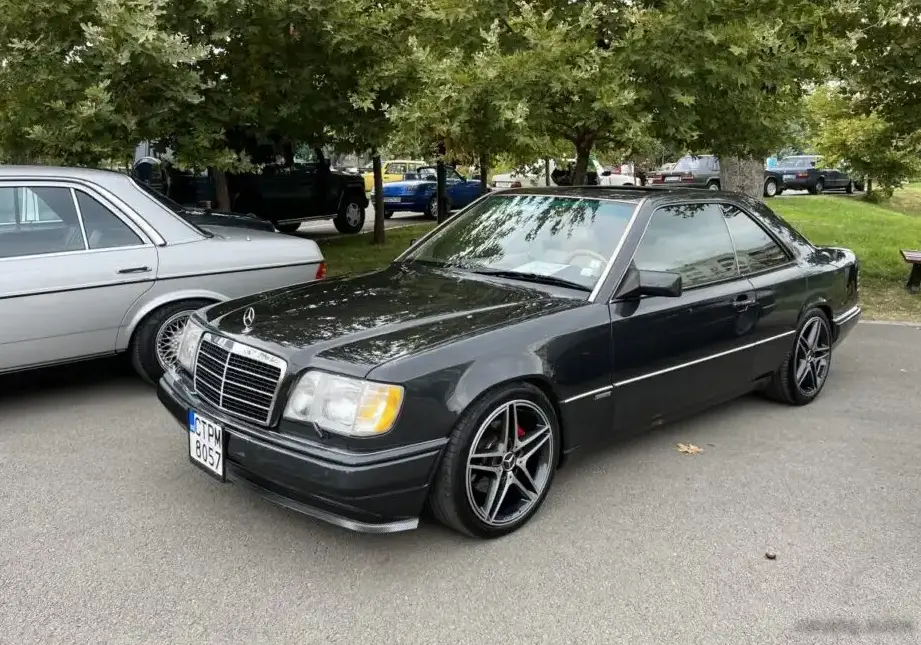
The Mercedes-Benz E 220 Coupe (C124) represents a refined and elegant offering from the German automaker, produced between July 1993 and March 1996. Positioned as a mid-range variant within the C124 coupe lineup, it bridged the gap between the more economical E 200 and the performance-oriented E 320. This model aimed to deliver a balance of comfort, style, and respectable performance, appealing to buyers seeking a sophisticated grand tourer. The C124 generation itself was a significant evolution of the W123 series, introducing independent suspension on all four wheels and a more modern aesthetic. The E 220, with its 150 horsepower engine and automatic transmission, became a popular choice for those prioritizing ease of driving and a luxurious experience.
Technical Specifications
| Brand | Mercedes-Benz |
| Model | E-class |
| Generation | E-class Coupe (C124) |
| Type (Engine) | E 220 (150 Hp) Automatic |
| Start of production | July, 1993 |
| End of production | March, 1996 |
| Powertrain Architecture | Internal Combustion engine |
| Body type | Coupe |
| Seats | 4 |
| Doors | 2 |
| Fuel consumption (urban) | 11.2 l/100 km (21 US mpg, 25.2 UK mpg, 8.9 km/l) |
| Fuel consumption (extra urban) | 7 l/100 km (33.6 US mpg, 40.4 UK mpg, 14.3 km/l) |
| Fuel Type | Petrol (Gasoline) |
| Acceleration 0 – 100 km/h | 10.6 sec |
| Acceleration 0 – 62 mph | 10.6 sec |
| Acceleration 0 – 60 mph | 10.1 sec |
| Maximum speed | 205 km/h (127.38 mph) |
| Weight-to-power ratio | 9.3 kg/Hp, 107.9 Hp/tonne |
| Weight-to-torque ratio | 6.6 kg/Nm, 151.1 Nm/tonne |
| Power | 150 Hp @ 5500 rpm |
| Power per litre | 68.2 Hp/l |
| Torque | 210 Nm @ 4000 rpm (154.89 lb.-ft. @ 4000 rpm) |
| Engine layout | Front, Longitudinal |
| Engine Model/Code | M 111 E 22 / 111.960 |
| Engine displacement | 2199 cm3 (134.19 cu. in.) |
| Number of cylinders | 4 |
| Engine configuration | Inline |
| Cylinder Bore | 89.9 mm (3.54 in.) |
| Piston Stroke | 86.6 mm (3.41 in.) |
| Compression ratio | 10:1 |
| Number of valves per cylinder | 4 |
| Fuel injection system | Multi-port manifold injection |
| Engine aspiration | Naturally aspirated engine |
| Valvetrain | DOHC |
| Engine oil capacity | 5.5 l (5.81 US qt | 4.84 UK qt) |
| Coolant | 8.5 l (8.98 US qt | 7.48 UK qt) |
| Kerb Weight | 1390 kg (3064.43 lbs.) |
| Max. weight | 1910 kg (4210.83 lbs.) |
| Max load | 520 kg (1146.4 lbs.) |
| Trunk (boot) space – minimum | 480 l (16.95 cu. ft.) |
| Fuel tank capacity | 70 l (18.49 US gal | 15.4 UK gal) |
| Length | 4655 mm (183.27 in.) |
| Width | 1740 mm (68.5 in.) |
| Height | 1395 mm (54.92 in.) |
| Wheelbase | 2715 mm (106.89 in.) |
| Front track | 1501 mm (59.09 in.) |
| Rear (Back) track | 1491 mm (58.7 in.) |
| Drivetrain Architecture | The Internal combustion engine (ICE) drives the rear wheels of the vehicle. |
| Drive wheel | Rear wheel drive |
| Number of gears and type of gearbox | 4 gears, automatic transmission |
| Front suspension | Wishbone |
| Rear suspension | Independent multi-link suspension |
| Front brakes | Ventilated discs |
| Rear brakes | Disc |
| Assisting systems | ABS (Anti-lock braking system) |
| Steering type | Cone worm with recirculation balls |
| Power steering | Hydraulic Steering |
| Tires size | Front wheel tires: 195/65 R15Rear wheel tires: 195/65 R15 |
| Wheel rims size | Front wheel rims: 6.5J x 15Rear wheel rims: 6.5J x 15 |
Powertrain & Engine Architecture
The heart of the E 220 Coupe is the M111 E 22 engine, a 2.2-liter inline-four cylinder powerplant. This engine, part of Mercedes-Benz’s M111 family, was known for its durability and relatively smooth operation. It featured multi-port fuel injection, a dual overhead camshaft (DOHC) valvetrain with four valves per cylinder, and a compression ratio of 10:1. The engine produced 150 horsepower at 5500 rpm and 210 Nm (155 lb-ft) of torque at 4000 rpm. Paired with this engine was a four-speed automatic transmission, designed to provide comfortable and effortless shifting. This transmission, while not offering the sportiness of a manual, was well-suited to the E 220’s grand touring character. The engine’s longitudinal mounting and rear-wheel drive configuration were hallmarks of traditional Mercedes-Benz engineering.
Driving Characteristics
The E 220 Automatic offered a comfortable and refined driving experience. Acceleration was adequate, with a 0-60 mph time of around 10.1 seconds, but it wasn’t designed for outright speed. The automatic transmission, while smooth, could feel somewhat sluggish compared to the manual options available in other E-Class models. The gear ratios were optimized for cruising, making it a pleasant companion on long highway journeys. Compared to the E 320, the E 220 lacked the punch and responsiveness of the larger six-cylinder engine. However, it offered better fuel economy and a lighter front-end feel, contributing to more balanced handling. The suspension, tuned for comfort, absorbed bumps and imperfections in the road effectively, providing a smooth and isolated ride.
Equipment & Trim Levels
The E 220 Coupe typically came standard with features such as power windows, power locks, central locking, and a basic audio system. Leather upholstery was often standard, reflecting the car’s luxury positioning. Optional extras included a sunroof, upgraded audio systems, automatic climate control, and heated seats. The interior design was characterized by its elegant simplicity and high-quality materials. Dashboard layouts were typically wood-trimmed, and the seats offered good support and comfort. Trim levels varied slightly depending on the market, but generally, the E 220 represented a well-equipped and comfortable package.
Chassis & Braking
The C124 chassis featured independent suspension all around, with a wishbone setup at the front and a multi-link suspension at the rear. This configuration provided a good balance of ride comfort and handling. Braking duties were handled by ventilated discs at the front and solid discs at the rear. Anti-lock braking system (ABS) was standard, enhancing safety and control. The steering was a recirculating ball system with hydraulic power assistance, offering a relatively light and precise feel. The tires were typically 195/65 R15, providing adequate grip for everyday driving.
Market Reception & Comparison
The E 220 Coupe was generally well-received by critics as a comfortable and stylish grand tourer. It was praised for its build quality, refined ride, and elegant interior. However, some reviewers noted that the engine lacked the performance of its larger siblings. Compared to the E 320, the E 220 offered better fuel economy – around 21 mpg city and 33.6 mpg highway – and a lower purchase price. The E 220 also proved to be a more reliable option than some of the more complex and technologically advanced models in the lineup. It appealed to buyers who prioritized comfort and refinement over outright performance.
Legacy
The Mercedes-Benz E 220 Coupe (C124) has developed a strong following among classic Mercedes-Benz enthusiasts. The M111 engine is known for its durability and relatively straightforward maintenance. While not as sought-after as the E 320 or AMG variants, the E 220 offers a more affordable entry point into C124 ownership. Well-maintained examples are still relatively common on the used car market, and parts availability is generally good. The C124 generation, as a whole, is considered a high point in Mercedes-Benz engineering, and the E 220 Coupe represents a particularly elegant and refined expression of that era.