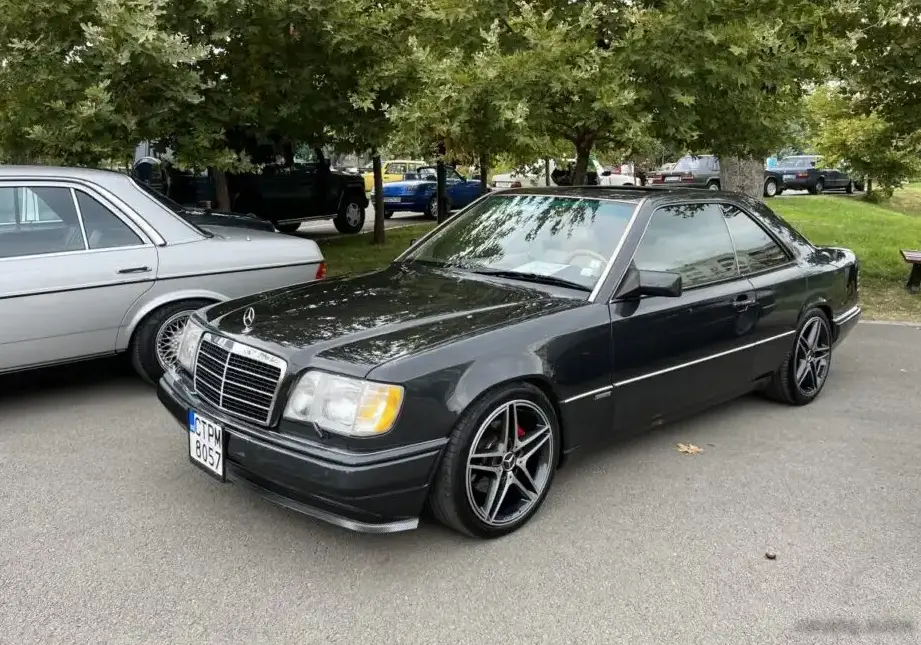
The Mercedes-Benz E 320 Coupe (C124) represented a compelling blend of luxury, performance, and engineering refinement within the broader C124 coupe range. Produced between July 1993 and March 1996, it occupied a significant position as the top-tier engine option for the coupe body style, offering a substantial step up in power and sophistication compared to the E 220 and E 280 models. The C124 platform itself was a pivotal design for Mercedes-Benz, known for its robust construction, elegant styling, and advanced features for its time. This variant aimed at buyers seeking a grand touring experience with a focus on comfortable high-speed cruising and a prestigious image.
Technical Specifications
| Brand | Mercedes-Benz |
| Model | E-class |
| Generation | E-class Coupe (C124) |
| Type (Engine) | E 320 (220 Hp) |
| Start of production | July, 1993 |
| End of production | March, 1996 |
| Powertrain Architecture | Internal Combustion engine |
| Body type | Coupe |
| Seats | 4 |
| Doors | 2 |
| Fuel consumption (urban) | 14.7 l/100 km (16 US mpg, 19.2 UK mpg, 6.8 km/l) |
| Fuel consumption (extra urban) | 10 l/100 km (23.5 US mpg, 28.2 UK mpg, 10 km/l) |
| Fuel consumption (combined) | 11 l/100 km (21.4 US mpg, 25.7 UK mpg, 9.1 km/l) |
| Fuel Type | Petrol (Gasoline) |
| Acceleration 0 – 100 km/h | 8.3 sec |
| Acceleration 0 – 62 mph | 8.3 sec |
| Acceleration 0 – 60 mph | 7.9 sec |
| Maximum speed | 235 km/h (146.02 mph) |
| Weight-to-power ratio | 6.8 kg/Hp, 147.7 Hp/tonne |
| Weight-to-torque ratio | 4.7 kg/Nm, 211.4 Nm/tonne |
| Power | 220 Hp @ 5500 rpm |
| Power per litre | 68.8 Hp/l |
| Torque | 315 Nm @ 3850 rpm (232.33 lb.-ft. @ 3850 rpm) |
| Engine layout | Front, Longitudinal |
| Engine Model/Code | M 104 E 32 / 104.992 |
| Engine displacement | 3199 cm3 (195.21 cu. in.) |
| Number of cylinders | 6 |
| Engine configuration | Inline |
| Cylinder Bore | 89.9 mm (3.54 in.) |
| Piston Stroke | 84 mm (3.31 in.) |
| Compression ratio | 10:1 |
| Number of valves per cylinder | 4 |
| Fuel injection system | Multi-port manifold injection |
| Engine aspiration | Naturally aspirated engine |
| Valvetrain | DOHC |
| Engine oil capacity | 7.5 l (7.93 US qt | 6.6 UK qt) |
| Coolant | 9 l (9.51 US qt | 7.92 UK qt) |
| Kerb Weight | 1490 kg (3284.89 lbs.) |
| Max. weight | 1985 kg (4376.18 lbs.) |
| Max load | 495 kg (1091.29 lbs.) |
| Trunk (boot) space – minimum | 480 l (16.95 cu. ft.) |
| Fuel tank capacity | 70 l (18.49 US gal | 15.4 UK gal) |
| Length | 4655 mm (183.27 in.) |
| Width | 1740 mm (68.5 in.) |
| Height | 1395 mm (54.92 in.) |
| Wheelbase | 2715 mm (106.89 in.) |
| Front track | 1501 mm (59.09 in.) |
| Rear (Back) track | 1491 mm (58.7 in.) |
| Drivetrain Architecture | The Internal combustion engine (ICE) drives the rear wheels of the vehicle. |
| Drive wheel | Rear wheel drive |
| Number of gears and type of gearbox | 5 gears, manual transmission |
| Front suspension | Wishbone |
| Rear suspension | Independent multi-link suspension |
| Front brakes | Ventilated discs |
| Rear brakes | Disc |
| Assisting systems | ABS (Anti-lock braking system) |
| Steering type | Cone worm with recirculation balls |
| Power steering | Hydraulic Steering |
| Tires size | Front wheel tires: 195/65 R15Rear wheel tires: 195/65 R15 |
| Wheel rims size | Front wheel rims: 6.5J x 15Rear wheel rims: 6.5J x 15 |
Powertrain & Engine Architecture
The heart of the E 320 Coupe was the M104.992 3.2-liter inline-six engine. This engine was a significant advancement over previous Mercedes-Benz six-cylinder designs, featuring a double overhead camshaft (DOHC) valvetrain, four valves per cylinder, and a sophisticated Bosch multi-port fuel injection system. The M104 engine family was known for its smoothness, durability, and relatively high output for its displacement. The 3.2-liter version produced 220 horsepower at 5500 rpm and 315 Nm (232 lb-ft) of torque at 3850 rpm. This power was delivered to the rear wheels through a standard 5-speed manual transmission, although a 4-speed automatic transmission was also available, and was a popular choice for buyers prioritizing comfort. The automatic transmission was designed to provide smooth shifts and enhance the overall driving experience.
Driving Characteristics
The E 320 Coupe offered a refined and capable driving experience. The 3.2-liter engine provided ample power for both relaxed cruising and spirited driving. Acceleration to 60 mph took approximately 7.9 seconds, and the car had a top speed of 146 mph. While not a sports car, the E 320 Coupe offered a good balance of performance and comfort. The suspension, featuring wishbones at the front and an independent multi-link setup at the rear, provided a comfortable ride while maintaining good handling characteristics. The automatic transmission, while smooth, did slightly diminish acceleration compared to the manual version, but it enhanced the car’s usability in everyday driving situations.
Equipment & Trim Levels
The E 320 Coupe was well-equipped as standard, reflecting its position as the top-of-the-line coupe model. Standard features included leather upholstery, power windows, power locks, a sunroof, and an automatic climate control system. Optional extras included heated seats, a premium sound system, and upgraded interior trim. The interior design was typical of Mercedes-Benz at the time, emphasizing quality materials and a functional layout. The dashboard featured wood trim and analog gauges, creating a classic and elegant atmosphere.
Chassis & Braking
The C124 chassis was renowned for its rigidity and safety. The E 320 Coupe featured ventilated disc brakes at the front and solid discs at the rear, providing adequate stopping power for the car’s weight and performance. Anti-lock braking system (ABS) was standard, enhancing safety in emergency braking situations. The steering was a recirculating ball system with hydraulic power assistance, offering a good balance of feel and ease of use.
Market Reception & Comparison
The E 320 Coupe was generally well-received by automotive critics. It was praised for its refined engine, comfortable ride, and luxurious interior. Compared to the E 220 and E 280 coupes, the E 320 offered a significant performance advantage. However, it also came at a higher price. Fuel economy was reasonable for a car of its size and performance, averaging around 21.4 mpg combined. Reliability was generally good, although maintenance costs could be higher than those of more mainstream vehicles.
Legacy
The Mercedes-Benz E 320 Coupe (C124) remains a desirable classic car today. The M104 engine is known for its durability and longevity, and well-maintained examples can still provide years of reliable service. The C124 platform is also highly regarded for its build quality and timeless design. In the used car market, the E 320 Coupe commands a premium over the lower-spec models, reflecting its superior performance and exclusivity. It represents a high point in Mercedes-Benz coupe design and engineering, and continues to be appreciated by enthusiasts and collectors alike.