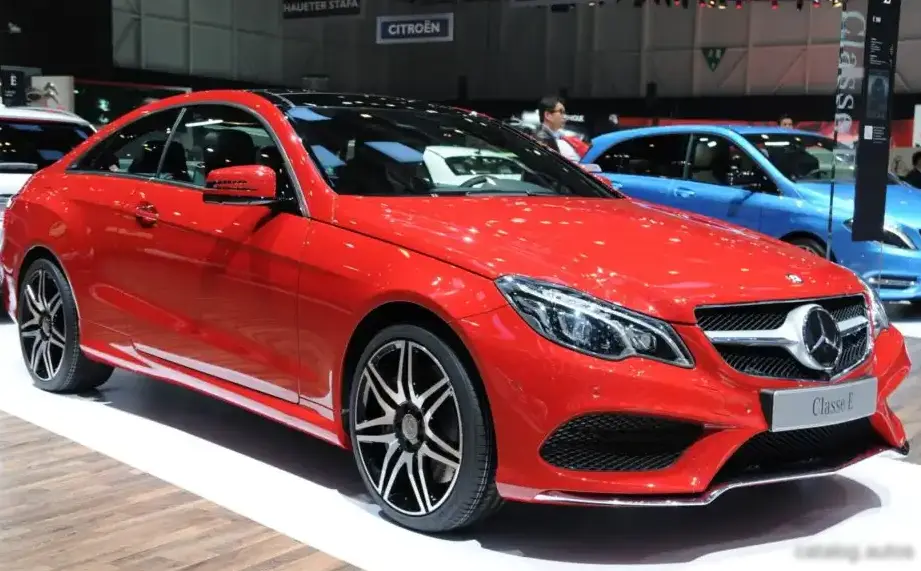
The Mercedes-Benz E-Class Coupe (C207) facelift, specifically the E 300 V6 model produced from June 2013 to July 2014, represented a refined offering in the mid-size luxury coupe segment. Positioned as a step up from the E 250 models, and below the more performance-oriented E 400 and E 550 variants, the E 300 V6 aimed to balance performance, comfort, and fuel efficiency. This iteration of the C207 E-Class benefitted from a mid-cycle refresh, incorporating styling updates and technological enhancements. It was primarily marketed towards buyers seeking a sophisticated and capable grand tourer with a focus on everyday usability.
| Brand | Mercedes-Benz |
| Model | E-Class |
| Generation | E-Class Coupe (C207, facelift 2013) |
| Type | E 300 V6 (252 Hp) 7G-TRONIC PLUS |
| Start of production | June, 2013 |
| End of production | July, 2014 |
| Powertrain Architecture | Internal Combustion engine |
| Body type | Coupe |
| Seats | 4 |
| Doors | 2 |
| Fuel consumption (urban) | 9.5-10 l/100 km (24.8 – 23.5 US mpg) |
| Fuel consumption (extra urban) | 5.3-5.8 l/100 km (44.4 – 40.6 US mpg) |
| Fuel consumption (combined) | 6.9-7.3 l/100 km (34.1 – 32.2 US mpg) |
| CO2 emissions | 160-166 g/km |
| Fuel Type | Petrol (Gasoline) |
| Acceleration 0 – 100 km/h | 6.9 sec |
| Acceleration 0 – 60 mph | 6.6 sec |
| Maximum speed | 250 km/h (155.34 mph) – Electronically limited |
| Emission standard | Euro 5 |
| Weight-to-power ratio | 6.4 kg/Hp |
| Weight-to-torque ratio | 4.7 kg/Nm |
| Power | 252 Hp @ 6500 rpm |
| Torque | 340 Nm @ 3500-4500 rpm (250.77 lb.-ft.) |
| Engine layout | Front, Longitudinal |
| Engine Model/Code | M 276.820 |
| Engine displacement | 3498 cm3 (213.46 cu. in.) |
| Number of cylinders | 6 |
| Engine configuration | V-engine |
| Cylinder Bore | 92.9 mm (3.66 in.) |
| Piston Stroke | 86 mm (3.39 in.) |
| Compression ratio | 12:1 |
| Number of valves per cylinder | 4 |
| Fuel injection system | Direct injection |
| Engine aspiration | Naturally aspirated |
| Valvetrain | DOHC |
| Engine oil capacity | 6.5 l (6.87 US qt | 5.72 UK qt) |
| Coolant capacity | 10.3 l (10.88 US qt | 9.06 UK qt) |
| Kerb Weight | 1610 kg (3549.44 lbs.) |
| Max. weight | 2155 kg (4750.96 lbs.) |
| Max load | 545 kg (1201.52 lbs.) |
| Trunk (boot) space | 450 l (15.89 cu. ft.) |
| Fuel tank capacity | 66 l (17.44 US gal | 14.52 UK gal) |
| Length | 4703 mm (185.16 in.) |
| Width | 1786 mm (70.31 in.) |
| Height | 1397 mm (55 in.) |
| Wheelbase | 2760 mm (108.66 in.) |
| Drivetrain | Rear wheel drive |
| Number of gears | 7 |
| Gearbox type | Automatic transmission G-TRONIC PLUS |
Powertrain & Engine Architecture
The E 300 V6 was powered by the M276.820 3.5-liter naturally aspirated V6 engine. This engine was a cornerstone of Mercedes-Benz’s mid-range offerings during this period. It featured a 60-degree V-angle, aluminum alloy block and cylinder heads, and a sophisticated direct injection system. The direct injection system, operating at pressures up to 200 bar, allowed for precise fuel delivery and optimized combustion efficiency. The engine utilized a dual overhead camshaft (DOHC) design with four valves per cylinder, contributing to its responsive nature. The 7G-TRONIC PLUS seven-speed automatic transmission was standard, offering smooth and efficient gear changes. This transmission was known for its wide gear ratios and ability to adapt to driving conditions, enhancing both performance and fuel economy. The transmission also featured a manual shift mode for more driver involvement.
Driving Characteristics
The E 300 V6 offered a refined and comfortable driving experience. With 252 horsepower and 340 Nm (250.77 lb-ft) of torque, it provided ample power for both highway cruising and spirited driving. Acceleration from 0 to 60 mph was achieved in approximately 6.6 seconds, making it a competitive performer in its class. The 7G-TRONIC PLUS transmission played a crucial role in delivering smooth power delivery, minimizing shift shock, and optimizing engine efficiency. Compared to the base E 250 models, the E 300 V6 offered a noticeable improvement in acceleration and overall responsiveness. While not as overtly sporty as the higher-performance E 400 or E 550, the E 300 V6 struck a good balance between performance and comfort. The rear-wheel-drive configuration contributed to balanced handling, although it wasn’t designed for aggressive cornering.
Equipment & Trim Levels
The E 300 V6 Coupe typically came well-equipped as standard. Interior features included leather upholstery, power-adjustable front seats with memory function, dual-zone automatic climate control, and a high-quality audio system. The dashboard featured a prominent central display screen for infotainment and vehicle settings. Optional extras included a panoramic sunroof, premium sound systems (such as Harman Kardon), advanced driver-assistance systems (like lane keeping assist and blind spot monitoring), and various interior trim options. The facelifted C207 models also benefited from updated infotainment systems and improved connectivity features. Exterior options included a range of wheel designs and metallic paint finishes.
Chassis & Braking
The E 300 V6 Coupe utilized a sophisticated suspension system designed to provide a comfortable ride and stable handling. The front suspension featured coil springs and an independent multi-link setup with a transverse stabilizer bar. The rear suspension also employed an independent multi-link design with a stabilizer bar. Braking duties were handled by ventilated disc brakes on all four wheels, providing ample stopping power. Anti-lock braking system (ABS) and electronic stability control (ESP) were standard safety features. The suspension tuning was geared towards comfort, prioritizing a smooth ride over outright sportiness. However, the chassis remained composed and predictable during cornering.
Market Reception & Comparison
The E 300 V6 Coupe was generally well-received by automotive critics. It was praised for its refined engine, comfortable ride, and luxurious interior. Critics noted that the E 300 V6 offered a compelling alternative to its competitors, such as the BMW 4 Series Coupe and the Audi A5 Coupe. Compared to the E 250, the E 300 V6 offered a significant performance upgrade, while remaining more affordable than the higher-end E 400 and E 550 models. Fuel economy was considered respectable for a vehicle in this class, with combined fuel consumption figures ranging from 6.9 to 7.3 liters per 100 kilometers (34.1 to 32.2 US mpg). Reliability was generally good, although some owners reported minor issues with electronic components.
Legacy
The M276 engine family, including the 3.5-liter V6 used in the E 300 V6, has proven to be relatively reliable over the long term, provided regular maintenance is performed. The 7G-TRONIC PLUS transmission is also known for its durability. In the used car market, the C207 E 300 V6 Coupe represents a good value proposition for buyers seeking a luxurious and capable grand tourer. While not as sought-after as some of the more iconic Mercedes-Benz models, it remains a well-regarded and enjoyable vehicle. Common maintenance items include oil changes, coolant flushes, and inspection of suspension components. The availability of parts and qualified mechanics is generally good, making ownership relatively straightforward.