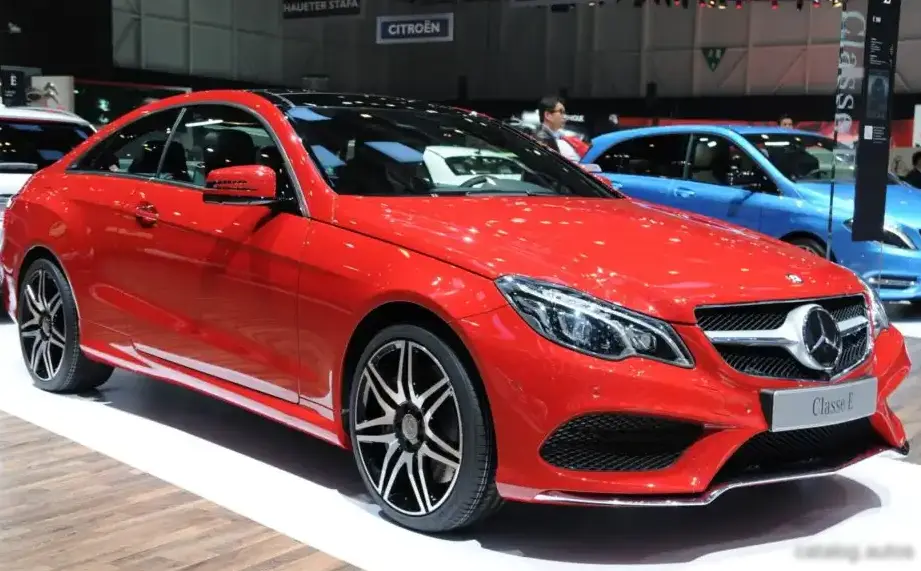
The Mercedes-Benz E-Class Coupe (C207) facelift, specifically the E 400 V6 3.5 (333 hp) variant equipped with the 7G-TRONIC PLUS automatic transmission, was produced from July 2014 to December 2016. This model represented a high-performance offering within the C207 coupe range, positioned above the E 250 and E 350 models. It combined a potent V6 engine with a sophisticated transmission to deliver a blend of luxury and performance, appealing to buyers seeking a refined grand touring experience. The C207 generation itself was a significant step forward for Mercedes-Benz coupes, offering a more dynamic and stylish alternative to the traditional E-Class sedan.
Technical Specifications
| Brand | Mercedes-Benz |
| Model | E-Class |
| Generation | E-Class Coupe (C207, facelift 2013) |
| Type (Engine) | E 400 V6 3.5 (333 Hp) 7G-TRONIC PLUS |
| Start of production | July, 2014 |
| End of production | December, 2016 |
| Powertrain Architecture | Internal Combustion engine |
| Body type | Coupe |
| Seats | 4 |
| Doors | 2 |
| Fuel consumption (economy) – urban (NEDC) | 9.3-9.5 l/100 km (25.3 – 24.8 US mpg) |
| Fuel consumption (economy) – extra urban (NEDC) | 5.2-5.4 l/100 km (45.2 – 43.6 US mpg) |
| Fuel consumption (economy) – combined (NEDC) | 6.7-6.9 l/100 km (35.1 – 34.1 US mpg) |
| CO2 emissions (NEDC) | 157-161 g/km |
| Fuel Type | Petrol (Gasoline) |
| Acceleration 0 – 100 km/h | 5.2 sec |
| Acceleration 0 – 62 mph | 5.2 sec |
| Acceleration 0 – 60 mph | 4.9 sec |
| Maximum speed | 250 km/h (155.34 mph), Electronically limited |
| Emission standard | Euro 6 |
| Weight-to-power ratio | 5 kg/Hp, 200.6 Hp/tonne |
| Weight-to-torque ratio | 3.5 kg/Nm, 289.2 Nm/tonne |
| Power | 333 Hp @ 5500 rpm |
| Torque | 480 Nm @ 1400-4000 rpm (354.03 lb.-ft. @ 1400-4000 rpm) |
| Engine layout | Front, Longitudinal |
| Engine Model/Code | M 276.850 |
| Engine displacement | 3498 cm3 (213.46 cu. in.) |
| Number of cylinders | 6 |
| Engine configuration | V-engine |
| Cylinder Bore | 92.9 mm (3.66 in.) |
| Piston Stroke | 86 mm (3.39 in.) |
| Number of valves per cylinder | 4 |
| Fuel injection system | Direct injection |
| Engine aspiration | BiTurbo, Intercooler |
| Valvetrain | DOHC |
| Engine oil capacity | 6.5 l (6.87 US qt | 5.72 UK qt) |
| Coolant | 10.3 l (10.88 US qt | 9.06 UK qt) |
| Kerb Weight | 1660 kg (3659.67 lbs.) |
| Max. weight | 2205 kg (4861.19 lbs.) |
| Max load | 545 kg (1201.52 lbs.) |
| Trunk (boot) space – minimum | 450 l (15.89 cu. ft.) |
| Fuel tank capacity | 66 l (17.44 US gal | 14.52 UK gal) |
| Max. roof load | 100 kg (220.46 lbs.) |
| Permitted trailer load with brakes (12%) | 1800 kg (3968.32 lbs.) |
| Permitted trailer load without brakes | 750 kg (1653.47 lbs.) |
| Permitted towbar download | 75 kg (165.35 lbs.) |
| Length | 4703 mm (185.16 in.) |
| Width | 1786 mm (70.31 in.) |
| Width including mirrors | 2016 mm (79.37 in.) |
| Height | 1397 mm (55 in.) |
| Wheelbase | 2760 mm (108.66 in.) |
| Front track | 1538 mm (60.55 in.) |
| Rear (Back) track | 1541 mm (60.67 in.) |
| Front overhang | 862 mm (33.94 in.) |
| Rear overhang | 1081 mm (42.56 in.) |
| Minimum turning circle (turning diameter) | 11.15 m (36.58 ft.) |
| Drive wheel | Rear wheel drive |
| Number of gears and type of gearbox | 7 gears, automatic transmission G-TRONIC PLUS |
Powertrain & Engine Architecture
The heart of the E 400 Coupe was the M276.850 3.5-liter V6 engine. This engine featured direct fuel injection and twin turbochargers, resulting in a high specific output of 95.2 horsepower per liter. The twin-turbo setup provided a broad torque curve, peaking at 480 Nm (354 lb-ft) between 1400 and 4000 rpm. This ensured strong acceleration across a wide range of driving conditions. The engine utilized a double overhead camshaft (DOHC) valvetrain with four valves per cylinder, optimizing airflow for increased power and efficiency. The 7G-TRONIC PLUS automatic transmission, a seven-speed unit, was specifically tuned to complement the engine’s characteristics. It offered smooth and responsive shifts, contributing to both performance and fuel economy. The transmission featured a torque converter lock-up clutch that engaged at higher speeds to improve efficiency.
Driving Characteristics
The E 400 Coupe delivered a noticeably more engaging driving experience than its E 350 counterpart. The increased power and torque, combined with the responsive 7G-TRONIC PLUS transmission, resulted in a 0-60 mph time of approximately 4.9 seconds. While not a dedicated sports car, the E 400 offered ample power for confident overtaking and highway cruising. The automatic transmission’s gear ratios were optimized for both acceleration and fuel efficiency. In everyday driving, the E 400 felt refined and comfortable, with the suspension effectively absorbing road imperfections. Compared to manual transmission versions (which were not commonly available in this configuration), the 7G-TRONIC PLUS provided a more relaxed and effortless driving experience, particularly in urban traffic.
Equipment & Trim Levels
The E 400 Coupe typically came well-equipped as standard. Common features included leather upholstery, automatic climate control, a premium sound system, and a host of safety technologies such as ABS, stability control, and multiple airbags. Optional extras included a panoramic sunroof, advanced driver-assistance systems (such as lane keeping assist and adaptive cruise control), and upgraded interior trim options. The interior design was characterized by Mercedes-Benz’s signature luxury and attention to detail, with high-quality materials and a user-friendly infotainment system. The dashboard layout was clean and elegant, with a focus on functionality and ease of use.
Chassis & Braking
The C207 E-Class Coupe featured a sophisticated chassis design with a multi-link suspension at both the front and rear. This provided a good balance between ride comfort and handling precision. The E 400 Coupe typically came equipped with ventilated disc brakes on all four wheels, providing ample stopping power. The electronic stability program (ESP) helped to maintain control during emergency maneuvers. The steering was precise and well-weighted, offering a connected feel to the driver. Stabilizer bars were fitted to both the front and rear axles to reduce body roll during cornering.
Market Reception & Comparison
The E 400 Coupe was generally well-received by automotive critics, who praised its powerful engine, refined ride, and luxurious interior. It was often compared favorably to competitors such as the BMW 6 Series and Audi A5 Coupe. While the E 400 offered superior performance compared to the E 350, it came at a higher price point. Fuel economy was respectable for a V6-powered coupe, but not class-leading. Reliability was generally good, although some owners reported minor issues with electronic components.
Legacy
The M276 engine family, including the 3.5-liter variant found in the E 400 Coupe, has proven to be relatively reliable over the long term, provided it receives regular maintenance. The 7G-TRONIC PLUS transmission is also known for its durability. Today, the C207 E 400 Coupe represents a compelling value proposition in the used car market, offering a blend of performance, luxury, and style at a more affordable price point than when new. Its sophisticated engineering and timeless design continue to appeal to enthusiasts seeking a refined grand touring experience.